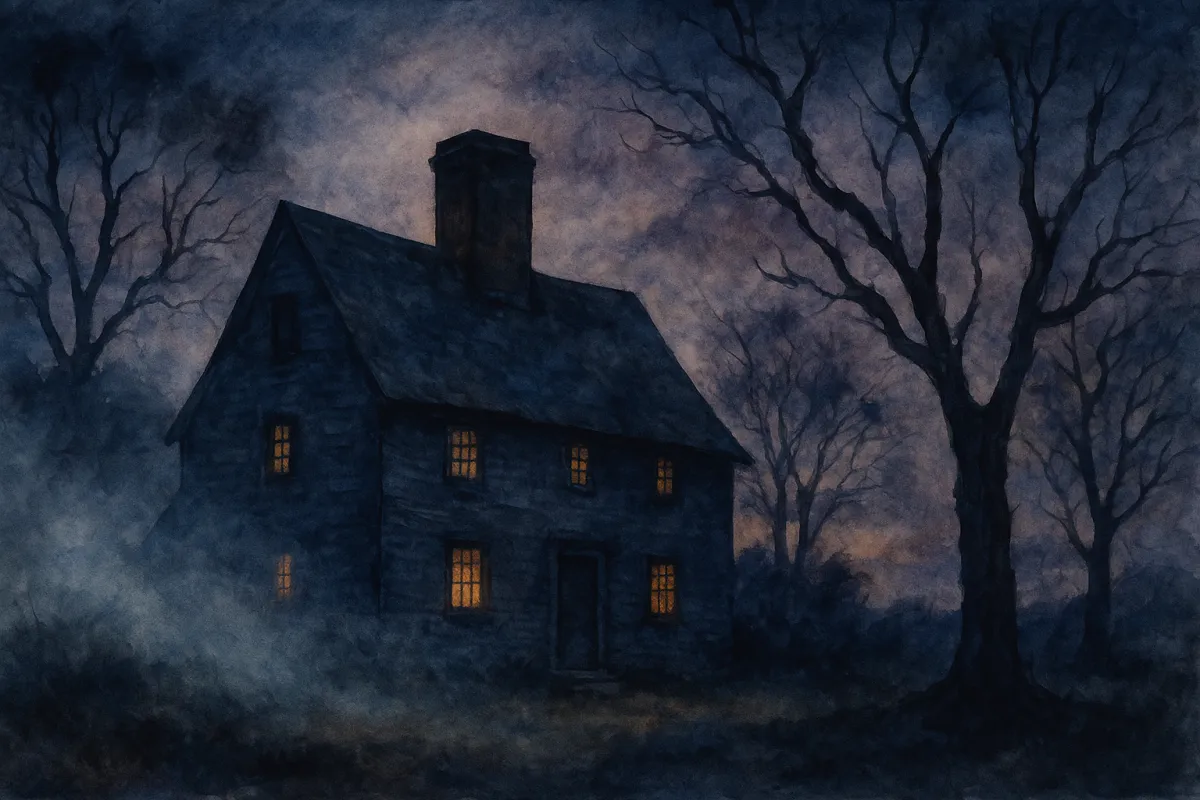
Ghostly Real Estate: The Most Historic (and Maybe Haunted) Homes in Essex County
There’s a particular feeling you get walking through certain neighborhoods on the North Shore — a sense that the houses remember more than you do. That the windows have been looking out over the same streets for three, four, sometimes ten generations. That whatever happened inside those walls, some of it never quite left.
Essex County, Massachusetts isn’t just historic. It’s the kind of historic that makes the rest of the country look newly built.
First, a Number
Architectural historian Abbott Lowell Cummings documented something remarkable in his landmark study The Framed Houses of Massachusetts Bay, 1625–1725: eastern Massachusetts contains the greatest concentration of First Period structures in the nation. Essex County is the heart of it.
In Ipswich alone, 57 to 59 houses have been identified as having First Period elements — many still standing quietly on streets that look nearly the same as they did in the 1600s. This isn’t a museum. People live here. Some of them have been living next to history so long they’ve stopped noticing it.
Salem’s Streets
Salem needs no introduction when it comes to history — or haunting. But beyond the October crowds, the architecture tells its own story year-round.
The Witch House
The Witch House — officially the Jonathan Corwin House, built around 1642 — is the only structure still standing in Salem with direct ties to the Witchcraft Trials of 1692. As a local magistrate and civic leader, Corwin was called upon to investigate the claims of witchcraft in Salem and neighboring communities, serving on the Court of Oyer and Terminer. Ironically, no accused witch ever lived within its walls. Its steeply pitched roof and overhanging second story are textbook examples of First Period colonial architecture. Visit witchhousemuseum.org — and verify hours before your trip, as they vary seasonally.
The House of Seven Gables
In 1668, merchant and shipowner John Turner I and his wife Elizabeth Robinson Turner built a home in Salem Harbor destined to become one of America’s most beloved historical buildings. The House of the Seven Gables was designated a National Historic Landmark in 2007. It is today best known for being the setting for Nathaniel Hawthorne’s 1851 novel, but has many other great stories to tell. There are claims of visions of a boy playing near the attic and shadowy silhouettes near the Gothic-inspired gables outside. Full details at 7gables.org.
Howard Street & the Corwin House
The old Salem jail looms beside the Howard Street Cemetery and is said to be the site of Giles Corey’s death during the Salem Witch Trials of 1692. Corey refused to admit his guilt, and as a result, he was pressed to death with stones — a method intended to force out his confession. Corey’s ghost is said to have haunted the cemetery ever since. The 1784 Corwin House nearby is associated with both Sheriff George Corwin and Giles Corey — and tours are available. Details at salem.org.
Ipswich’s Bones

The Whipple House
One of the earliest still-standing houses in New England is the Whipple House in Ipswich. The earliest known recorded date for the house is 1650, and some historians believe the original construction may go back as far as 1638. Its three distinct building phases show how the Whipple ancestors moved away from their English roots while improving craftsmanship and architectural detail over generations. Now operated by the Ipswich Museum, it’s a rare opportunity to step inside the 17th century. Historic Ipswich’s neighborhood streetscapes — along Meeting House Green, High Street, the East End, and the South Green — offer some of the most remarkable preserved colonial architecture anywhere in America. Verify hours before visiting.
Gloucester’s Legends

Hammond Castle
Built in the 1920s by inventor John Hays Hammond Jr., Hammond Castle is exactly what it sounds like: a medieval-style stone castle overlooking the Atlantic Ocean in Gloucester. It incorporates Romanesque, Medieval, Renaissance French, and Gothic architectural styles, along with unusual features like hidden passageways and a room that can be made to rain indoors. Hammond himself reportedly believed in spirit communication, and local lore holds that he never quite left. Tours available — verify hours at hammondcastle.org.
Dogtown
Dogtown isn’t a house — it’s an entire ghost town. Settled around 1693 in the interior of Cape Ann, this abandoned village was home to a close-knit community before being deserted in the early 1800s. The abandoned buildings became shelter for those on the margins, the area accumulated stray dogs, and local legend says some residents were known to practice folk magic. Today it’s a conservation area open to hikers, with massive granite boulders carved with motivational words during the Great Depression by stonemason Roger Babson. Accessible from both Gloucester and Rockport — bring a trail map.
Beyond the Names
The history doesn’t stop with the famous sites.
In Beverly, the John Hale House (1694) was built by Reverend John Hale of Beverly’s First Parish Church — who played a significant role in the 1692 witch trials and later expressed public regret. It now operates as a museum with period artifacts. Verify seasonal hours before visiting.
In Newbury, the Spencer-Peirce-Little Farm — dating to approximately 1675–1700 — is one of the most remarkable surviving stone manor houses in New England, preserved and interpreted by Historic New England.
Manchester-by-the-Sea and Rockport carry their own layers of sea captain lore and colonial-era streetscapes that don’t need ghost stories to feel like they’re holding something back.
The Essex Coastal Scenic Byway connects many of these sites across Salem, Beverly, Gloucester, Ipswich, and beyond — making for an extraordinary day of exploration. The Byway is home to some of the oldest houses in America dating back to the 17th and 18th centuries.
Haunted Questions
Is Ipswich really one of the most historic towns in America?
Yes — with 57 to 59 documented First Period houses, Ipswich holds more early colonial structures than almost anywhere else in the country. Architectural historian Abbott Lowell Cummings confirmed in his 1979 research that eastern Massachusetts has the greatest concentration of First Period structures in the nation.
What exactly is a “First Period” house?
In American architectural history, First Period refers to homes built between approximately 1625 and 1725. They’re identifiable by steeply pitched roofs, large central chimneys, asymmetrical facades, and exposed timber framing. Essex County has more of them than anywhere else in America.
Are the historic sites open to visitors?
Several are open year-round or seasonally — including the Witch House, House of the Seven Gables, Hammond Castle, and John Hale House. Always verify hours directly with each venue before visiting, as seasonal schedules vary and some close for private events.
Do you need to believe in ghosts to enjoy these places?
Not even a little. The architecture alone is extraordinary. The history is documented and verified. The ghost stories are a bonus — and on the North Shore, they come with the territory.
Final Thoughts
There is something singular about living where the past isn’t just preserved — it’s present. Essex County’s oldest homes aren’t relics behind velvet ropes. Many are still standing on quiet streets, still holding their stories, still watching the same tides come in that rolled in when they were built.
Whether you’re drawn by the architecture, the history, the lore, or simply the strange and beautiful experience of standing in front of a house built before your country existed — the North Shore delivers it all.
Bring comfortable shoes, a sense of curiosity, and an open mind. The houses will do the rest.


