






Kathleen Militello
REALTOR®
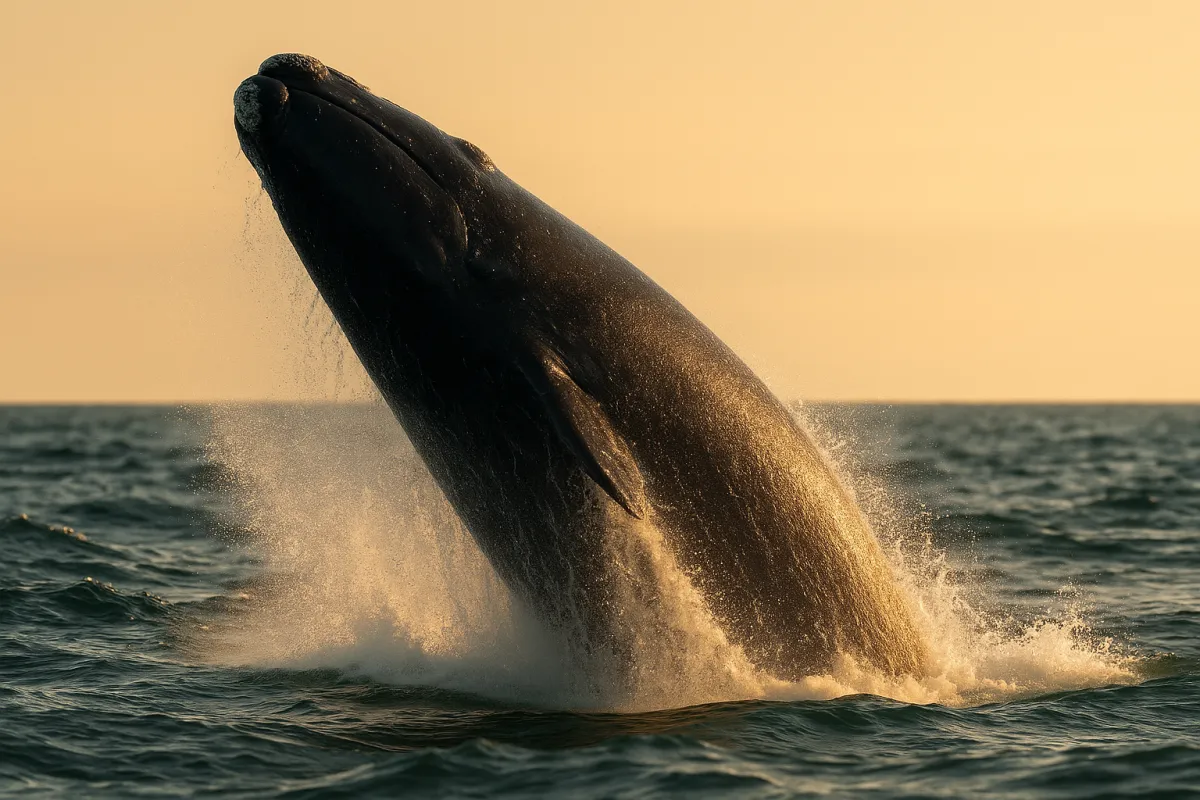
30 Endangered Whales Are Off Gloucester's Coast Right Now — And Time Is Running Out
They're out there right now. About 30 of them.
Moving through the cold water between Cape Ann, Tillies Bank, and the deep stretch northeast of Gloucester near Jeffrey's Ledge. This week, a pod of approximately 30 North Atlantic right whales is sitting off our coast — part of 52 confirmed in Massachusetts Bay over the last several days alone, including six mother-and-calf pairs. I've been watching this unfold all week, and I can't stop thinking about it.
Most people on the North Shore have no idea.
The Rarest Great Whale in the Atlantic

North Atlantic right whales got their name the hard way. Early whalers called them the "right" whale to hunt — slow-moving, found close to shore, and heavy enough in blubber to float when killed. For centuries they were hunted to near extinction for their oil and baleen. Commercial protections came, but the population has never truly recovered.
Fewer than 350 North Atlantic right whales remain on Earth. Not in this region. Not along the New England coast. On the entire planet. They can grow to more than 50 feet and live up to 70 years, but the population has been declining despite legal protections for decades. Every calf born is a meaningful event. Every death is a measurable loss to a species that has almost no room left to absorb one.
30 Whales. Right Now. Between Cape Ann and Jeffrey's Ledge.

The whales off Gloucester are mostly concentrated between the Cape Ann coast, Tillies Bank — a productive fishing bank about 24 miles due east — and Scantum Basin, directly northeast of Gloucester near Jeffrey's Ledge. These are known feeding grounds, rich in the dense zooplankton that right whales filter feed on in massive quantities.
This isn't random. Gloucester sits between two major known whale feeding areas: Stellwagen Bank and Jeffrey's Ledge. The whales know this coast. They return to it every spring. And when calving season wraps up and the animals push north to feed, these waters are exactly where they come.
You can track their real-time locations at whalemap.org — a publicly accessible interactive map plotting confirmed sightings across the Northwest Atlantic. Right now, it tells a story worth paying attention to.
Why They're Here — and Why Right Now Matters

Just as North Atlantic right whale calving season has come to a close, this pod of about 30 of the endangered mammals has been staying off the coast of Gloucester. These animals have spent months in warmer southern waters off Georgia and Florida, where calves are born. Now they're pushing north, feeding aggressively after months in relatively low-productivity water.
What they need from this coast right now is simple: water free of vertical lines, slow-moving vessels, and space. What they're finding is more complicated than that.
The Race Against the Rope

The single biggest threat to North Atlantic right whales isn't vessel strikes — it's rope. The vertical buoy lines connecting lobster traps on the seafloor to their surface buoys are nearly invisible to a surfacing whale. A whale swimming through a line can become entangled in seconds, and that entanglement can take days or weeks to resolve — often fatally.
There is a substantial amount of lobster gear in the immediate vicinity that poses an acute entanglement risk to the whales. The Massachusetts Division of Marine Fisheries strongly urges any lobster fishers with gear in the vicinity to move it to another area as soon as possible and keep away until surveys indicate the whales have moved on. That urgent language is not boilerplate — it is a real-time call to action in waters just off our shore.
NOAA Fisheries has also initiated a voluntary slow-speed zone called a Dynamic Management Area, where mariners are requested to reduce their speed to 10 knots to protect the whales. Vessel strikes are the second leading cause of right whale mortality, and the NOAA Northeast Fisheries Science Center tracks each individual whale by the unique callosities — patches of hardened skin — on its head. They know these animals. When one dies, they know exactly which one.
What This Means for Gloucester's Lobstermen

This is where the story gets complicated, and I want to be honest about it. Gloucester has been a working fishing port since 1623. Being asked to pull gear at the start of spring fishing season is a real economic ask — not a symbolic one. I know this community well enough to understand that.
But the alternative is what makes the urgency impossible to dismiss. North Atlantic right whales are considered critically endangered, with only around 360 remaining. A single entanglement death doesn't just grieve conservationists — it measurably shifts the odds for the entire species. The New England Aquarium's right whale research team has tracked every known individual for decades. They know the whales by name. That specificity says everything about how thin the margin has become.
A growing body of research shows that climate-fueled ocean warming compounds the problem, as whales follow food to new places or arrive at unexpected times of the year when there may be no protections for them. The tension between fishing rights and species survival is not new on this coast. It won't be resolved in this post. But what happens in the next two weeks off Gloucester matters in ways that will outlast the season.
What Happens If They Stay Past May 15?

All buoyed traps must be removed from Massachusetts waters through May 15. But this closure may be extended past May 15 or rescinded after May 1 based on the presence or absence of right whales.
Read that again. The whales off Gloucester right now are directly influencing when lobstermen can return to normal operations. It's a high-stakes standoff playing out in real time, in water you can see from the shore. With 30 whales still feeding between Cape Ann and Tillies Bank as of this week, that May 15 deadline is not a sure thing.
What You Can See — and Do — From the North Shore Right Now

If there is ever a time to go on a whale watch out of Gloucester, this is it. 7 Seas Whale Watch runs tours into the exact waters where these whales have been confirmed this week. Gloucester is located directly between two major whale feeding areas — Stellwagen Bank and Jeffrey's Ledge — giving access to more productive whale territory than boats leaving from any other port. Right now, the whales aren't making the boats travel far.
If you're already on the water, slow to 10 knots in the area between Cape Ann and Tillies Bank. Voluntary doesn't mean optional when the math is this stark. And if you spot a right whale — or think you have — report it at whalemap.org or through the Allied Whale sighting network at the College of the Atlantic.
Questions I'm Hearing This Week

Q: Is it safe to go out on the water near Gloucester right now?
Yes — with full awareness. If you're operating a motorized vessel anywhere between Cape Ann, Tillies Bank, and Jeffrey's Ledge, slow down and keep constant watch. Right whales surface quietly and can be nearly impossible to spot before you're too close to react. The voluntary 10-knot NOAA request isn't bureaucratic language — it's the margin between a close call and a collision.
Q: Can you see the right whales from shore?
Unlikely, though not impossible. Most of the current concentration sits well offshore — some of it 20 or more miles east of Cape Ann. A whale watch boat is the reliable option. Both 7 Seas Whale Watch and the New England Aquarium Whale Watch put you directly in the right water. Right now, that water is unusually full.
Q: How many North Atlantic right whales are left — and is the population recovering?
The North Atlantic right whale population is estimated at around 300 to 350 individuals. These whales can live up to 70 years and reach lengths of up to 52 feet. The six mother-and-calf pairs observed in Massachusetts Bay this week represent genuine hope — new lives in a species that desperately needs them. But the population has been in slow decline for years, and each season without an entanglement death is a victory that has to be actively earned.
Q: What can people on the North Shore actually do to help?
Report sightings at whalemap.org. Support the New England Aquarium's right whale research program. If you're on the water, slow down and give them space. These aren't anonymous animals passing through — there are individuals out there right now with names, histories, and in some cases, calves born just months ago swimming alongside them.
Final Thoughts

Thirty of the rarest whales on Earth are in the water off our coast this week. Fewer than 350 of them exist. Six of the pairs spotted in Massachusetts Bay include mothers with new calves — lives that began this past winter and are now moving through the cold water between Cape Ann and Jeffrey's Ledge.
This is happening right now. In water you can see from the shore. Pay attention to it.

Get In Touch!
Kathleen Militello
REALTOR®
(978) 500-1480
Kathleen Militello
P.O. Box 854
Essex, MA 01929