








Kathleen Militello
REALTOR®

Why Some North Shore MA Homes Sell Fast While Others Sit
Some homes in Newburyport go under contract before the weekend is over. A similar home in a nearby town sits for sixty days with no offers. Same county. Same general price range. Very different outcomes.
This is not a mystery — it is the North Shore real estate market doing what it always does: responding to the right combination of price, presentation, and positioning. When a home sells fast, there are reasons. When it sits, there are reasons for that too.
Here is what actually drives the difference.
Different Markets

The North Shore of Massachusetts is not one market. It is a collection of individual markets, each with its own pace, its own buyer pool, and its own variables.
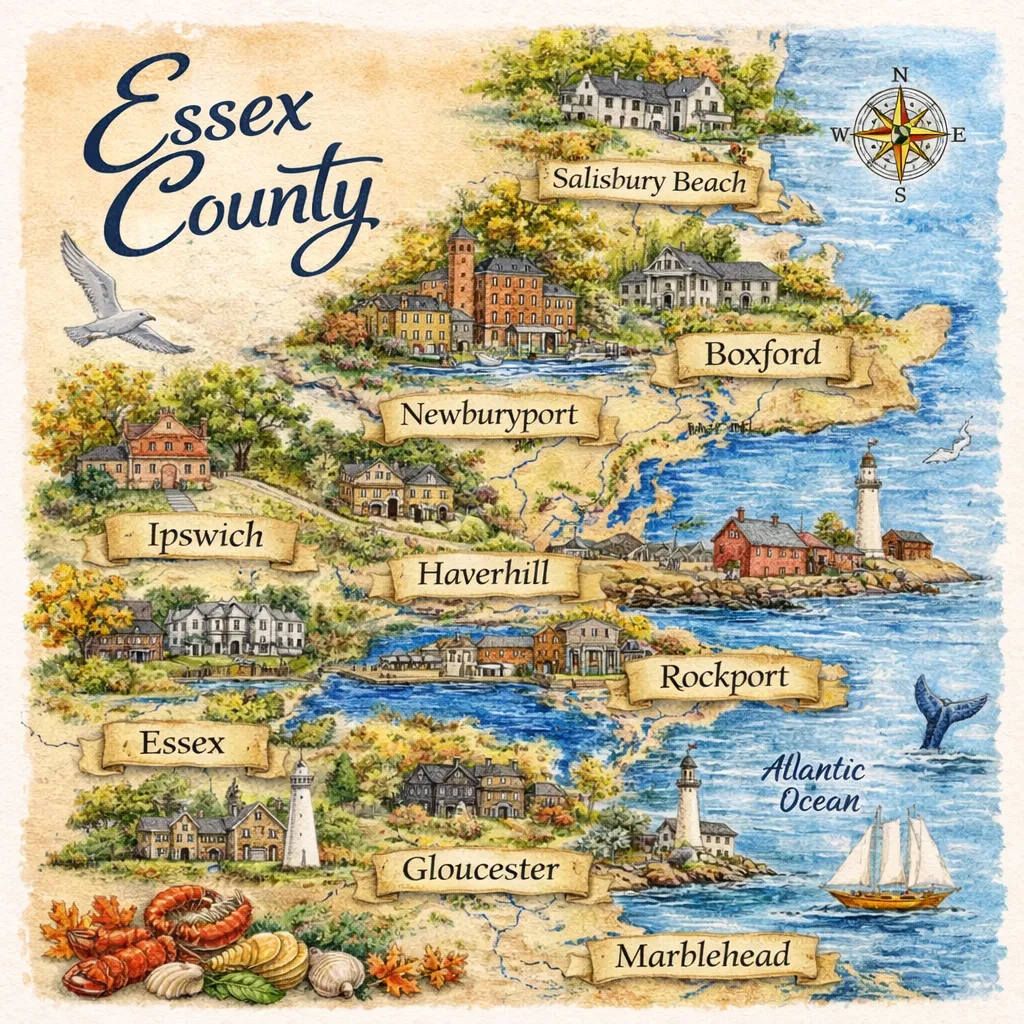
A waterfront home in Gloucester does not behave the same way as a home in Lynn. A historic colonial in Ipswich operates in a different market than a cape near Salisbury Beach. Each town, each price range, and each property type has its own rhythm.
Rockport attracts buyers drawn to its art community character and walkable village setting. Manchester-by-the-Sea draws buyers who want access to Singing Beach and a commuter rail connection into Boston. Salem has a consistent buyer pool drawn to its walkability, cultural landmarks, and MBTA access. Beverly sits where commuter convenience and coastal proximity overlap in a way that is hard to replicate. Gloucester has long drawn buyers who want a working harbor town with genuine water access. Lynn has seen meaningful price movement in recent years as buyers look for accessible value within reach of Greater Boston.
Understanding which of these markets a property belongs to — and what actually drives demand there — is the starting point for everything that follows.
Buyer Behavior

Buyers on the North Shore today are more deliberate than they were a few years ago, when the pace of the market left little time for careful evaluation. That pace has shifted. Buyers are paying attention to details they used to have no time to consider.
Condition gets scrutinized. Deferred maintenance that might have been overlooked in a faster market now shows up in inspection requests or in lower offers. Layout matters more as people think carefully about how a space actually works day to day. Recent updates are appreciated but not assumed — buyers will factor in the cost of work they expect to do after closing.
Location-specific details that once seemed like afterthoughts now make it into every conversation: distance to the commuter rail, parking availability, flood zone designation, homeowner's insurance costs, and access to town amenities all factor into what buyers decide they are willing to pay.
This does not mean buyers are pulling back from the North Shore market. It means they are making decisions carefully, and homes that give them a reason to hesitate tend to pay for it in time on market.
First Impressions

The first two weeks a home is on the market are the most valuable two weeks it will have. Buyer attention is highest. Showings are most active. The energy around a new listing is at its peak.
When a home enters the market priced above where serious buyers are searching, it misses that window entirely. Buyers who would have shown genuine interest never see it. Those who do see it may assume — fairly or not — that the price will eventually drop, so there is no urgency to act now.
A price reduction can bring a listing back into view, but the initial momentum is gone. Homes that sit, even for a few weeks, begin to carry questions that have nothing to do with the property itself. Buyers ask how long it has been on the market. Agents note it in conversations with their clients. A history of sitting is hard to overcome once it sets in.
The first impression a home makes at launch carries more weight than almost any decision that comes after it.
Presentation Counts

Two homes in the same neighborhood, at the same price, with similar square footage can perform very differently based entirely on how they are presented — online and in person.
Most buyers see a home for the first time on a screen. Photography is not a finishing detail — it is the first showing for every buyer who comes across a listing. Images that are dark, poorly framed, or that make rooms look smaller than they are can stop a buyer from scheduling a showing before they have ever stepped through the door. Well-lit, thoughtfully composed photography gives every room a fair chance at the right buyer.
Listing descriptions matter as well. Accurate, specific, and clearly written language helps buyers understand what they are actually getting. Vague or templated descriptions do the opposite — they create gaps that buyers often fill with doubt.
Floor plans, video walkthroughs, and strong distribution across multiple platforms extend a listing's reach and help buyers arrive at a showing already oriented to the space. That tends to make showings more productive and decisions faster.
Coastal Factors

Coastal properties along the North Shore operate by their own logic, and that logic is worth understanding before going to market.
Homes with beach access, ocean views, or marsh views carry real value — but that value is specific to the buyers who prioritize those features. Not every buyer wants the seasonal considerations, weather exposure, or maintenance demands that come with coastal living. The buyer pool for these properties is real but more defined, and pricing should reflect that honestly from the start.
Flood zone designation has become a meaningful factor in how buyers evaluate coastal homes. Buyers are increasingly aware of flood insurance requirements and what they add to the annual cost of ownership. Properties in higher-risk zones often face a more selective buyer pool, and sellers benefit from having current flood zone documentation and elevation certificates readily available before going to market. The FEMA Flood Map Service Center at msc.fema.gov is a publicly available resource for reviewing current flood zone designations.
Parking is another variable that matters more than it might appear. Limited or shared parking in seasonal areas affects how buyers perceive a property and can influence what they are willing to pay — sometimes significantly.
Common Questions

Why does overpricing hurt a home from the start?
Buyers search within price ranges that work for their budgets and their financing. A home priced above where serious buyers are looking does not get in front of those buyers during the most critical weeks on market. By the time a price reduction happens, the most motivated buyers have often already moved on to other properties.
Does the time of year affect how fast a North Shore home sells?
Seasonality plays a role, particularly for beach-adjacent and coastal properties that see concentrated demand in spring and summer. That said, motivated buyers are active throughout the year, and low inventory at any point in the calendar can create competitive conditions regardless of the season.
Do older homes take longer to sell?
Not necessarily. Well-maintained older homes with updated systems, clear inspection history, and honest pricing can move as quickly as newer construction. Condition, presentation, and pricing relative to the local market tend to matter more than age in most situations.
How does flood zone designation affect a sale?
Properties in designated flood zones often require flood insurance, which adds to the annual cost of ownership. Buyers factor this into their calculations when evaluating what they are willing to pay. Having a current elevation certificate available before listing can help buyers and their lenders move through the process more smoothly. For current flood zone information, the FEMA Flood Map Service Center at msc.fema.gov is a reliable starting point.
Are North Shore buyers more selective now than a few years ago?
Yes — and that reflects the current cost of homeownership overall. Higher carrying costs have made buyers more deliberate. They are spending more time evaluating condition, insurance considerations, location, and long-term value before making offers. Homes that address those concerns clearly and price accordingly tend to attract more serious, consistent interest.
Best Price

The goal of pricing is not to name the highest number a seller hopes to get. It is to find the number that brings the most serious buyers to the table at the right moment.
A home priced where buyers see clear value — where showings come in consistently, where interest is genuine, and where offers reflect real market demand — tends to outperform a home that starts high and chases the market down through a series of reductions.
This holds true across the North Shore, from higher-priced coastal communities to the more accessible markets in Beverly, Salem, and Lynn. The market responds to homes that are priced honestly. It also responds, quickly and visibly, to those that are not.
For current median prices, days on market, and sale-to-list price ratios by area, the Massachusetts Association of Realtors publishes regular market data at mar.realtor, and MLS PIN statistics are available at mlspin.com. These numbers shift regularly, so reviewing current data before making pricing decisions is always worthwhile.
Final Thoughts

When a home sells quickly on the North Shore, it is rarely luck. It is the result of a realistic pricing strategy, an honest read of condition and presentation, and a clear understanding of the specific market that property belongs to.
When a home sits, the reasons are usually just as clear — a price that did not connect with where buyers were searching, a presentation that did not reflect the property's value, or an expectation that the market simply was not prepared to meet.
The North Shore is a layered, town-by-town market with real texture and real variation. Homes that do well here tend to be the ones that were approached that way from the very beginning.

Get In Touch!
Kathleen Militello
REALTOR®
(978) 500-1480
Kathleen Militello
P.O. Box 854
Essex, MA 01929