House Hacking the North Shore: A First-Time Buyer's Guide to Multi-Family Homes
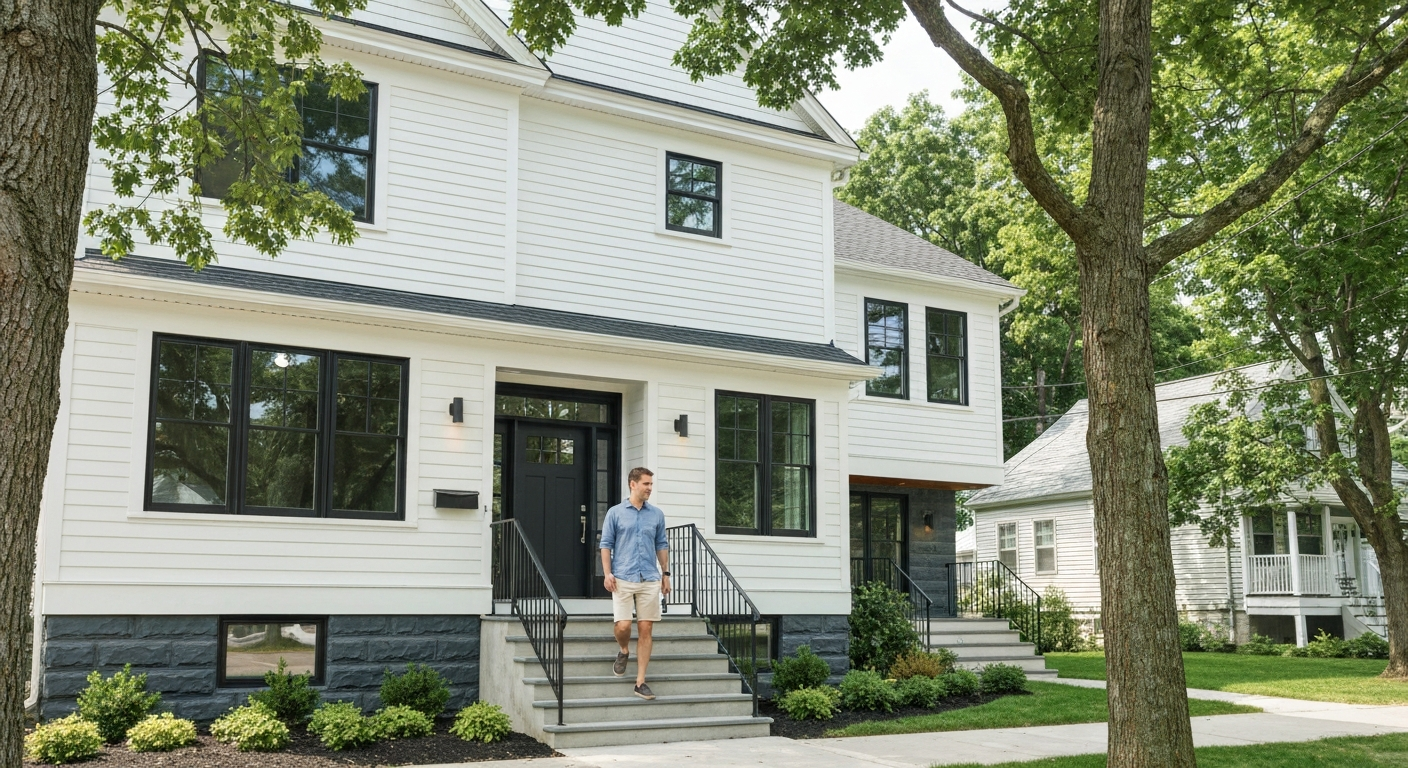
For many first-time home buyers on Boston's North Shore, the math of purchasing a single-family home can feel daunting. But there is a strategic alternative that is quietly becoming the most powerful wealth-building tool for new buyers: the multi-family home.
Often referred to as "house hacking," this strategy involves buying a two-, three-, or four-unit property, living in one unit, and renting out the others. The rental income offsets—or sometimes entirely covers—your mortgage payment.
While the North Shore is famous for its sprawling coastal estates and historic single-family colonials, communities like Beverly, Salem, and Gloucester possess a rich inventory of classic New England multi-family homes. For the strategic buyer, these properties represent the ultimate stepping stone into homeownership.
Why House Hacking Works So Well on the North Shore
The North Shore rental market is incredibly strong. Driven by professionals commuting to Boston, students attending local colleges, and residents who want the coastal lifestyle without the commitment of ownership, demand for quality rental units consistently outpaces supply.
When you purchase a multi-family home in a high-volume hub near a commuter rail station, you are acquiring an asset with built-in demand. A well-maintained two-bedroom apartment in downtown Salem or Beverly can command significant monthly rent, dramatically altering your personal debt-to-income ratio.
Kathleen's Local Insight
Many of my first-time buyers are shocked to learn that they can often qualify for a more expensive multi-family home than a single-family home. Lenders allow you to count a percentage of the projected rental income toward your qualifying income, significantly increasing your purchasing power.
The Financing Advantage: Low Down Payments
One of the biggest misconceptions about buying an investment property is that you need a 20% or 25% down payment. While that is true if you are buying a property strictly as an investor, the rules change entirely if you intend to live in the property.
As an owner-occupant, you can leverage programs like the FHA loan, which allows you to purchase a multi-family property (up to 4 units) with as little as 3.5% down. Conventional loan programs also offer low-down-payment options for owner-occupied multi-families.
This means you can acquire a significant, income-producing asset with a down payment comparable to what you would put down on a modest starter condo. To explore what these numbers might look like for you, I always recommend speaking with one of our preferred local lenders.
What to Look For in a North Shore Multi-Family
Not all multi-family homes are created equal. When evaluating properties in places like Peabody or Danvers, you must look at the home through two lenses: as a homeowner and as a landlord.
- Separate Utilities: The ideal multi-family home has separate heating, electrical, and hot water systems for each unit. If the utilities are shared, you (the landlord) will be responsible for paying the entire building's utility bills out of the rental income.
- Parking: On the North Shore, off-street parking is a premium amenity. A multi-family with a large driveway or a multi-car garage will attract higher-quality tenants and command higher rent.
- Transit Access: Properties within walking distance of the MBTA Commuter Rail are incredibly desirable for renters commuting into Boston.
- Condition of the "Renter" Unit: While you might be willing to renovate your own unit over time, the rental unit should ideally be "turnkey" so you can start generating income immediately after closing.
The Reality of Being a Landlord
House hacking is a fantastic financial strategy, but it is not entirely passive. When you buy a multi-family home, you are starting a small business. You will be responsible for screening tenants, managing leases, and handling midnight maintenance calls.
However, living on-site makes management significantly easier. You can keep a close eye on the property, and tenants tend to treat the home with more respect when they know the owner lives downstairs.
It is also crucial to understand Massachusetts tenant-landlord laws, which are famously protective of tenants. Proper screening, clear leases, and professional boundaries are essential to a successful house-hacking experience.
The Long-Term Wealth Strategy
The true power of house hacking on the North Shore reveals itself after three to five years. By that point, your tenants have paid down a significant portion of your mortgage, and the property has likely appreciated in value.
Many buyers use this equity to move up to a single-family home. Because they already own the multi-family, they can rent out the unit they were living in, transforming the property from a "house hack" into a pure, cash-flowing investment property.
This strategy—buying a multi-family first, stabilizing it, and then moving to a single-family—is one of the most reliable paths to building generational wealth in real estate.
Final Thoughts
If you are struggling to make the math work for a single-family home on the North Shore, it might be time to change the equation. A multi-family property offers a practical, powerful way to enter the market, offset your living expenses, and build a foundation for long-term financial freedom.
If you are curious about what multi-family inventory looks like in your target towns, let's connect. As an AI Certified Agent™, I can help you analyze the rental data, evaluate the true potential of a property, and map out a strategy that aligns with your financial goals.