
Ipswich, MA: The Complete Guide to Living, Exploring & Understanding Ipswich
Discover Ipswich beyond Crane Beach — its historic streets, riverfront downtown, farms, protected open spaces, neighborhoods, restaurants, commuter rail, coastal landscape and what it is really like to live in this remarkable North Shore town.
What's Your Ipswich Home Worth?
Based on real local sales and current market conditions.
Ipswich Is More Than Crane Beach
Many people first discover Ipswich because of Crane Beach. The wide stretch of sand and dunes is one of the most well-known beaches in New England, and it draws visitors from across the region every summer. But Crane Beach is only one piece of Ipswich. The town that residents experience every day is far broader and more complex than the version visitors see on a summer afternoon.
Ipswich combines historic New England architecture, a traditional downtown centered on the Ipswich River, salt marshes, working farmland, protected open space, Atlantic coastline, MBTA commuter rail access, restaurants, local businesses, and residential neighborhoods that range from dense historic streets near the town center to rural roads that wind through woods and fields. It is simultaneously a coastal town, a historic town, a river town, an agricultural community, and a commuter-rail community.
That complexity is what makes Ipswich interesting. It is difficult to define with a single label, and the experience of living in one part of town can be completely different from living in another. This guide is designed to help you understand those differences — the geography, the history, the neighborhoods, and the real estate considerations that make Ipswich one of the most distinctive communities on Boston's North Shore.
Ipswich at a Glance
Where Is Ipswich?
Ipswich sits on Boston's North Shore in Essex County, approximately 30 miles northeast of Boston. It is bordered by Rowley to the north, Essex to the south, Hamilton and Topsfield to the west, and the Atlantic coastline to the east. Gloucester and Newburyport are both accessible via Route 133 or Route 1A.
Route 1A runs through Ipswich and connects to Route 133, which links to I-95 and Route 128 for driving access to Boston and the broader North Shore. The MBTA commuter rail station in downtown Ipswich provides direct service to Boston's North Station, which is one of the reasons the town remains attractive to commuters who want a rural or coastal setting without losing access to the city.
What Is It Really Like to Live in Ipswich?
The first thing to understand about Ipswich is that different parts of town feel dramatically different. Downtown Ipswich is a traditional New England town center with the Ipswich River running through it, local shops and restaurants, and the commuter rail station within walking distance. The historic neighborhoods near downtown are dense with early homes on narrow streets. As you move outward, the landscape opens up. Argilla Road transitions from residential areas to farmland to marsh to the Crane Estate. The rural roads in the western and northern parts of town wind through woods, fields, and conservation land. The coastal areas around Great Neck and Little Neck have a distinctly seaside character.
The second thing to understand is the seasonal contrast. In summer, Ipswich fills with visitors heading to Crane Beach. Argilla Road sees heavier traffic, downtown restaurants are busier, and the coastal areas are at their most active. By late fall and winter, the town contracts. The beaches are empty, the farms are quiet, and the year-round community becomes more visible. The architecture, the river, the marshes, and the historic streets are more noticeable without the summer foliage and crowds. If you only visit in July, you are seeing one version of Ipswich. Living here year-round is something else.
The practical reality is that Ipswich is a working town with a year-round population, a town government, a school system, and a community that is here in January as much as in July. The farms still operate, the river still flows, and the downtown still functions. The tourists come for the beach, but the community stays for everything else.
Understanding Ipswich's Geography
Ipswich's geography is the key to understanding why different parts of town can feel so different. The Ipswich River flows through the downtown area and continues toward the coast, shaping the landscape and providing recreational access. The Great Marsh, the largest continuous salt marsh in New England, extends along the coastline and gives Ipswich much of its open, undeveloped coastal character. When you drive through Ipswich and see vast stretches of marshland without buildings, that is the Great Marsh.
Inland from the coast, Ipswich transitions through farmland, woodlands, and residential areas. The agricultural landscape is a defining feature. Working farms, fields, and preserved open space give the western and northern parts of town a rural character that is increasingly rare on the North Shore. The Argilla Road corridor connects the inland portion of town to the coast, passing through a sequence of landscapes that illustrate the geographic variety within one community.
This geography directly influences the character of different properties. A home near the river, a home on a farm road, a home in a downtown historic district, and a home near the coast each come with a different set of considerations, views, and daily experiences. Understanding the geography is essential for understanding Ipswich real estate.
Downtown Ipswich
Downtown Ipswich centers on Market Street, South Main Street, and North Main Street, with the Ipswich River running through the heart of the town. The downtown is walkable, historic, and connected to the water. The Ipswich Riverwalk follows the river through the downtown area, providing a pleasant walking route that connects the commercial district to the natural landscape.
What you find downtown is a mix of local businesses, restaurants, coffee shops, and historic buildings. The architecture is genuinely old, not manufactured. Many of the buildings date back centuries, and the streetscape reflects the town's colonial origins. The MBTA commuter rail station is within walking distance of the downtown core, which makes this area one of the more transit-accessible parts of Ipswich.
Walking through downtown Ipswich feels different from the coastal areas or the rural roads. It is where the town's civic and commercial life happens. It is where you run into people, where the river is visible from the street, and where the historic architecture is most concentrated. For people who value walkability and proximity to restaurants and transit, downtown Ipswich is the most practical part of town.
Choate Bridge
The Choate Bridge spans the Ipswich River in downtown Ipswich and is one of the oldest stone arch bridges in the United States. Built in 1764, it is named after Colonel John Choate, who was involved in its construction. The bridge connects the two sides of the downtown area and remains in use today, carrying traffic across the river.
The Choate Bridge is not just a piece of infrastructure. It is a direct physical connection to Ipswich's colonial history. When you stand on the bridge and look at the river flowing beneath it, you are standing in a spot that has been central to the town's life for more than 250 years. It is one of the most important historical landmarks in Ipswich and a recognizable feature of the downtown landscape.
The Ipswich River
The Ipswich River is central to the town's identity. It flows through downtown, passing beneath the Choate Bridge, and continues toward the coastal environment where it meets the marsh and the sea. The river has shaped Ipswich's history, landscape, recreation, and ecology since the town's founding.
In the downtown area, the Ipswich Riverwalk provides public access to the river, with a walking path that follows the water through the town center. The river is also used for kayaking and paddling, with access points that allow residents to get on the water. The Ipswich River Watershed Association works to protect the river and its watershed, which is an important ecological resource for the region.
For residents, the river is part of the everyday landscape. It runs through the downtown, it shapes the geography of the surrounding areas, and it connects the town to its coastal environment. Properties near the river have a different character from those inland or on the coast, and the river's presence is one of the things that makes downtown Ipswich feel distinct from other North Shore town centers.
Crane Beach
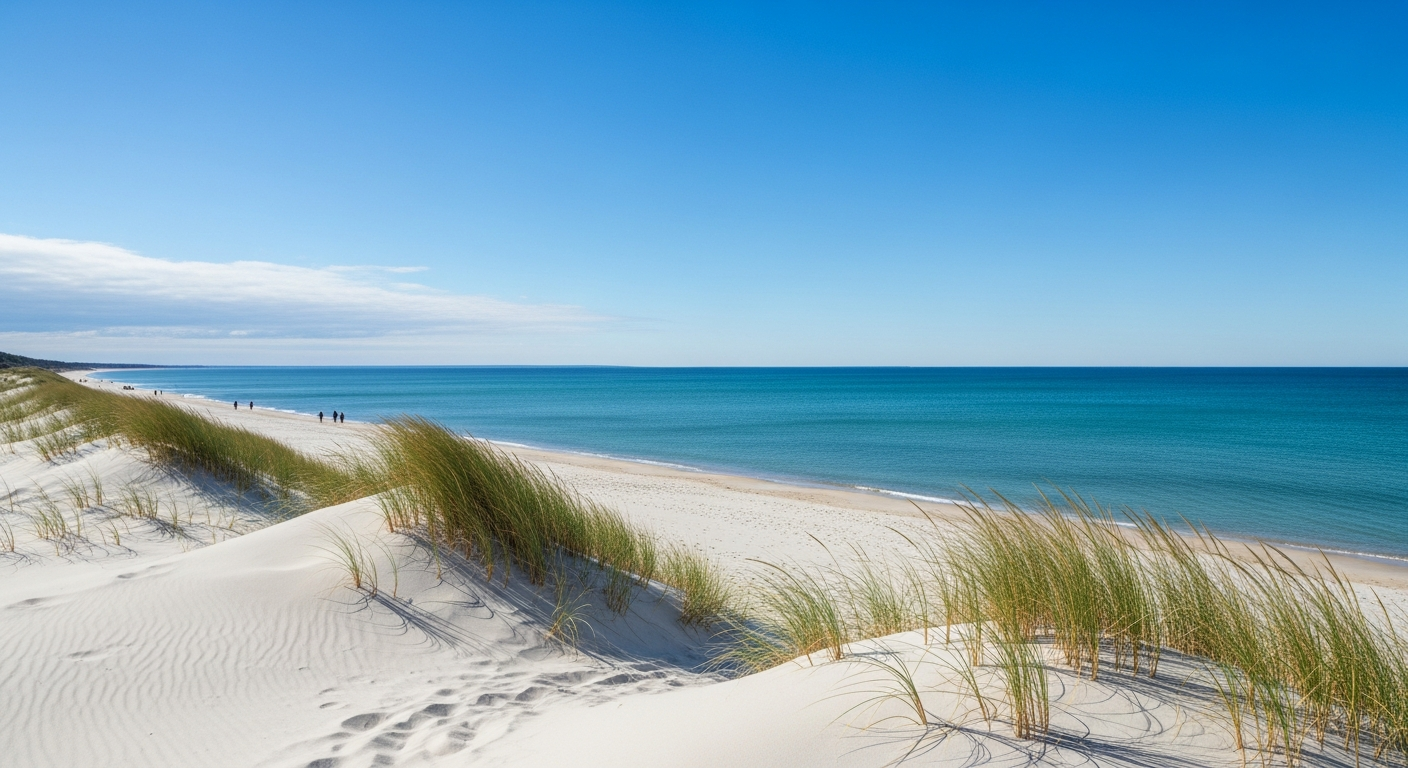
Crane Beach is one of the most well-known beaches on the Massachusetts North Shore, and it is one of the main reasons people first discover Ipswich. Managed by The Trustees of Reservations, Crane Beach features miles of white sand, dunes, and coastal trails. The beach is part of the larger Crane Estate, which also includes Castle Hill.
The beach is known for its broad sandy expanse, its dune environment, and the walking trails that extend through the surrounding coastal landscape. At low tide, the sand stretches out broadly, and the dunes provide a distinctive backdrop. The beach is popular in summer, and the seasonal experience is a major part of Ipswich's identity.
Parking rules, reservation requirements, pricing, and seasonal access policies at Crane Beach can change. Visitors should check The Trustees website for current information before planning a visit, especially during summer weekends when passes can sell out.
Beach Access for Ipswich Residents
One of the practical questions people ask when considering a home in Ipswich is whether living in town provides any advantage for Crane Beach access. The short answer is that Ipswich residents may have access to resident-specific beach parking or stickers, but the rules, availability, and requirements can change from year to year.
Crane Beach is managed by The Trustees of Reservations, not the Town of Ipswich, which means access policies are set by The Trustees rather than the municipality. Resident stickers or discounted parking, when available, are typically administered through the town. The specific details, including whether stickers are available, how to obtain them, and what they cover, should be verified directly with the Town of Ipswich and The Trustees before relying on them.
For buyers considering a home in Ipswich partly because of beach access, it is worth confirming the current resident benefits directly with official sources rather than assuming past policies will continue. Beach access rules can change, and what was true a few years ago may not reflect current policy.
Castle Hill on the Crane Estate
Castle Hill is a historic estate on the Ipswich coastline, part of the Crane Estate managed by The Trustees of Reservations. The estate features the Great House, a designed landscape, and the Grand Allée, a dramatic lawn that extends from the house toward the ocean. Castle Hill is more than a mansion. It is a designed landscape that represents an important part of the Ipswich experience.
The estate was developed in the early 20th century by the Crane household, and the landscape was designed to take advantage of the coastal setting. The combination of architecture, designed grounds, and ocean views makes Castle Hill one of the most recognizable landscapes on the North Shore. It is open to the public for tours, events, and outdoor exploration.
The Grand Allée
The Grand Allée is a broad, manicured lawn that extends from the Great House at Castle Hill toward the ocean. It is one of the most dramatic and recognizable designed landscapes in New England. Standing at the top of the Allée and looking toward the sea, you see a straight green corridor opening to the Atlantic. It is a defining image of Ipswich and one of the reasons Castle Hill is so strongly associated with the town.
Appleton Farms
Appleton Farms is one of the oldest continuously operating farms in the United States, managed by The Trustees of Reservations. Located in the rural part of Ipswich, it features working farmland, trails through fields and woodlands, and a farm landscape that has been preserved for generations. Appleton Farms is not simply another attraction. It represents an important part of Ipswich's agricultural identity.
The farm includes miles of trails that wind through open fields, pastures, and wooded areas. It is open to the public for hiking, and the farm store sells locally produced goods. The preservation of Appleton Farms is part of the broader story of Ipswich's commitment to open space, which is one of the major differences between Ipswich and more densely developed coastal communities.
Ipswich's Farms & Agricultural Landscape
Beyond Appleton Farms, agriculture continues to shape the visual character of Ipswich. Working farms, fields, and preserved landscapes are visible throughout the western and northern parts of town. Russell Orchards and Marini Farm are well-known local agricultural businesses. The combination of farms, conservation land, and open fields gives Ipswich a rural character that is increasingly rare on the North Shore, and it is one of the reasons the town looks and feels the way it does.
The Great Marsh
The Great Marsh is the largest continuous salt marsh in New England, extending along the North Shore coastline from Gloucester through Essex, Ipswich, and beyond. In Ipswich, the Great Marsh is a dominant feature of the coastal landscape. When you drive through Ipswich and see vast stretches of marshland without buildings, that is the Great Marsh.
The marsh is a tidal environment, shaped by the daily cycle of salt water moving in and out. It supports wildlife habitat, filters water, and provides a natural buffer along the coast. The Great Marsh is one of the reasons Ipswich has so much undeveloped open space near the coastline. The marsh cannot be built on, which preserves the coastal landscape and gives Ipswich its distinctive open, natural appearance.
For residents, the Great Marsh is part of the everyday visual landscape. The views across the marsh change with the tides, the seasons, and the light. Properties near the marsh have a different character from those inland, and the marsh environment is an important consideration for anyone buying or living near the coast in Ipswich.
What About Greenheads in Ipswich?
Greenhead flies are a salt marsh insect that emerges during the summer months, typically from late June through early August. They are found throughout the Great Marsh, including the Crane Beach area and the marshlands that border coastal Ipswich. They are fast, persistent biters that are more active on hot, still days near the marsh.
The greenhead season is a real part of living near the marsh in Ipswich, but it is not a town-wide problem. The flies are concentrated near the marsh and coastline during their breeding season. Areas inland from the marsh, including downtown and the western parts of town, are far less affected. The intensity varies by location, weather, and year. Some summers are worse than others, and the season typically passes by mid-August.
If you are considering buying a home near the marsh or coast in Ipswich, the greenhead season is worth understanding. It does not last all summer, and it does not affect every part of town, but it is a genuine factor of coastal living that the marsh environment creates. The Massachusetts state government provides information about greenhead flies and their salt marsh habitat.
Ipswich's Commitment to Open Space
Ipswich has a long history of protecting open space, which is one of the main reasons the town still looks and feels the way it does. The Town of Ipswich Open Space Program has worked for decades to preserve woodlands, farmland, water resources, wildlife habitat, recreation areas, and scenic landscapes.
Organizations including The Trustees of Reservations, the Essex County Greenbelt Association, and the Ipswich River Watershed Association have all played roles in preserving land in and around Ipswich. The result is a town with substantial conservation land, working farms, and protected natural areas that shape the daily experience of living here.
This commitment to open space is not accidental. It is the result of decades of planning, community involvement, and investment. It is the reason Ipswich has not been developed as densely as some neighboring communities, and it is one of the town's most valuable characteristics.
Willowdale State Forest
A large state forest bordering Ipswich and Hamilton with miles of trails for hiking, mountain biking, and horseback riding through mixed woodlands. One of the most significant protected forest areas on the North Shore. Learn more.
Julia Bird Reservation
A Trustees of Reservations property along the Ipswich River with trails through woods and along the riverbank, offering quiet walking and river access. Learn more.
Hamlin Reservation
A Trustees property on a former saltwater farm island, with a trail through marsh and upland habitat offering a distinctive marsh-edge walking experience. Learn more.
Ipswich River Watershed Association
The Riverbend property on County Road serves as the association headquarters and offers river access, trails, and conservation programs. Learn more.
Historic Ipswich
Ipswich was settled in 1633, making it one of the oldest English settlements in Massachusetts. The town's history is visible in its architecture. Ipswich has an unusually large concentration of early-period homes and historic structures, and the town's historic streets are a major part of its character. The Ipswich Historical Society and the Ipswich Museum, which includes the 1677 Whipple House, document this history extensively.
First Period Homes
"First Period" refers to homes built during the earliest period of English settlement in New England, roughly from 1625 to 1725. These houses predate the Georgian architectural period and are characterized by post-and-beam construction, steeply pitched roofs, and distinctive early features. Ipswich has a significant concentration of First Period homes, and buyers and visitors encountering this terminology in property listings should understand that it refers to the oldest category of English colonial architecture in America.
Ipswich Historic District & Historic Streets
Ipswich's historic areas include streets like High Street, East Street, North Main Street, South Main Street, and the Meetinghouse Green area. These streetscapes are defined by the concentration of early homes, the narrow street layouts, and the architectural continuity that has been preserved over centuries. Walking these streets gives a sense of the town's colonial origins that is difficult to find in more heavily developed communities.
Old North Burial Ground
The Old North Burial Ground is one of Ipswich's important historical resources, dating to the town's earliest settlement period. It contains gravestones from the 17th and 18th centuries and provides a direct connection to the families who founded and built the town. It is a quiet, historically significant site that reflects the depth of Ipswich's colonial history.
Ipswich Neighborhoods & Areas
Ipswich contains several distinct areas, each with its own character, setting, and housing style. Understanding these areas is essential for anyone considering buying or living in Ipswich, because the experience of living in one part of town can be completely different from another.
Downtown Ipswich
The historic and commercial heart of the town, centered on Market Street and Main Street with the Ipswich River running through. Walkable, with local businesses, restaurants, the Riverwalk, and the MBTA commuter rail station nearby. Housing includes historic homes, condominiums, and properties within walking distance of downtown amenities.
Meetinghouse Green & High Street Area
An area of concentrated historic architecture near the town center, with early homes along High Street, East Street, and the Meetinghouse Green. The streetscape reflects the town's colonial origins, with narrow streets and a high concentration of First Period and early Colonial homes.
Argilla Road Corridor
A major route that transitions from residential areas near the town center through farmland and marsh toward Castle Hill and Crane Beach. The corridor illustrates the geographic variety of Ipswich, with the landscape changing dramatically as you drive toward the coast.
Linebrook & Pinefield
Areas in the northern and western parts of Ipswich, characterized by larger lots, more rural settings, and a mix of mid-century and newer homes. These areas offer a quieter, more suburban-to-rural lifestyle with access to conservation land and open space.
Outer Farm Areas
The rural edges of Ipswich, near Appleton Farms and Linebrook Road, offer larger lots, equestrian properties, and a quiet, pastoral lifestyle surrounded by conservation land and working farms.
Jeffreys Neck
A coastal area east of downtown that extends toward the marsh and water. Jeffreys Neck Road winds through a mix of residential properties and open landscape, with some homes situated near or overlooking the marsh and tidal environment. The area has a quieter, more secluded coastal character than downtown, with a mix of housing types and proximity to the natural coastal landscape.
Turkey Hill Area
A residential area in the western part of Ipswich near the Hamilton border, known for its rolling terrain, larger lots, and a mix of mid-century and newer homes. The area offers a suburban-to-rural setting with access to conservation land and trails, including proximity to Willowdale State Forest. It is one of the more wooded, private parts of town.
Topsfield Road Area
The Topsfield Road corridor runs west from downtown toward the Topsfield town line, passing through a mix of residential neighborhoods, conservation land, and open areas. Housing along this corridor ranges from older homes closer to downtown to newer subdivisions farther out. The area provides convenient access to both downtown Ipswich and Route 1, with a mix of walkable and car-dependent sections.
Great Neck
Great Neck is a coastal area in Ipswich that extends into the coastal environment, with a setting shaped by its proximity to the water. The area has a distinctly seaside character, with homes that range from cottages to larger properties. The coastal geography affects the character of this part of Ipswich, with water views, coastal exposure, and a setting that is very different from the downtown or rural areas.
Little Neck
Little Neck is a distinctive coastal peninsula in Ipswich with its own geographic character and community structure. It sits adjacent to Great Neck but has a separate identity, with a tight-knit community feel and a setting that is shaped by its exposure to Ipswich Bay and the surrounding coastal environment. The housing ranges from cottages to larger waterfront properties, and the area has a distinctly seaside character that feels different from both Great Neck and the inland parts of town.
Little Neck has unique governance and ownership considerations that distinguish it from other parts of Ipswich. The area has historically operated with its own community structure, and property-related matters there can involve specific rules, agreements, or arrangements that do not apply elsewhere in town. Buyers interested in Little Neck should not assume that the standard Ipswich real estate considerations tell the full story. The specific details of governance, ownership structures, land lease arrangements, and property rights at Little Neck should be verified directly and researched carefully before proceeding.
For the right buyer, Little Neck offers a coastal lifestyle that is difficult to find elsewhere on the North Shore. The community is close-knit, the setting is genuinely waterfront, and the character is distinct from the rest of Ipswich. But the unique aspects of ownership and governance mean that it requires more due diligence than a typical property purchase, and working with someone who understands those distinctions matters.
Argilla Road
Argilla Road provides one of the clearest examples of Ipswich's changing landscape. The road connects the inland portion of Ipswich toward Castle Hill and Crane Beach, and as you drive it, the landscape transitions through a sequence of environments. You begin in residential areas near the town center, pass through farmland and open fields, cross the marsh, and arrive at the Crane Estate and the coast.
This transition is one of the things that makes Ipswich so unusual. Within a single road, you see the full range of the town's character — residential, agricultural, natural, and coastal. For anyone trying to understand Ipswich, driving Argilla Road is one of the best ways to grasp how much variety exists within one community. In summer, the road also carries significant beach traffic, which is a practical consideration for residents who live along the corridor.
Food & the Ipswich Clam
Ipswich's association with clams is one of the town's most recognizable cultural identities. The term "Ipswich clam" became a recognizable name beyond the town itself because of the quality of the soft-shell clams harvested from the town's clam flats. The historic relationship between shellfishing and Ipswich goes back generations, and clamming has been part of the local economy and culture for centuries.
The soft-shell clam, also known as the steamer clam, is the variety historically associated with Ipswich. The town's coastal flats provided an ideal environment for harvesting, and the quality of the local clams earned a reputation that spread beyond the region. The Clam Box is a well-known local restaurant that built its reputation on fried clams, and it remains a destination for visitors and residents alike.
The clam tradition is more than a food story. It is a reflection of Ipswich's relationship with its coastal environment, its working history, and its cultural identity. The clam flats, the shellfishing industry, and the restaurants that serve local seafood are all part of what makes Ipswich distinct from communities that are purely residential or purely tourist-oriented.
Restaurants & Eating in Ipswich
Ipswich's dining scene reflects the town's character: a mix of historic, local, and casual. The range includes seafood, Mediterranean cuisine, farm-to-table, coffee, and classic New England fare. These are some of the notable establishments, but restaurant operations change. Confirm current hours and availability through official websites before visiting.
Downtown & Casual Dining
- 1640 Hart House — Historic dining in one of the oldest homes in the country.
- Ithaki — Upscale Mediterranean cuisine near downtown.
- The Clam Box — Legendary roadside spot famous for fried clams.
Coffee & Bakeries
- Little Wolf Coffee Roasters — Specialty coffee roaster with espresso and pour-overs.
- Sandpiper Bakery — Artisanal pastries, breads, and light lunch fare.
- Zumi's Espresso & Ice Cream — A popular downtown spot for fair-trade coffee and treats.
Local Breweries
- True North Ale Company — Award-winning craft brewery with a spacious taproom.
Farms & Farm Stands
- Russell Orchards — Apple picking, cider donuts, and farm animals.
- Marini Farm — Corn maze, farm stand, and seasonal events.
Restaurant operations change. Before visiting, confirm current hours and availability through the establishment's official website.
Outdoor Life in Ipswich
Outdoor recreation in Ipswich extends well beyond Crane Beach. The town offers a network of trails, conservation land, river access, and natural areas that make it one of the best communities on the North Shore for people who value outdoor life.
Bradley Palmer State Park
Miles of trails for hiking, biking, and horseback riding through woodlands adjacent to Ipswich. Learn more.
Ipswich River Access
Kayaking and paddling on the Ipswich River, with public access points and the Riverwalk in downtown.
Appleton Farms Trails
Miles of trails through fields, pastures, and woodlands on one of the oldest farms in America.
Crane Estate Trails
Coastal trails through dunes, marsh, and the Castle Hill landscape. Learn more.
Getting Around Ipswich
Route 1A is the main road running through Ipswich, connecting the town to Rowley to the north and Hamilton and Beverly to the south. Route 133 connects to Essex and Gloucester to the east and provides access to I-95 for longer drives. Argilla Road connects the inland portion of town to the coastal areas, including Castle Hill and Crane Beach.
Downtown Ipswich is walkable, with the river, shops, restaurants, and the commuter rail station all within a reasonable walking radius. The residential areas outside downtown are car-dependent. Travel patterns change considerably during peak beach season, when Argilla Road and Route 1A see heavier traffic from visitors heading to Crane Beach.
Parking at Crane Beach is managed by The Trustees and requires advance planning, especially on summer weekends. Residents who live along the Argilla Road corridor should be aware that summer beach traffic is a regular part of daily life during peak season.
Ipswich MBTA Commuter Rail
Ipswich has MBTA commuter rail service on the Newburyport/Rockport Line, with the station located near downtown. This is a significant advantage for a town with Ipswich's rural and coastal character. The station is within walking distance of the downtown area, which makes the downtown neighborhood one of the most transit-accessible parts of the North Shore.
Ipswich Station
Located near downtown, within walking distance of Market Street, the Riverwalk, and local businesses. Provides direct service to North Station in Boston on the Newburyport/Rockport Line. Check MBTA schedules.
Commuting from Ipswich to Boston
The MBTA commuter rail provides the most practical commuting option for many residents. By car, Route 1A connects to I-95 via Route 133, with the drive varying based on traffic, time of day, and destination. Travel time varies, and residents should consider both options when deciding where in Ipswich to live, as proximity to the station can materially affect the daily commute experience.
Schools & Education
Ipswich Public Schools serves the town's students, including the Paul F. Doyon Memorial School, Winthrop School, and the combined Ipswich Middle and High School campus. Area students also have access to the Essex North Shore Agricultural & Technical School. Families should review current district and school information directly through the Ipswich Public Schools website and the Essex Tech website.
School programs, enrollment, and district boundaries can change. Families should verify current information directly with the school district.
Seasons in Ipswich
Spring
Farms begin to wake up, trails dry out, and the river picks up with spring runoff. The marsh starts to green, and the town transitions back toward outdoor life. Spring is quieter than summer but warmer than winter, and many residents consider it one of the best times to experience Ipswich.
Summer
Crane Beach and Castle Hill are at their busiest. Visitors fill the roads, downtown restaurants see more traffic, and Argilla Road carries heavy beach traffic. This is the Ipswich that most tourists see — vibrant, full of energy, and congested on peak days.
Fall
The crowds thin, the farms are at their most productive, and the historic streets look their best in the changing light. The trails are beautiful with foliage, and the beaches are empty enough to walk for miles. For many residents, fall is the best season in Ipswich.
Winter
A much quieter version of Ipswich. The beaches are empty, the farms are dormant, and the marsh takes on a stark, open beauty. The architecture, the river, and the year-round community become more noticeable without the summer foliage and crowds. If you want to know whether you would actually like living in Ipswich, visit in February.
Homes & Architecture in Ipswich
Ipswich has one of the most diverse housing stocks of any town on the North Shore. The range of architecture reflects the town's long history and its varied geography, and it is one of the reasons Ipswich cannot be treated as a single real estate market.
First Period & Colonial Homes
The oldest homes in Ipswich date to the 17th and early 18th century, concentrated near downtown on streets like High Street and East Street. These homes have post-and-beam construction, steeply pitched roofs, and distinctive early features. They are architecturally significant and often subject to historic preservation considerations.
Victorians & Capes
Later periods brought Victorian homes and classic Cape-style houses throughout the residential neighborhoods. These homes are common in the areas surrounding downtown and contribute to the town's traditional New England streetscape.
Coastal Homes
Great Neck, Little Neck, Jeffreys Neck, and other coastal areas offer a range of waterfront and water-view properties, from seasonal cottages to larger homes. Coastal properties come with specific considerations involving flood zones, exposure, and proximity to the marsh and water.
Rural & Farm Properties
The western and northern parts of Ipswich include larger lots, farmhouses, equestrian properties, and homes set back on rural roads. These properties offer privacy and land but may involve septic systems, wells, and private road considerations.
Condominiums
Condominium options exist in and near downtown, offering a lower-maintenance alternative for buyers who want walkability and proximity to the commuter rail station without the upkeep of a detached historic home.
Mid-Century & Newer Construction
Subdivisions in areas like Linebrook, Pinefield, and the Topsfield Road corridor offer mid-century and newer homes on larger lots, providing a more conventional suburban setting within a town known for its historic character.
The point is that Ipswich is not one housing market. A First Period home on High Street, a waterfront property on Great Neck, a farmhouse on Linebrook Road, and a condo near the train station are all Ipswich, but they appeal to completely different buyers and require completely different approaches to pricing, inspection, and marketing.
Buying a Home in Ipswich
Ipswich real estate is unusually diverse. The housing stock includes First Period and Colonial-era homes near downtown, Victorian homes, Cape-style houses, traditional subdivisions, condominiums, coastal properties, marsh-view homes, and larger rural properties with acreage. Two properties within the same town may have completely different considerations.
The factors that make Ipswich real estate location-specific include historic restrictions, waterfront and coastal exposure, flood zones, private roads, septic systems, wetlands, conservation restrictions, beach proximity, commuter rail proximity, downtown walkability, and lot characteristics. A downtown condo near the train station, a First Period home on High Street, a farm property on a rural road, and a coastal home near Great Neck are all Ipswich, but they require completely different approaches.
Ipswich Real Estate Market Summary
Official market report data from the Massachusetts Association of Realtors® (MAR) for Ipswich, Massachusetts. July 2026 update.
single-family Homes (July 2026)
$847,500
July Median Price (+6.6%)
$897,500
YTD Median Price (+1.1%)
95 Days
Avg Days on Market
98.8%
List Price Received
46 homes sold YTD (17 active inventory, 2.1 months supply) — single-family prices are holding strong with a $897,500 YTD median, while cumulative days on market increased to 95 days, giving buyers more room for thorough due diligence and inspections.
Condominium Properties (July 2026)
$955,000
July Median Price (+75.6%)
$675,000
YTD Median Price (+30.3%)
115.1%
List Price Received (July)
13
Active Inventory (+30%)
Significant condo price surge — Year-to-date condo sales are up +19.0% (25 closed) with a median price of $675,000 (+30.3% YoY). In July, high-end downtown condo sales pushed the monthly median list price received to an extraordinary 115.1%.
Market Context for Buyers & Sellers
For Buyers: single-family inventory remains tight at 2.1 months supply (17 active listings), but an average of 95 days on market means you don't have to panic-bid. Sellers are accepting close to full list price (98.8% in July, 101.9% YTD). Meanwhile, condos are seeing fresh inventory (+233.3% new listings in July), though strong demand for walkable downtown units near the MBTA station is driving intense competition for premium listings.
For Sellers: Values across both property types are near historic highs on the North Shore line. single-family homes are averaging $897,500 YTD, while luxury and updated downtown condos are commanding a median $675,000 YTD. Accurate pricing is vital — with 95 days average market time for single families, properties priced above current buyer tolerance sit, while turn-key, properly priced homes sell reliably near ask.
Buying a Historic Home in Ipswich
Historic homes in Ipswich require careful evaluation. Considerations include the age of systems (electrical, plumbing, heating), foundations, insulation, windows, additions, renovations, historic character, documentation, and potential preservation restrictions. Some properties are located in historic districts with specific guidelines. "Old" does not automatically mean problematic, and "renovated" does not automatically mean trouble-free. Each property requires individual evaluation and professional inspection. For more, see our guides on home inspections for older homes and restoring antique First Period homes.
Buying Coastal Property in Ipswich
Coastal properties in Ipswich may involve FEMA flood zones, flood insurance requirements, elevation considerations, wetlands, marsh proximity, and private road access. Buyers should review FEMA flood maps, understand coastal exposure, and factor these considerations into their due diligence. Water access and water views are different things, and each property near the coast needs individual evaluation. See our North Shore flood zones buyer's guide for more.
Selling a Home in Ipswich
Ipswich properties cannot all be marketed the same way. A First Period home on High Street appeals to a different buyer than a coastal property on Great Neck, and both are different from a rural property with acreage near Appleton Farms. Pricing and marketing need to reflect what makes a specific property distinct within the Ipswich market.
Factors that influence how an Ipswich home is positioned include historic character, downtown location, commuter rail proximity, Crane Beach proximity, water views, marsh views, acreage, renovations, farm or rural setting, coastal setting, neighborhood, and property condition. Understanding the micro-location is essential. A home with a marsh view and a home without one a few streets away may need entirely different marketing approaches.
That is where I come in. I have been working in North Shore real estate since 2003, and I understand that Ipswich is not a commodity market. Every property has a story, and the right buyer for an Ipswich home is often someone who specifically values what this town offers. If you are thinking about selling, I can help you understand how your property fits into the current market and how to position it for the right buyer.
Ipswich vs. Nearby North Shore Communities
Understanding how Ipswich compares to its neighbors is useful for anyone deciding where to live on the North Shore. None of these communities is better than another. They are different, and the right choice depends on what you want your daily life to look like.
| Factor | Ipswich | Essex | Gloucester | Newburyport | Hamilton |
|---|---|---|---|---|---|
| Government | Town | Town | City | City | Town |
| Commuter Rail | 1 station | No station | 2 stations | 1 station | 1 station |
| Beaches | Crane Beach | No ocean beaches | Multiple, major | Plum Island nearby | No ocean beaches |
| Downtown | Walkable, riverfront | Village corridor | Walkable, active | Walkable, vibrant | Small, limited |
| Farmland | Yes, significant | Limited | No | Limited | Some, equestrian |
| Housing Variety | Very high | Limited | High | High | Moderate |
| Summer Traffic | Significant (beach) | Moderate | Significant | Moderate | Light |
For a broader comparison, see our town-by-town comparison guide.
Who Might Appreciate Living in Ipswich?
Ipswich tends to be a good fit for people who value open space, enjoy the coast, appreciate historic architecture, want commuter rail access, and like having both a downtown and rural landscapes nearby. It appeals to people who enjoy beaches, trails, and farms, and who prefer a traditional New England town environment over a more densely developed community.
The tradeoffs are real. Summer beach traffic on Argilla Road and Route 1A can be heavy. The town is farther from Boston than closer communities like Beverly or Salem. Historic homes require maintenance and may involve preservation restrictions. Coastal properties may involve flood zone considerations. And while Ipswich has a walkable downtown, it does not have the volume of retail and dining options found in larger communities like Newburyport or Gloucester.
For the right person, those tradeoffs are worth it. Ipswich offers a combination of coastline, farmland, historic architecture, open space, commuter rail, and a genuine year-round community that is difficult to match on the North Shore. The question is whether that combination fits the way you want to live.
Kathleen's Ipswich Perspective
After decades helping North Shore buyers and sellers, here's what I know about living in Ipswich.

"Ipswich is one of those towns where you can't understand it from a listing alone. A home on High Street is nothing like a property on Argilla Road, and neither looks anything like Great Neck or the rural roads near Linebrook. I live here, so I know how much this town changes between January and July — the marsh light, the summer traffic, the way each neighborhood feels different at different times of year. That context matters when you're making a decision about where to buy."
Kathleen Militello
Realtor, eXp Realty · Licensed Since 2003
AI Certified Agent™ · Negotiation Specialist
22+
Years on the North Shore
1634
Town Founded
$500K–$2M
Price Range Across Neighborhoods
Local Insights About Ipswich
Articles and guides from Kathleen Militello that include Ipswich-specific information or are relevant to Ipswich buyers and sellers.
Restoring Antique First Period Homes on the North Shore
What buyers should know before taking on a historic Ipswich property.
Home Inspections for Older North Shore Homes
Key inspection considerations for Ipswich's historic housing stock.
Flood Zones: North Shore Home Buyers Guide
Coastal and marsh property considerations for Ipswich buyers.
Best Equestrian & Rural Neighborhoods on the North Shore
Including Ipswich's farm country and rural roads.
Which North Shore Town Is Right For You?
A town-by-town comparison including Ipswich.
Best Coastal Trails & Nature Reserves
Including Crane Estate trails and Appleton Farms.
Hidden Beaches of the North Shore
Beyond Crane Beach: lesser-known coastal spots.
The Forgotten Fishing Villages That Shaped the North Shore
Maritime history including Ipswich's shellfishing heritage.
FAQ: Ipswich, Massachusetts
Official Ipswich Resources
These are authoritative, first-party sources for information about Ipswich. Use them to verify current details about municipal services, transportation, beaches, schools, and local institutions.
Explore Other North Shore Communities
Have a Question About Ipswich?
Ipswich can be surprisingly difficult to understand from a map or a list of homes. Different parts of town can feel completely different from one another. If you're trying to understand a particular Ipswich neighborhood, road, property or part of town, ask me. I'm always happy to talk about Ipswich.