
Living in Salem, MA: The Complete Local Guide
Everything you need to know about Salem's neighborhoods, waterfront, downtown, commuting, schools, housing, and daily life on Boston's North Shore.
What's Your Salem Home Worth?
Find out what your property could sell for in today's market.
Salem at a Glance
Salem is a coastal city of approximately 44,000 residents located about 16 miles north of Boston on Massachusetts' North Shore. It sits in Essex County, bordered by Beverly to the north (across the Beverly-Salem bridge), Peabody to the west, Swampscott to the south, and Marblehead to the southeast, with the Atlantic Ocean and Salem Harbor defining its eastern edge.
Known worldwide for the Salem Witch Trials of 1692, Salem is far more than its Halloween reputation. It is a dense, walkable city with a working waterfront, a pedestrian-only downtown mall, one of the oldest continuously operating museums in the country, and a commuter rail station that gets you to Boston in about 30 minutes. Salem State University brings thousands of students and energy to the southern part of the city.
What sets Salem apart from many North Shore communities is its density and urban feel. The downtown core is one of the most walkable areas on the North Shore, with the Essex Street Pedestrian Mall, Pickering Wharf, restaurants, shops, museums, and the MBTA station all within a few blocks. Housing ranges from historic Federal-style homes in the McIntire District to downtown condos, multifamily properties, and mid-century homes in the outer neighborhoods.
Commuter Rail + Ferry
Direct service to Boston North Station
Working Waterfront
Harbor, marinas, and Pickering Wharf
World-Class Museums
PEM, Maritime Historic Site, Seven Gables
Walkable Downtown
Pedestrian mall and waterfront district
What It Is Really Like to Live in Salem
Salem is a small city that punches well above its weight. The downtown core is dense, active, and genuinely walkable in a way that most North Shore communities are not. You can step off the commuter rail, grab coffee at Jaho, walk the Essex Street Pedestrian Mall, visit the Peabody Essex Museum, eat dinner on Pickering Wharf, and never move your car.
October is the elephant in the room. Haunted Happenings brings hundreds of thousands of visitors to Salem every October, and residents who live near the downtown core experience significant traffic, parking pressure, and crowds during that month. Many locals embrace it; others plan their lives around avoiding downtown in October. It is a real quality-of-life consideration that anyone buying near the city center should understand before committing.
Outside of October, Salem is a vibrant, year-round city. The restaurant and bar scene is one of the strongest on the North Shore. The waterfront is active with marinas, the ferry to Boston, and commercial activity. Salem State University keeps the southern part of the city energized with students, faculty, and cultural programming. And the historic neighborhoods — the McIntire District, the Point, Collins Cove — each have their own distinct character.
The practical considerations are real. Traffic on Route 1A and downtown streets can be slow during commuter hours and especially in October. Parking in the downtown core is tight. Property taxes reflect the city's desirability and the cost of municipal services. And while Salem is more affordable than some of its coastal neighbors like Marblehead or Manchester-by-the-Sea, the most walkable neighborhoods near downtown and the commuter rail command significant premiums.
The trade-offs are favorable for the right buyer. A 30-minute train ride to Boston, a walkable downtown with a genuine restaurant and arts scene, a working waterfront, and a housing market that includes condos, multifamily properties, and historic single-family homes — all in one city. Salem is not for everyone, but for buyers who want urban density and coastal access without the price tag of closer-in Boston neighborhoods, it is one of the most compelling options on the North Shore.
Salem Neighborhoods & Areas
Salem contains several distinct areas, each with its own character, housing stock, and lifestyle. Understanding these differences is essential whether you are buying, selling, or simply deciding where to rent.
Downtown & Essex Street Pedestrian Mall
The commercial and cultural heart of the city. Essex Street is one of the only pedestrian-only downtown malls on the North Shore, lined with shops, restaurants, and museums. Housing here includes condos above retail, converted historic buildings, and new construction near the Rantoul corridor. Walkability is the highest in the city, with the MBTA station, Pickering Wharf, PEM, and dozens of restaurants all within a few blocks. This area attracts professionals, empty nesters, and anyone who wants urban living without a car.
McIntire Historic District
One of the most prestigious historic districts in America, known for its grand Federal-style homes, cobblestone streets, and architectural masterpieces by Samuel McIntire. The housing stock is dominated by meticulously preserved 18th and 19th-century single-family homes. Properties here are among the most sought-after in Salem and come with the responsibilities of historic district guidelines.
Pickering Wharf & Derby Street
Waterfront living characterized by modern condos, historic townhomes, and immediate access to the harbor, marina, and restaurants. Pickering Wharf is a mixed-use maritime village with shops, dining, and residential units. Derby Street connects the wharf to the Salem Maritime National Historic Site. This area attracts buyers who want to be on the water and walking distance to downtown.
Salem Willows
A beloved coastal neighborhood and park area at the eastern tip of the city. Salem Willows offers a mix of seasonal and year-round homes with a seaside village feel. The park itself features an oceanfront promenade, arcade, and some of the best harbor views in the city. Housing ranges from modest cottages to newer construction, all within walking distance of the water.
North Salem
A popular residential area offering a mix of single-family homes and multifamily properties, with excellent proximity to the MBTA station and Route 114. North Salem is more suburban in feel than downtown, with larger lots and a quieter pace. It is popular with buyers who want a yard and more space while staying close to transit and downtown amenities.
South Salem
Home to Salem State University's central campus, South Salem offers diverse housing ranging from historic colonials to mid-century homes and multifamily properties. The university presence brings energy, rental demand, and cultural programming. Housing here tends to be more affordable than the downtown and McIntire areas, making it attractive to first-time buyers and investors.
Collins Cove
A scenic neighborhood bordering the water with a popular walking path along Collins Cove itself. Collins Cove offers traditional residential homes, many with water views or easy access to the shoreline path. It is a quieter, established area that appeals to buyers who want coastal proximity without the density of downtown.
The Point
A dense, historic neighborhood just south of downtown known for its close-knit community and triple-decker multifamily homes. The Point has a rich immigrant history and remains one of the most affordable entry points to Salem real estate. It attracts investors, first-time buyers, and buyers who value walkability to downtown at a lower price point.
Downtown Salem
Downtown Salem is organized around a few key corridors: the Essex Street Pedestrian Mall, Washington Street, and the Pickering Wharf waterfront district. Together, they form one of the most active and walkable downtown cores on the North Shore.
Essex Street is the pedestrian-only spine of downtown. Closed to vehicle traffic, it is lined with shops, restaurants, museums, and historic buildings. The Peabody Essex Museum anchors one end, and the street flows toward the waterfront at the other. Essex Street is where much of the October Haunted Happenings activity takes place, but year-round it is a genuine gathering place for residents.
Pickering Wharf, a few blocks east, is a maritime mixed-use village on the harbor. It combines residential condos, shops, restaurants, and marina access in a waterfront setting. The wharf connects to Derby Street and the Salem Maritime National Historic Site, creating a continuous walkable waterfront experience from downtown to the harbor.
What makes downtown Salem different from the outer neighborhoods is the density of activity. You can grab coffee at Jaho, visit PEM, eat dinner at Finz or Ledger, browse shops on the pedestrian mall, and walk to the commuter rail — all without a car. For buyers seeking low-maintenance, walkable, urban-coastal living, the condos and townhomes in this area offer a lifestyle that is hard to match elsewhere on the North Shore.
Beaches & the Waterfront
Salem's waterfront is central to its identity, but it is important to understand that the city's coastal access is a mix of public parks, working harbor, and waterfront districts rather than long stretches of open sandy beach. Always check current regulations with the City of Salem before planning a visit.
Salem Willows Park
A 35-acre oceanfront park at the eastern tip of the city with a promenade, arcade, and scenic harbor views. Salem Willows is publicly accessible and is one of the most beloved public spaces in the city. It offers waterfront access, walking paths, and a nostalgic seaside atmosphere.
Winter Island Park
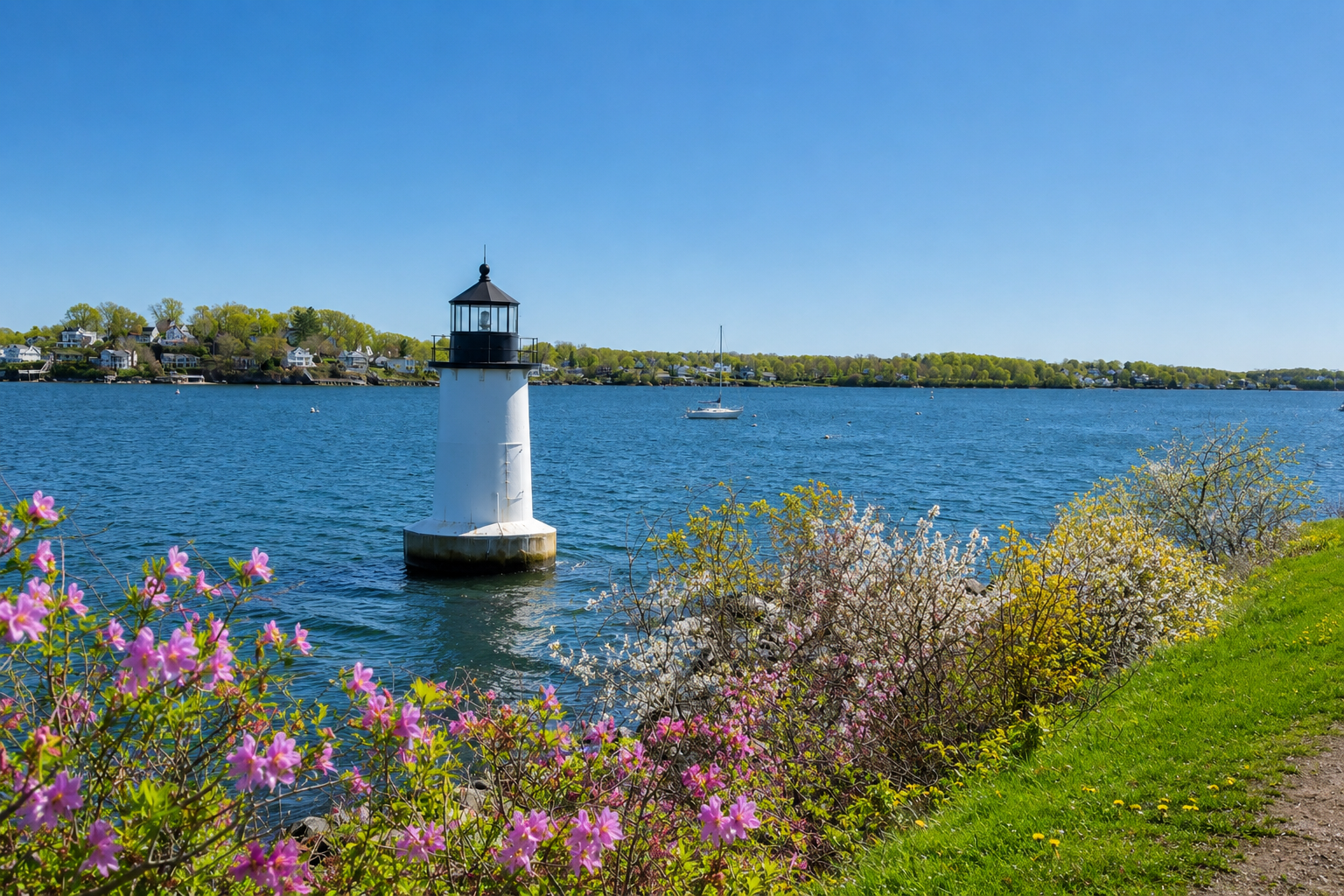
A coastal park offering camping, boat ramps, a lighthouse, and historic Fort Pickering. Winter Island is publicly accessible and provides some of the best ocean views in Salem, plus waterfront camping and marine facilities. Check the official Winter Island page for current hours and parking rules.
Salem Harbor & Pickering Wharf
Salem Harbor is a working waterfront with public piers, marinas, commercial activity, and the seasonal ferry to Boston. Pickering Wharf Marina provides public boat slips and dock access. The harbor is also home to waterfront restaurants and offers a front-row seat to the maritime heritage that still defines much of the local economy.
Collins Cove Beach
A small, quiet beach area along the Collins Cove waterfront path. It offers a more residential, low-key coastal experience than the busier parks. Access and conditions vary with the tide, so it is best suited for a walk or a moment by the water rather than a full beach day.
Important: Waterfront Access Varies
Salem's waterfront is a mix of public parks, working harbor, and private marina facilities. Not all shoreline areas are publicly accessible, and parking restrictions, seasonal rules, and resident sticker requirements apply at various locations. Always verify current access rules with the City of Salem official website before visiting any waterfront area.
Things to Do in Salem
Salem offers enough activities to keep residents and visitors engaged year-round. The mix of waterfront recreation, world-class museums, historic sites, and community events means there is always something happening — and October is just the beginning.
Museums & Historic Sites
Visit the Peabody Essex Museum, explore the Salem Maritime National Historic Site, tour the House of the Seven Gables, or see the Witch House and Charter Street Cemetery.
Waterfront & Harbor
Walk the Pickering Wharf marina, stroll Salem Willows promenade, take the seasonal ferry to Boston, or explore Winter Island and Fort Pickering.
Dining & Nightlife
Eat on Pickering Wharf, grab coffee on the Essex Street mall, or enjoy the restaurant and bar scene that rivals cities much larger than Salem.
Arts & Culture
Attend PEM community programming, visit the Salem Arts Association, or enjoy live performances and cultural events throughout the year.
Outdoor Recreation
Walk the Collins Cove path, explore Forest River Park, or enjoy the Salem Common — a historic 8-acre park in the center of the city.
Seasonal Events
Experience Haunted Happenings in October, the Salem Farmers' Market in summer, the Salem Maritime Festival, and First Friday downtown events.
Arts, Music & Culture
Salem has a cultural identity that goes far beyond its witch trial history. The city is home to one of the oldest continuously operating museums in the United States, a national historic site, a university with active arts programming, and a downtown that functions as a year-round cultural district.
Peabody Essex Museum (PEM)
One of the oldest and most respected art museums in the country, PEM houses extraordinary collections of American, Asian, maritime, and Native American art. Its modern expansion and rotating exhibitions make it a major cultural destination that draws visitors from across New England and anchors downtown Salem.
Salem Maritime National Historic Site
America's first national historic site, preserving Salem's maritime heritage through historic buildings, wharves, and the Friendship of Salem, a replica tall ship. The site connects downtown to the waterfront and tells the story of Salem's role in global trade.
The House of the Seven Gables
The historic seaside mansion that inspired Nathaniel Hawthorne's novel, now a museum and historic site with colonial architecture, seaside gardens, and a connection to literary history that draws visitors year-round.
Salem State University
A public university with its main campus in South Salem, bringing thousands of students, faculty, cultural programming, and energy to the city. The university's presence influences housing demand, the rental market, and the vibrancy of the southern neighborhoods.
Salem Restaurants & Coffee
Salem has one of the most diverse and active dining scenes on the North Shore, concentrated downtown and along the Pickering Wharf waterfront. Restaurants change frequently, so always verify that an establishment is currently operating before visiting.
Restaurants
- Finz Seafood & Grill
Upscale waterfront dining on Pickering Wharf.
- Ledger Restaurant & Bar
Elevated wood-fired cuisine in an 1818 bank building.
- Turner's Seafood
Classic New England seafood in a historic downtown setting.
- Sea Level Oyster Bar
Waterfront oyster bar and raw bar on Pickering Wharf.
- Opus Underground
Subterranean pub and dining in the heart of downtown.
Coffee & Bakeries
- Jaho Coffee Roaster & Wine Bar
A local favorite for coffee, tea, and evening drinks on the Essex Street mall.
- Front Street Coffeehouse
Cozy, relaxed atmosphere in the heart of downtown.
- A&J King Artisan Bakers
Renowned artisan breads and pastries.
- Coven Bakery
Themed bakery and coffee shop downtown.
Parks, Trails & Outdoor Life
Despite its urban density, Salem offers a surprising amount of green and waterfront space. From the historic Salem Common at the city's center to oceanfront parks and waterfront paths, outdoor recreation is woven into daily life.
Salem Common
A historic 8-acre park in the center of the city, perfect for walks, community events, and outdoor gatherings.
Winter Island Park
Coastal park with camping, boat ramps, a lighthouse, and historic Fort Pickering.
Salem Willows Park
35-acre oceanfront park with a promenade, arcade, and harbor views.
Forest River Park
Waterfront park in South Salem with a beach area, playground, and walking paths along the river.
Collins Cove Path
Scenic waterfront walking path along Collins Cove with harbor views.
Salem Harbor Walk
Waterfront walkway connecting downtown, Pickering Wharf, and the Maritime Historic Site along the working harbor.
Getting Around Salem
Salem's downtown core is one of the most walkable areas on the North Shore. The Essex Street Pedestrian Mall, Pickering Wharf, the MBTA station, museums, and dozens of restaurants are all within a few blocks of each other. Outside the downtown core, most neighborhoods are more car-dependent, though the city's density means distances are generally short.
Route 1A (Boston Street / Essex Street) is the main north-south artery through the city and can be slow during commuter hours and especially in October. Route 114 connects Salem to Marblehead and points east, while Route 107 runs south toward Lynn and Swampscott.
Parking in the downtown core is tight, particularly during October and summer weekends. Many downtown residents rely on city-issued resident parking stickers. The MBTA Commuter Rail and the seasonal Salem Ferry are the primary transit options for Boston commuters.
Commuting from Salem to Boston
Salem has some of the best commuter access on the North Shore. The city is served by the Salem MBTA Commuter Rail station on the Newburyport/Rockport Line, providing direct service to Boston's North Station in approximately 30 minutes. The station's location right in downtown makes it one of the most walkable transit connections on the North Shore.
In addition to the train, the seasonal Salem Ferry provides a scenic high-speed catamaran service directly to Boston's Long Wharf. For many residents, the combination of train and ferry gives Salem a commuter advantage that few North Shore communities can match.
Do not rely on hardcoded schedules, as MBTA service changes periodically. Always check the official MBTA Newburyport Line timetable for current schedules and service alerts.
MBTA Commuter Rail
Salem station on the Newburyport/Rockport Line. Direct service to North Station in about 30 minutes. Located downtown, highly walkable.
Salem Ferry
Seasonal high-speed catamaran service connecting Salem directly to Boston's Long Wharf. A scenic alternative to the train.
Driving to Boston
Approximately 16 miles via I-95 and Route 1. Typical drive time is 35 to 50 minutes depending on traffic.
Salem's History
Salem was settled in 1626 and incorporated in 1629, making it one of the oldest English settlements in North America. Its name comes from the Hebrew word for peace, though its history has been anything but peaceful.
The Salem Witch Trials of 1692 are the most famous chapter in the city's history. Twenty-five people were executed during a period of mass hysteria that lasted only months but left an indelible mark on American history and culture. Read our in-depth guide to the Salem Witch Trials to understand how 1692 still shapes the North Shore today.
Long before and after the witch trials, Salem was a major maritime trading port. In the late 18th and early 19th centuries, Salem's ships traded with China, India, and the East Indies, bringing back goods and art that would form the foundation of the Peabody Essex Museum's extraordinary collections. The city's wealth from this era is visible in the Federal-style architecture of the McIntire Historic District, much of it designed by the celebrated architect and woodcarver Samuel McIntire.
In the 19th and 20th centuries, Salem transitioned from a maritime port to an industrial city, with leather, textile, and manufacturing industries driving growth. Salem State University, founded in 1854 as a normal school, became a major educational institution. Today, Salem's history is preserved and interpreted by institutions including the Peabody Essex Museum and the Salem Maritime National Historic Site.
Homes & Architecture in Salem
Salem is not one homogeneous housing market. The city developed over nearly four centuries, and the architectural styles range from 17th-century timber frames to modern waterfront condos. Different neighborhoods have very different housing stock, property considerations, and price points.
Historic Federal-Style Homes
Found in the McIntire Historic District and surrounding streets. These homes offer extraordinary character and architectural significance but may involve historic district commission oversight for exterior changes.
Downtown Condos & Lofts
Concentrated near Essex Street, the Rantoul corridor, and Pickering Wharf. Includes converted historic buildings and new construction. Popular with professionals and empty nesters seeking walkable, low-maintenance living.
Multifamily Properties
Two- and three-family homes are common, particularly in The Point and near Salem State University. These can be attractive for house hacking, rental income, or owner-occupant investment.
Mid-Century Suburban Homes
Found in North Salem and parts of South Salem. Ranches, split-levels, and colonials on smaller lots, typically built in the mid-20th century. More affordable than downtown and historic areas.
Waterfront Condos & Townhomes
At Pickering Wharf and along Derby Street. Modern and renovated units with harbor views and marina access, representing some of the highest price points per square foot in the city.
Coastal & Willows Cottages
Near Salem Willows and Collins Cove. A mix of seasonal cottages, year-round homes, and newer construction with coastal proximity and water views.
Salem Real Estate Market Summary
Comprehensive market data provided by the Massachusetts Association of REALTORS®. Here is how the Salem single-family and condominium housing market performed in July 2026.
Single-Family Homes
26
Homes For Sale
$722.5K
YTD Median Price
2.2 Mo
Months Supply
102.8%
List Price Received
July median surged to $779K (+18.5% vs. last year) — Salem single-family homes are selling in a median of 28 days with sellers receiving 102.8% of list price and 14 pending sales heading into next month.
Condominium Properties
58
Condos For Sale
$525K
YTD Median Price
2.5 Mo
Months Supply
153
YTD Closed Sales
153 condo sales YTD (+6.3%, $525K median) — Salem's condo market is active with 58 units available and 35 pending sales, offering buyers more options near downtown, Pickering Wharf, and the commuter rail than most North Shore towns.
Kathleen's Salem Market Perspective
For Buyers: What I'm seeing in Salem is a city where the neighborhood you choose matters enormously. A condo near Pickering Wharf or the commuter rail station is a completely different purchase from a single-family home in North Salem or a historic property in the McIntire District. With only 2.2 months of single-family supply and July median prices jumping to $779K, buyers in the single-family segment need to be ready to move. The condo side is a bit more forgiving — 58 active units and 2.5 months of supply give you more to compare.
For Sellers: This is where I think Salem sellers have real leverage right now. Single-family homes are selling in a median of 28 days and receiving 102.8% of list price, which tells me well-positioned homes are still generating competition. But I'd caution against assuming any price works — Salem is a diverse market, and a multifamily near Salem State University attracts different buyers than a waterfront loft at Pickering Wharf or a Federal-style home in the McIntire District. Pricing has to reflect which Salem market your property is actually competing in.
What I Watch: I pay much more attention to what is happening around a particular property than I do to a citywide median. A home near downtown and the MBTA station is competing in a very different market from a property in South Salem near the university or a coastal home at Collins Cove. That's why I don't believe there is one "Salem market." There are several Salem markets, and knowing which one your home is actually competing in is what matters.
* Does not account for seller concessions. Activity for one month can sometimes look extreme due to small sample size. Data provided by the Massachusetts Association of REALTORS®.
Buying a Home in Salem
Buying in Salem is not like buying in a single-neighborhood town. The city's different areas have very different housing stock, price points, and lifestyle trade-offs. A condo near Pickering Wharf offers a completely different experience from a multifamily in The Point or a mid-century ranch in North Salem.
Key considerations for Salem buyers include neighborhood differences, proximity to the commuter rail and ferry, the condition of older housing stock, October traffic and parking if buying near downtown, and the level of competition in specific price ranges. Downtown and transit-adjacent properties tend to attract the most competition, while the outer neighborhoods may offer more inventory and negotiating room.
If you are considering a waterfront or coastal property, it is essential to understand flood zone requirements, harbor regulations, and the difference between public and private waterfront access before making an offer. Read our guide to flood zones for North Shore buyers for more detail.
Selling a Home in Salem
Salem homes cannot all be priced or marketed identically. A downtown condo near the commuter rail appeals to a different buyer than a multifamily near Salem State University or a Federal-style home in the McIntire District. Understanding those differences is what makes the difference between a listing that sells quickly and one that sits.
Factors that influence how a Salem home should be positioned include the neighborhood, property condition, architectural style, lot size, waterfront proximity, commuter access, property type, and current competition. A condo at Pickering Wharf should be marketed to waterfront and lifestyle buyers. A multifamily in The Point should be positioned for investors and owner-occupants.
I help Salem homeowners understand their options, including traditional sale, downsizing, selling and buying simultaneously, cash offer programs, and senior transition support. Different situations call for different approaches, and the first step is always understanding what your specific property and timeline call for.
Kathleen's Salem Perspective
After decades helping North Shore buyers and sellers, here's what I know about living in Salem.

"Salem is a city where the neighborhood you choose changes everything about the experience. A waterfront condo at Pickering Wharf, a Federal-style home in the McIntire District, and a multifamily near Salem State are three completely different markets. October is real — it shapes traffic, parking, and daily life downtown — but the rest of the year Salem is one of the most vibrant, walkable, culturally rich cities on the North Shore. I've been helping buyers and sellers navigate those differences since 2003."
Kathleen Militello
Realtor, eXp Realty · Licensed Since 2003
AI Certified Agent™ · Negotiation Specialist
22+
Years on the North Shore
~30 min
Commuter Rail to Boston
$450K–$2M+
Price Range Across Neighborhoods
Local Insights About Salem
Articles and guides I have written specifically about Salem and its history.
Salem Questions People Actually Ask
Clear answers to the most common questions about living in Salem, Massachusetts.
Official Salem Resources
Authoritative first-party sources for Salem information. These links go directly to official websites.
Explore Other North Shore Communities
Thinking About Salem?
Whether you are buying, selling, or just exploring your options, I am happy to share local insight and a clear view of the Salem market.