
Home Inspections on Older North Shore Homes: What to Expect

Touring an 18th-century Colonial in Ipswich, a Victorian home in Beverly, or a McIntire Federal house in Salem showcases extraordinary New England craftsmanship. Hand-hewn post and beam frames, wide pine floorboards, and period masonry give historic North Shore homes unmatched character.
When buying an older or antique property, the home inspection process requires a different mindset than inspecting modern construction built after 1990. Older homes have evolved through centuries of New England weather, changing building codes, and previous owner renovations.
Having guided buyers and sellers across Essex County since 2003, I help clients distinguish between normal, age-appropriate character and major structural, electrical, or environmental hazards.
The Short Version
Older North Shore homes need a specialized inspection beyond a standard checklist. Key systems to evaluate include knob and tube wiring, cast iron plumbing, stone foundations, lead paint, asbestos, and structural beams. Many insurance companies require updates before issuing a policy.
Budget $500 to $1,200 for a thorough inspection of an older home, plus additional testing for radon, lead, and asbestos. The goal is not to find reasons to walk away — it is to understand what you are buying and what it will cost to maintain.
Key Systems to Evaluate During an Inspection
- Electrical Panels & Knob and Tube Wiring: Older homes often contain updated circuit breaker panels alongside legacy knob and tube wiring in unrenovated attics or walls. Many insurance companies require active knob and tube wiring to be updated before writing a policy.
- Plumbing Systems & Cast Iron Drains: Original lead supply lines or aging cast iron waste pipes require careful evaluation. A video sewer scope inspection is strongly recommended for homes built before 1970.
- Stone Foundations & Timber Framing: Fieldstone or brick foundations in historic homes are designed to breathe. Minor moisture seepage is common, but active bowing, mortar breakdown, or rot in main sill plates requires structural evaluation.
- Heating Systems & Oil Tanks: Steam radiators and cast-iron boilers provide comfortable heat but require age assessment. Underground or aging oil tanks must be evaluated for environmental compliance.
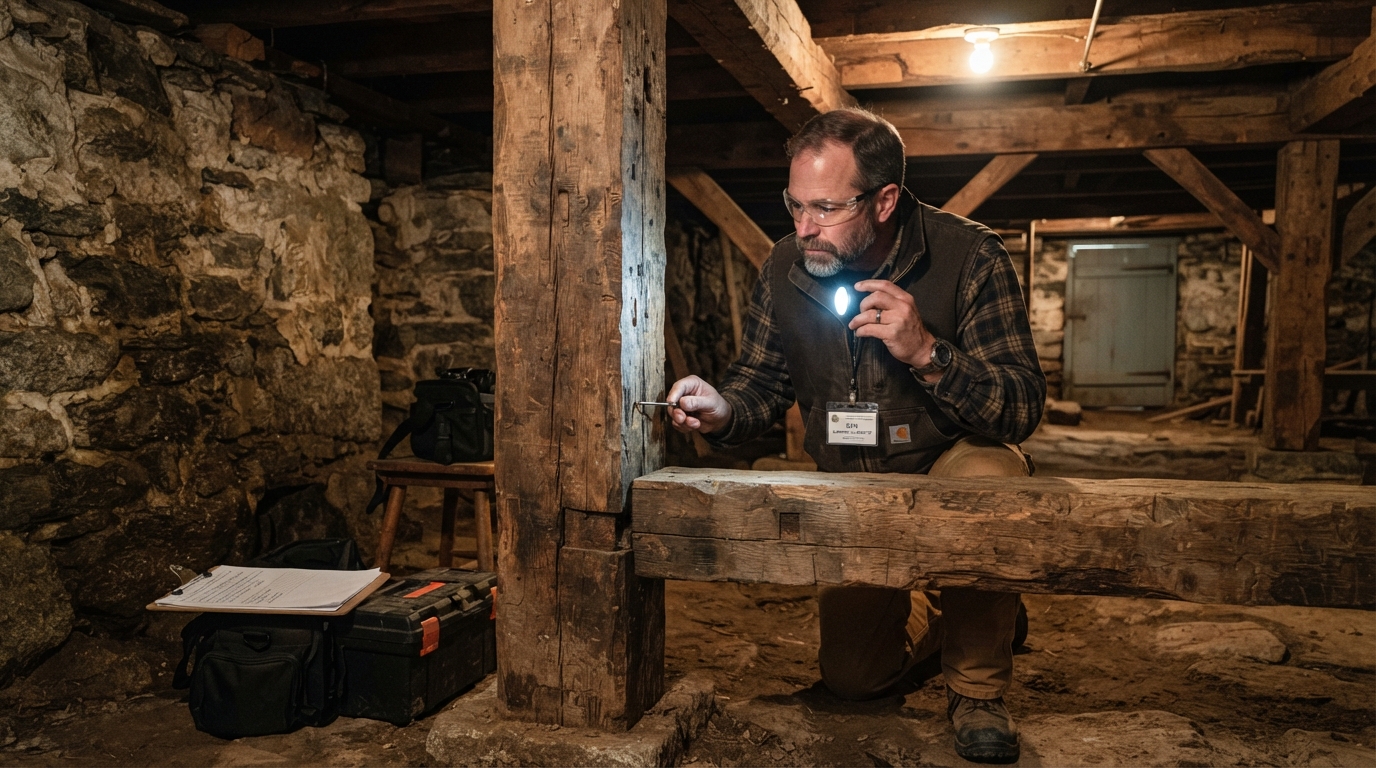
Evaluating exposed post-and-beam timber framing and fieldstone foundations requires specialized historical building knowledge.
Specialized Inspections for Rural and Coastal Properties
If your target property is situated in rural communities like Essex, Rowley, or Boxford, additional environmental inspections apply.
Properties on private waste systems require a Massachusetts Title 5 septic inspection performed by a certified inspector. Read our complete guide on Buying a Home with a Septic System in Massachusetts to understand Title 5 rules and cost responsibilities.
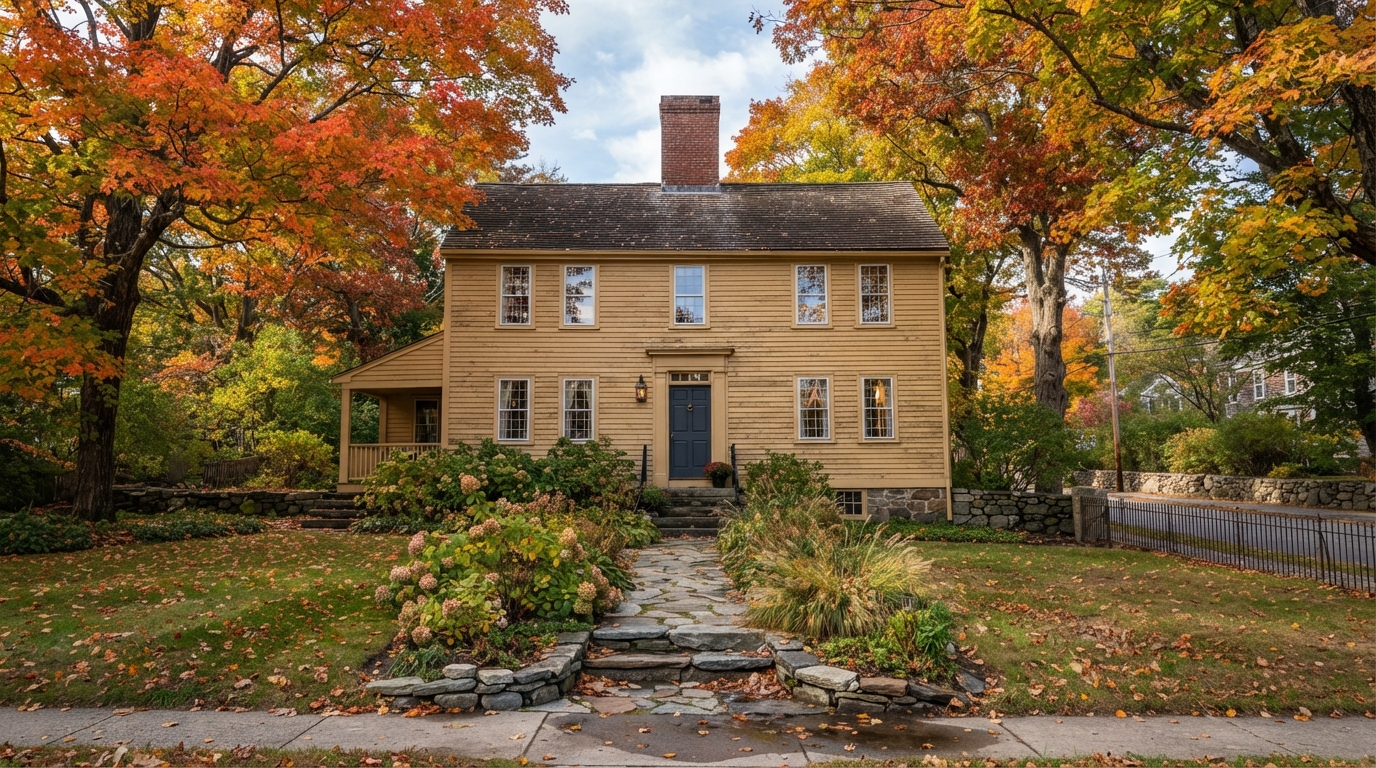
Antique homes in Ipswich, Topsfield, and Essex balance centuries of preserved architecture with modern mechanical updates.
A Realtor's Take
In my 20-plus years guiding buyers through historic home inspections across Ipswich, Salem, Beverly, and Newburyport, I always remind clients that an inspection report on a 150-year-old house will naturally be 50 pages long. Every old home has stories, uneven floors, and historical quirks.
The key to a successful transaction is focusing on safety, structural integrity, and environmental systems rather than minor cosmetic wear. When major issues arise, my role is to help you gather repair estimates, negotiate appropriate seller credits, and proceed with complete clarity. Read our detailed Guide to Restoring Antique Homes on the North Shore for additional preservation insights.
Frequently Asked Questions
Should I be afraid of buying a historic home with knob and tube wiring in Massachusetts?
Knob and tube electrical wiring is common in North Shore homes built before 1940. While it is not inherently dangerous if undisturbed and uninsulated, many insurance carriers require active knob and tube wiring to be decommissioned and updated to modern romex before issuing a homeowner insurance policy.
What is a Title 5 septic inspection and who pays for it?
Title 5 is the Massachusetts environmental standard governing private septic systems. In Massachusetts, the seller is legally responsible for performing and paying for a Title 5 inspection prior to closing. A passing inspection is valid for two years.
What specialized inspections are recommended for antique homes?
Beyond a standard home inspection, antique home buyers on the North Shore should consider a video sewer scope inspection, a specialized chimney timber inspection, radon testing, lead paint testing, and a structural timber inspection for homes built prior to 1850.
How do I negotiate inspection repairs on an older home?
Focus negotiations on major structural, safety, environmental, or health hazards (such as active leaks, failed heating systems, structural sagging, or knob and tube wiring) rather than cosmetic age-related wear.
Final Thoughts
Buying an older home on Boston's North Shore connects you with centuries of regional history and craftsmanship.
Partnering with an experienced agent and knowledgeable home inspector ensures you enjoy the historic charm of your property with confidence.

About the Author
Kathleen Militello is REALTOR® of Coastal Homes & Living and AI Certified Agent™ with eXp Realty. Providing sellers and buyers with clear, calm, and strategic expertise across Beverly, Essex, Gloucester, Ipswich, Lynn, Manchester-by-the-Sea, Newbury, Newburyport, Rockport, Salem, and Salisbury since 2003.
Considering an Older or Historic Home on the North Shore?
Connect with Kathleen Militello for expert guidance on home inspections, historical district regulations, and strategic buyer representation.