
Living in Lynn, MA: The Complete Local Guide
Lynn is a dense, diverse coastal city where the neighborhoods feel dramatically different from one another. From the oceanfront Diamond District to the 2,200-acre Lynn Woods, from downtown lofts to quiet residential streets, this guide explains what it is actually like to live here.
What's Your Lynn Home Worth?
Based on real local sales and current market conditions.
Lynn, Massachusetts
Lynn is a city of approximately 100,000 people on Boston's North Shore, about 10 miles northeast of downtown Boston. It sits on the coastline of Nahant Bay, with Swampscott to the east, Nahant to the southeast, Saugus to the west, and Peabody and Salem to the north. It is one of the largest cities in Essex County and has a density and urban character that distinguishes it from many of its North Shore neighbors.
What makes Lynn unusual is the range of experiences packed within one city. You have miles of public shoreline along Lynn Shore Drive, a 2,200-acre forest reservation with over 30 miles of trails, a downtown with commuter rail access and a growing arts scene, historic neighborhoods with Victorian architecture, and dense residential areas with multifamily housing. Few cities this size offer that combination.
Lynn is often misunderstood because people try to describe the entire city in one sentence. That does not work. The coastline feels different from Lynn Woods. Downtown feels different from Pine Hill. The Diamond District feels different from West Lynn. The purpose of this guide is to help you understand those differences.
What Is It Really Like to Live in Lynn?
The first thing to understand about Lynn is that it is a real city, not a suburb. It has density, urban neighborhoods, bus routes, multifamily housing, and a downtown that is actively redeveloping. That urban character is part of what makes Lynn appealing to commuters and first-time buyers who want proximity to Boston without suburban prices. But it also means that different parts of Lynn feel very different from one another.
The Diamond District, along Lynn Shore Drive, has grand Victorian homes and ocean views. Pine Hill, bordering Lynn Woods, is quiet and leafy with single-family homes on residential streets. Downtown has loft conversions, restaurants, murals, and the commuter rail station. West Lynn and East Lynn are dense residential areas with a mix of multifamily and single-family housing, local businesses, and strong community roots. Wyoma Square is a bustling commercial hub near Flax Pond.
The practical advantage of living in Lynn is access. The commuter rail gets you to North Station in roughly half an hour. Bus routes connect to the Blue Line at Wonderland. Route 1A, Route 129, and Route 1 provide driving access to Boston, Logan Airport, and the wider highway network. And the outdoor resources, from Lynn Woods to the shoreline, are extensive for a city this dense.
The practical consideration is that Lynn is not uniformly polished. It is a city with industrial history, ongoing redevelopment, and neighborhoods at different stages of investment. For some buyers that is part of the appeal. For others it is a reason to be thoughtful about which part of Lynn they choose. Understanding the differences between neighborhoods is essential.
Lynn Neighborhoods & Areas
Lynn is a city of distinct neighborhoods. The City of Lynn identifies multiple recognized areas, including Central, West Lynn, and East Lynn subareas. Understanding these neighborhoods is essential because the experience of living in one can be completely different from another.
Diamond District
A historic coastal neighborhood along Lynn Shore Drive, known for grand Victorian homes and oceanfront properties. It has direct access to the shoreline, Red Rock Park, and the coastal promenade. The architecture is among the most significant in the city, and the setting feels distinctly different from the denser neighborhoods inland.
Downtown Lynn
The urban core centered on Central Square, with historic brick buildings, loft conversions, restaurants, and the MBTA commuter rail station. Downtown has seen significant investment in recent years, including the Beyond Walls mural project, new dining options, and residential conversions. It is the most transit-oriented and walkable part of the city.
Pine Hill / Lynn Woods Area
A quiet residential area bordering Lynn Woods Reservation. Known for single-family homes, leafy streets, and a suburban feel within the city limits. The proximity to 2,200 acres of forest and trails makes this area popular with buyers who want a quieter setting without leaving Lynn.
West Lynn
A diverse, densely populated neighborhood with strong community roots. Housing includes a mix of multifamily homes and single-family properties. West Lynn has access to local businesses, the Saugus River, and its own commercial areas. It is more car-dependent than downtown but offers a more affordable entry point into the Lynn market.
East Lynn
A vibrant residential area stretching from downtown toward the Swampscott line. East Lynn has a mix of classic New England homes, multifamily properties, and local parks. It benefits from proximity to both downtown and the coastal areas of Swampscott and Marblehead.
Wyoma Square
A bustling commercial and residential hub near Flax Pond in North Lynn. Wyoma Square has local shopping, dining, and a strong sense of neighborhood identity. It is a practical area with good access to both Route 1A and the northern parts of the city.
The Highlands
A residential area with a mix of housing types, located in the central part of Lynn. The Highlands has a neighborhood feel with tree-lined streets and access to nearby parks and schools.
Lynn Common Area
The area around Lynn Common, a historic green space in the central city. The neighborhood has a mix of historic and newer housing, with proximity to downtown and the waterfront. The Common itself is a gathering place and part of Lynn's civic history.
Goldfish Pond Area
A residential neighborhood centered around Goldfish Pond, a small scenic pond. The area has a quieter feel with a mix of single-family and multifamily homes, popular with buyers looking for a residential setting close to downtown.
Downtown Lynn
Downtown Lynn centers on Central Square and the surrounding historic blocks. It is the most urban part of the city, with brick buildings, the MBTA commuter rail station, and a growing mix of restaurants, cafes, and local businesses. In recent years, downtown has seen significant investment, including loft conversions that have turned upper-floor commercial space into residential units.
The Beyond Walls mural project has transformed dozens of downtown facades into large-scale public art, making the area visually distinct from any other North Shore downtown. The Lynn Auditorium, a restored 2,000-seat venue, hosts national touring acts, comedians, and concerts.
Downtown living is different from living in Lynn's residential neighborhoods. You have walkable access to transit, restaurants, and cultural venues, but you also have the density and activity of an urban center. For buyers who want a transit-oriented lifestyle without Boston prices, downtown Lynn offers one of the most direct commuter rail connections on the North Shore.
Lynn Woods Reservation
Lynn Woods Reservation is one of the largest municipal parks in the United States. Founded in 1881, it encompasses approximately 2,200 acres and contains more than 30 miles of trails. Having a forest of this scale inside a dense coastal city is one of Lynn's most distinctive characteristics. It is not a small park. It is a wilderness area with reservoirs, rocky peaks, and enough trail mileage that you can hike for hours without covering the same ground twice.
The reservation is used for hiking, running, mountain biking, horseback riding, and cross-country skiing in winter. Key landmarks include the Stone Tower, which offers panoramic views of the city and ocean, and Dungeon Rock, a tunnel carved into a boulder that is part of local folklore. The main entrances include Pennybrook Road and Great Woods Road.
For residents of Pine Hill and the surrounding neighborhoods, Lynn Woods is essentially a backyard trail system. It is one of the reasons that part of Lynn feels more like a suburb than a city, even though it is minutes from downtown. Visit the official Lynn Woods page for current trail maps and seasonal information.
Beaches, Shoreline & Lynn Shore Drive
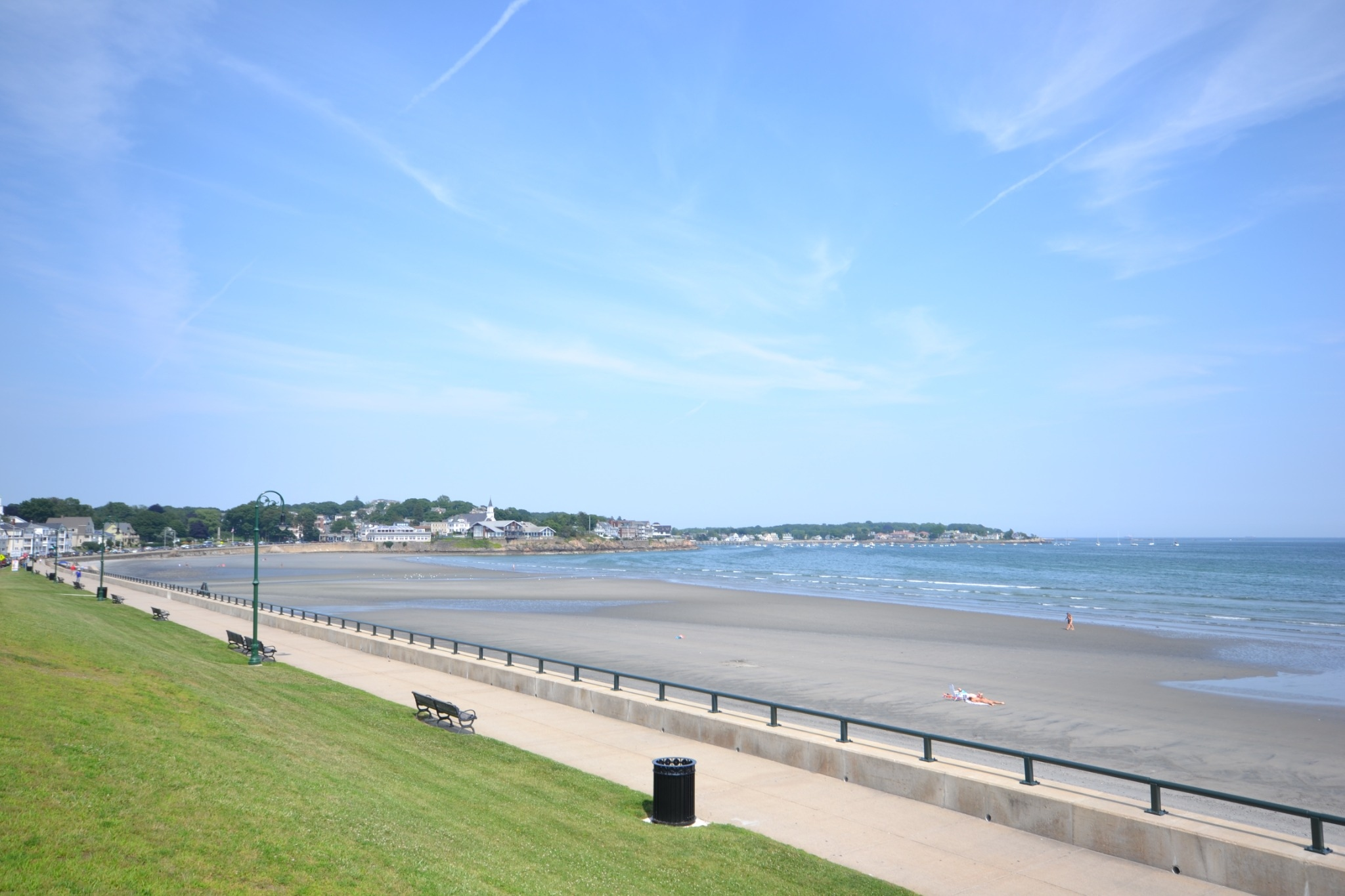
Lynn has miles of public shoreline along Nahant Bay. Lynn Shore Drive is a coastal road and promenade that runs along the ocean, connecting the Diamond District to Red Rock Park and the Nahant town line. It is one of the best places in the city to walk, run, or sit and watch the water.
Lynn Beach
A long, public sandy beach along Lynn Shore Drive. It is accessible from the coastal promenade and is popular for walking, swimming in summer, and shoreline activities. Parking and access rules vary by season.
King's Beach
A beach along the Lynn-Swampscott line on Nahant Bay. It is shared between the two communities and is a popular spot for swimming and walking. The jurisdiction shifts between Lynn and Swampscott, so beach rules and parking can differ depending on which section you access.
Red Rock Park
An oceanfront park along Lynn Shore Drive with rocky outcrops, green space, and views across Nahant Bay. It is popular for picnicking, fishing, and summer concerts. The park is one of the most scenic spots on the Lynn coastline.
Beach parking, sticker requirements, and seasonal rules change frequently. Always verify current access policies through the City of Lynn before planning a visit.
Things to Do in Lynn
Lynn's activities span from wilderness exploration to coastal walks to downtown arts. The range is part of what makes the city interesting.
Lynn Woods Reservation
2,200 acres of forest with over 30 miles of trails for hiking, mountain biking, running, and horseback riding. Stone Tower offers panoramic views. Dungeon Rock is a local landmark.
Lynn Shore Drive
A coastal promenade along Nahant Bay for walking, jogging, and ocean views. Connects to Red Rock Park and the Diamond District.
High Rock Tower
A stone observation tower on a rocky peak in Lynn Woods, offering sweeping views of the city, coastline, and Boston skyline in the distance.
Beyond Walls Murals
A walking tour of downtown Lynn reveals dozens of large-scale murals that have transformed the city's brick facades into public art.
Arts, Music & Culture
Lynn has a strong and growing arts identity. The Beyond Walls mural project has brought dozens of large-scale works by international artists to downtown facades, making the city a destination for public art. The Lynn Museum / LynnArts documents the city's industrial history, including its era as one of the largest shoe manufacturing centers in the world, and hosts contemporary art exhibitions.
The Lynn Auditorium is a restored 2,000-seat venue that hosts national touring acts, comedians, and concerts throughout the year. The downtown area has galleries, cultural organizations, and historic architecture that reflect the city's ongoing investment in the arts.
The combination of public art, historic venues, and a growing community of artists living and working in downtown Lynn has made the city a recognizable cultural presence on the North Shore.
Lynn Restaurants, Coffee & Local Food
Lynn has a diverse food scene that reflects the city's multicultural community. From award-winning downtown restaurants to casual international eateries, the range is broad. Restaurants change frequently, so verify current status before visiting.
Downtown & Date Night
Downtown Lynn has become a dining destination. Nightshade Noodle Bar offers innovative French-Vietnamese tasting menus and has received national recognition. The Blue Ox is a local staple known for its upscale American comfort food. Rossetti Restaurant serves Italian cuisine in an elegant setting.
Coffee & Bakeries
Land of a Thousand Hills Coffee is a spacious, community-focused coffee shop in downtown Lynn. One Mighty Mill mills its own fresh flour for bagels and baked goods. Bent Water Brewing Company is a popular craft brewery with a lively taproom.
International & Casual
Lynn has one of the most diverse food scenes on the North Shore, with authentic Latin American, Caribbean, and Asian options throughout the city. The Capitol Diner, a historic 1928 dining car, is a classic American diner experience.
Restaurant openings and closures happen frequently. Verify current operating status through official websites or listing platforms before visiting.
Getting Around Lynn
Lynn's transportation network is one of its strengths. Route 1A runs through the city, Route 129 connects to the western areas, and Route 1 provides access to the wider highway network and Boston. For a city its size, Lynn has excellent transit options.
Walkability varies significantly by neighborhood. Downtown and the areas around Central Square are walkable, with shops, restaurants, and the commuter rail station within walking distance. More residential areas like Pine Hill and parts of West Lynn and East Lynn are more car-dependent. Lynn is not uniformly walkable, and the experience of getting around depends heavily on which part of the city you are in.
MBTA bus service connects Lynn to surrounding communities and to the Blue Line at Wonderland Station in Revere, providing another transit option for reaching Boston.
Commuting from Lynn to Boston
Lynn has one of the best commuter rail connections on the North Shore. The Lynn MBTA station is on the Newburyport/Rockport Line, providing direct service to Boston's North Station. The ride typically takes roughly 25 to 35 minutes. Because the station is downtown, commute convenience is greatest for residents who live near Central Square.
For residents in other parts of Lynn, the commute involves getting to the station first. Bus routes connect neighborhoods to the station, and driving to the station is an option for those who live farther out. MBTA bus service also connects Lynn to the Blue Line at Wonderland, providing an alternative rapid transit route into Boston.
Driving to Boston via Route 1A or Route 1 typically takes 25 to 40 minutes depending on traffic. Logan Airport is accessible by car in roughly 20 to 30 minutes. Do not rely on hardcoded train times, as schedules change. Always check the official MBTA schedule for current service information.
Lynn vs. Nearby North Shore Communities
Understanding how Lynn compares with its neighbors helps buyers and residents understand what makes Lynn distinct.
| Community | Character | Commuter Rail | Coastline | Housing |
|---|---|---|---|---|
| Lynn | Dense, urban, diverse, redeveloping | Yes (Newburyport/Rockport Line) | Lynn Shore Drive, Nahant Bay | Victorians, multifamily, condos, single-family |
| Swampscott | Residential coastal town | Yes | Multiple beaches | Single-family, condos |
| Nahant | Small peninsula, quiet coastal | No (bus to Lynn) | Beaches on both sides | Single-family, some condos |
| Salem | Historic, walkable, tourist draw | Yes | Harborfront | Historic homes, condos, multifamily |
| Peabody | Suburban, commercial center | No (bus to Salem) | Limited | Single-family, condos |
| Beverly | Coastal city, downtown, beaches | Yes (4 stations) | Multiple beaches | Varied, historic to coastal |
Lynn History
Lynn was settled in 1629, making it one of the oldest settlements in Massachusetts. The city's early economy was based on agriculture and leather tanning, but Lynn became most famous for shoe manufacturing. By the mid-19th century, Lynn was one of the largest shoe-producing cities in the world, and the industry shaped the city's growth, its architecture, and its immigrant communities.
The city's industrial past is still visible in its architecture. The historic factories, the Diamond District's grand homes built by industrialists, and the dense multifamily housing built for factory workers all tell the story of a city that was a major manufacturing center. The Lynn Museum documents this history extensively.
The city's planning documents identify Downtown, the Diamond District, Lynn Common, Pine Hill, Lynn Woods, and Pine Grove Cemetery among recognized historic areas and resources. Lynn Common remains a civic gathering space, and the Diamond District preserves some of the most significant residential architecture on the North Shore.
Homes & Architecture in Lynn
Lynn's housing stock is as varied as its neighborhoods. The Diamond District has grand Victorians and oceanfront homes. Pine Hill has single-family Colonials and Capes on leafy streets. Downtown has loft conversions and condos. West Lynn and East Lynn have a mix of triple-deckers, multifamily properties, and single-family homes. The range is broad, and it is one of the reasons Lynn appeals to so many different types of buyers.
Lynn is not one housing market. A Diamond District Victorian, a downtown loft, a Pine Hill Colonial, and a West Lynn triple-decker are completely different properties with different value drivers, different buyer pools, and different considerations. Understanding which part of the market a property belongs to is essential for both buyers and sellers.
Multifamily properties are a significant part of Lynn's housing stock, and many buyers purchase them as owner-occupied investments. If you are considering a multifamily property, understanding rental demand, property condition, and the differences between neighborhoods is critical.
Buying a Home in Lynn
Buying in Lynn requires understanding which neighborhood fits your priorities. A downtown condo near the commuter rail offers a completely different lifestyle from a single-family home near Lynn Woods or a multifamily in West Lynn. Each area has its own considerations.
Neighborhood differences: The experience of living in the Diamond District, Downtown, Pine Hill, and West Lynn are completely different. Visit the areas you are considering.
Commuter access: Proximity to the Lynn MBTA station or bus routes can materially affect both lifestyle and property value.
Coastal considerations: Properties near the coastline may involve flood zone considerations. Check FEMA flood maps and consult insurance professionals.
Multifamily properties: If you are considering a multifamily or triple-decker, evaluate rental income potential, property condition, and management requirements.
Older housing stock: Many Lynn homes are historic. Inspections are essential, particularly for electrical, plumbing, and structural systems.
Selling a Home in Lynn
Pricing and marketing a Lynn property depends heavily on understanding which micro-market it belongs to. A Diamond District Victorian should not be marketed the same way as a downtown loft or a West Lynn multifamily. Each property type appeals to a different buyer pool, and the strategy needs to reflect that.
Factors that influence positioning include the neighborhood, property type, condition, number of units, proximity to commuter rail, proximity to the coastline, parking, architectural style, lot size, renovations, and competing inventory. A property near Lynn Woods has a different value story than a property near the shoreline or a multifamily near downtown.
That nuance is where local knowledge matters. Understanding the differences within Lynn is what allows a property to be positioned accurately rather than compared generically with every other listing in the city.
Kathleen's Lynn Perspective
Lynn is often misunderstood because people try to describe the entire city in one sentence. That does not work. The coastline feels different from Lynn Woods. Downtown feels different from Pine Hill. The Diamond District feels different from West Lynn. The value of local knowledge is understanding those differences.
When I work with buyers or sellers in Lynn, the first conversation is almost always about which part of the city we are discussing. A property near the commuter rail, a property near the beach, and a property near Lynn Woods are three different conversations. Understanding that is what helps people make good decisions here.

Kathleen Militello
Realtor, eXp Realty | Licensed Since 2003
AI Certified Agent | Certified Negotiation Specialist
Questions People Actually Ask About Lynn
Official Lynn Resources
These authoritative sources provide current information on city services, parks, schools, transportation, and more.
Explore Other North Shore Communities
Have a Question About Lynn?
Lynn is a city where the neighborhood matters more than the zip code. If you are trying to understand a specific area, property, or part of town, ask me. I am always happy to talk about Lynn.