
If you own a home in Massachusetts, there is a powerful legal protection available to you that costs less than $100 to activate — yet most homeowners never use it. The Massachusetts Homestead Act can shield up to $500,000 of your home's equity from most creditors. But here is the catch: the full protection only kicks in if you record a Declaration of Homestead at your county Registry of Deeds. Many North Shore homeowners have no idea this law exists, let alone that they need to file for it.
The Short Version
The Massachusetts Homestead Act protects up to $500,000 of your home's equity from most unsecured creditors (like credit card companies and medical bill collectors). Married couples who both sign can potentially protect up to $1,000,000 in combined equity.
You get only limited automatic protection without filing. To get the full $500,000, you must record a Declaration of Homestead at the Registry of Deeds in the county where your home is located. The filing fee is typically under $100. It does not protect against tax liens, mortgages, child support, or debts incurred before filing.
This article provides general information about the Massachusetts Homestead Act for educational purposes. I am a real estate professional, not an attorney. Always consult a qualified Massachusetts attorney about your specific legal situation before making decisions based on legal protections.
What Is the Homestead Act in Plain English?
The Homestead Act is a Massachusetts law that lets you protect a portion of the equity in your primary residence from being seized by most creditors. Think of it as a legal shield around your home. If someone sues you and wins, or if you rack up medical debt you cannot pay, the Homestead Act prevents most creditors from forcing the sale of your home to collect — up to the protected amount.
Massachusetts actually has two versions of homestead protection:
Automatic Homestead
Provides limited protection without any filing. The amount is much smaller and varies. You get this automatically just by owning your home as your primary residence.
Declared Homestead
Protects up to $500,000 of equity. Requires recording a Declaration of Homestead at the Registry of Deeds. This is the full protection most people want.
The difference between the two is significant. The automatic homestead provides only a fraction of the protection. To get the full $500,000 shield, you must take the extra step of recording the declaration.
How Much Equity Can You Protect?
The Declared Homestead protects up to $500,000 of equity in your primary residence. Equity is the difference between your home's market value and what you owe on your mortgage and any other liens.
$500,000
Maximum equity protection per individual
For example, if your North Shore home is worth $800,000 and you owe $350,000 on your mortgage, your equity is $450,000. With a Declared Homestead, all $450,000 would be protected from most creditors. If your equity exceeds $500,000, the excess amount is not protected.
For married couples: If both spouses sign the Declaration of Homestead, each spouse can claim the $500,000 protection. This means a married couple could potentially protect up to $1,000,000 in combined equity, depending on how title is held and how the declaration is filed. This is one of the most important reasons for couples to file together rather than individually.
How to File a Declaration of Homestead
Filing is straightforward and inexpensive. Here are the basic steps:
- 1
Obtain the form
Download a Declaration of Homestead form from your county Registry of Deeds website or pick one up in person. Many registries provide the form for free.
- 2
Complete the form
Fill in your name, the property address, the book and page number of your deed (from when you bought the home), and your ownership information.
- 3
Sign before a notary
Sign the declaration in front of a notary public. Many banks and attorney's offices offer free notary services.
- 4
Record at the Registry of Deeds
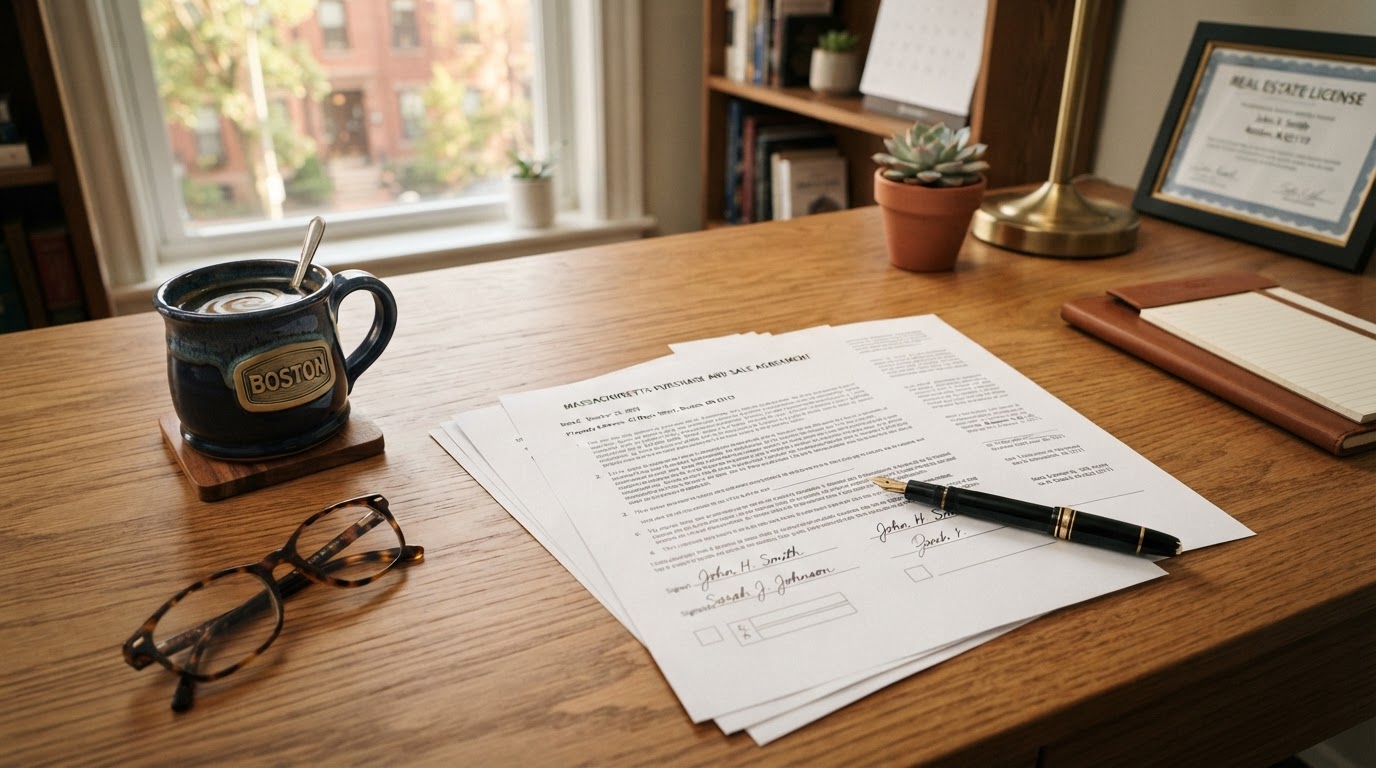
Bring or mail the notarized form to the Registry of Deeds in the county where your home is located. The filing fee is typically under $100.
- 5
Keep your recorded copy
Once recorded, the registry will return a stamped copy. Keep this with your important property documents.
Many closing attorneys on the North Shore will record a Declaration of Homestead as part of your closing when you buy a home. If you are not sure whether one was recorded when you purchased, you can search your property records at the Registry of Deeds website for your county.
What the Homestead Act Does NOT Protect Against
The Homestead Act is powerful, but it is not a blanket shield. It does not protect against every type of debt. Here is what it does not cover:
Not Protected
- • Federal and state tax liens
- • Your mortgage and home equity loans
- • Mechanic's liens (unpaid contractor bills)
- • Court-ordered child support or alimony
- • Debts incurred before the homestead was recorded
- • Liens recorded before the homestead
Protected Against
- • Credit card companies
- • Medical bill collectors
- • Personal loan creditors
- • Most lawsuit judgments
- • Business debts (in many cases)
- • Most unsecured creditors
The key distinction is secured versus unsecured debt. The Homestead Act protects against most unsecured creditors — those who do not have a lien on your property. It does not protect against creditors who already have a legal claim to your home, like your mortgage lender or the IRS.
Who Is Eligible for the Homestead Protection?
To claim the Homestead Act protection in Massachusetts, you must meet these requirements:
- The property must be your primary residence — not a vacation home or investment property
- You must own the home (or hold a beneficial interest in a trust that owns the home)
- You must record the Declaration of Homestead at the county Registry of Deeds
- For the full $500,000 protection, the declaration must be properly recorded
The Homestead Act applies to single-family homes, condominiums, and mobile homes. For a condominium, the homestead protects your individual ownership interest in the unit. For a mobile home, you file with the city or town clerk rather than the Registry of Deeds.
What Happens When You Sell or Refinance?
Selling Your Home
When you sell your home, the homestead protection is automatically released. The proceeds from the sale are not automatically protected — the Homestead Act protects the home itself, not the cash you receive after selling. If you are concerned about protecting sale proceeds, talk to an attorney about other asset protection strategies before the sale closes.
Refinancing Your Mortgage
When you refinance, your new lender may ask you to subordinate the homestead to the new mortgage. This means the mortgage takes priority over the homestead protection. After the refinance is complete, you should confirm whether your existing homestead declaration is still in effect. In some cases, you may need to record a new Declaration of Homestead after refinancing. Your closing attorney or lender can advise you on this.
Special Situations on the North Shore
Older Homes and Historic Properties
Many North Shore homes are older, historic properties that may have significant equity. If you own a First Period home in Ipswich or a historic colonial in Salem, your equity may well exceed $500,000. The Homestead Act protects the first $500,000. For equity above that amount, consider talking to an estate planning attorney about additional asset protection strategies.
Waterfront and Coastal Properties
Waterfront homes in communities like Gloucester, Marblehead, and Manchester-by-the-Sea often have substantial equity. The same $500,000 cap applies regardless of the property's total value. If your waterfront property has $1,000,000 in equity, $500,000 is protected by the homestead and $500,000 is not.
Homes Held in Trust
If your home is held in a trust, you may still be able to claim homestead protection if you have a beneficial interest in the trust. The rules for trust-held properties are more complex, so consult an attorney to ensure the declaration is properly prepared and recorded.
Kathleen's Take
I am always surprised by how many North Shore homeowners have never heard of the Homestead Act, let alone filed for it. For a filing fee under $100, you can protect up to $500,000 of your home's equity from most creditors. If you are buying a home, ask your closing attorney to record a Declaration of Homestead as part of your closing. If you already own and are not sure whether you have a homestead on file, you can search your property records at the Essex County Registry of Deeds or the Southern Essex District Registry of Deeds. It is one of the simplest, most cost-effective forms of asset protection available to Massachusetts homeowners.
Quick Checklist: Homestead Act Filing
- Confirm the property is your primary residence
- Download the Declaration of Homestead form from your county Registry of Deeds
- Complete the form with your property details and deed reference
- If married, have both spouses sign for maximum protection
- Sign before a notary public
- Record at the Registry of Deeds (filing fee typically under $100)
- Keep the recorded copy with your property documents
- If you refinance later, confirm whether you need to refile
Frequently Asked Questions
Related Reading
Have Questions About Protecting Your Home?
Understanding your legal protections is part of smart homeownership. If you are buying or selling on the North Shore, I can help you navigate the process.
Connect With Kathleen