
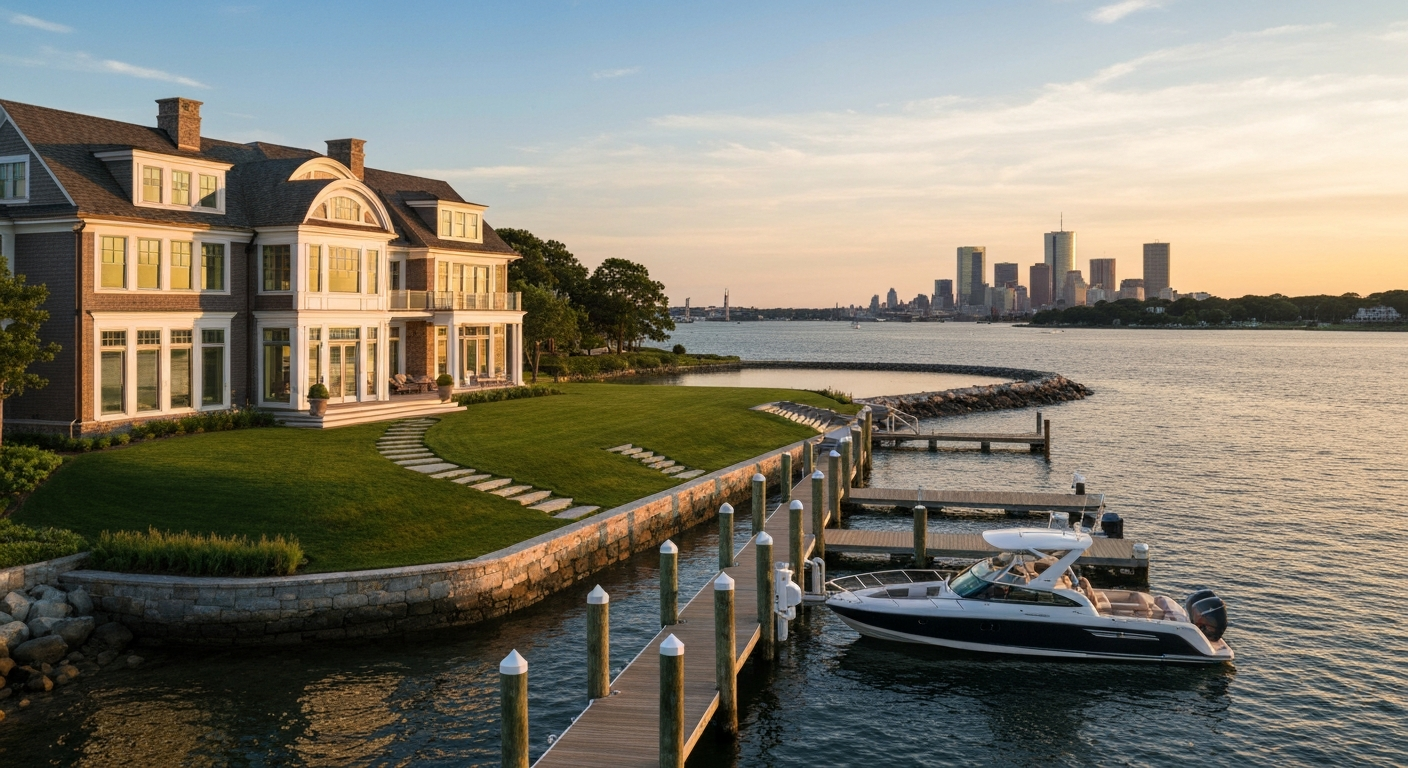
The Ultimate Guide to Buying Waterfront Property on Boston's North Shore
Owning a home on the water is the ultimate North Shore dream. But buying coastal real estate requires a completely different level of due diligence than purchasing an inland home. From navigating complex tidal rights to evaluating the structural integrity of a seawall, here is what you need to know before you make an offer.
The True Value of "Direct Water Access"
On the North Shore, not all waterfront is created equal. A home in Manchester-by-the-Sea perched on a high granite bluff offers sweeping, unobstructed views of the Atlantic but may not provide a safe place to launch a kayak. Conversely, a property along the Essex River might offer a private deep-water dock, but the view changes dramatically with the extreme tidal swings of the Great Marsh.
Before you begin your search, you must define exactly what you want from the water. Are you an avid boater who needs a deep-water mooring? Are you looking for a sandy beach where your grandchildren can swim? Or do you simply want to drink your morning coffee while watching the sun rise over the ocean? Your specific lifestyle requirements will dictate which towns and which specific shorelines you should target.
Kathleen's Local Insight
"Many buyers assume that if a property is on the water, they can automatically build a dock. In Massachusetts, adding a new dock is an incredibly complex, multi-year permitting process with the state, the local conservation commission, and sometimes the Army Corps of Engineers. If a dock is essential to your lifestyle, you should prioritize homes that already have a licensed, existing dock structure in place."
Evaluating the Coastal Infrastructure
When you buy a waterfront home, you are also buying the infrastructure that protects it from the sea. This infrastructure requires specialized inspection.
Seawalls and Bulkheads
A seawall is the primary defense against coastal erosion and storm surge. During your due diligence period, you must determine who owns the seawall and who is responsible for its maintenance. Is it a private wall owned solely by the property? Is it a shared wall with neighbors? Or is it a municipal structure?
Repairing or replacing a failing seawall can easily cost hundreds of thousands of dollars. You should always hire a specialized coastal engineer—not just a standard home inspector—to evaluate the integrity of the stone, the footing, and the drainage behind the wall (weep holes).
Docks, Piers, and Moorings
If the property includes a dock, you must verify its legal status. In Massachusetts, structures built over tidelands require a Chapter 91 License. If the previous owner built or expanded the dock without this license, you could be forced to remove it. Furthermore, mooring rights do not automatically transfer with the sale of a property in most North Shore towns; they are managed by the local harbormaster, and there is often a waitlist.

Understanding Flood Zones and Insurance
You cannot discuss waterfront real estate without discussing FEMA flood maps. Properties directly on the ocean are often located in Zone VE (high risk for flooding and wave action), while homes on tidal rivers or marshes may be in Zone AE.
If you are securing a mortgage, your lender will require flood insurance. The cost of this insurance is determined heavily by the home's elevation relative to the Base Flood Elevation (BFE). A home built on high granite in Gloucester might be right on the water but sit completely out of the flood zone, while a low-lying cottage in Salisbury might face significant annual premiums.
Always ask the seller for a current Elevation Certificate. This document is the only way to accurately quote flood insurance premiums and understand the true carrying costs of the property.
The Emotional and Financial ROI
Waterfront properties on the North Shore are legacy assets. They are finite, highly coveted, and historically resilient to market fluctuations. However, they also require a higher budget for ongoing maintenance. Salt spray is harsh on exterior paint, windows, and HVAC systems.
The trade-off is a lifestyle that simply cannot be replicated. It is the ability to launch your paddleboard from your backyard at sunrise, the sound of the waves lulling you to sleep, and the profound peace of watching the tide shape the landscape twice a day.
Next Steps for Waterfront Buyers
Navigating the complexities of coastal real estate requires a guide who understands the local terrain. From verifying Chapter 91 licenses to connecting you with the right marine contractors and coastal engineers, my role as an AI Certified Agent™ and local expert is to ensure your waterfront purchase is a secure and joyful investment.
Ready to Explore Waterfront Homes?
Let's sit down and discuss your specific lifestyle goals, preferred communities, and what to look for in the current North Shore coastal market.
Related Reading
Understanding Beach Rights
A buyer's guide to deeded access and private beaches on the North Shore.
Chapter 91 Coastal Regulations
The coastal regulation every waterfront buyer must know.
Flood Zones Buyer's Guide
What every buyer should know about FEMA flood zones before purchasing.
Boating Estates & Deep-Water Docks
Guide to buying luxury coastal estates with private deep-water docks.