
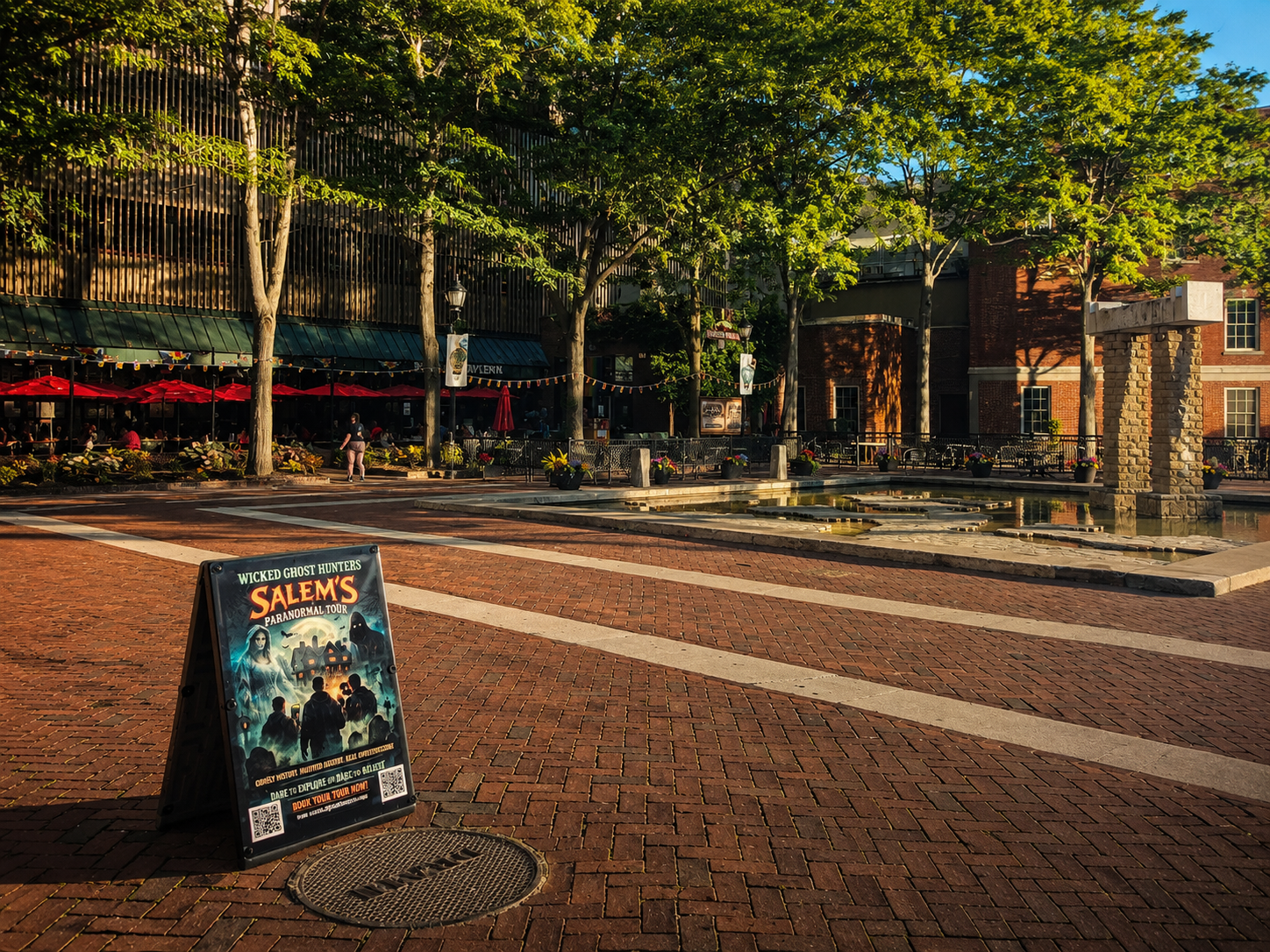
Salem is the city that most people think they know. They know the witch trials, the Halloween crowds, the postcard image of a New England town leaning hard into its spooky reputation. But the people who actually live here know a different Salem entirely.
The real Salem is a fast-commuting, genuinely walkable, waterfront city with one of the best restaurant scenes on the North Shore. It is home to Salem State University, the Peabody Essex Museum, and a working harbor that still sends boats out into the Atlantic. It has the shortest MBTA ride to Boston of any community in this guide, and its downtown has more energy on a Tuesday night in February than most towns manage in July.
I have been selling real estate on the North Shore since 2003, and Salem has been one of my most consistent markets the entire time. Buyers come for the commute and stay for the lifestyle. The city offers a rare combination: urban density and walkability without the price tag of Boston or Cambridge, plus a coastal setting that most inland suburbs cannot match.
If you are trying to figure out whether Salem is the right fit for your next move, this guide will walk you through what it is actually like to live here. Not the tourist version. The resident version.
Where Salem Is Located
Salem sits approximately 16 miles northeast of Boston, making it the closest North Shore city to the capital. It is bordered by Beverly to the east, Peabody to the west, and Marblehead to the south. The Atlantic Ocean touches its southeastern edge along the Salem Sound.
Geographically, Salem sits at the intersection of two major North Shore corridors. Route 1A runs through the city, connecting it to points north along the coast, while Route 114 provides direct access to Lynn and Interstate 95. This positioning gives residents multiple routes in and out of the city, which matters when you are commuting daily.
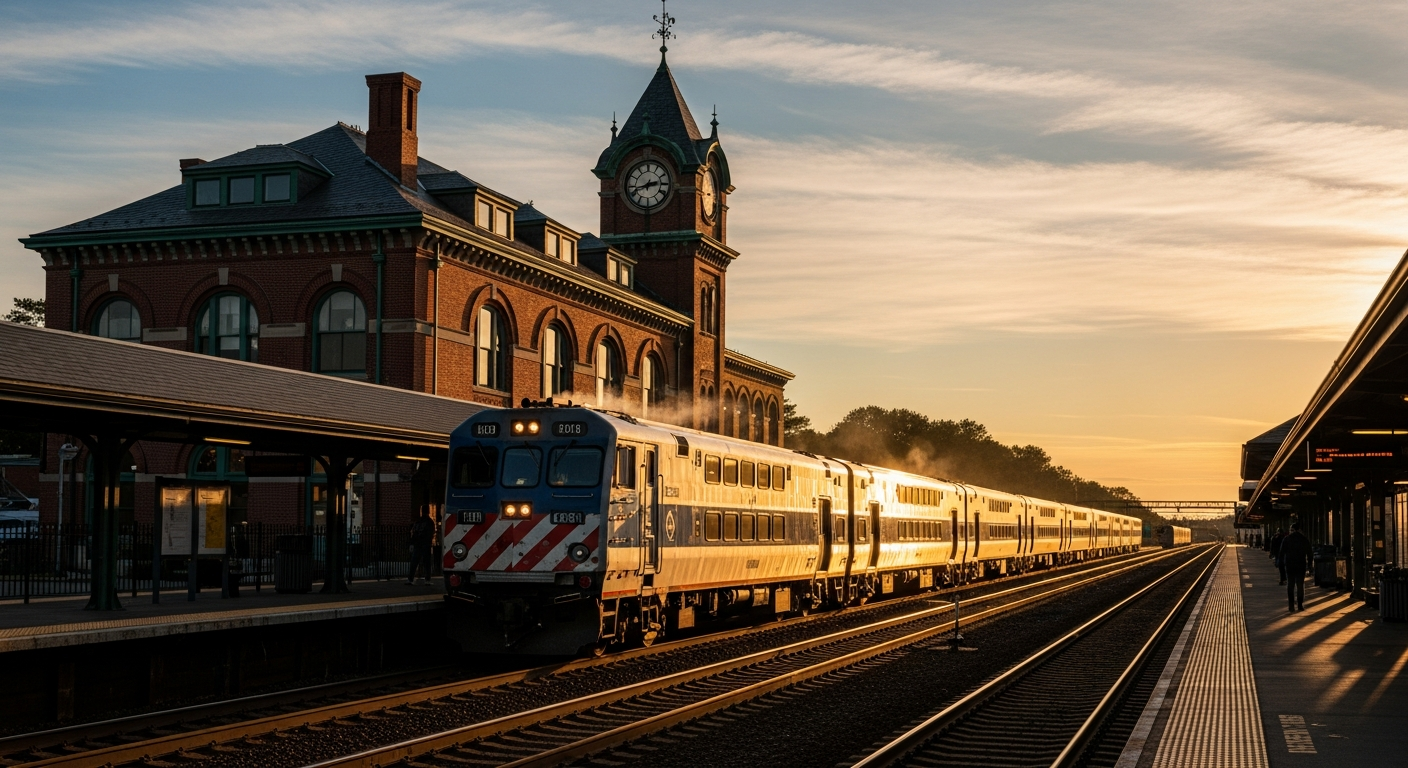
The MBTA Commuter Rail station is located right downtown, which is one of Salem's biggest advantages. You can walk from your front door to the train platform in many neighborhoods, and the ride to North Station takes just 28 to 35 minutes. That is faster than some neighborhoods inside Boston itself.
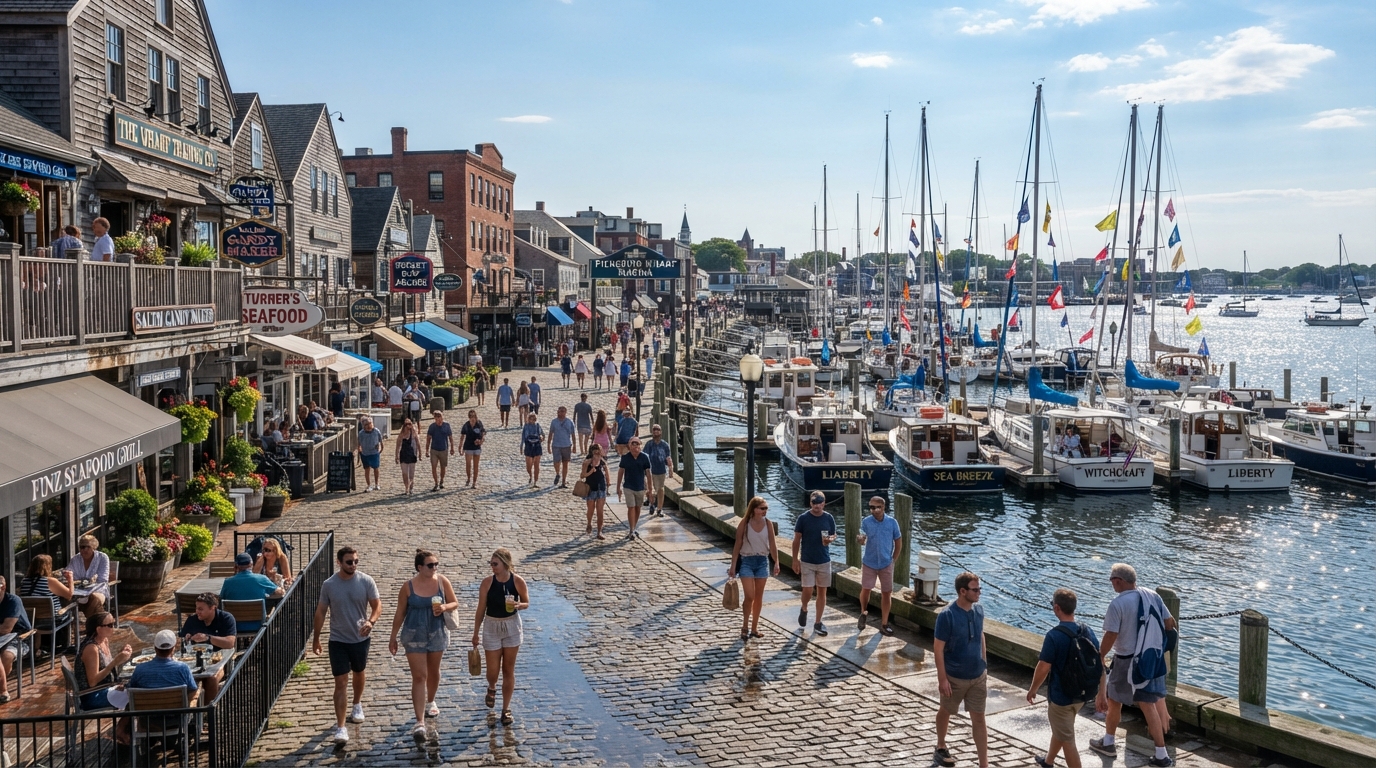
Pickering Wharf is Salem's waterfront gathering place, with shops, restaurants, and marina access steps from downtown. | Neighborhood Guides
The Downtown Core: Essex Street, Derby Street, and Pickering Wharf
Salem's downtown is its heartbeat, and it is one of the few downtowns on the North Shore that genuinely functions as a complete neighborhood. You can live, work, eat, shop, and catch a train without ever starting a car.
Essex Street is the main pedestrian artery. The central section is a brick-pedestrian mall closed to traffic, lined with restaurants, bars, and shops. This is where you find the year-round energy that defines the city. On a Wednesday evening in January, you will still see people out walking, grabbing dinner, or heading to an event at the Peabody Essex Museum.
Derby Street runs along the waterfront and connects the downtown to the Salem Maritime National Historic Site. This is where the city's maritime heritage is most visible. The Customs House, the Friendship of Salem replica tall ship, and the historic wharves all sit along this corridor. For buyers looking at waterfront property, Derby Street and its side streets offer some of the closest proximity to the harbor you will find anywhere on the North Shore.
Pickering Wharf is the marina village at the end of Derby Street. It blends cobblestone walkways, boutique retail, and waterfront dining into a compact, walkable district. The marina itself is active, with pleasure boats and the occasional charter heading out into Salem Sound. For residents, it functions as an extension of downtown. You can walk from the commuter rail station to Pickering Wharf in about 10 minutes.
If you are buying your next home and walkability is a priority, the downtown core is where Salem separates itself from most North Shore competitors. Few communities offer this level of density and convenience.
The McIntire Historic District: Salem's Grand Residential Streets
Just north of the downtown core sits the McIntire Historic District, named after Samuel McIntire, the architect and woodcarver who shaped much of Salem's finest residential architecture in the late 1700s and early 1800s. This is where you find the city's most spectacular Federal-style and Greek Revival homes.
Walking through the McIntire District feels like stepping back two centuries. The streets are wide and tree-lined, the homes are set back from the road with mature gardens, and the architectural detail on the doorways, windows, and cornices is extraordinary. Hamilton Street, Chestnut Street, and Federal Street form the backbone of this neighborhood.
These homes rarely come to market, and when they do, they command premium prices. But the district is not just for mansion buyers. The surrounding streets offer more modest historic homes, including early 20th-century colonials and converted multifamily properties that give buyers a foothold in one of the most architecturally significant neighborhoods on the North Shore.
If you love historic homes, the McIntire District is worth exploring even if you are not in the market for a grand estate. The neighborhood sets a tone of pride and preservation that influences the entire city.
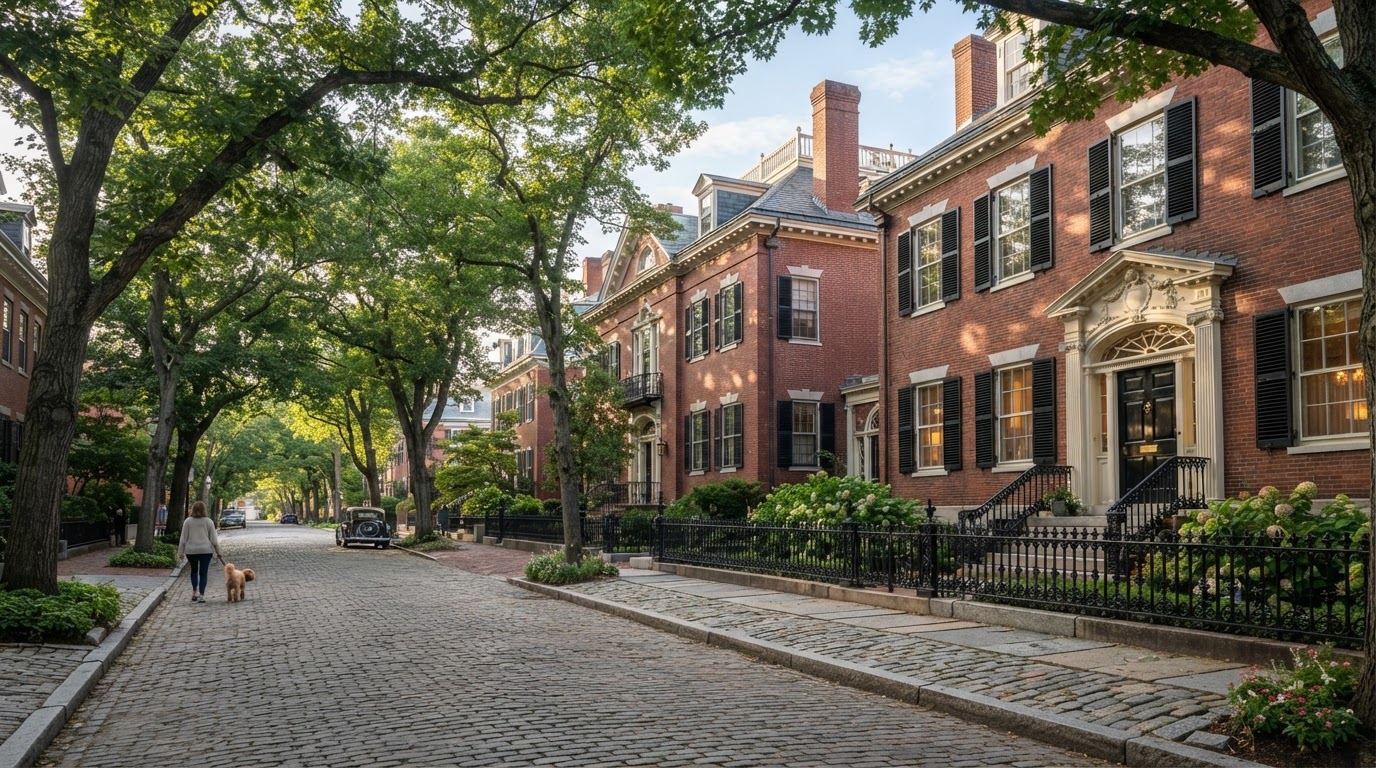
The McIntire Historic District features some of the finest Federal-style architecture in New England. | Neighborhood Guides
Salem Common: The City's Front Yard
Salem Common is an eight-acre park at the geographic center of the city, and it functions as Salem's communal gathering space. Surrounded by historic homes, churches, and the Salem Athenaeum, the Common hosts farmers markets, concerts, community events, and the seasonal ice rink in winter.
For residents who live within walking distance, the Common is an extension of their front yard. You see people walking dogs in the morning, kids playing in the afternoon, and couples strolling in the evening. The bandstand at the center hosts live music during the summer months.
The streets radiating out from the Common offer some of the most convenient residential real estate in the city. You are a five-minute walk from the commuter rail, a ten-minute walk from Pickering Wharf, and surrounded by restaurants and shops. Condo conversions and single-family homes in this area are perennially in demand.
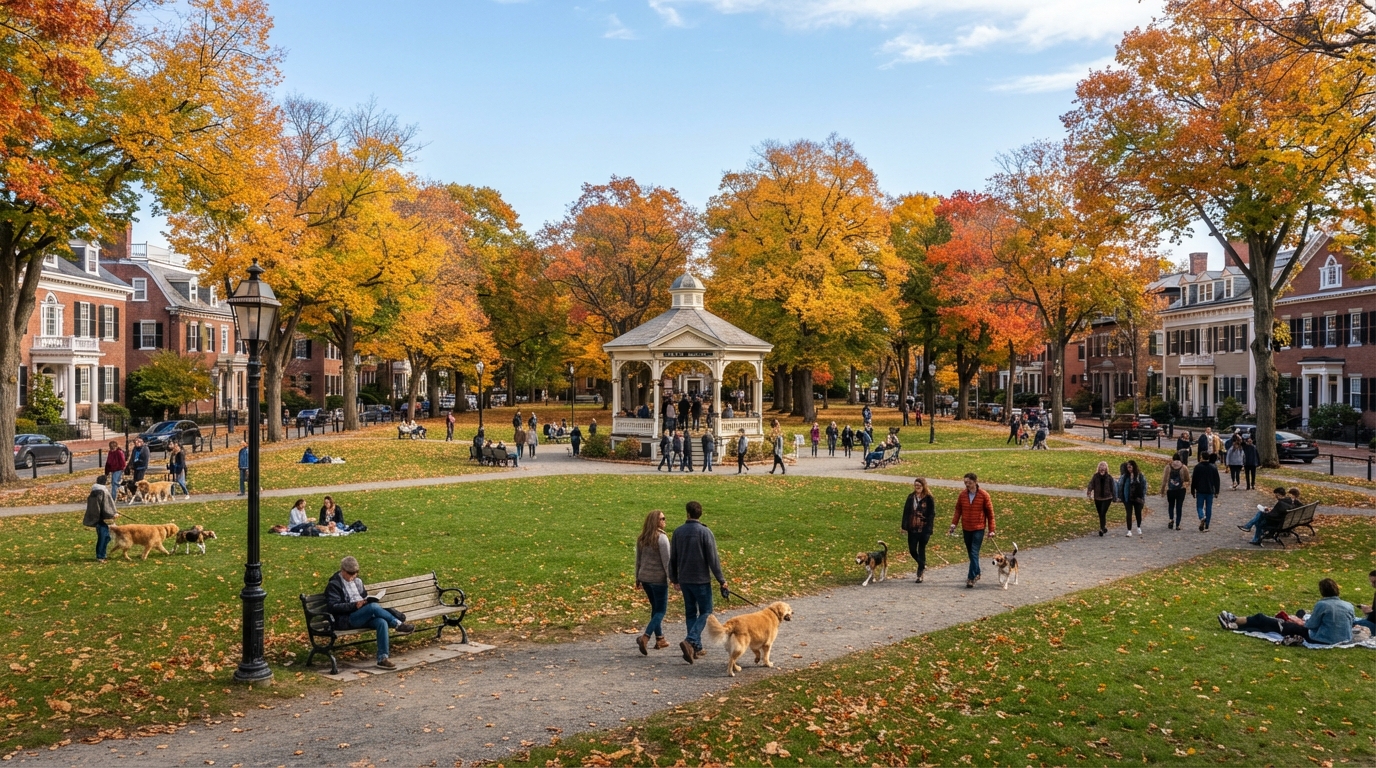
Salem Common serves as the city's central gathering space, surrounded by centuries of residential architecture. | Neighborhood Guides
The Willows and Salem Neck: Ocean Views and Coastal Quiet
Salem Neck is the peninsula that juts out into Salem Sound, and it is where you find a completely different side of the city. The streets here are quieter, the lots are often larger, and many homes have water views or direct waterfront access. This is the neighborhood where residents go to escape the downtown energy without leaving the city.
Salem Willows is the park at the tip of the peninsula. It is a classic New England seaside amusement area with arcade games, popcorn stands, and a waterfront promenade. In the summer, it draws families and locals looking for an old-fashioned evening by the water. The views from the Willows stretch across Salem Sound to Marblehead and the Boston skyline in the distance.
Real estate on Salem Neck tends to be more expensive than the city average, particularly for properties with water views or direct access. But compared to similar waterfront settings in Marblehead or Manchester-by-the-Sea, Salem Neck can offer better value. Buyers who want ocean access without the premium price tag of Cape Ann should explore this area.
Dining and Nightlife: A Genuine Restaurant City
Salem has developed one of the strongest dining scenes on the North Shore, and it is not just a tourist phenomenon. The restaurants here serve locals year-round, and the quality has risen steadily over the past decade.
The downtown and Pickering Wharf areas are dense with options. You will find fresh seafood with harbor views, craft cocktail bars, Italian trattorias, and international cuisine that reflects the city's diverse population. On weekends, Salem draws diners from across Essex County who come specifically for the restaurant scene.
What makes Salem's dining different from other North Shore towns is the density. In many communities, you have a handful of good restaurants spread across a wide area. In Salem, you can walk past 15 quality options in a 10-minute stroll. That concentration creates a critical mass that attracts chefs, supports new openings, and keeps the scene evolving.
For buyers who value walkable dining and nightlife, Salem offers something that Ipswich, Rowley, and other quieter North Shore towns simply cannot match.
Culture and Institutions: More Than Witches
The Peabody Essex Museum is one of the oldest and most significant art museums in the United States. Its collections span maritime art, Asian art, American decorative arts, and contemporary photography. The museum hosts major traveling exhibitions and serves as a cultural anchor not just for Salem but for the entire North Shore.
Salem State University brings approximately 7,000 students to the city, and their presence shapes the community in important ways. The university hosts public lectures, theater productions, and athletic events that are open to residents. The student population also supports the rental market, which makes Salem attractive for real estate investors looking at multifamily properties.
The Salem Maritime National Historic Site preserves the city's shipping heritage and includes the Customs House, the Derby Wharf, and the Friendship of Salem, a replica of a 1797 East Indiaman merchant vessel. The House of the Seven Gables, the inspiration for Nathaniel Hawthorne's novel, is a historic house museum that draws visitors year-round.
These institutions give Salem a cultural depth that most cities of 45,000 people lack. Residents have access to world-class art, theater, and history without leaving the city limits.
October in Salem: What Residents Actually Experience
I want to be honest about October because it is the one thing every prospective Salem buyer asks about. During October, Salem draws hundreds of thousands of visitors for Halloween season. The downtown area is extremely busy, especially on weekends. Traffic is heavy, parking is difficult, and the pedestrian mall is packed.
Here is what residents actually do about it. Some embrace it fully and participate in the events, costumes, and street performances. Others treat October like a month-long festival in their backyard and enjoy the energy from a comfortable distance. And plenty of residents simply plan weekend trips and come back in November when the city returns to normal.
The key thing to understand is that October is one month out of twelve. The other 11 months, Salem is a quiet, normal, livable city. The tourist crowds disappear, the downtown belongs to the residents again, and the city settles into its year-round rhythm. If you are considering buying in Salem, I recommend visiting in both October and a quieter month like February so you can experience the full range.
The Commute: Salem's Biggest Competitive Advantage
Salem has the fastest MBTA Commuter Rail commute to Boston on the North Shore. The trip from Salem station to North Station takes 28 to 35 minutes on the Newburyport/Rockport Line. Trains run frequently during peak commuting hours, and the station is located right downtown, which means many residents can walk to the platform.
By car, the drive to Boston is approximately 16 miles via Route 1A or Route 114 to I-95 south. Without traffic, you can make it in 35 minutes. With rush-hour traffic, expect 50 to 60 minutes. The commute is also possible by ferry. The Salem Ferry runs from Blaney Street to Boston's Long Wharf during the warmer months, offering a 55-minute scenic ride across the harbor.
For hybrid workers who commute two or three days a week, Salem is hard to beat. The combination of a short train ride, walkable downtown, and coastal setting creates a lifestyle that feels like a compromise-free choice rather than a sacrifice.
If you want to compare Salem's commute against other North Shore towns, the town-by-town guide breaks down MBTA access, drive times, and beach access for all 12 communities.
The Housing Market: What Buyers Find in Salem
Salem's single-family home prices typically range from $350,000 to $1.2 million, depending on neighborhood, condition, and proximity to the waterfront. The city offers one of the widest price ranges on the North Shore, which means buyers at different budget levels can find something that works.
The housing stock is diverse. You will find historic colonials and Federal-style homes in the McIntire District and around Salem Common, converted condos and modern lofts in the downtown core, multifamily properties that attract investors and house hackers, and waterfront homes on Salem Neck with ocean views. The condo versus single-family decision is particularly relevant in Salem because the downtown condo market is robust.
Demand in Salem is driven by three factors: the fast commute, the walkable downtown, and the presence of Salem State University. These create consistent buyer interest from commuters, lifestyle buyers, and investors alike. The market is competitive but not as frenzied as some of the smaller, lower-inventory coastal towns like Manchester-by-the-Sea.
For first-time buyers, Salem is one of the more accessible entry points on the North Shore. The lower end of the price range offers condos and smaller homes that can work with MassHousing loans and down payment assistance programs. Using a mortgage calculator can help you understand your purchasing power in this market.
If you are considering selling, Salem's strong demand and diverse buyer pool make it a solid market for pricing for multiple offers. You can check your home's current value to see where you stand.
A Realtor's Take
I have sold homes in Salem for over 20 years, and the thing that surprises buyers most is how livable it is. People come in expecting a tourist town and discover a real city with real neighborhoods. The commute is the hook, but the walkability, the restaurant scene, and the waterfront are what make people stay.
The buyers I see succeed in Salem are the ones who know what they want. If you want walkable downtown living, we focus on condos and homes near Essex Street and the Common. If you want quiet and water views, we look at Salem Neck. If you want an investment property, the multifamily market near Salem State University is where the math works. Salem rewards buyers who have done their homework.
One thing I always tell clients: do not judge Salem by October. Visit in February. Walk the downtown on a Tuesday night. Take the train to work once. That is the real Salem, and it is a city that earns its residents' loyalty.
Frequently Asked Questions
What is it really like to live in Salem, MA?
Living in Salem means having the fastest commute to Boston on the North Shore at 28 to 35 minutes by MBTA Commuter Rail. You get a genuinely walkable downtown, a working waterfront, world-class museums, and a restaurant scene that rivals much larger cities. October brings heavy tourist traffic, but most residents find the other 11 months more than make up for it.
How long is the commute from Salem to Boston?
Salem has the fastest commute to Boston on the North Shore. The MBTA Commuter Rail trip from Salem station to North Station takes 28 to 35 minutes. By car, the drive is approximately 16 miles and typically takes 35 to 50 minutes depending on traffic.
Is Salem, MA walkable?
Yes. Salem is one of the most walkable cities on the North Shore. The downtown core around Essex Street, Derby Street, Pickering Wharf, and Salem Common is highly walkable, with restaurants, shops, museums, the waterfront, and the commuter rail station all within a 15-minute walk of each other.
What is October like in Salem?
October in Salem draws hundreds of thousands of visitors for Halloween season. The downtown area is extremely busy, especially on weekends. Many residents embrace the energy and participate in events, while others plan weekend trips. Parking becomes difficult and traffic is heavy. The rest of the year, Salem is a quiet, normal city.
What are the best neighborhoods in Salem?
Salem's notable neighborhoods include the McIntire Historic District for grand Federal-style homes, the Derby Street and Pickering Wharf area for waterfront living, the Willows for ocean views and the Salem Willows amusement park, and the downtown core for condo and loft living near restaurants and transit.
What is the housing market like in Salem, MA?
Salem's single-family home prices typically range from $350,000 to $1.2 million depending on neighborhood and condition. The city offers a wide mix of historic colonials, converted condos, modern lofts, and waterfront properties. The fast commute and walkable downtown keep demand strong year-round.
Does Salem have good restaurants?
Salem has one of the strongest restaurant scenes on the North Shore. The downtown and Pickering Wharf areas offer everything from fresh seafood and Italian to craft cocktails and international cuisine. The city has become a genuine dining destination that draws visitors from across Essex County.
How far is Salem from the beach?
Salem has its own waterfront at Pickering Wharf and the Salem Willows. While Salem does not have a traditional swimming beach like nearby Manchester or Gloucester, the Salem Willows park offers ocean views, and residents are a short drive from beaches in neighboring communities like Marblehead and Beverly.
What schools are in Salem, MA?
Salem operates its own public school system including Salem High School, Collins Middle School, and several elementary schools. The city is also home to Salem State University, a major public university that brings energy and cultural programming to the community.
Is Salem, MA a good place to invest in real estate?
Salem attracts real estate investors because of its strong rental demand from Salem State University students, its fast commute to Boston, and its year-round tourism economy. multifamily homes and condo conversions in the downtown area have historically performed well.
Final Thoughts
Salem is the city that keeps surprising people. They come for the history and discover a modern, livable community with the best commute on the North Shore. They come for October and discover that the other 11 months are when the city really shines.
What makes Salem work is its completeness. You can walk to dinner, catch a train to Boston, visit a world-class museum, and watch the sunset over the harbor, all without leaving the city. Few communities on the North Shore offer that level of convenience packed into a walkable footprint.
The housing market reflects that desirability. Demand is consistent, prices span a wide range, and the mix of historic homes, modern condos, and investment properties means there is usually something for every buyer type. Whether you are a first-time buyer looking for a condo near the train, a move-up buyer drawn to the McIntire District, or an investor eyeing a multifamily near the university, Salem has options worth exploring.
If you are ready to see what Salem has to offer, search current homes for sale, check your home's current value, or reach out to talk about your goals. I have been helping buyers and sellers in Salem for over 20 years, and I would be glad to help you find your place in this city.
Related Articles



Thinking About Salem?
Whether you're buying, selling, or just exploring your options, I'm happy to share local insights and a clear view of the Salem market.