
The Short Version
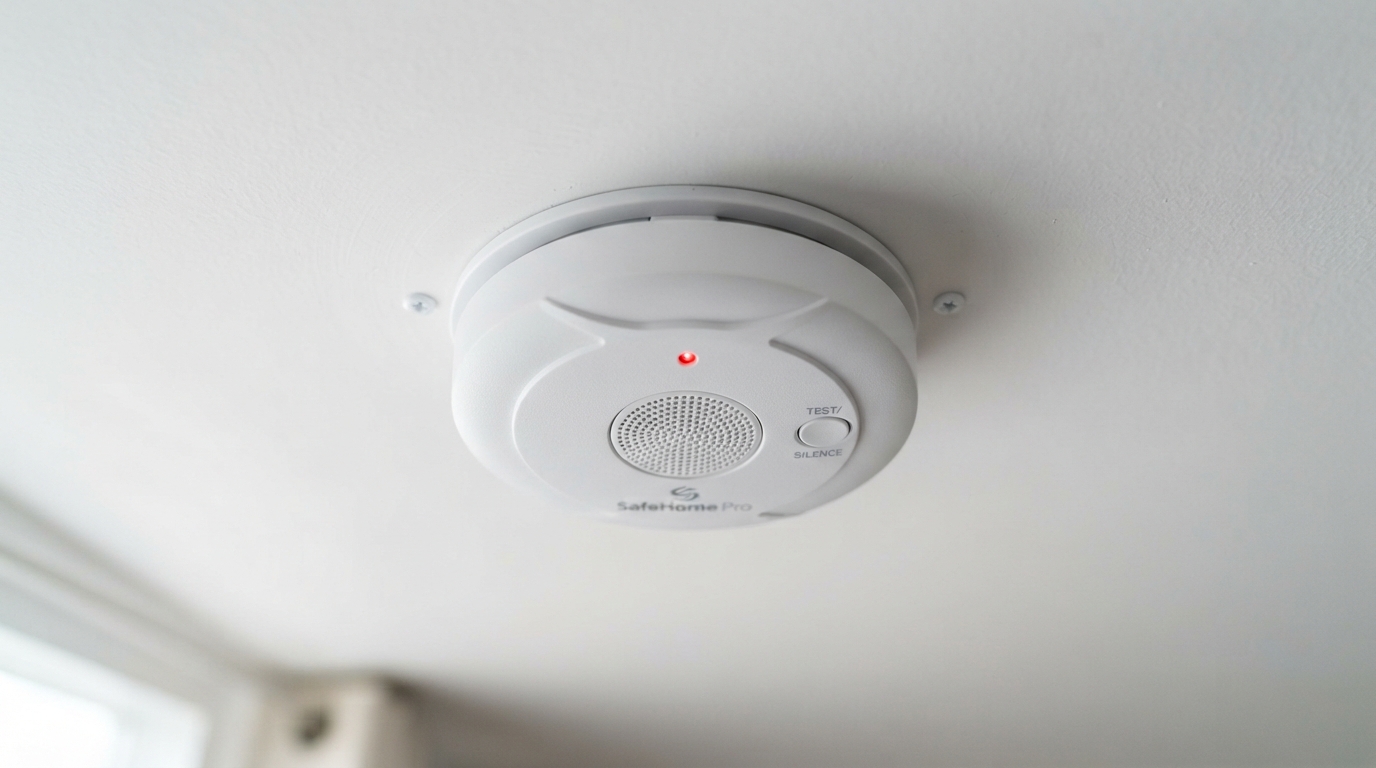
If you are selling a home in Massachusetts, you must pass a smoke detector and carbon monoxide detector inspection before closing. Your local fire department does the inspection and gives you a certificate. You cannot sell the home without it.
The type of detectors you need depends on when your home was built. The rules are based on the Massachusetts Comprehensive Fire Safety Code (527 CMR 1.00). This guide explains everything in plain English.
Why This Matters When Selling
When you sell a home in Massachusetts, the smoke detector inspection is not optional. It is required by state law. The fire department must check that your smoke detectors and carbon monoxide detectors are the right type, in the right places, and working. If they are not, you do not get a certificate. No certificate means no closing.
I have seen sales delayed by weeks because a seller did not know about this rule until the last minute. A $30 smoke detector should never be the reason your closing gets pushed back. This guide will help you get it right the first time.
The Law: What Massachusetts Requires
Massachusetts General Laws Chapter 148, Section 26F requires that every building used for living purposes must have working smoke detectors. When you sell the home, you must get a certificate of compliance from your local fire department.
Here is what the law says in simple terms:
- You must have smoke detectors on every level of the home, including the basement.
- You must have a smoke detector outside each bedroom area.
- You must have carbon monoxide detectors on every level with living space and within 10 feet of every bedroom.
- The fire department must inspect the detectors and issue a certificate of compliance before the sale closes.
This rule applies to single-family homes, condos, and multifamily homes (up to 2 units). Buildings with 3 or more units follow different commercial rules.
What Type of Detectors Do You Need?
This is where most people get confused. The type of smoke detector you need depends on the age of your home. Massachusetts uses three time periods to decide:
Homes Built Before 1975
You can use battery-powered smoke detectors. They do not need to be wired into the home's electrical system.
You can use ionization detectors, photoelectric detectors, or a combination. But many fire departments now recommend photoelectric detectors because they are better at detecting slow, smoldering fires.
Homes Built or Renovated After 1975
Smoke detectors must be hardwired into the home's electrical system with a battery backup. Battery-only detectors are not enough.
If one detector goes off, all the hardwired detectors must go off at the same time. This is called "interconnection."
Homes Built or Renovated After 1997
You must have photoelectric smoke detectors outside each bedroom area and on each level of the home. Photoelectric detectors are better at detecting slow, smoldering fires, which are the most common type of fatal fires at night.
You can still have ionization detectors in other areas, but the detectors near bedrooms must be photoelectric.
Important: Check the Date on Your Detectors
Smoke detectors do not last forever. Most have a life of 10 years. The manufacture date is printed on the back. If your detectors are older than 10 years, they need to be replaced before the inspection, even if they still beep when you test them.
Carbon Monoxide Detectors (Nicole's Law)
Carbon monoxide (CO) is a gas you cannot see or smell. It comes from fuel-burning things like furnaces, water heaters, stoves, fireplaces, and cars in attached garages. CO is dangerous and can kill people in their sleep.
Massachusetts passed Nicole's Law in 2006 after a 7-year-old girl named Nicole Garofalo died from carbon monoxide poisoning. The law requires CO detectors in every home with a fuel-burning appliance, fireplace, or attached garage.
Here is what you need:
- A CO detector on every level of the home that has living space, including the basement.
- A CO detector within 10 feet of every bedroom door.
- CO detectors can be battery-powered, plug-in with battery backup, or hardwired.
- Combination smoke and CO detectors are allowed, but they must meet the same rules for each type.
Where to Put Your Detectors
Getting the right detector is only half the job. You also need to put it in the right place. Here is a simple room-by-room guide:
- On every level: Including the basement and the attic if it is used for living space.
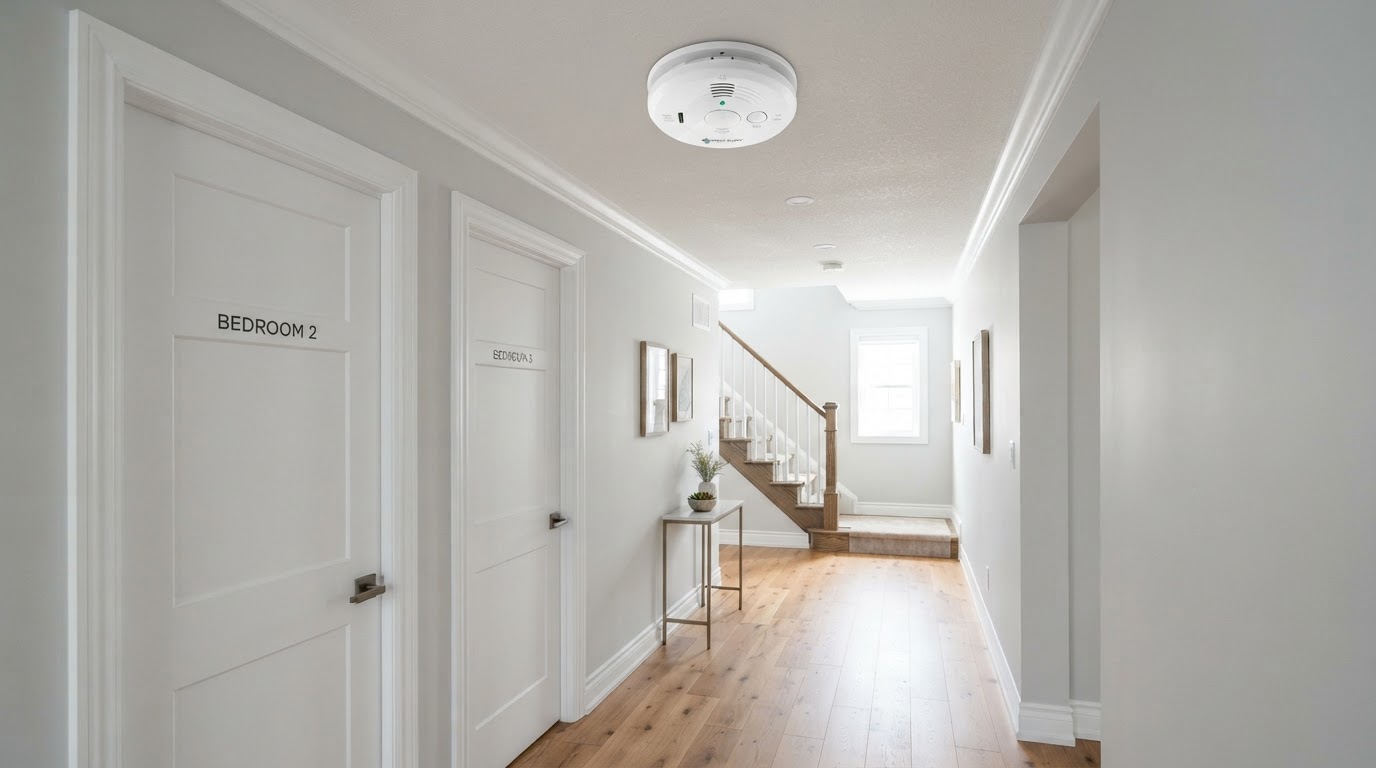
- Outside each bedroom area: In the hallway near the bedroom doors.
- Inside each bedroom: Recommended but not always required by law.
- On the ceiling: At least 4 inches from the wall, or on the wall 4 to 12 inches from the ceiling.
- Not near the kitchen: Keep smoke detectors at least 10 feet from cooking appliances to avoid false alarms.
- Not in the bathroom: Steam can cause false alarms.
- Not near vents or fans: Air flow can blow smoke away from the detector.
How the Inspection Works
The inspection is done by your local fire department. Here is what happens, step by step:
- Schedule the inspection. Call your fire department or check their website. Some towns let you book online. Do this as soon as you accept an offer.
- Pay the fee. The fee is set by your town and usually ranges from $25 to $50. Some towns charge more for multifamily homes.
- The fire department visits. A fire inspector comes to your home and checks every detector. They will test each one, check the dates, and make sure the types and placement are correct.
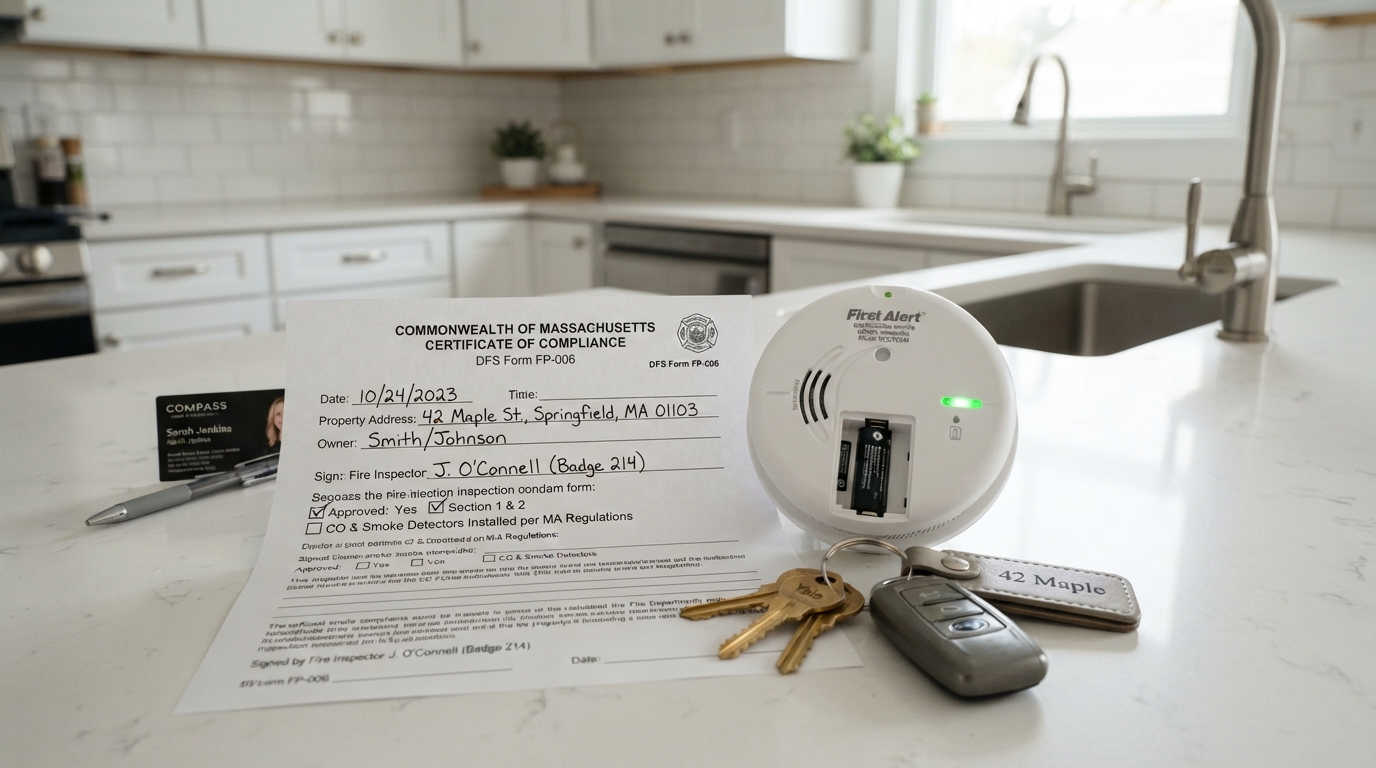
- You get a certificate. If everything passes, the fire department gives you a certificate of compliance. This document goes to your closing attorney and is required for the sale.
- If you fail, you fix and re-inspect. If any detector is wrong, missing, or expired, you fail. You fix the problem and schedule a re-inspection. This can take another week or more.
Common Mistakes That Cause Failed Inspections
What Does This Cost?
The cost is small compared to the cost of a delayed closing. Here is what to expect:
- Inspection fee: $25 to $50, paid to your fire department.
- Smoke detectors: $15 to $40 each. Combination smoke and CO detectors cost $30 to $60.
- Electrician (if you need hardwiring): $150 to $300 per detector if new wiring is needed.
- Total for a typical home: $100 to $300 if you do it yourself, more if an electrician is needed.
Your Pre-Sale Smoke Detector Checklist
- Count every level of your home, including the basement.
- Check that there is a smoke detector on each level and outside each bedroom area.
- Check that there is a CO detector on each level and within 10 feet of each bedroom.
- Look at the date on the back of every detector. Replace any older than 10 years.
- Make sure you have the right type (battery vs. hardwired, ionization vs. photoelectric) for your home's age.
- Test every detector by pressing the test button.
- Call your fire department to schedule the inspection at least 2 weeks before closing.
- Keep the certificate of compliance and give it to your closing attorney.
Kathleen's Take
This is one of those small details that can cause a big problem if it is ignored. I have seen closings delayed because a seller had the wrong type of smoke detector or forgot to install a CO detector near the bedrooms. The fix is usually under $100, but the delay can cost you weeks.
If you are selling on the North Shore, I will remind you about this early in the process. We will check your detectors together, make sure you have the right type for your home's age, and schedule the inspection well before closing. If you have questions about selling your home, let's talk.