
Should I Wait Until Spring 2027 or Buy Now? The Honest Math for North Shore Buyers
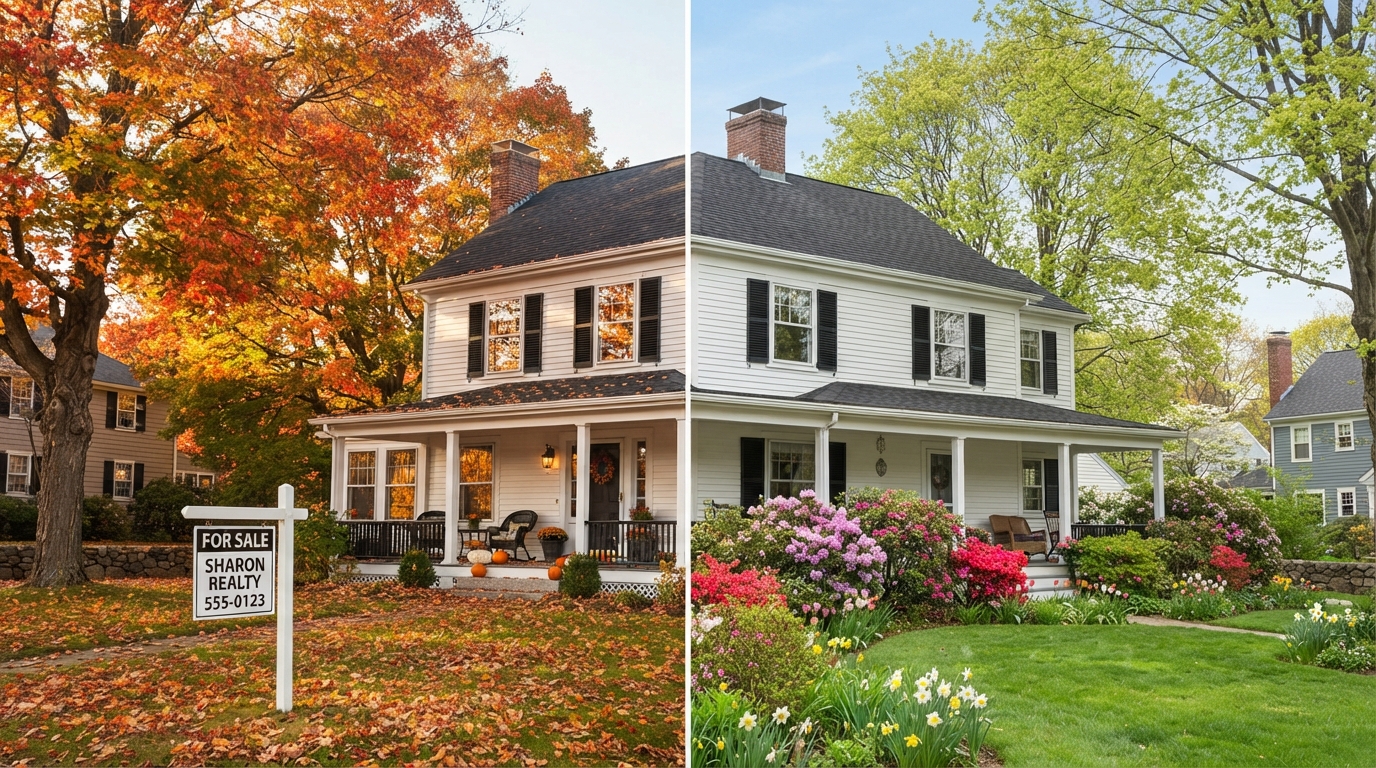
The 30-year fixed mortgage rate just hit 6.55 percent — the highest level since August 2025. Pending home sales fell 5.4 percent in June. The Fed held rates steady, but three members dissented in favor of a hike, and September is looking uncertain. Every buyer I talk to in Beverly, Gloucester, and Newburyport is asking the same question: should I wait until spring 2027, or should I buy now?
I understand the instinct. Rates are high. The news is scary. It feels like patience should be rewarded. But after more than twenty years of helping North Shore buyers through every kind of market, I can tell you that waiting is rarely the safe play people think it is. Let me walk you through the honest math so you can make a decision based on numbers, not fear.
If you want the short answer: if you find the right home at a payment you can afford, buy it. You can refinance later if rates drop. You cannot retroactively buy a home at today's price.
The Real Cost of Waiting
Let's use a concrete example. Say you are looking at a $600,000 home in Salem or Ipswich. You are putting 10 percent down, so your loan is $540,000.
At today's rate of 6.55 percent, your monthly principal and interest payment is approximately $3,427. That feels high. I get it. Now let's see what happens if you wait six months for spring 2027.
Scenario A: You Wait and Rates Stay the Same
If rates hold at roughly 6.55 percent but North Shore home prices appreciate at a conservative 3 percent annual rate (the current trend), that $600,000 home costs $609,000 in spring 2027. You have lost $9,000 in price appreciation, plus six months of equity you would have built by owning now.
Cost of waiting: ~$9,000+ in lost appreciation
Scenario B: You Wait and Rates Go Up
If the Fed raises rates in September and the 30-year fixed climbs to 7 percent, that same $600,000 home (now $609,000 with appreciation) costs you more per month even though the price only rose modestly. Your new payment on a $548,100 loan at 7 percent is approximately $3,648. That is $221 more per month, or $2,652 more per year, for the same home.
Cost of waiting: ~$9,000 in appreciation + $2,652/year in higher payments
Scenario C: You Wait and Rates Drop to 6 Percent
This is the scenario everyone hopes for. Rates fall to 6 percent by spring 2027. The home is now $609,000. Your loan is $548,100 at 6 percent. Your payment is approximately $3,287. You save $140 per month compared to buying now at 6.55 percent. But you paid $9,000 more for the house. It takes you over five years of monthly savings just to break even on the higher purchase price.
Cost of waiting: ~$9,000 more in price, 5+ years to break even
The math is clear. In two of three scenarios, waiting costs you thousands. In the best-case scenario, it takes years to break even. And none of these calculations account for the equity you would have built by owning for six additional months.
What Is Actually Happening on the North Shore Right Now
The headlines say the market is cooling. That is partially true nationally, but the North Shore is not a national market. Here is what I am actually seeing in August 2026:
Inventory is up
Massachusetts inventory rose 13.7 percent year-over-year to 20,267 homes. More homes are available than at any point in the last two years.
Prices are holding
The North Shore median hit $805,000 in June. Prices are not crashing. They are stabilizing and appreciating modestly.
Competition is easing
Pending home sales fell 5.4 percent nationally. Fewer buyers are actively shopping, which means less competition for the homes that are available.
Sellers are negotiating
With 44.5 percent of Massachusetts homes still selling above list price, the market is not frozen. But sellers are more willing to offer rate buydowns, closing cost credits, and repair concessions than they were six months ago.
This is what a balanced market starting to look like looks like. Not a buyer's market yet, but not the feeding frenzy of 2021 either. You have room to breathe, negotiate, and make a thoughtful decision. That window may not exist in spring 2027 when every buyer who waited comes back at once.
The Refinance Option Nobody Talks About
Here is the part that gets lost in the fear: you are not locked into today's rate forever. If you buy now at 6.55 percent and rates drop to 5.5 percent in 2027 or 2028, you refinance. Your monthly payment goes down. You keep the house you already bought at today's price.
Refinancing typically costs 2 to 5 percent of the loan amount in closing costs. On a $540,000 loan, that is roughly $10,800 to $27,000. But if refinancing saves you $300 per month, you break even in 30 to 75 months. After that, every dollar saved is money in your pocket.
The point is simple. Date the rate, marry the house. You can change your rate. You cannot retroactively change your purchase price. If you wait and prices rise, you pay that higher price forever.
Why Spring 2027 Could Actually Be Worse for Buyers
Everyone assumes spring is better because inventory rises. That is true. But spring also brings the single largest wave of competing buyers into the market. Here is what happens every spring on the North Shore:
Buyers who paused in fall and winter all re-enter the market at once, creating intense competition for the same inventory.
Families with school-age children target spring closings, which means more bidding wars in desirable school districts like Hamilton-Wenham and Manchester-Essex.
Sellers know demand peaks in spring, so they price more aggressively and are less likely to negotiate on price or concessions.
The homes that sat unsold in fall are often off the market by spring, replaced by fresh listings priced at the top of the range.
I have written extensively about why fall is the smartest time to buy on the North Shore. The fall market gives you the best combination of available inventory, reduced competition, and motivated sellers. Spring gives you more options but more people fighting for them.

When Waiting Actually Makes Sense
I am not going to tell you to buy no matter what. There are situations where waiting is the right call:
Your credit score needs work
If your score is below 700, spending six months improving it could qualify you for a significantly better rate.
You do not have a down payment yet
If you are still saving, wait. But set a specific target and timeline so waiting does not become indefinite.
You are not sure you want to stay in the area
If you might relocate within two years, renting may make more sense. Buying requires a commitment of at least three to five years to build enough equity to offset transaction costs.
You have not been pre-approved
If you do not know what you can actually afford, you are not ready to buy. Get pre-approved first.
But if you are pre-approved, you know where you want to live, and you can afford the payment at today's rates, waiting is a bet against the math. And the math is not on your side.
How to Buy Strategically in a High-Rate Market
If you decide to buy now, there are specific strategies that make a high-rate market work in your favor:
Ask the seller for a rate buydown. A 2-1 buydown lowers your rate by 2 percent in year one and 1 percent in year two. The seller pays the cost, and your monthly payment drops immediately.
Negotiate closing cost credits. With less competition, sellers are more willing to credit you 2 to 3 percent of the purchase price toward closing costs, which offsets your cash needed at closing.
Target homes that have been on the market 30+ days. These sellers are motivated and more likely to negotiate on price, terms, or concessions.
Use the fall window. From Labor Day through mid-November, you have the best balance of inventory and negotiating power on the North Shore.
Get pre-approved before you start shopping. In a high-rate environment, sellers want to know your financing is solid. A strong pre-approval letter gives you an edge.
A Realtor's Take
I have been licensed since 2003. I have worked through the boom, the crash, the recovery, the pandemic frenzy, and now this normalizing market. The buyers who do best are not the ones who time the market perfectly. They are the ones who buy a home they can afford, in a town they love, and hold it long enough for the market to do its work.
The buyers who get hurt are the ones who wait for the perfect moment that never comes. They watch rates rise, prices rise, and inventory tighten, and then they buy in a panic at the top of the next cycle. I have seen it happen over and over across Rockport, Essex, and Marblehead.
If you can afford the payment today, find the right home, and plan to stay for at least five years, the math says buy. Refinance later if rates drop. But do not bet your future on a rate prediction that nobody can make with certainty.
Frequently Asked Questions
Should I wait until spring 2027 to buy a home on the North Shore?
Waiting until spring 2027 is risky. While spring brings more inventory, it also brings more competition, higher prices, and bidding wars. If you find the right home now at a payment you can afford, you can refinance later if rates drop. The cost of waiting includes rising home prices, lost equity, and the possibility that rates do not fall as expected.
What happens to mortgage rates if I wait until spring 2027?
Nobody can predict mortgage rates with certainty. As of August 2026, the 30-year fixed rate is approximately 6.55 percent. The Federal Reserve held rates steady but three members dissented in favor of a hike. If rates rise further, waiting costs you more. If rates fall, you can refinance. The safest strategy is to buy based on what you can afford today, not on a rate prediction.
How much does it cost to wait six months to buy a home?
On a $600,000 North Shore home, waiting six months could cost you in three ways: home price appreciation (typically 3-5 percent annually), lost equity from not making mortgage payments, and the risk of higher rates. If the home appreciates 2 percent over six months, that is $12,000 in lost value. Combined with potential rate increases, the cost of waiting can exceed $15,000 to $20,000.
Is the North Shore housing market going to crash in 2027?
No major crash is expected. North Shore inventory is rising, which is cooling price growth, but demand remains strong and supply is still historically tight. The market is normalizing, not crashing. Prices are holding steady and are expected to appreciate modestly. Waiting for a crash is not a viable strategy for most buyers.
Can I refinance my mortgage if rates drop later?
Yes. If you buy now and mortgage rates fall in 2027 or 2028, you can refinance into a lower rate. Refinancing typically costs 2 to 5 percent of the loan amount in closing costs, but the monthly savings can offset that within a year or two. Buying now and refinancing later is often cheaper than waiting for the perfect rate.
What is the advantage of buying in fall 2026 instead of spring 2027?
Fall 2026 offers less competition, motivated sellers, better inspection conditions, and more room to negotiate. Spring 2027 will bring more inventory but also more buyers, higher prices, and bidding wars. If you are pre-approved and find the right home, fall gives you a better balance of selection and negotiating power.
Final Thoughts
The decision to buy or wait is not really about mortgage rates. It is about whether you are ready to own a home, whether you can afford the payment, and whether you plan to stay long enough for the investment to make sense. If the answer to those three questions is yes, then the math says buy now and refinance later.
I have helped buyers across the North Shore make this decision for over two decades. If you want to talk through your specific situation — your numbers, your timeline, your town — I would be happy to sit down and help you think it through. No pressure, no sales pitch, just honest math and local experience.
Want to Run the Numbers Together?
Let's sit down and look at your specific situation. I will help you understand what buying now looks like versus waiting, and we will make the decision based on real numbers, not headlines.
Kathleen Militello is a REALTOR® with Coastal Homes & Living and an AI Certified Agent™ with eXp Realty, serving buyers and sellers on Boston's North Shore since 2003. She specializes in residential real estate, senior transitions, downsizing, and relocation across Essex County communities including Beverly, Gloucester, Ipswich, Newburyport, Rockport, and Salem.