
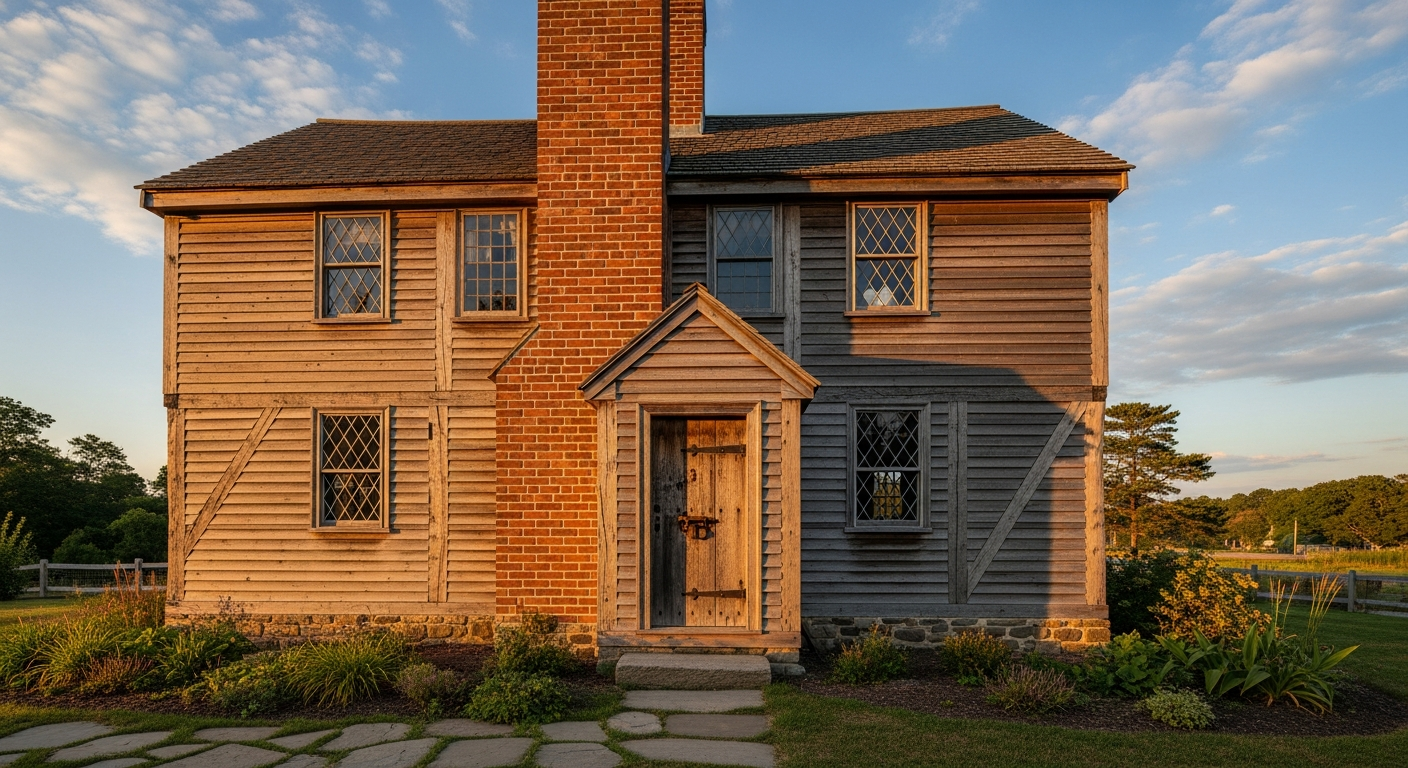
Why Do So Many Historic North Shore Homes Have Tiny Closets?

The Short Version
Historic North Shore homes have tiny closets because people in the 1600s and 1700s simply owned far fewer clothes. Most colonists had two or three outfits — work clothes, Sunday clothes, and maybe a heavy coat. The popular story that closets were taxed is a myth with no evidence in Massachusetts tax records. The real explanation is practical: wardrobes and armoires stored clothing, closets were used for small household items, and homes were built around heating efficiency, not storage. If you're buying an antique North Shore home, plan for creative storage solutions — but appreciate that those tiny closets tell the story of a simpler, more sustainable way of life.
The one question every buyer asks when touring a 300-year-old home — and the surprising answer that has nothing to do with storage.
A young couple stood in the bedroom of a beautifully preserved Colonial home in Ipswich last fall. Wide pine floors. A massive stone fireplace. Hand-hewn oak beams overhead. Natural light falling through small-paned windows.
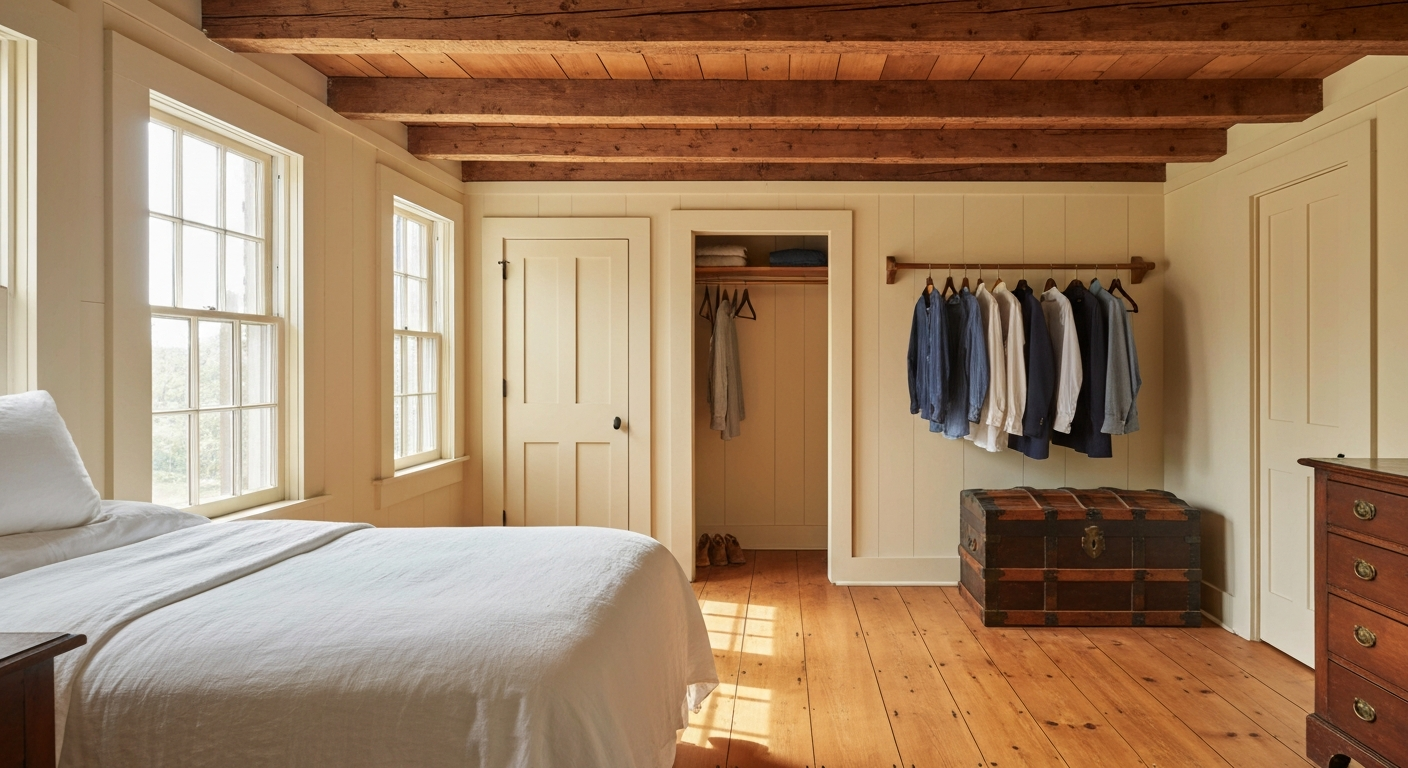
Everything felt perfect. Then one of them opened a narrow door in the corner, expecting a closet — and found a space barely deep enough for a few shirts. They looked at each other. Then at their agent. "Is this it?"
It's a question I hear in nearly every antique home showing across the North Shore — from Ipswich to Salem to Gloucester. Buyers from newer suburbs are used to walk-in closets the size of a small bedroom. When they encounter a 1690s home where the closet is barely two feet deep, they assume something is wrong — or that the builder was working around a tax.
The real answer is more interesting.
Were Closets Really Taxed?
This is the most common explanation for tiny closets in historic homes — and it's one of those stories that sounds true but isn't quite right. The myth goes like this: In Colonial times, the British government or early American tax authorities taxed rooms based on the number of closets they contained. So builders made closets tiny to avoid the tax.
Historic Fact: There is no evidence that Colonial Massachusetts taxed closets specifically. The myth seems to have originated in England from a window tax legend — but even in England, there is no record of a "closet tax." The story likely grew from confusion with the British window tax of 1696, which did tax homes based on the number of windows.
Researchers who have studied early American tax records — including property tax assessments from Essex County dating to the 1600s and 1700s — have found no reference to closets being counted or taxed. Colonial tax assessments were based on acreage, livestock, and the overall value of the property, not the interior configuration of rooms.
So if it wasn't taxes, why are the closets so small?
People Simply Owned Fewer Clothes
The most important reason is the simplest one: people in colonial New England did not own very much clothing. A typical colonist in the 1600s or early 1700s might own:
- One set of everyday work clothes
- One set of "Sunday" or meeting clothes
- A heavy coat or cloak for winter
- A few undergarments and stockings
- Perhaps one extra shirt or shift
That was it. There was no need for a walk-in closet because there was nothing to put in one. Clothing was expensive and labor-intensive to produce. Fabrics were imported or hand-woven. A single garment could take weeks to make from raw materials. Most families owned fewer total garments than a modern person packs for a weekend trip.
When you understand that, the tiny closet stops looking like a design flaw and starts looking like a perfectly adequate storage solution for the amount of stuff people actually had.
How Did Colonists Store Their Clothes?
Instead of built-in closets, colonists used freestanding furniture:
- Wardrobes and armoires — large freestanding cabinets that could hold clothing on hooks or shelves. These were often the most valuable piece of furniture in a home.
- Chests and trunks — the earliest and most common form of storage. A sea chest or dowry chest held folded clothing, linens, and valuables. Many North Shore homes still have original chests from the 1600s.
- Wall pegs — simple wooden pegs driven into the wall or a board for hanging cloaks, hats, and bags. You can still see original peg boards in many pre-1800 North Shore homes.
- Press cupboards — for storing linens and more valuable items, often in the parlor or keeping room.
The built-in closet as we know it — a small room with a rod and a door — did not become standard in American home construction until the mid-1800s, and even then it was modest by modern standards. The walk-in closet is essentially a post-World War II invention, driven by the explosion of consumer goods and mass-produced clothing.
What Were Those Tiny Closets Actually For?
In many First Period and Colonial homes on the North Shore, the small built-in spaces that buyers today call "closets" were not originally designed for clothing at all. They served a variety of practical purposes:
- Storage for household items — candles, soap, medicines, tools, and other small necessities.
- Food storage — some were used as small pantries or storage for preserved goods.
- Privy closets — in some homes, a small enclosed space was used for a chamber pot, especially at night or in winter when going outside was impractical.
- Storage for firearms and ammunition — in frontier-era homes, keeping a musket accessible but out of sight was common.
When you see a tiny closet in a 1700s home, it may have started life as something entirely different from what we imagine.
Homes Were Built Around Heat, Not Storage
Another factor that shaped early North Shore architecture was the absolute priority of staying warm. Every design decision in a colonial home was driven by heating efficiency:
- Rooms were small to conserve heat from a single fireplace.
- Ceiling heights were lower than modern standards to reduce the volume of air to warm.
- Windows were small to minimize heat loss.
- Homes were oriented to capture southern light and block northern winds.
In that context, dedicating valuable heated square footage to a storage closet would have been wasteful. Every inch of a colonial home served a daily purpose. Storage was secondary to survival.
The North Shore's Unique Architectural Heritage
Boston's North Shore has one of the highest concentrations of early colonial architecture in the United States. Ipswich alone has dozens of surviving First Period homes (built between roughly 1620 and 1725). Salem, Beverly, Gloucester, Newburyport, and Essex all have significant stocks of 1700s and early 1800s homes.
For buyers considering an antique home, the tiny closet is just one of many features that reflect a different era of living. You'll also find:
- Low doorways (people were shorter)
- Steep, narrow staircases (to save floor space)
- Small windows (glass was expensive)
- Rooms that seem oddly proportioned by modern standards
- Original wide-pine floors that are often wider than modern lumber
None of these are defects. They are authentic features of homes built in a different time, for different needs, by people with different priorities.
What to Consider When Buying an Antique Home
If you're touring a historic North Shore home and the tiny closets are giving you pause, here are some practical things to think about:
- Armoires and wardrobes work beautifully — they're how people stored clothes for centuries, and they add character to a room.
- Many antique homes have been updated — previous owners may have added modern closets, built-ins, or even converted small rooms into dressing areas.
- Attic and basement storage — older homes often have generous attic or cellar space that can be used for seasonal storage.
- Historic district considerations — if the home is in a historic district, exterior changes may be restricted, but interior modifications like adding closets are usually fine.
- The trade-off is worth it — you're trading closet space for 12-inch hand-hewn beams, wide-pine floors, and the irreplaceable character of a home that has stood for 300 years.
Final Thoughts
The next time you walk into a historic North Shore home and open a closet that barely holds a winter coat, don't see it as a design flaw. See it as a window into a different way of life. Those small closets were never a mistake. They were a choice — a reflection of a time when people owned fewer things, valued what they had, and built homes designed for warmth and community rather than accumulation.
And if you're house-hunting on the North Shore and fall in love with a 1700s home with tiny closets — don't let it stop you. There's always room for an armoire. There's never another house quite like it.