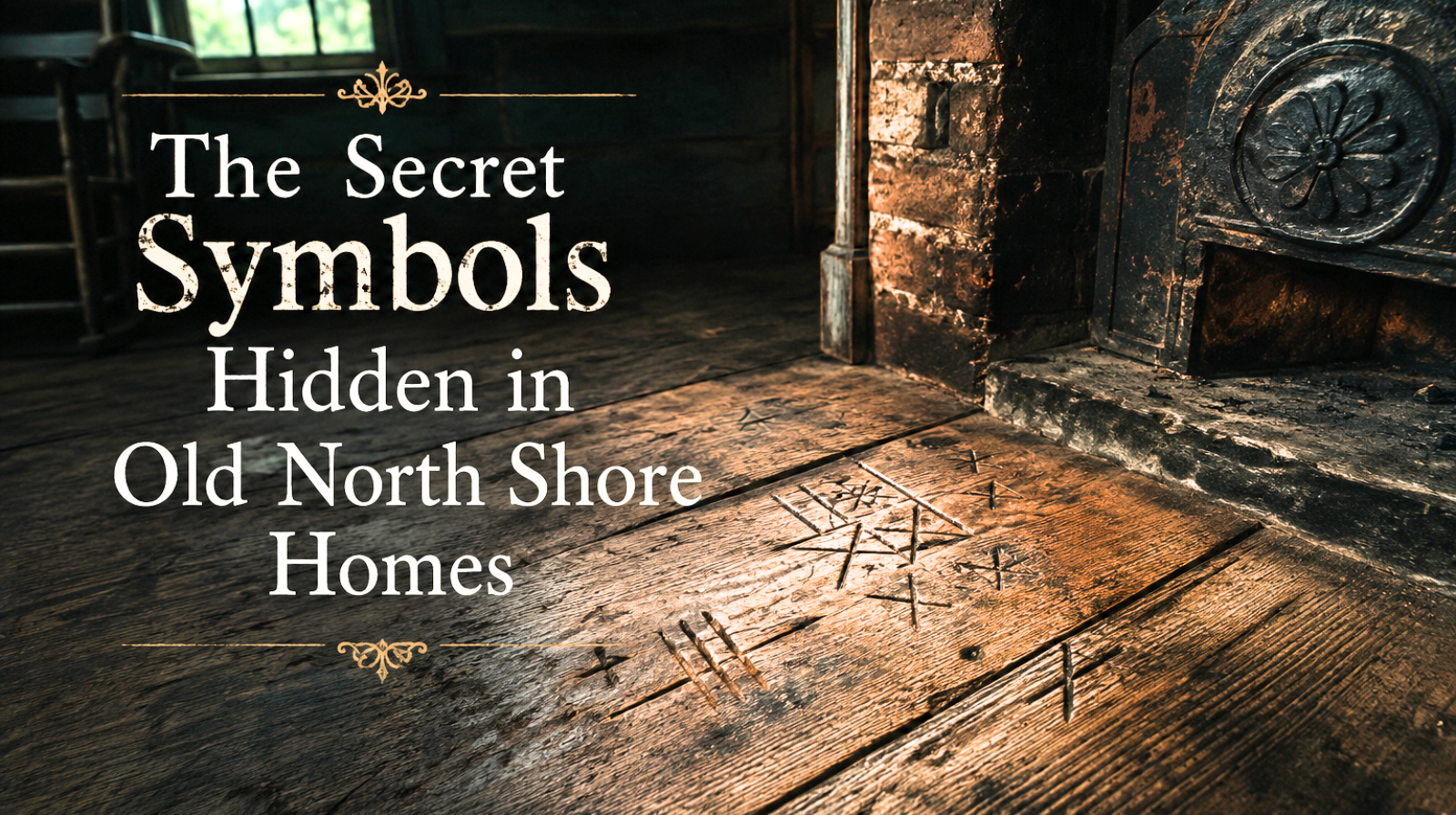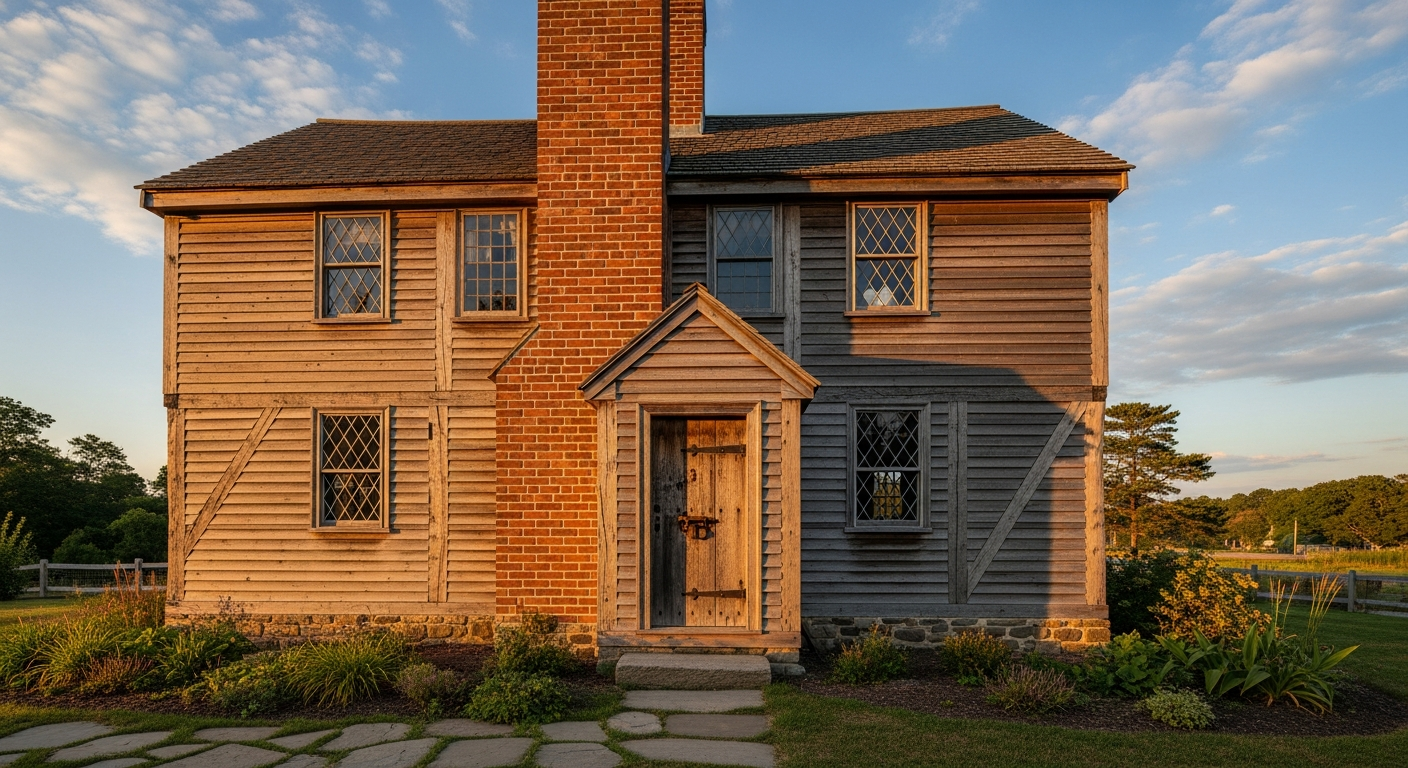

There is an undeniable soul in a home that has watched the centuries pass.
On the North Shore, our landscape is defined by the sturdy silhouettes of Federal-style mansions in Salem, the salt-weathered First Period homes of Ipswich, and the grand Victorian "cottages" that line the rocky coasts of Gloucester and Rockport.
Walking across wide-pine floorboards that have smoothed under the feet of generations offers a sense of permanence and narrative that modern construction rarely replicates.
These homes, built before 1950, are the very backbone of our coastal communities.
They represent a time when craftsmanship was personal, and materials were chosen for their endurance.
However, falling in love with a home that has its roots in the early 20th century or earlier requires a transition from dreamer to detective.
You aren't just buying a shelter; you are becoming the next steward of a piece of Massachusetts history.
As a first-time home buyer, the prospect of navigating an antique home can feel daunting.
You might hear whispers about knob-and-tube wiring or fieldstone foundations and wonder if you're stepping into a "money pit."
The reality is far more nuanced. Most of these homes have stood for 100 or 200 years because they were exceptionally well-engineered for their environment.
The goal isn't to find a "perfect" old home, it's to understand exactly what you are inheriting.
This guide is designed to empower you with the right questions.
Whether you are eyeing a 1920s bungalow in Beverly or a 1790 Federal in Salem, these eight questions will help you evaluate the home's "bones" with clarity and confidence.
We aren't here to look for reasons to say no; we're here to find the information you need to say a smart, informed yes.
Question #1: How old are the electrical systems?
When we look at a home built before 1950, we have to remember that the electrical needs of a household in 1920 were vastly different from ours today.
Back then, "electricity" meant a few light bulbs and maybe a radio. Today, we have high-speed internet, smart appliances, and electric vehicle chargers.
The most common term you'll encounter is knob-and-tube wiring.
This was the standard from the late 1800s through the 1940s, using single-insulated copper conductors run through porcelain tubes and supported by porcelain knobs.
While surprisingly durable if left untouched, it lacks a ground wire.
Many insurance companies are hesitant to cover homes with active knob-and-tube, especially if it's buried under modern insulation, which can cause it to overheat.
Beyond the wiring itself, look at the service panel and ask whether it is a modern circuit breaker panel with 200-amp service or an old 60-amp fuse box.
For a modern lifestyle, a 60-amp service is rarely enough.
Upgrading to a 100-amp or 200-amp panel is a common and manageable project, but it's something you'll want to factor into your hidden costs of buying a home.
Always check with your insurance agent early in the process. Some carriers will require a licensed electrician to certify that any remaining knob-and-tube is safe or has been decommissioned before they will issue a policy.
Question #2: What is the condition of the plumbing?
Plumbing in older North Shore homes often tells a story of evolution.
You might find a mix of materials, copper pipes from a 1980s kitchen renovation, modern PEX in a recently added bathroom, and perhaps the original galvanized steel or cast iron in the basement.
The concern with galvanized pipe is that it corrodes from the inside out.
Over decades, mineral deposits build up, slowly narrowing the pipe like a clogged artery.
This results in low water pressure and, eventually, leaks.
If you turn on the kitchen faucet and the water comes out with a slight brown tint before clearing up, you're likely looking at rusting galvanized pipes.
Cast iron was the gold standard for drain and waste lines for a long time.
It's incredibly quiet, which is why you don't hear water rushing through the walls like you do with modern PVC.
However, cast iron eventually thins and cracks, especially the horizontal sections buried under the basement floor.
When buying an older house, I always recommend a "sewer scope", a small camera sent through the main drain line to ensure there are no root intrusions or collapses between the house and the street.
Question #3: Has the foundation remained structurally sound?
In the historic homes of the North Shore, the foundation is usually one of two types: granite block or fieldstone.
Granite foundations, often seen in grander 19th-century homes in places like Rockport or Gloucester, are essentially the bedrock of the house.
These massive stones were hand-hewn and fit together with incredible precision.
They are remarkably stable and rarely shift.
Fieldstone foundations are more common in earlier colonials and farmhouses in Ipswich or Rowley.
These are made of rounded stones gathered from the local landscape, held together with lime mortar.
Because these stones aren't square, they rely heavily on that mortar.
Over 150 years, the mortar can turn to sand (a process called "spalling").
Don't be alarmed if you see a bit of water in an old basement.
These foundations were often designed to be "breathable."
However, you want to look for significant bowing in the walls or large horizontal cracks, which could indicate hydrostatic pressure from the soil outside.
Often, a simple "re-pointing" of the mortar is all an old foundation needs to stay strong for another century.
Question #4: What type of heating system is installed?
Heating an older New England home is an art form.
You will likely encounter steam heat or forced hot water.
Steam systems, characterized by those iconic cast iron radiators, are beloved by historic home enthusiasts for the "gentle" heat they provide.
There's a certain nostalgia to the clinking of the pipes on a cold Essex County morning.
However, they require regular maintenance. You have to "blow down" the boiler weekly to remove sediment.
Many older homes have been converted from oil to natural gas, which is generally more efficient and easier to manage.
If the home still uses oil, you'll want to inspect the tank for signs of age and condition.
If it's an older tank located in the basement, check for any signs of weeping or rust.
If it's an underground tank, that is a significant environmental consideration that usually requires removal before closing.
Lately, we are seeing a surge in air-source heat pumps (mini-splits) being installed in historic homes.
They provide both heating and cooling without requiring the massive ductwork that is so difficult to hide in a house built in 1850.
Question #5: Have the windows and insulation been updated?
Windows are often the subject of heated debate in the historic home world.
Original single-pane windows with "wavy" glass are breathtakingly beautiful and can actually be quite efficient if they are properly maintained and paired with high-quality storm windows.
According to This Old House , a well-restored original window with a storm window can perform nearly as well as a modern double-pane replacement.
However, many buyers prefer the convenience of modern tilt-in windows.
If the home is in a designated historic district , you may be restricted in what types of replacements you can use.
You might be required to use wood-framed windows that match the original "light" (pane) pattern.
Insulation is the other side of the efficiency coin.
In homes built before 1950, "wall insulation" often didn't exist, so the houses relied on heavy timber and plaster to hold heat.
Adding blown-in cellulose insulation to the attic is one of the most cost-effective ways to make an old home comfortable.
Just be careful about insulating the walls of a very old house; without a proper vapor barrier, moisture can get trapped and cause the exterior paint to peel or, worse, rot the sills.
Many homes in our coastal towns were built with "balloon framing," where the wall studs run continuously from the foundation to the roof. While structurally sound, it creates empty vertical channels that can act as chimneys in a fire. Your inspector will look for "fire blocking" in these cavities.
Question #6: Has the roof been maintained?
On the North Shore, a roof has a hard life.
Between the heavy snow loads and the salt spray of the Atlantic, materials are put to the test.
While most homes today have asphalt shingles, which last 20–30 years, you might occasionally find a slate roof on a grander historic home.
A well-maintained slate roof can last 100 years or more.
It is a premium material that requires a specialized roofer to repair.
If you see mismatched slates or "tar patches," it's a sign the roof hasn't been given the care it deserves.
Regardless of the material, pay close attention to the flashing, the metal usually copper in older homes that seals the valleys and the areas around chimneys.
This is where most leaks begin.
Also, ask about ice dams.
Because older homes often have less insulation, heat escapes into the attic, melts the snow on the roof, then refreezes at the cold eaves and backs up under the shingles.
Question #7: Are there environmental considerations?
We have to discuss these topics calmly because they are simply a reality of 20th-century construction.
- Lead Paint: If a home was built before 1978, it almost certainly contains lead paint. In Massachusetts, the Lead Law is quite specific. If a child under six lives in the home, the owner is required to delead or bring the home into interim control.
- Powderpost Beetles: These tiny wood-boring insects are a common concern in older New England homes. They lay their eggs in cracks in bare, unfinished wood. Larvae then tunnel through the timber, creating fine, powder-like sawdust (frass).
- Asbestos: You'll often find asbestos in the "magnesia" pipe wrap around old steam boilers or in 9x9 floor tiles in the basement. As long as it's in good condition and not "friable" (crumbling), the EPA often recommends leaving it alone or encapsulating it.
- Radon: This is a naturally occurring gas that can seep into basements through the soil. It's common across Massachusetts. A simple radon test during your inspection will tell you if a mitigation system is needed.
Question #8: What renovations have been completed?
In a town like Beverly or Manchester-by-the-Sea, these homes have likely been through five or six major renovations over the decades.
The question is whether they were done well.
I always suggest checking the local building department for permits.
If a previous owner finished the basement or added a bathroom without a permit, you might inherit code violations or, worse, safety issues.
Look at the quality of the workmanship.
Does the new trim match the profile of the original 19th-century molding, or did a "flipper" use generic big-box store materials that clash with the home's character?
A home that has been thoughtfully updated by a craftsman who understands historic architecture is a treasure.
A home that has been "modernized" with cheap materials often requires more work to fix than a home that hasn't been touched at all.
Questions to Ask the Seller
When you're touring an older home, the seller (or their representative) is your best source for the "unseen" history of the house. Don't be afraid to ask:
- "How old are the major systems?" (Roof, boiler, water heater). Knowing the age helps you calculate the "remaining life" of these expensive items.
- "Have you had any issues with water in the basement during heavy rains?" On the North Shore, our water table can be high, especially in coastal areas like Salisbury or Newbury.
- "Are there any known easements or historic preservation restrictions?" Some homes come with "preservation easements" that protect the facade.
- "What are your average utility costs?" This is the best way to gauge the effectiveness of the insulation and windows.
Questions to Ask Your Home Inspector
A general home inspector is a generalist. For a home built before 1950, you want an inspector who has a deep appreciation for, and experience with, antique homes. Ask them:
- "What is the condition of the sills?" The sill is the wooden beam that sits directly on the foundation. In old homes, these can be prone to rot.
- "Is the electrical panel properly grounded?" This is a major safety item in older systems.
- "Do you see any signs of active powderpost beetles or carpenter ants?" Wood-boring insects love old, damp wood.
- "If this were your home, what would be the first three things you'd fix?" This helps you prioritize your "move-in" list.
What Shouldn't Scare You
It's easy to get overwhelmed by a long inspection report, but remember that older homes are often built with a level of redundancy that modern homes lack.
- Sloping Floors: In a house that's 150 years old, a little bit of "character" in the floors is normal. Most of it happened in the first 50 years.
- Hairline Cracks in Plaster: Plaster is a rigid material. As the house breathes with the seasons, small cracks are inevitable.
- Old Windows: As we discussed, they are often repairable. Unlike modern vinyl windows, a wood window can be maintained indefinitely.
When An Older Home May Actually Be Better Built
There is a reason why a Colonial home in Ipswich has survived since 1750 while some homes built in the 1990s are already seeing structural issues.
Older homes were built with old-growth lumber. This wood is significantly denser, stronger, and more rot-resistant than "new-growth" pine.
The framing members were often "true dimension," meaning a 2x4 actually measured two inches by four inches.
Furthermore, these homes were built with joinery, mortise and tenon joints held together with wooden pegs.
This allows the house to flex slightly under the pressure of New England's coastal winds without cracking.
They are, in many ways, more "organic" structures that have proven their worth against the elements for a century or more.
Kathleen's Local Perspective
Experience matters when you are looking at the historic fabric of our region.
After decades of navigating the North Shore real estate market, I've learned that while advanced technology sharpens our strategy, it is the years of ground-level experience that ensure your transition is successful.
I help my clients see an accepted offer as a bridge between two shores, a high-stakes period where strategy and discipline are what actually carry you across the finish line.
When we look at a historic home together, I'm not just looking at the floor plan; I'm looking at the sills, the chimney flashing, and the "tell-tale" signs of how the home has been loved over the years.
As an AI Certified Agent™, I use precision tools to analyze market trends and property data, but my true value to you is my local intuition.
I know which neighborhoods in Beverly were built on ledge and which parts of Salem require specific historic commission approvals.
Buying a pre-1950 home is a journey, and having a guide who knows the terrain makes all the difference.
Frequently Asked Questions
Are older homes built better?
In many ways, yes. The use of old-growth lumber and traditional joinery often makes older homes more structurally resilient. However, they require more consistent maintenance than a new home.
Is knob-and-tube wiring always a problem?
It's not inherently dangerous if it's in good condition and hasn't been overloaded. However, because it lacks a ground and is difficult to insure, most buyers replace it over time for peace of mind.
Should I worry about fieldstone foundations?
Not necessarily. They have held up the house for a long time. The key is ensuring the mortar is intact and that the ground outside is graded away from the house to prevent water pressure.
How do I know if renovations were permitted?
You can visit the local building department (e.g., the City of Gloucester) and request a "permit pull" for the address.
Are older windows worth replacing?
If they are original and in decent shape, restoration is often a better investment. They are more historically accurate and, when paired with a good storm window, can be very efficient.
Is lead paint a deal breaker?
For most people, no. It's simply a factor to manage. Many families choose to delead only high-risk areas while keeping the rest encapsulated under fresh paint.
How important is a home inspection?
Crucial. For an older home, consider specialized inspections for the sewer line, the electrical system, and potentially a structural engineer if the foundation shows significant wear.
Can buying an older home be a good investment?
Absolutely. Historic homes on the North Shore tend to hold their value exceptionally well because they are in high demand and their supply is limited.
Final Thoughts
Buying a home built before 1950 is an emotional and practical investment. It is an opportunity to own a piece of the North Shore's legacy and to live in a space that has character carved into every corner.
By asking these eight questions, you move past the "romance" of the antique and into the reality of homeownership. Remember, no home is perfect, regardless of its age.
The goal of your search isn't to find a house without a history. It's to find a house whose history you are excited to continue.
With the right strategy, a bit of curiosity, and a deep appreciation for the craftsmanship of the past, you'll find that an older home isn't just where you live — it's where you belong.

Thinking About a Historic North Shore Home?
Navigating the antique home market requires a specialized approach. Whether you're looking for a Federal in Salem or a First Period home in Ipswich, I'm here to provide the expert guidance you need.