

Before Refrigerators: How North Shore Ice Houses Supplied Homes, Hotels, and Fishing Boats
The Short Version
Before electric refrigeration, North Shore ponds were harvested for ice each winter and shipped worldwide. Wenham Lake ice was so pure Queen Victoria served it at royal banquets. Frederic Tudor, the "Ice King," pioneered global ice shipping using sawdust insulation. Cape Pond Ice in Gloucester supplied the fishing fleet with up to 100,000 tons of ice annually so fresh fish could reach distant markets. Ice houses — massive double-walled buildings packed with sawdust — kept ice frozen for up to two years. By the 1940s, mechanical refrigeration ended the industry, but its legacy still shapes the North Shore's waterfront and pond landscapes.
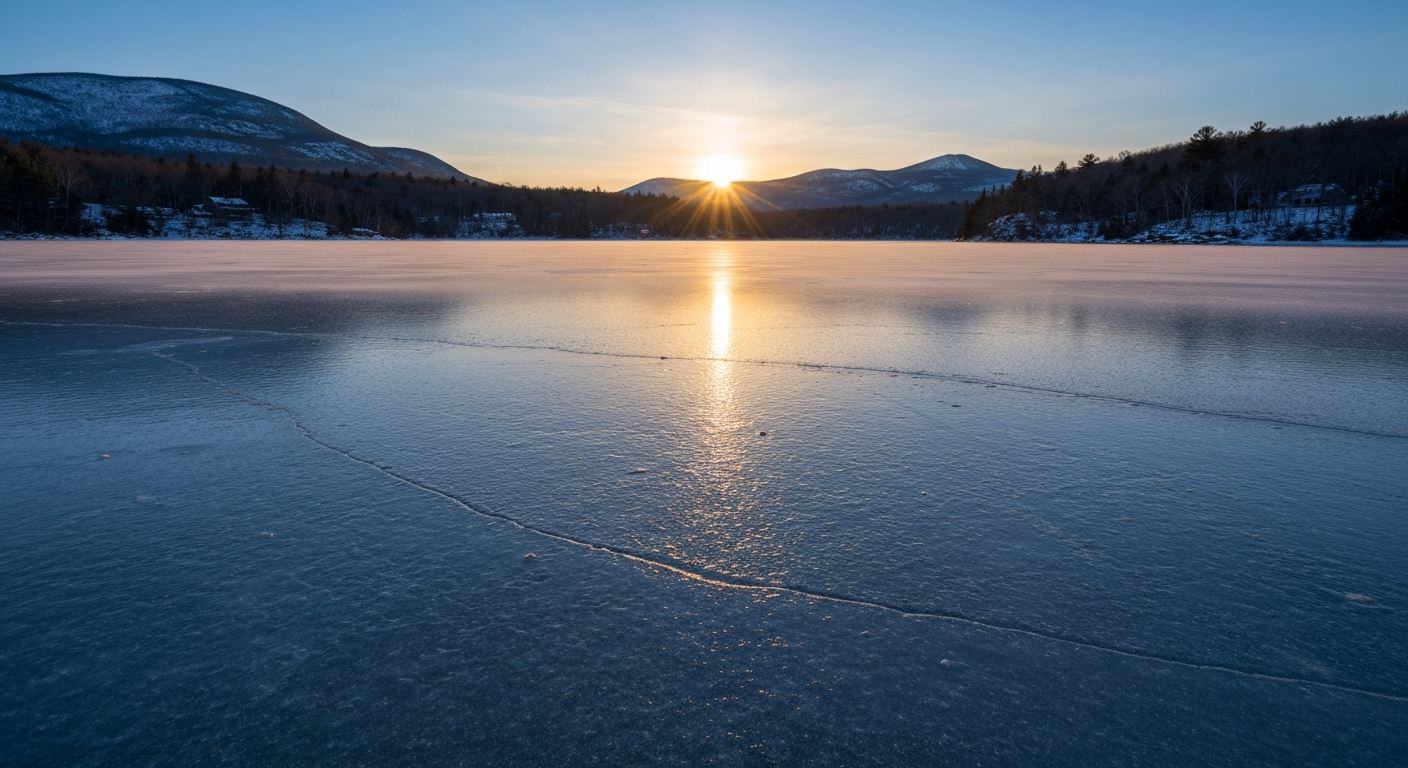
Imagine a winter morning on the banks of Wenham Lake in 1850.
The air is so cold it stings your lungs, and the only sounds are the rhythmic shush-shush of long iron saws and the heavy breathing of workhorses.
Underfoot, the lake has transformed into a slate of blue-black glass, twelve inches thick and perfectly clear.
This wasn’t just a scenic winter landscape; it was an industrial field, and the "frozen gold" being pulled from its depths was about to be shipped to the farthest corners of the globe.
Long before the hum of the electric refrigerator became the heartbeat of the modern kitchen, the North Shore of Massachusetts was the epicenter of a global revolution in cooling.
From the legendary purity of Wenham Lake to the massive commercial operations fueling the Gloucester fishing fleet, the ice industry shaped our communities, our architecture, and our very survival.
In an era when keeping food fresh was a matter of life or death, and a chilled drink was the ultimate luxury, the ponds and rivers of Essex County became a source of immense wealth and innovation.
It was a time when Massachusetts ice was served at the tables of British royalty and used to preserve the catch of sailors a thousand miles out at sea.
Today, we walk past these ponds and see only beauty. But beneath the surface lies a story of grit, ingenuity, and a forgotten trade that once employed thousands of North Shore residents in the dead of winter.
This is the story of how we kept our cool before the world turned electric.
The Birth of the "Ice King": Frederic Tudor and the Global Trade
The story of North Shore ice doesn’t begin with a scientist, but with a daring, and initially mocked, entrepreneur named Frederic Tudor.
In the early 1800s, Tudor hit upon an idea that his contemporaries thought was madness: he would harvest the ice from New England ponds and sell it to the sweltering residents of the Caribbean.
Tudor’s first shipment to Martinique in 1806 was a disaster, most of the ice melted, and he ended up in debtor’s prison.
But the man who would eventually be known as the "Ice King" was relentless. He experimented with insulation, eventually discovering that common sawdust was the perfect material to keep ice frozen for months.
By the 1830s, Tudor’s Massachusetts ice was reaching as far as Calcutta, India, where the sight of a clear block of frozen New England pond water was treated as a miracle of nature.
Historic FactFrederic Tudor didn't just sell ice; he sold the lifestyle. To create a market in tropical climates, he gave away free samples to bartenders, teaching them how to make chilled cocktails, and showed doctors how ice could break a fever. Once people tasted a cold drink, they couldn't go back.
Wenham Lake Purity: A Royal Endorsement
While Tudor pioneered the trade, it was Wenham Lake that became the gold standard.
In the mid-19th century, "Wenham Lake Ice" was a brand name as powerful as any modern luxury label. Its water was exceptionally pure, resulting in ice so transparent that it was said you could read a newspaper through a two-foot-thick block.
The fame of Wenham Lake reached such heights that in 1844, the Wenham Lake Ice Company opened a storefront in the Strand in London.
They placed a massive block of ice in the window with a fresh salmon frozen inside to prove its clarity. The elite of London were captivated.
Queen Victoria herself began demanding Wenham Lake ice for royal banquets, and for a time, no high-society party in London was considered complete without it.
Even after ice began to be harvested locally in Norway to save on shipping costs, the Norwegian companies would still market their product as "Wenham Lake Ice" to capitalize on the North Shore’s reputation for quality.
The Harvest: Turning a Pond into a Grid
Harvesting ice was a meticulously choreographed ballet of men, horses, and iron. It began only when the ice reached a minimum thickness of 8 to 12 inches.
First, the snow was cleared away to allow the ice to freeze deeper. Then, the "marking" began.
Workers used horse-drawn groovers to score a perfect grid into the surface, usually in blocks of 22 by 44 inches. This was followed by a "cutting plow" that deepened the grooves.
The final separation was done by hand, with men using massive iron ice saws to cut the blocks free.

These blocks were then puddled or floated through "canals" cut into the ice toward the shore.
At Tougas’ Pit in Ipswich or the ponds of Essex, long lines of men with "pike poles" would guide the floating blocks toward an inclined wooden ramp.
From there, they were hoisted into the massive ice houses by mechanical elevators or horse-powered pulleys.
Local History SpotlightThe labor was grueling and dangerous. Men often worked in sub-zero temperatures, and if a horse fell through the ice, it required a specialized "choke rope" to save the animal from drowning, a terrifying ordeal for both man and beast.
Architecture of Cold: The Ice House and Sawdust
To store tens of thousands of tons of ice through a sweltering Massachusetts summer, the ice houses had to be marvels of engineering.
These weren't simple sheds; they were massive, windowless structures with double or even triple-thick wooden walls.
The secret was the "dead air" space between the walls, which was packed tight with sawdust, tanbark, or salt hay.
Sawdust, a byproduct of the local lumber industry, was the preferred choice. It was so effective that ice harvested in January could remain frozen until the following autumn, with only about 10% to 15% loss to melting.

On the North Shore, these structures were often the largest buildings in town.
In Salem and Beverly, these "cathedrals of cold" dotted the shorelines of local ponds.
While most are long gone, victims of fire or decay, modern buyers searching for a home can still see the stone foundations of former ice operations if they know where to look along the scenic harbor walks and pond trails of the region.
Fueling the Fleet: Gloucester’s Cape Pond Ice
While Wenham Lake provided luxury ice for tables in London, the Gloucester ice industry provided the lifeblood for the American fishing industry.
Before the mid-1800s, most fish was salted or dried to prevent spoilage. But as consumers began to demand fresh seafood, the need for ice became paramount.
Founded in 1848, the Cape Pond Ice Company became the primary supplier for the Gloucester fishing fleet.
Nathaniel Webster and Francis Homans transformed the industry by building massive storage facilities along the waterfront.
Schooners would pull up to the docks, and blocks of ice would be slid down wooden chutes directly into the holds.

This allowed Gloucester fishermen to stay at sea longer and bring back "fresh-caught" cod and haddock that could be shipped as far as New York and Philadelphia on "ice cars" (early refrigerated rail cars).
The industry was so vital that at its peak, Gloucester was consuming nearly 100,000 tons of ice annually just for its fleet.
The Daily Delivery: The "Ice Man" Cometh
For the average homeowner in Newburyport or Rockport, the ice industry was represented by a single figure: the ice man.
Every morning, horse-drawn wagons would rattle through the streets, carrying 300-pound blocks of frozen pond water.
Households would place a card in their front window indicating how many pounds they needed: 25, 50, 75, or 100.
The ice man would use large iron tongs to hoist a block onto his shoulder, protected by a leather or canvas apron, and carry it into the kitchen’s "icebox."
Did You Know?Children in the 19th century loved the ice man’s visit. As he chipped the blocks to size, small shards of cold, clean ice would fly off, providing a much-coveted summer treat for the neighborhood kids who followed the wagon.

The Hospitality Boom: Grand Hotels and Cold Drinks
The availability of North Shore ice also fueled the region's burgeoning tourism industry.
The grand historic inns and taverns that line our coast relied on local ice houses to serve the "Summer People" who flocked to the shore.
From chilled oysters to the newly popular "ice cream," the luxury of the North Shore summer was built on the hard work of the winter harvest.
The End of an Era: The Rise of the Machine
The decline of the natural ice industry was as swift as its rise. By the 1920s, mechanical refrigeration began to move from industrial plants into private homes.
The "electric icebox" was cleaner, more reliable, and didn't leave a puddle of melted pond water on the kitchen floor.
By the 1940s, most of the North Shore’s commercial ice houses had been abandoned, changing the local real estate landscape forever.
Because they were built of wood and filled with dry sawdust, many succumbed to spectacular fires. Others were simply torn down as towns expanded and the demand for natural ice evaporated.
Today, companies like Cape Pond Ice in Gloucester still exist, but they’ve transitioned to manufacturing their own ice, continuing a 175-year tradition of "icing the fleet" while the natural ponds of Wenham and Ipswich have returned to their quiet, original states.
FAQ: The North Shore Ice Industry
How were ice houses insulated?
Ice houses used a double-wall construction method. The gap between the inner and outer wooden walls, often a foot or more wide, was packed with insulating materials like sawdust, ground cork, tanbark, or salt hay. This prevented heat transfer and kept the interior at a consistent, freezing temperature even during the peak of summer.
Where did North Shore towns harvest their ice?
Harvesting took place on almost every clean freshwater body in the region. Notable locations included Wenham Lake, the Ipswich River, Tougas’ Pit in Ipswich, Chebacco Lake in Essex, and various ponds in Gloucester and Rockport.
How long would stored ice last?
If properly insulated and stacked in a large enough mass, ice could last for up to two years. The sheer thermal mass of thousands of tons of ice packed together acted as its own cooling system, with the sawdust slowing the melt to a negligible rate.
Why was New England ice exported around the world?
New England ice was prized because it was "natural" and exceptionally hard. It was denser than ice formed in warmer climates, meaning it lasted longer and melted slower. The clarity of North Shore ponds also gave it a purity that was unmatched by ice from other regions.
Can any historic ice houses still be visited?
While most of the massive commercial wooden ice houses are gone, you can still see the legacy of the industry at the Cape Ann Museum or by taking a tour of the Cape Pond Ice facility in Gloucester. Many local hiking trails also pass by the stone foundations of former ice operations.
Who was the "Ice King"?
Frederic Tudor of Boston was known as the "Ice King." He was the visionary who first realized that ice could be a global commodity, and he spent decades perfecting the shipping and storage techniques that made the Massachusetts ice trade possible.
Was pond ice safe to consume?
Generally, yes. At the time, the ponds of the North Shore were far from industrial centers and remained remarkably clean. However, as towns grew and pollution became a concern in the late 19th century, the industry began to shift toward "manufactured" ice made from purified water.
What replaced the natural ice industry?
The development of the electric compressor and mechanical refrigeration in the early 20th century allowed ice to be "made" anywhere, anytime. This eliminated the need for seasonal harvesting, massive storage houses, and long-distance shipping.
Final Thoughts
It is easy to take the modern convenience of a cold glass of water or a fresh piece of fish for granted.
We live in an age of instant gratification, where the elements are kept at bay by the flick of a switch. But the history of the North Shore ice houses reminds us of a time when the rhythm of life was dictated by the seasons, and when the frozen surface of a local pond was a source of global wonder.
The men who worked those winter harvests were part of an incredible chain of ingenuity that connected a quiet pond in Wenham to the dining rooms of London and the fishing grounds of the North Atlantic.
As you explore the North Shore today, take a moment to look at our local waters and imagine them as they once were: vast, shimmering fields of "frozen gold" that once helped the world keep its cool.