
Living in Marblehead, MA: A Local Guide to History, Harbor, Beaches & Everyday Life
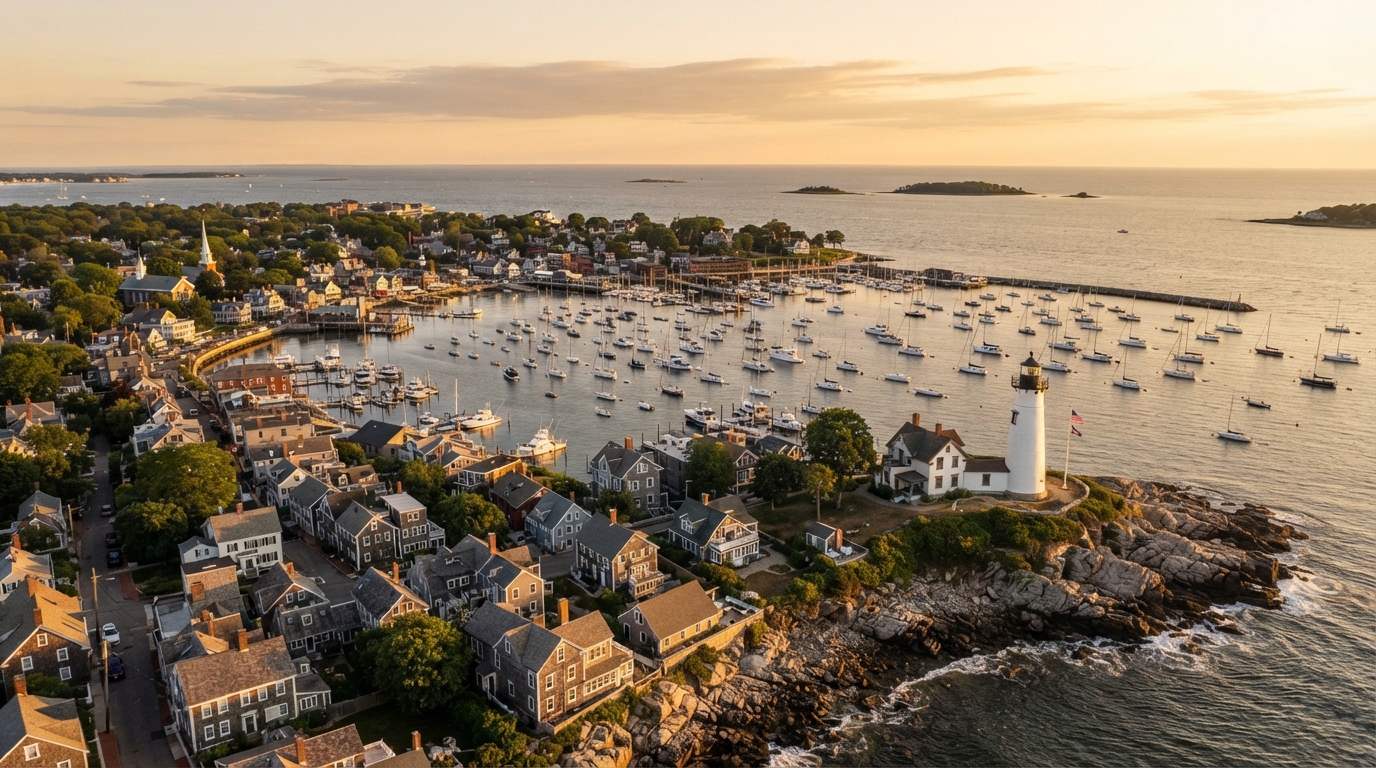
Marblehead is one of the most historically preserved coastal towns in America. Here is what it is actually like to live there — the harbor, Old Town, beaches, Marblehead Neck, commuting, and the housing.
The Short Version
Marblehead is a coastal town of about 20,000 residents, 18 miles from Boston, with one of the highest concentrations of pre-Revolutionary War homes in America. The town has three distinct personalities: the walkable, historic Old Town and harbor area; the private, waterfront Marblehead Neck peninsula; and quieter suburban neighborhoods further out. Marblehead does not have its own commuter rail station — residents use nearby Swampscott or Salem stations (5-10 minutes away). Housing ranges from 18th-century colonials to waterfront estates to mid-century suburban homes. Beaches include Devereux Beach and several smaller coves, with resident parking stickers required in summer. The town is known for its sailing culture, preserved architecture, and strong year-round community identity.
Marblehead at a Glance
Marblehead is a coastal town of roughly 20,000 residents located about 18 miles northeast of Boston on a rocky peninsula jutting into Massachusetts Bay. It borders Swampscott to the south and Salem Harbor to the north. What makes Marblehead unusual is how much of its 18th-century character has survived. The Old Town district contains one of the highest concentrations of pre-Revolutionary War homes in the United States, and the town's narrow, winding streets still follow the same paths laid out centuries ago.
Marblehead is not a single experience. The walkable Old Town and harbor area feels like a historic maritime village. Marblehead Neck feels like a private coastal peninsula. The residential neighborhoods further from downtown feel like a quiet suburban community. Understanding those differences is the key to understanding Marblehead real estate.
County
Essex County
Distance to Boston
~18 miles
Commute
35-45 min drive
Coastline
Marblehead Harbor + Atlantic
What Is It Really Like to Live in Marblehead?
Living in Marblehead is not like living in a typical suburb. The town has a strong, distinct identity built around its maritime history, its harbor, and its unusually preserved architecture. People who live here tend to feel deeply connected to the town, and many residents are multi-generational.
The Old Town area is compact and genuinely walkable. You can walk to coffee, restaurants, shops, the harbor, and the beach. But Marblehead is not universally walkable. The further you get from the town center — especially out toward Marblehead Neck or the western residential areas — the more you need a car for everyday errands.
Summer brings a noticeable increase in visitors, especially around Devereux Beach and the harbor. Traffic on Pleasant Street and Front Street can slow considerably on warm weekends. But unlike some coastal towns, Marblehead does not empty out in winter. It is a year-round community with active civic life, schools, and local businesses.
One thing to understand: Marblehead takes its history seriously. The Marblehead Historical Commission, the Marblehead Museum, and local preservation organizations are active and influential. If you buy an antique home in Old Town, you may encounter preservation considerations that do not exist in newer communities. That is part of what makes Marblehead special, but it is also a practical consideration.
Old Town Marblehead
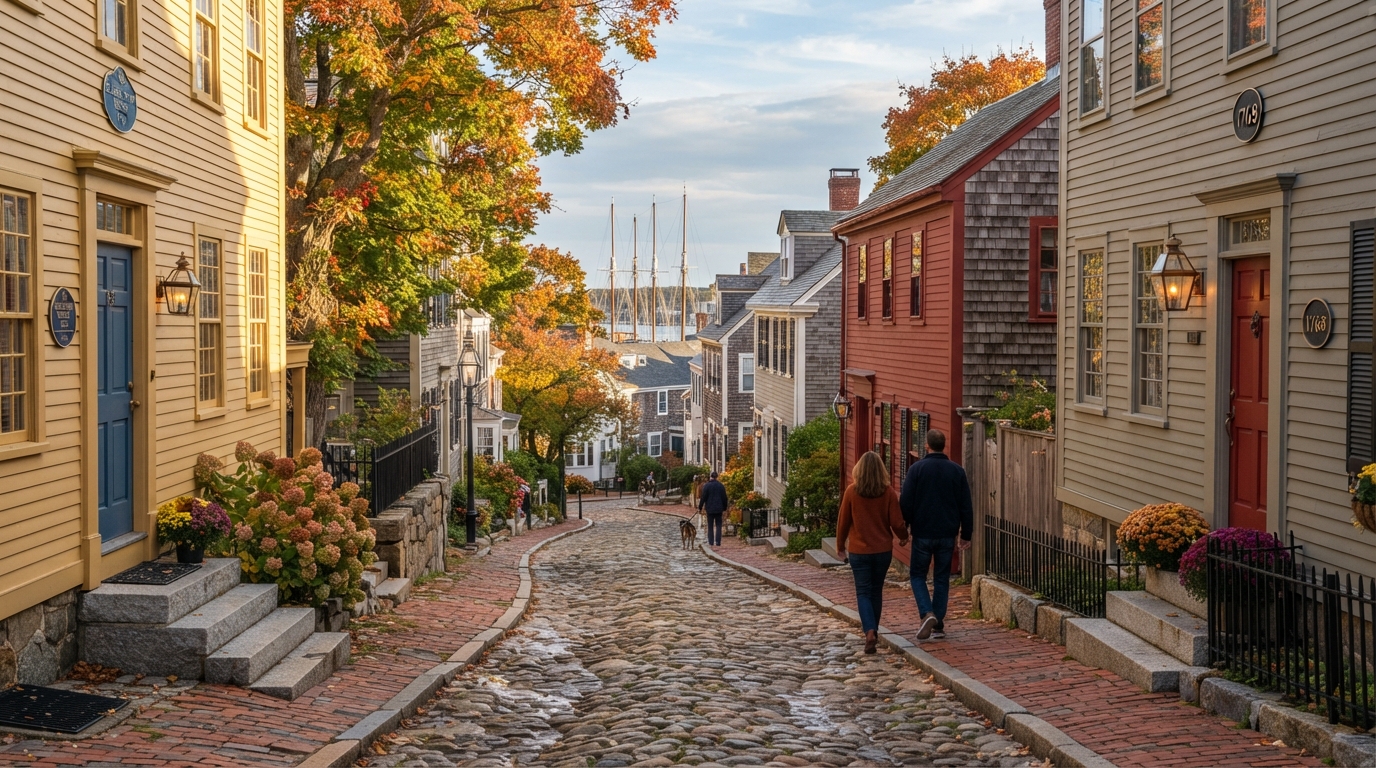
Old Town is the historic heart of Marblehead. Its narrow, winding streets are lined with hundreds of homes built before the American Revolution. Many of these houses are clapboard colonials and Cape-style homes, often with small lots and minimal setbacks — the way they were built in the 1700s.
Walking through Old Town feels different from walking through a restored historic district. These are not museum buildings. They are lived-in homes, and the streets are still used the way they were 250 years ago. That is what makes it remarkable — and also what makes owning a home there different from owning a home in a newer subdivision.
Key streets include Washington Street, Pleasant Street, Front Street, and the many smaller lanes that branch off them. The Marblehead Museum on Washington Street is a useful starting point for understanding the town's history.
Marblehead Harbor
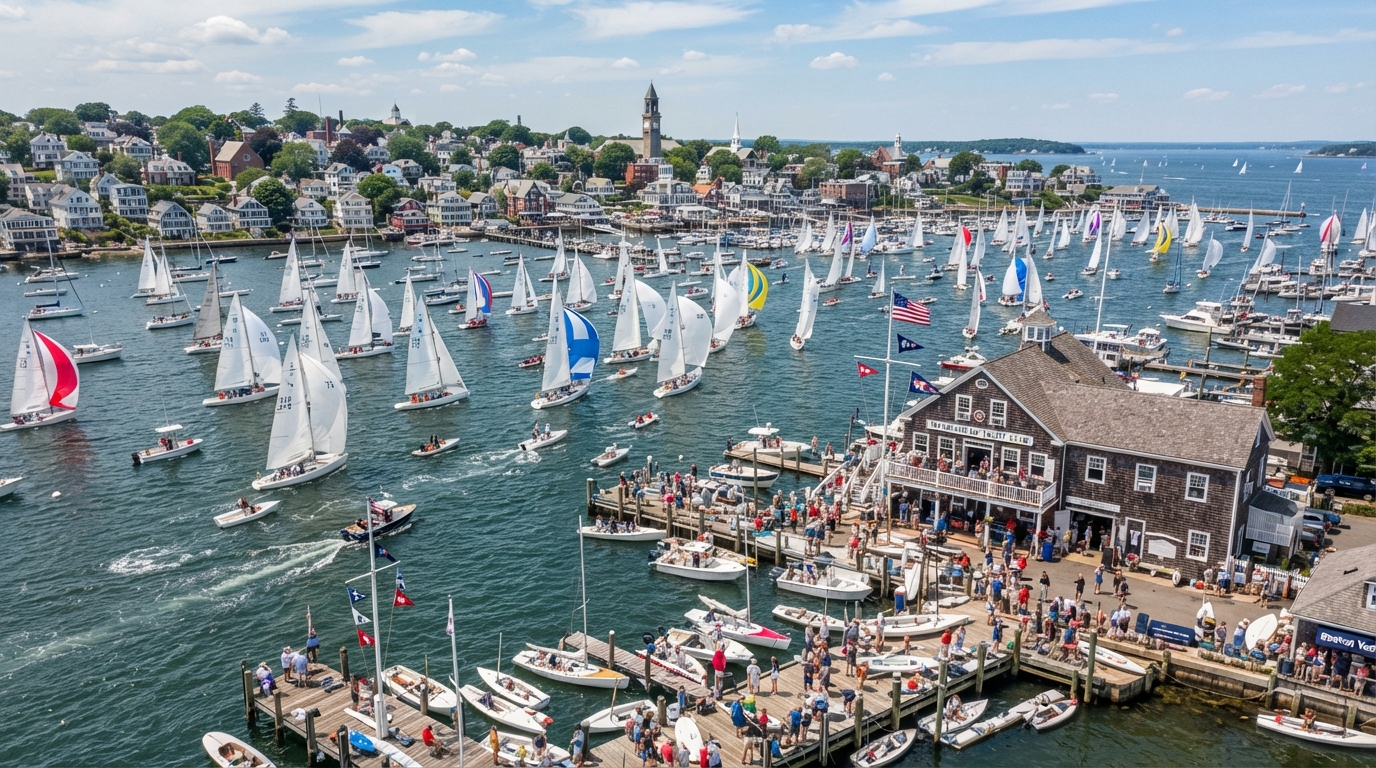
Marblehead Harbor is one of the finest yacht harbors on the East Coast. It is home to several yacht clubs, including the Boston Yacht Club, Eastern Yacht Club, and Marblehead Yacht Club. The harbor fills with sailboats during the summer, and regattas are a regular occurrence.
The harbor is not just scenery. It is central to Marblehead's identity. The town's relationship with sailing and boating shapes its culture, its seasonal rhythm, and even its real estate values. Properties with harbor views or proximity to the waterfront carry a premium.
State Street Landing and other public access points provide ways to experience the harbor even if you do not own a boat. The Marblehead Harbormaster's office manages moorings, docking, and marine services.
Marblehead Neck
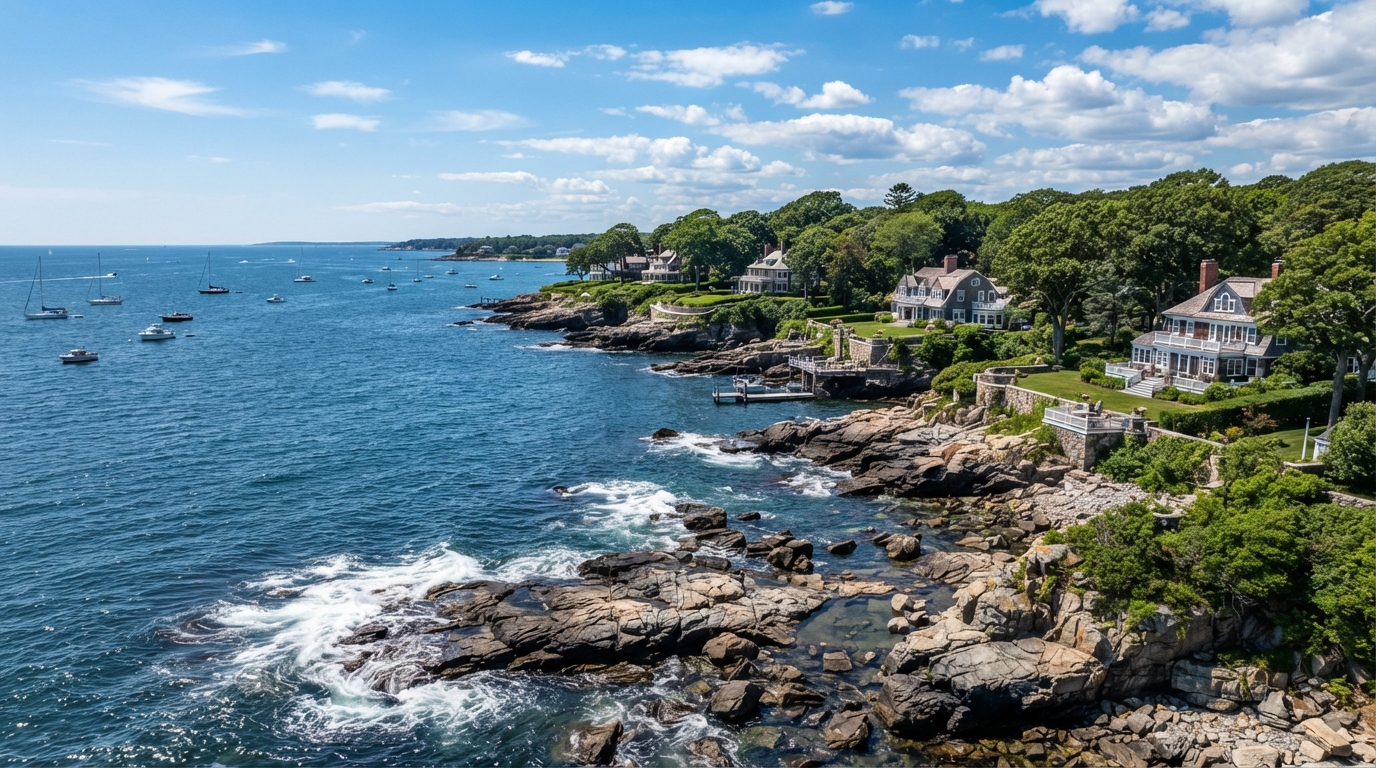
Marblehead Neck is a peninsula that extends southeast into Massachusetts Bay. It is geographically and atmospherically distinct from Old Town. The Neck is known for waterfront estates, rocky shoreline, the Marblehead Light at Chandler Hovey Park, and the Marblehead Neck Conservation Area — a 25-acre preserve maintained by the Town of Marblehead.
Housing on the Neck tends to be larger and more private than in Old Town. Many properties have water views or direct coastal frontage. The streets are wider and more suburban in feel, though the terrain is rocky and wooded in places.
Chandler Hovey Park, at the tip of the Neck, is one of the most scenic spots in Marblehead. The Marblehead Light sits on the rocks, and the park offers panoramic views of the harbor entrance and open ocean. It is a popular spot for sunset watching and photography.
Beaches in Marblehead
Marblehead has several beaches, and access rules vary. The largest is Devereux Beach, located on Ocean Avenue. It has a sandy shoreline, lifeguards in season, and a parking lot managed by the town. Resident stickers and non-resident fees apply during the summer season. Check the Town of Marblehead website for current parking fees and rules.
Grace Oliver Beach is a smaller, quieter beach on the harbor side. Other coastal access points exist but are more limited. It is important to understand that not every stretch of Marblehead coastline is publicly accessible — some areas are private or have restricted parking.
Beach Access Note
Beach parking rules, resident sticker requirements, and fees change seasonally. Always verify current information with the Town of Marblehead before planning a beach visit.
Things to Do in Marblehead
Marblehead offers more than beaches and boating. The Marblehead Museum tells the story of the town's maritime and military history. Fort Sewall, a former coastal fortification overlooking the harbor, is now a public park with dramatic water views. Abbot Hall, the town's municipal building, houses the famous painting "The Spirit of '76" by Archibald Willard.
Crocker Park, on the harbor side, offers walking paths and waterfront views. Chandler Hovey Park at the tip of Marblehead Neck is one of the best sunset spots on the North Shore. The Marblehead Neck Conservation Area has trails through woods and along the rocky coast.
In summer, Marblehead Race Week is one of the largest sailing regattas in the country. The town also hosts the Marblehead Festival of Arts over July 4th weekend and a Christmas Walk in December that draws visitors from across the region.
Restaurants & Coffee in Marblehead
Marblehead's dining scene is concentrated in the Old Town and harbor areas. Atlantic Avenue, Washington Street, and Pleasant Street have the highest concentration of restaurants and cafes. Options range from casual seafood and harbor-side dining to upscale restaurants.
Several restaurants have harbor views, particularly along Front Street and near State Street Landing. Coffee shops and bakeries are walkable from most of Old Town. Restaurant options change frequently, so verify current operations before visiting.
For a broader range of dining, Salem is just a few minutes away and offers one of the most diverse restaurant scenes on the North Shore.
Marblehead's History
Marblehead was settled in 1629 and incorporated in 1649. It began as a fishing village and grew into one of the most important maritime communities in colonial America. The town's fishermen were among the first to challenge British authority, and Marblehead sailors played a critical role in the American Revolution — including manning the boats that crossed the Delaware with George Washington.
In the 19th century, Marblehead transitioned from fishing to yachting. The town became a summer destination for wealthy Bostonians, and the yacht clubs that define Marblehead's harbor culture were established during this period. Many of the grand homes on Marblehead Neck date from this era.
The preservation of Old Town is not accidental. Marblehead residents have fought to protect the town's historic character for generations, and that commitment is visible in every street. The Marblehead Museum is an excellent resource for learning more.
Getting Around Marblehead
Marblehead is accessible by car via Route 114, which connects to Route 1A and eventually to Route 128/I-95. Pleasant Street and Atlantic Avenue are the main arteries through town. Traffic can be heavy in summer, especially on weekends and around Devereux Beach.
Walkability depends on where you live. Old Town and the harbor area are genuinely walkable. Marblehead Neck and the outer residential areas are more car-dependent. Parking in Old Town can be tight, especially during summer events.
Marblehead does not have its own MBTA commuter rail station. The nearest stations are in Swampscott and Salem. Local bus service is limited.
Commuting from Marblehead to Boston
Driving from Marblehead to downtown Boston typically takes 35 to 45 minutes in normal traffic, longer during rush hour. The route generally follows Route 114 to Route 1A or I-90 (Mass Pike) via the Ted Williams Tunnel.
For commuter rail, Marblehead residents use nearby stations. Swampscott station is about 5 minutes by car and provides service to North Station on the Newburyport/Rockport Line. Salem station is about 10 minutes away and offers the same line with more frequent service.
Commute strategy can influence where in Marblehead someone chooses to live. If you plan to use the train regularly, proximity to Swampscott or Salem station matters. If you drive, access to Route 114 is the key factor.
Homes & Architecture in Marblehead
Marblehead's housing stock is unusually diverse for a town of its size. In Old Town, you will find 18th-century colonials, antique Capes, and Federal-style homes, many with small lots and historic preservation considerations. On Marblehead Neck, the housing shifts to larger waterfront estates and coastal properties with water views.
The central and western residential areas have mid-century suburban homes, ranches, and some newer construction. Condominiums exist but are less common than single-family homes. The town's overall housing market tends to be among the most expensive on the North Shore.
Marblehead is not one housing market. A historic colonial in Old Town, a waterfront estate on the Neck, and a suburban home near the Swampscott border are very different properties with very different value drivers, inspection needs, and buyer pools.
Buying a Home in Marblehead
If you are considering buying in Marblehead, here are some things to keep in mind:
- Historic homes in Old Town may have preservation restrictions, old systems, and unique maintenance needs
- Properties near the coast may involve flood zone considerations, seawalls, or insurance requirements
- Marblehead Neck properties can have private road considerations and coastal exposure
- Parking is limited in Old Town — some properties have no off-street parking
- Commuting without a car requires proximity to Swampscott or Salem station
- Inventory is typically tight, especially for homes under $1 million
Selling a Home in Marblehead
Pricing and marketing a Marblehead property depends heavily on location and property type. An antique colonial in Old Town should not be marketed the same way as a waterfront estate on Marblehead Neck or a suburban home near the Swampscott border. Each attracts a different buyer with different priorities.
Factors that influence positioning include architectural character, harbor or ocean views, proximity to downtown, lot size, parking, condition, and renovation history. Historic homes can be a major selling point when presented correctly — but they also require buyers who understand what they are getting into.
I have been working in North Shore real estate since 2003. If you are thinking about selling a home in Marblehead, I can help you understand how your specific property fits into the current market.
Kathleen's Marblehead Perspective
Marblehead is a town that rewards understanding. It looks compact on a map, but the lifestyle changes significantly depending on whether you are in Old Town, on the Neck, or in one of the outer residential areas. A listing that says "Marblehead" does not tell you whether the home is a walkable antique colonial or a secluded waterfront estate.
I have been working in North Shore real estate since 2003, and I have spent that time getting to know these communities property by property. If you are considering Marblehead — whether buying, selling, or just trying to understand the town — I am always happy to talk about it.
Questions People Actually Ask About Marblehead
Official Marblehead Resources
Town of Marblehead
Official municipal website
Marblehead Museum
Local history and maritime heritage
Marblehead Public Schools
School district information
MBTA Newburyport/Rockport Line
Commuter rail schedules
Marblehead Harbormaster
Mooring, docking, and marine services
Abbot Public Library
Community library and events
Related North Shore Guides
Which North Shore Town is Right For You?
An honest town-by-town comparison of commutes, beach access, and home prices.
Living in Salem, MA
The fastest commute on the North Shore and a walkable downtown.
Living in Beverly, MA
Five commuter rail stops, Cabot Street arts, and beaches at Lynch Park.
Understanding North Shore Beach Rights
A buyer's guide to deeded access and private beaches.
The Ultimate Guide to Buying Waterfront Property
How to evaluate seawalls, flood zones, docks, and coastal property values.
The Best Commuter Towns for Hybrid Workers
Top North Shore towns balancing MBTA access with coastal lifestyle.
Have a Question About Marblehead?
Marblehead can be surprisingly different from one neighborhood to the next. If you are trying to understand a particular area, property, or part of town, I am always happy to talk about it.
Connect With Kathleen