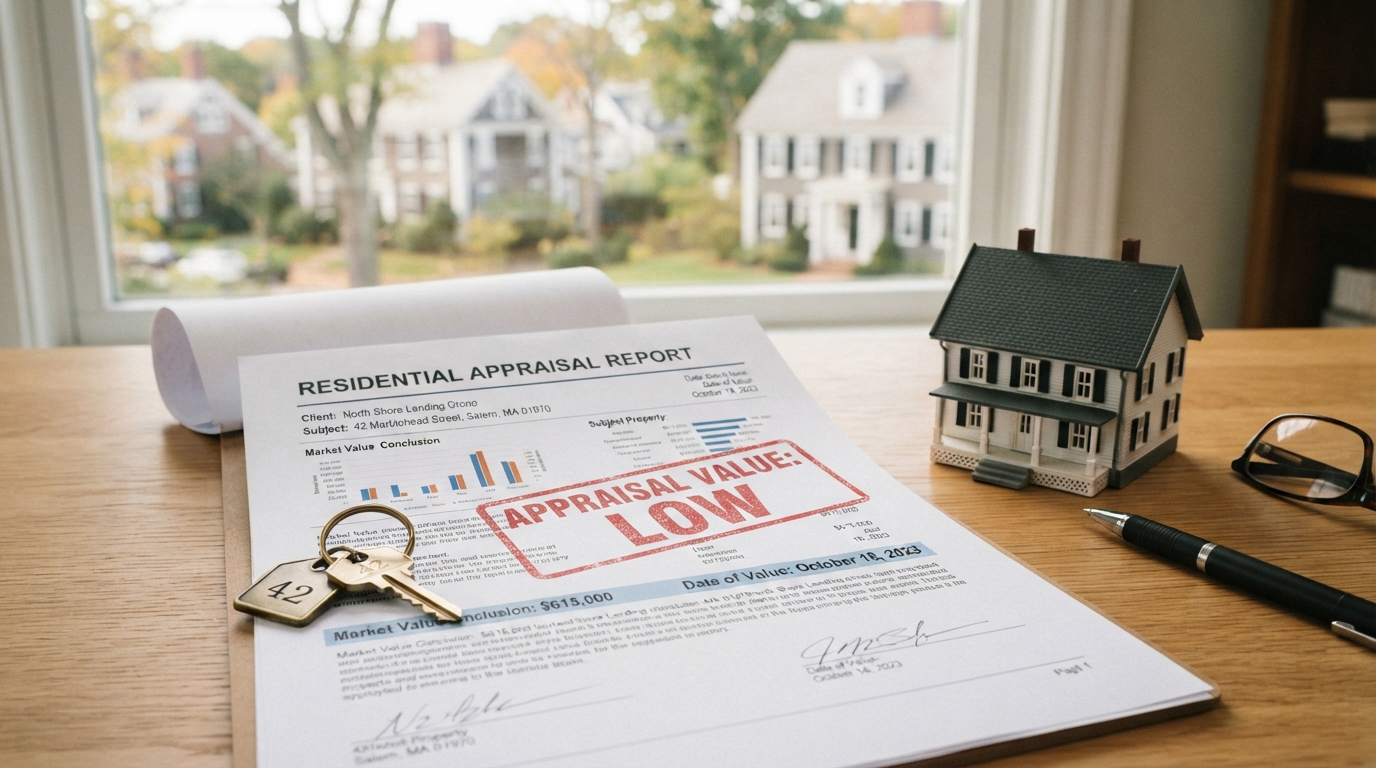
You found the home. You made the offer. The seller accepted. Then the appraisal comes back $30,000 below the agreed price. This is one of the most stressful moments in a real estate transaction, and it happens more often than most buyers expect, especially in a market where prices are rising faster than appraisers can track.
The Short Version
When the appraisal comes in below the purchase price, the lender will only finance based on the appraised value, not what you agreed to pay. You have 5 options: cover the gap in cash, renegotiate the price down, split the difference, challenge the appraisal, or walk away using your appraisal contingency.
If your offer included an appraisal contingency, you can terminate the contract and recover your deposit. If you waived it, you are legally obligated to proceed — which means covering the gap yourself or risking default. Most North Shore buyers and sellers end up splitting the difference.
What Is an Appraisal Gap?
An appraisal gap is the difference between what you agreed to pay for a home and what a licensed appraiser says the home is worth. Lenders use the appraisal to determine how much they are willing to finance. If the appraisal comes in below the contract price, the lender will only loan based on the appraised value, not the purchase price.
For example, if you agreed to pay $850,000 for a home in Gloucester and the appraisal comes in at $820,000, there is a $30,000 gap. Your lender will finance up to 80% (or whatever your loan-to-value ratio is) of $820,000, not $850,000. That means you need to cover the difference somehow, or the deal falls apart.
Why Do Appraisals Come in Low?
Appraisals are based on recent comparable sales, typically within the last 3 to 6 months. In a rising market, sale prices can move faster than the comparable data available to appraisers. If homes in your target neighborhood have been selling for progressively higher prices over the past few months, the appraiser may not have enough recent comps to justify the price you agreed to pay.
On the North Shore, this happens frequently in coastal communities like Manchester-by-the-Sea, Marblehead, and Rockport, where waterfront properties are unique and comparable sales are limited. A home with ocean views or direct beach access may have no true comparable sale in the past six months, making the appraisal more subjective.
Common Reasons for Low Appraisals
- Rising market prices outpacing recent comparable sales data
- Unique or waterfront properties with limited comparable sales
- Multiple-offer situations driving prices above appraised value
- Appraiser unfamiliar with the local North Shore micro-market
- Home condition issues discovered during the appraisal inspection
Your 5 Options When the Appraisal Comes in Low
1. Cover the Gap in Cash
You can pay the difference between the appraised value and the purchase price out of pocket. This keeps the deal on track at the original price, but it requires you to have the additional cash available. Before doing this, consider whether overpaying relative to the appraisal makes financial sense for your long-term goals.
2. Renegotiate the Price Down
You can ask the seller to reduce the purchase price to match the appraised value. Sellers often consider this because the next buyer's appraisal may also come in low, putting the seller back at square one. This is one of the most common outcomes, especially when the gap is moderate.
3. Split the Difference
Buyer and seller can negotiate a compromise where each side covers part of the gap. For a $30,000 gap, the seller might reduce the price by $15,000 and the buyer brings an additional $15,000 in cash. This is often the fastest path to keeping the deal together.
4. Challenge the Appraisal
Your agent can gather additional comparable sales that support a higher value and submit them to your lender for a reconsideration of value. The lender forwards the request to the appraiser, who may or may not revise the appraisal. This works best when there are genuinely better comps the appraiser missed or could not access.
5. Walk Away
If your purchase and sale agreement includes an appraisal contingency, you can terminate the contract and recover your earnest money deposit. This is your protection against being forced to overpay. Without an appraisal contingency, walking away may mean forfeiting your deposit.
The Appraisal Contingency: Your Safety Net
An appraisal contingency is a clause in your offer that makes the purchase contingent on the home appraising at or above the agreed purchase price. If the appraisal comes in low, you have the right to renegotiate or walk away without losing your deposit.
In competitive North Shore markets, some buyers waive the appraisal contingency to make their offer more attractive. This is a serious decision. If you waive it and the appraisal comes in low, you are legally obligated to proceed, which means covering the gap in cash or risking default.
Kathleen's Take
I have seen appraisal gaps on the North Shore range from $5,000 to over $75,000. The key is not to panic. A low appraisal is a negotiation, not a dead deal. The most important thing you can do before making an offer is understand whether your contract includes an appraisal contingency, and if not, whether you have the cash reserves to cover a potential gap. We talk through this before you ever submit an offer, not after the appraisal comes back.
How to Reduce Your Risk of a Low Appraisal
While you cannot control the appraisal, you can reduce the likelihood of a problem:
- Review comparable sales with your agent before making an offer so your price is grounded in data
- Avoid overbidding in multiple-offer situations unless you can cover a potential gap
- Keep your appraisal contingency unless you have a specific reason to waive it
- Ask your lender whether they use local appraisers familiar with North Shore micro-markets
- Have your agent prepare a comp packet for the appraiser at the time of inspection
What Sellers Should Know
If you are selling a North Shore home, a low appraisal can kill your deal. To reduce this risk, price your home based on solid comparable data, not aspirational numbers. If you receive an offer well above your list price in a bidding war, understand that the appraisal may not support that price, and be prepared to negotiate.
Sellers who refuse to negotiate after a low appraisal often find themselves back on the market, where the next buyer's appraisal may come in equally low. A pragmatic approach keeps the transaction moving and avoids weeks of delay.
Frequently Asked Questions
Related Reading
Worried About an Appraisal Gap?
Let's talk through your offer strategy before you submit. Understanding your appraisal risk is part of making a smart North Shore purchase.
Ask Kathleen About Your Offer