What Is a Home Appraisal? How the Massachusetts Appraisal Process Works for North Shore Buyers
A home appraisal determines what a property is worth — and your lender won't finance more than that number. Here's how the process works in Massachusetts, what appraisers look for, what it costs, and what to do if it comes in low.
Kathleen Militello
REALTOR®, eXp Realty · North Shore Coastal Homes & Living
If you're getting a mortgage to buy a home in Massachusetts, a home appraisal is not optional. Your lender will order one, you will pay for it, and the result can determine whether your deal moves forward — or falls apart.
Most buyers have only a vague idea of what an appraisal is, how it differs from a home inspection, and what happens if the number comes back lower than expected. Let's clear that up.
What Is a Home Appraisal?
A home appraisal is an independent, professional estimate of a property's market value, conducted by a licensed appraiser. The appraiser visits the property, inspects its condition and features, researches recent comparable sales in the area, and produces a detailed report with a final opinion of value.
Your lender requires an appraisal because they need to confirm the home is worth the amount you're borrowing. If you default on the mortgage, the lender needs to know they can recover the loan amount by selling the property. The appraisal is their safety net — and yours. It prevents you from overpaying for a home that isn't worth what you agreed to pay.
Appraisal vs. Home Inspection — What's the Difference?
A home inspection evaluates the physical condition of the property — the roof, plumbing, electrical, HVAC, foundation, and more. It tells you what's broken and what needs repair. An appraisal estimates the property's market value. It tells you what the home is worth. You need both. The inspection protects you from buying a money pit. The appraisal protects you (and your lender) from overpaying.
When Does the Appraisal Happen?
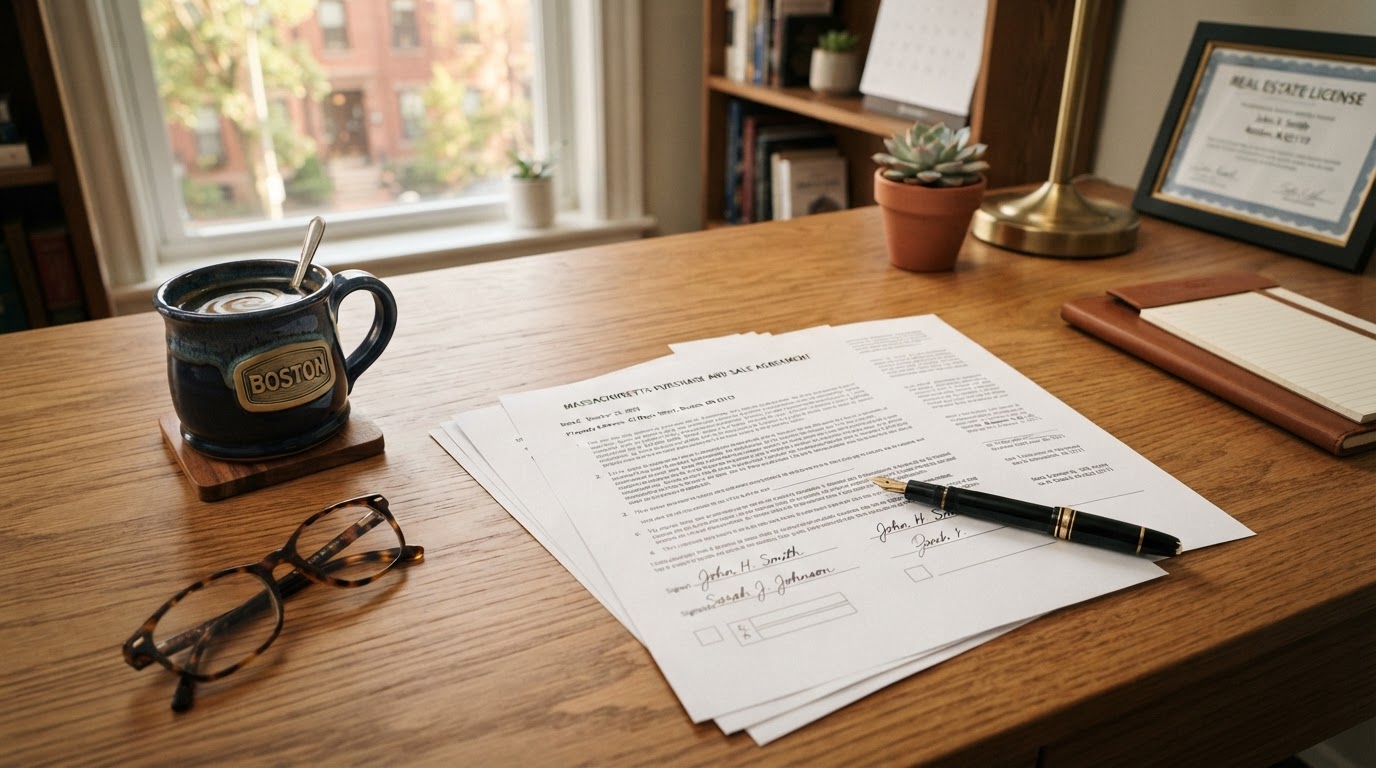
The appraisal is typically ordered by your lender shortly after you and the seller sign the Purchase and Sale (P&S) agreement. Here's where it fits in the Massachusetts transaction timeline:
- Offer accepted — You and the seller agree on price and terms.
- Home inspection — Usually within 7–10 days of the accepted offer.
- P&S signed — Typically 10–14 days after the offer is accepted.
- Appraisal ordered — The lender orders the appraisal within a few days of receiving the signed P&S.
- Appraisal completed — Usually within 1–2 weeks of being ordered.
- Closing — Typically 30–45 days after the P&S is signed, after the appraisal and final loan approval are complete.
What Appraisers Look For During the Inspection

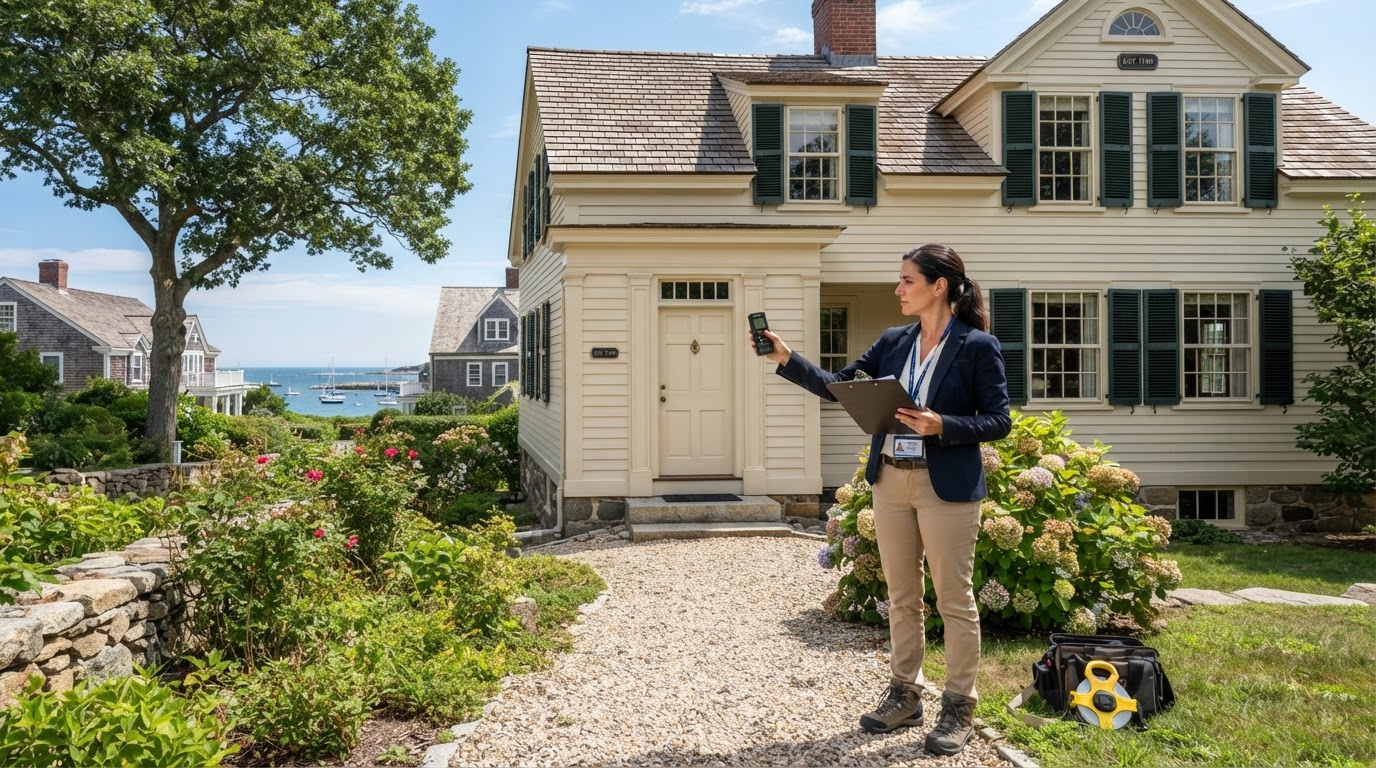
The appraiser's on-site visit typically takes 30 to 90 minutes, depending on the size and complexity of the property. They're not doing a deep-dive inspection of every system like a home inspector would. They're assessing the factors that drive market value:
On the North Shore, appraisers pay special attention to factors that significantly affect value: proximity to the ocean, water views, historic district status, flood zone designation, and lot characteristics like private roads or shared driveways. A waterfront home in Gloucester will be appraised differently than a similar-sized colonial in a suburban Danvers neighborhood — the appraiser accounts for these location premiums.
How the Appraiser Determines Value
Appraisers use three approaches to estimate value, though the sales comparison approach is the most common for residential properties:
Sales Comparison
The primary method. The appraiser finds 3–5 recent sales of similar homes nearby (comps) and adjusts for differences in size, condition, features, and location.
Cost Approach
Estimates what it would cost to rebuild the home from scratch, minus depreciation. Often used for new construction or unique properties with few comps.
Income Approach
Used for investment properties and multi-family homes. Estimates value based on the rental income the property can generate.
For most North Shore single-family home purchases, the appraiser will rely on the sales comparison approach. They'll pull recent sales from the MLS and public records — typically homes that sold within the last 3–6 months within a 1-mile radius — and adjust the comp values up or down based on differences from your subject property.
How Much Does a Home Appraisal Cost?
In Massachusetts, a standard single-family home appraisal typically costs:
| Property Type | Typical Cost |
|---|---|
| Single-family home (standard) | $500–$800 |
| Condo or townhouse | $450–$650 |
| Multi-family (2–4 units) | $700–$1,200 |
| Waterfront or luxury home | $800–$1,500+ |
| Historic or unique property | $800–$1,500+ |
The buyer pays for the appraisal at closing, even though the lender orders it. It's a closing cost, not a fee you pay upfront.
What Happens If the Appraisal Comes In Low?

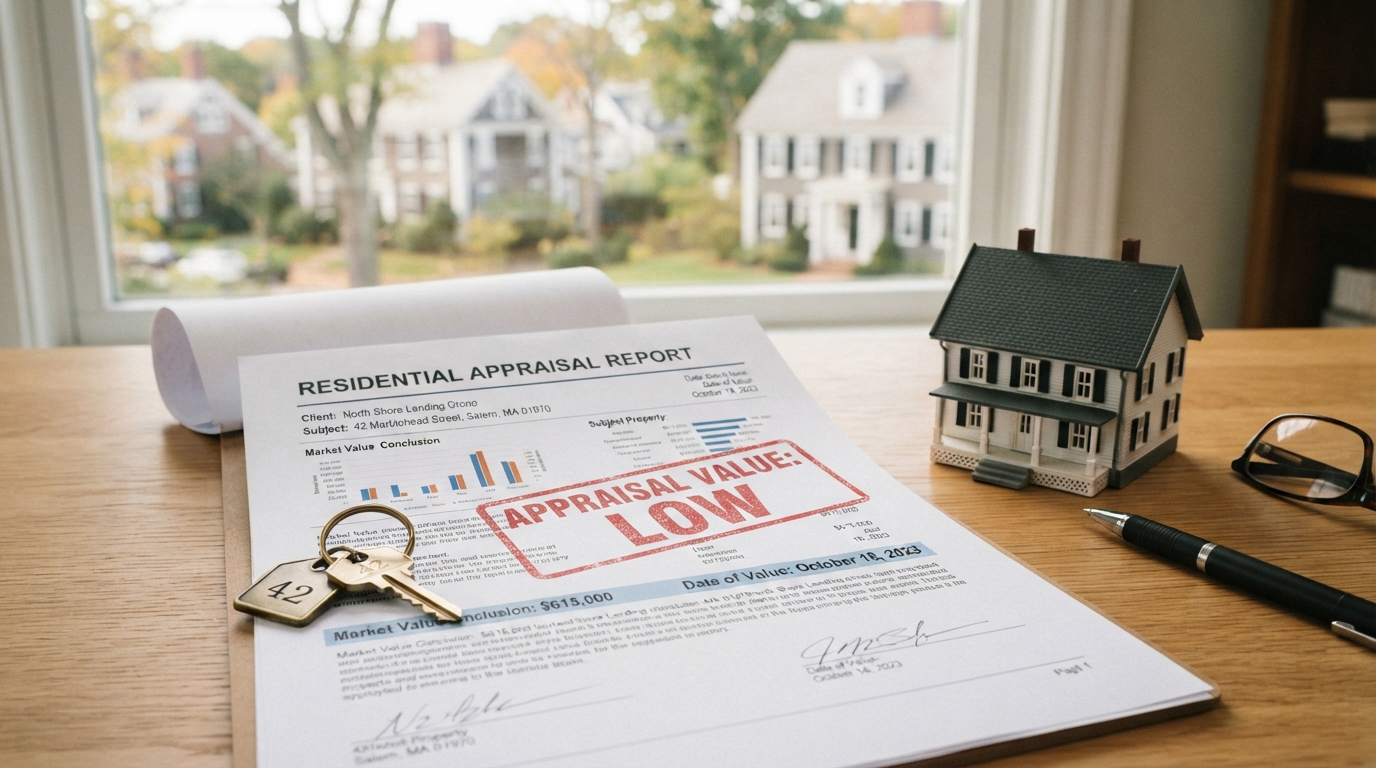
This is the scenario every buyer worries about. You agree to pay $650,000 for a home. The appraisal comes in at $620,000. Your lender will only finance based on $620,000 — not the $650,000 you agreed to pay. That $30,000 gap is now your problem.
You have several options:
Renegotiate the price
Ask the seller to lower the price to the appraised value. In a buyer's market or with a motivated seller, this often works. In a multiple-offer situation, it may not.
Make up the difference in cash
You bring extra cash to closing to cover the gap between the appraised value and the purchase price. The lender still finances based on the appraisal — you pay the difference out of pocket.
Challenge the appraisal
Your agent can provide additional comparable sales data that the appraiser may have missed. If the appraiser agrees the new comps support a higher value, they can revise the report. This works best when the appraiser used outdated or distant comps.
Walk away
If you have an appraisal contingency in your P&S, you can terminate the deal and recover your earnest money. This is your safety net — and one reason the contingency matters.
Split the difference
The seller reduces the price partway, and you bring some cash to close the remaining gap. This is a common compromise when both sides want the deal to happen.
The appraisal contingency is critical
Your P&S agreement should include an appraisal contingency that lets you walk away with your earnest money if the appraisal comes in below the purchase price and you can't reach an agreement with the seller. Without this contingency, you may be obligated to buy the home even if it appraises low — or forfeit your deposit.
North Shore Factors That Affect Appraisals
The North Shore has characteristics that can complicate appraisals:
- Historic homes: Properties built in the 1700s and 1800s can be difficult to appraise because comparable sales are scarce. Appraisers may need to look at homes in other historic North Shore communities.
- Waterfront premiums: Homes with ocean access, water views, or private beaches command significant premiums. If the appraiser is not local, they may underestimate the value of waterfront proximity.
- Flood zones: Properties in FEMA flood zones may appraise lower because of required flood insurance costs and perceived risk.
- Private roads: Homes on private roads or shared driveways can be harder to finance and may appraise slightly lower due to access and maintenance concerns.
- Unique properties: The North Shore has many one-of-a-kind properties — converted barns, former commercial buildings, multi-generational compounds. These can be appraisal challenges because there are no true comparables.
Worried About the Appraisal?
I've helped North Shore buyers navigate low appraisals, challenge questionable valuations, and negotiate gaps with sellers. Let's talk strategy before you make an offer.
Frequently Asked Questions
Kathleen Militello
Kathleen Militello is a REALTOR® with eXp Realty serving Boston's North Shore and Essex County. With over 20 years of experience, she specializes in coastal homes, historic properties, and helping buyers navigate every step of the transaction — including the appraisal process and what to do when it doesn't go as planned.