
What Does Escrow Mean?
The word "escrow" comes from the Old French word escroue, meaning a scroll or a deed held by a third party. In real estate, escrow is simple in concept: a neutral third party holds money, documents, or property until all conditions of a transaction are satisfied. Only then does the money or property change hands.
Think of escrow as a safety deposit box with two keys. The buyer puts money in. The seller puts the deed in. Neither side can open the box alone — the escrow agent only releases the contents when both parties have met their obligations.
In Massachusetts real estate, escrow comes into play at two distinct stages: during the transaction (when your earnest money is held) and after closing (when your lender manages an account for property taxes and insurance). Understanding both is essential.

Escrow During the Transaction: Your Earnest Money
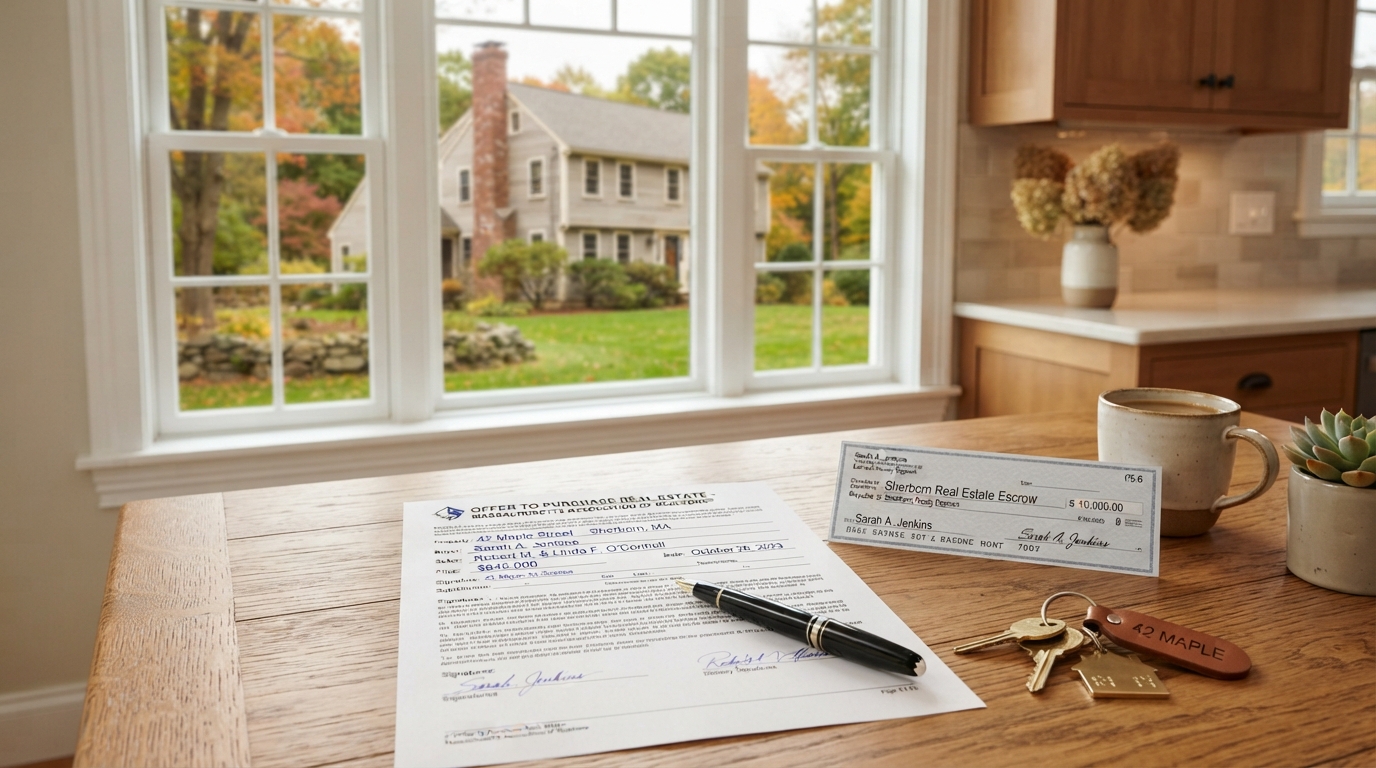
When you make an offer on a home in Massachusetts, you include an earnest money deposit — a good-faith payment showing the seller you are serious. That money does not go to the seller directly. It goes into an escrow account held by a neutral third party.
In Massachusetts, the escrow agent is typically one of the following:
- The listing broker's escrow account, regulated by the Massachusetts Real Estate Board
- The seller's attorney's Interest on Lawyers' Trust Account (IOLTA), regulated by the Board of Bar Overseers
- In some cases, the buyer's attorney's trust account
The funds remain in escrow until one of three things happens: the deal closes and the money is applied as a credit toward your purchase, the deal falls through under a valid contingency and the money is returned to you, or the buyer defaults and the money is released to the seller. In every case, both parties must sign a release before the escrow agent can disburse the funds.
Why Escrow Matters
Without escrow, the seller would have to trust that you will actually close. And you would have to trust that the seller will not cash your check and walk away. Escrow removes the need for trust — the neutral third party holds the money until both sides have done what they promised. For a deeper dive, read our earnest money deposit guide.
The Escrow Timeline in a Massachusetts Transaction
Here is how escrow works step by step in a typical Massachusetts home purchase:
Offer Accepted
You submit an offer with an earnest money deposit (typically $1,000–$5,000). The deposit goes into the listing broker's or seller's attorney's escrow account.
Inspection Period
Your deposit is held in escrow while you complete the home inspection. If you terminate under the inspection contingency, the escrow agent returns your money after both parties sign a release.
P&S Signing
You sign the Purchase and Sale Agreement and make a second, larger deposit (typically 3–5% of the purchase price). This also goes into the same escrow account.
Mortgage Commitment
Your lender issues a mortgage commitment. If you cannot secure financing by the deadline and have a financing contingency, your escrow funds are returned.
Closing
The closing attorney handles the final settlement escrow. Your earnest money is applied as a credit toward your purchase. The deed and funds are transferred through the closing escrow.
Escrow After Closing: Your Property Tax and Insurance Account
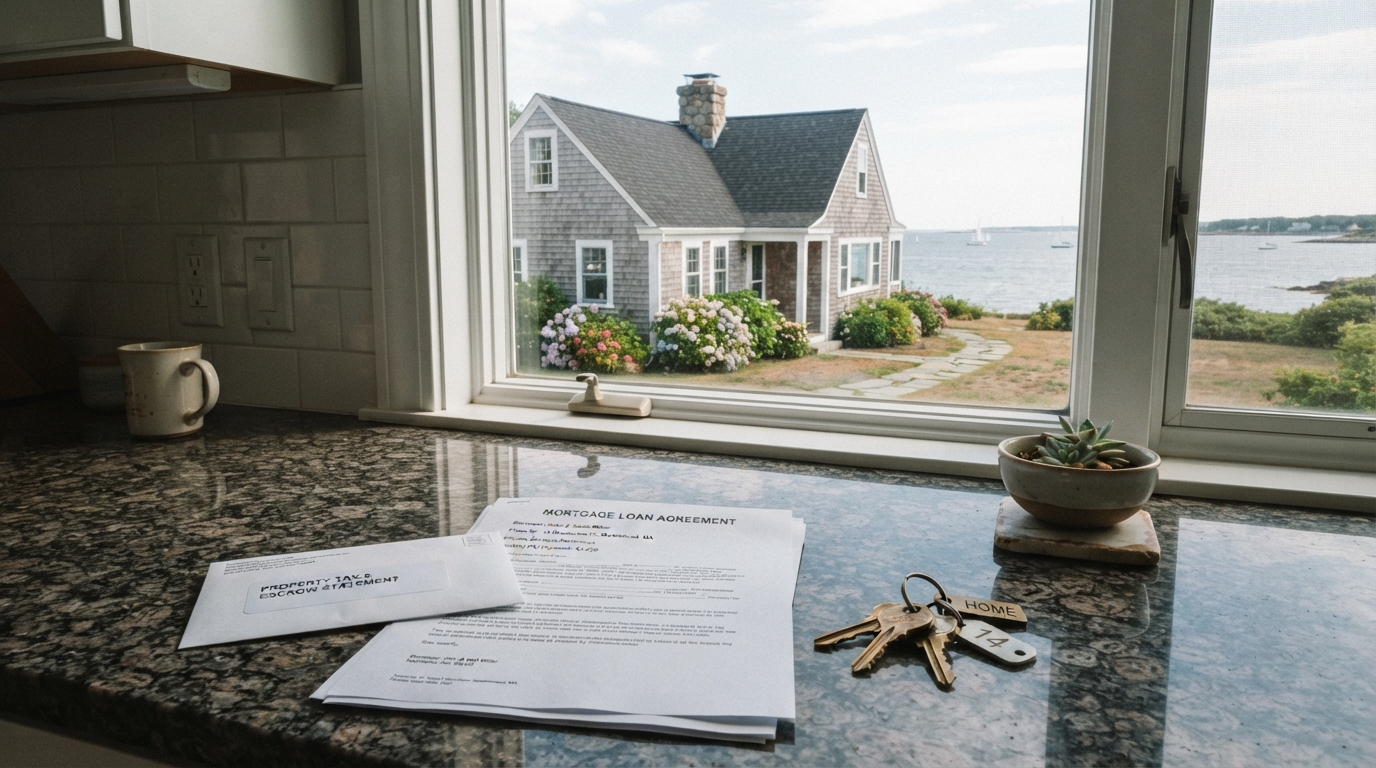
The second type of escrow begins after you close. Most mortgage lenders in Massachusetts require borrowers to maintain an escrow account (also called an impound account) for property taxes and homeowners insurance. This is a completely separate arrangement from the transaction escrow described above.
Here is how it works:
- Your lender estimates your annual property taxes and homeowners insurance premiums.
- They divide the total by 12 and add that amount to your monthly mortgage payment.
- Each month, the lender deposits the escrow portion into a dedicated account.
- When your tax bill or insurance premium is due, the lender pays it directly from the escrow account.
- You receive an annual escrow analysis statement showing all deposits and payments.
Why Lenders Require Escrow
If you stop paying property taxes, the city can place a tax lien on your home — which takes priority over the lender's mortgage. If you let your insurance lapse and the home is damaged, the lender's collateral is unprotected. Escrow ensures these critical bills are always paid on time.
When Escrow Is Required
If your down payment is less than 20%, most lenders require an escrow account. Once you reach 20% equity on a conventional loan, you may request to waive it. FHA loans require escrow for the life of the loan. VA loans require it for at least the first several years.
The Annual Escrow Analysis: Why Your Payment Changes
Every year, your lender conducts an escrow analysis — a review of your escrow account to compare projected tax and insurance costs with what was actually paid. This is why your monthly mortgage payment can change from year to year, even if you have a fixed-rate mortgage.
On the North Shore, property tax bills typically go out twice a year (in most Essex County municipalities). If your town reassesses property values or overrides the Proposition 2½ cap — as several North Shore communities have done in recent years — your tax bill can rise significantly, and your escrow payment will increase accordingly.
If the analysis shows a shortage (your escrow account does not have enough to cover the next year's bills), the lender will typically offer to spread the repayment over 12 months. If there is a surplus of more than $50, the lender must refund the excess. For more on how property taxes work on the North Shore, read our property tax exemptions guide.
Watch for the Cushion
Federal law allows lenders to keep a cushion in your escrow account equal to two months' worth of tax and insurance payments. This is legal, but if your analysis shows a cushion larger than two months, you are entitled to a refund. Review your annual escrow analysis carefully — mistakes happen.
Can You Waive Escrow After Closing?
If you have a conventional loan and have built up at least 20 percent equity in your home, you can request to cancel your escrow account. You would then pay your property taxes and homeowners insurance directly, rather than through your lender. This gives you more control over your cash flow — but also more responsibility.
Some lenders charge a fee to waive escrow (typically 0.25% of the loan amount at origination, or a flat fee at the time of cancellation). And some loan types do not allow you to waive escrow at all:
- FHA loans require escrow for the life of the loan.
- VA loans generally require escrow for at least the first several years.
- USDA loans require escrow for the life of the loan.
- Some conventional loans with lender-paid mortgage insurance may require escrow even above 20% equity.
For most homeowners, keeping the escrow account is the simpler choice. It eliminates the risk of forgetting to pay a tax bill and facing a lien. But if you prefer to manage your own money and earn interest on the funds, waiving escrow can make sense — provided you are disciplined about saving for tax and insurance bills. If you are weighing whether PMI applies to your situation, read our PMI guide.
Escrow vs. Earnest Money: What Is the Difference?
These terms are often confused, but they are not the same thing. Earnest money is the actual money you deposit. Escrow is the mechanism that holds it. You could say your earnest money is "in escrow" — meaning it is being held by the escrow agent. The earnest money is the what; escrow is the how.
Earnest Money
The actual funds you deposit — typically $1,000–$5,000 with the offer, then 3–5% at P&S. This is your money, held by a third party, until closing or termination.
Escrow
The neutral holding arrangement — the account and the agent who manage the funds. Escrow can also refer to your post-closing property tax and insurance account with your lender.
What Happens at Closing with Escrow?
On closing day in Massachusetts, the closing attorney handles the final settlement escrow. Here is what happens:
- The buyer brings the remaining funds (down payment minus earnest money, plus closing costs) to closing, typically via wire transfer.
- The closing attorney receives the buyer's funds and the lender's mortgage proceeds.
- The attorney pays off the seller's existing mortgage, if any.
- The attorney records the new deed and mortgage with the county Registry of Deeds.
- The seller receives the net proceeds.
- The buyer receives the keys.
The earnest money that was held in escrow during the transaction is applied as a credit — it reduces the amount of cash the buyer needs to bring to closing. For a full walkthrough, read our closing day guide.

Kathleen's Take
The most common question I get about escrow is: "Why did my mortgage payment go up if I have a fixed rate?" The answer is almost always the escrow analysis. Your principal and interest payment does not change on a fixed-rate loan — but your property taxes and insurance premiums do. When Essex County towns reassess or insurance rates rise, your escrow payment adjusts. I always tell buyers to budget for a small increase each year, even with a fixed-rate mortgage. And if you are considering waiving escrow, make sure you are the type of person who will actually save for those biannual tax bills. The town does not send reminders — they send liens.
Related Reading
Have questions about escrow or your upcoming closing?