

What Changed and Why You Need to Know
If you are buying a home on the North Shore in 2026, there is a new step in the process that did not exist a few years ago: before your agent can show you a single house, you both must sign a written agreement. This is a direct result of the NAR settlement that took effect in August 2024, and it changes how buyer's agents are compensated and how the relationship works.
For most buyers, this is unfamiliar territory. You may be wondering: What am I signing? Am I locked in? Who pays the agent? Can I still ask the seller to cover it? This guide answers all of those questions in plain English — so you can sign with confidence and focus on finding the right home.

What Is a Buyer's Agent Agreement?
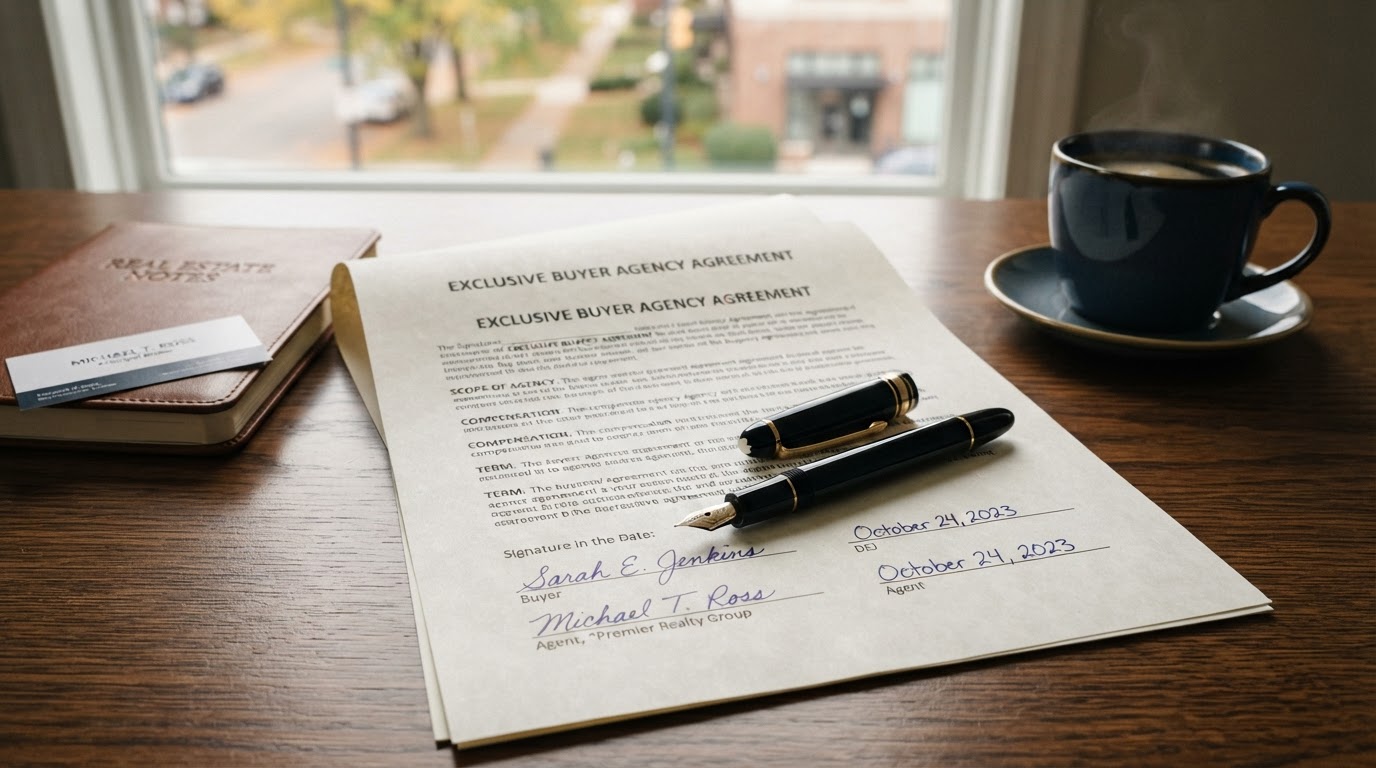
A buyer's agent agreement is a written contract between you and your real estate agent. It establishes your working relationship and spells out the terms of that relationship. Think of it as a job description for your agent — it defines what they will do for you, how they will be paid, how long the relationship lasts, and what happens if either party wants to end it.
Before the NAR settlement, this agreement existed but was often signed late in the process — sometimes not until you were ready to make an offer. Now, it must be signed before your agent shows you any home, either in person or virtually. The agreement is between you and your agent (or their brokerage) — it is not a mortgage document and it does not commit you to buying a specific property.
What the Agreement Covers
A typical Massachusetts buyer's agent agreement includes these key sections:
Scope of Services
What your agent will do for you: searching for homes, scheduling showings, preparing offers, negotiating, coordinating inspections, and guiding you through closing. This section defines the agent's responsibilities.
Compensation
How your agent will be paid and how much. This can be a flat fee, a percentage of the purchase price, or an hourly rate. The amount is negotiated between you and your agent — it is not set by law or by the MLS.
Term Length
How long the agreement lasts. Common terms are 3 to 6 months. Some agreements automatically renew unless either party gives notice. Pay attention to this section — you do not want to be locked into a relationship that is not working.
Exclusivity
Whether you can work with other agents during the term. Exclusive agreements mean you work only with this agent. Non-exclusive agreements allow you to work with multiple agents. Most agents prefer exclusive agreements.
Termination Clause
How either party can end the agreement. Some allow termination with written notice (e.g., 30 days). Others may require a specific reason. Read this carefully before signing.
Protection Period
A period after the agreement ends during which the agent is still owed compensation if you buy a home they showed you. This protects the agent's work but can surprise buyers who are not paying attention.
How Agent Compensation Works Now
This is the biggest change from the NAR settlement, and it is the part most buyers are confused about. Here is the old system versus the new system:
Before the NAR Settlement
The seller listed the home and offered a commission to both the listing agent and the buyer's agent through the MLS. The buyer's agent commission was published in the listing, and the seller paid both sides. Buyers rarely saw or signed an agreement early in the process.
After the NAR Settlement
The buyer's agent compensation is negotiated directly between you and your agent, written into your agreement, and is no longer published in the MLS. The seller may still agree to pay your agent's fee as part of the negotiation — but it is not guaranteed or automatic.
In practice, on the North Shore, it is still common for the seller to cover the buyer's agent commission as part of the offer. Your agent can request this as a concession during negotiations. The key difference is transparency: you know exactly what your agent is being paid, and you agree to it upfront.
When You Need to Sign
The NAR settlement rules are specific about when the agreement must be in place:
- Private showings: Your agent must have a signed agreement before showing you any home, in person or virtually.
- Open houses: You can attend open houses without a signed agreement. The requirement does not apply to open house visits.
- Browsing online: You can search listings, browse Zillow, and explore neighborhoods without signing anything.
- Making an offer: You must have a signed agreement in place before your agent can submit an offer on your behalf.
In practice, most agents will present the agreement during your first serious conversation — after you have had an initial consultation but before you start touring homes together. This gives you a chance to ask questions and understand the terms before committing.
What to Watch For Before Signing
Before you sign a buyer's agent agreement, read it carefully. Here are the four things I tell every North Shore buyer to check:
1. Term Length
How long are you committing to this agent? A 3-month term is reasonable. A 12-month term is too long for most buyers. If you are not sure about the agent, ask for a shorter term or a non-exclusive agreement.
2. Exclusivity
An exclusive agreement means you cannot work with another agent during the term. This is standard and usually fine — but make sure the termination clause allows you to exit if the relationship is not working.
3. Protection Period
If the agreement has a 90-day protection period, that means if you buy a home the agent showed you within 90 days after the agreement ends, they are still owed compensation. This is common but worth understanding. If the period seems too long, negotiate it down.
4. Compensation Terms
Know exactly what you are agreeing to pay and when. If the seller covers the full commission, you pay nothing. If the seller covers part of it, you may owe the difference. Make sure the agreement spells this out clearly.
Can I Still Ask the Seller to Pay My Agent?
Yes — and this is one of the most common misconceptions after the NAR settlement. The seller can still agree to pay your buyer's agent commission. The change is that it is no longer automatic or pre-published in the MLS listing. Instead, your agent requests it as part of your offer.
In Massachusetts, it is still common practice for the seller to cover the buyer's agent fee, especially in a balanced or buyer-friendly market. In a strong seller's market, you may need to be more creative — for example, offering full price or adjusting other terms to make the seller more willing to cover the fee. Your agent will advise you on the best strategy for your specific situation.
Key Point: Transparency Benefits You
Before the settlement, the buyer's agent commission was baked into the listing price — you never saw it. Now, it is a negotiated term that you see and agree to upfront. This transparency gives you more control over your costs and more room to negotiate.
What If I Want to Switch Agents?
If your agent is not responsive, is not showing you homes that match your criteria, or you simply feel the relationship is not working, you have options. Most agreements include a termination clause that allows either party to end the relationship with written notice. Here is what to do:
- Review the termination clause in your agreement. Note the required notice period and any conditions.
- Provide written notice to your agent and their brokerage. Email is sufficient — keep a copy for your records.
- Ask about the protection period. If you are planning to buy a home your current agent showed you, you may still owe them compensation even after termination. If you are starting fresh with a new agent and new properties, this is usually not an issue.
- Get a release in writing. Some brokerages will provide a formal release document that confirms the agreement has ended. This protects you if there is ever a dispute later.
Exclusive vs. Non-Exclusive: Which Is Right for You?
Exclusive Agreement
You work with one agent only. The agent knows their time investment is protected, which often means better service, more attention, and deeper commitment to your search.
Best for: Buyers who want a dedicated agent and a committed working relationship.
Non-Exclusive Agreement
You can work with multiple agents at the same time. This gives you flexibility but can lead to confusion about who represents you and who earns the commission.
Best for: Buyers who are unsure about committing to one agent or are early in their search.
In my experience, exclusive agreements produce better outcomes for buyers. When an agent knows they have your commitment, they invest more time in your search, provide deeper market analysis, and are more willing to go the extra mile. But the agreement must include a fair termination clause so you are not stuck in a relationship that is not working.

Kathleen's Take
The buyer's agent agreement is not something to fear — it is something to understand. I walk every client through it line by line before they sign. The most important conversation is about compensation: I explain exactly what I charge, how the seller may cover it, and what happens if they do not. Transparency builds trust, and trust is the foundation of a good buyer-agent relationship. If your agent will not take the time to explain the agreement, that tells you something about how they will treat you throughout the transaction.
Related Reading
Have questions about the buyer's agent agreement?