

Questions to Ask at an Open House on the North Shore: A Buyer's Checklist
The listing photos look perfect — but the right questions at the open house reveal what the camera hides. Here's exactly what to ask.
The Short Version
- •Ask why the seller is moving — it reveals motivation and urgency.
- •Ask about offers and deadlines — know your competition before you commit.
- •Ask the age of major systems — roof, HVAC, water heater, septic.
- •Look past the staging — check for water stains, odors, and deferred maintenance.
- •The listing agent works for the seller — get your own buyer's agent before making an offer.
Why Open House Questions Matter
An open house is your best chance to gather intelligence before you ever make an offer. The listing photos are curated to show the home at its best — but the right questions, asked in person, reveal what the camera hides: the seller's motivation, the home's true condition, the competition you're up against, and whether this home is actually right for you.
Remember one thing above all: the agent hosting the open house works for the seller. They're friendly and helpful, but their job is to sell the home for the best price. Ask your questions, gather information, but save your serious interest for your own buyer's agent.
Questions About the Seller's Motivation
- "Why is the seller moving?" — Relocation, upsizing, downsizing, divorce, estate sale? The reason reveals urgency. A seller relocating for a job is more motivated than one testing the market.
- "How long has the home been on the market?" — A home sitting 30+ days signals possible pricing or condition issues. A fresh listing means more competition.
- "Have there been any price reductions?" — Price cuts reveal the seller's flexibility and what the market will bear.
- "Has the seller received any offers?" — Know if you're competing or if the home is sitting.
- "Is there an offer deadline?" — Tells you whether you need to act fast or have time to think.
Questions About the Home's Condition
- "How old is the roof?" — A roof near end of life is a $10,000+ expense.
- "How old are the HVAC system and water heater?" — Major systems over 15 years old may need replacement soon.
- "Has the home had any inspections or recent repairs?" — Past inspections reveal known issues; recent repairs show what's been addressed.
- "Is there a septic system or sewer?" — On the North Shore, rural homes often have septic. Ask about the last Title 5 inspection.
- "Are there any known issues with the home?" — Sellers in Massachusetts have limited disclosure obligations, but a direct question sometimes elicits useful answers.
- "What's included in the sale?" — Appliances, fixtures, window treatments, shed? Get clarity on what stays.
Questions About the Neighborhood
- "What are the local schools like?" — Even if you don't have kids, school quality affects resale value.
- "How is the commute to Boston?" — Proximity to commuter rail stations matters on the North Shore. See our commuter rail guide.
- "Are there any neighborhood issues?" — Noise, parking, flooding, construction? The agent may not know everything, but ask.
- "What do neighbors typically pay in property taxes?" — Get a sense of the ongoing cost. See our rates-by-town guide.
What to Look For Beyond the Questions
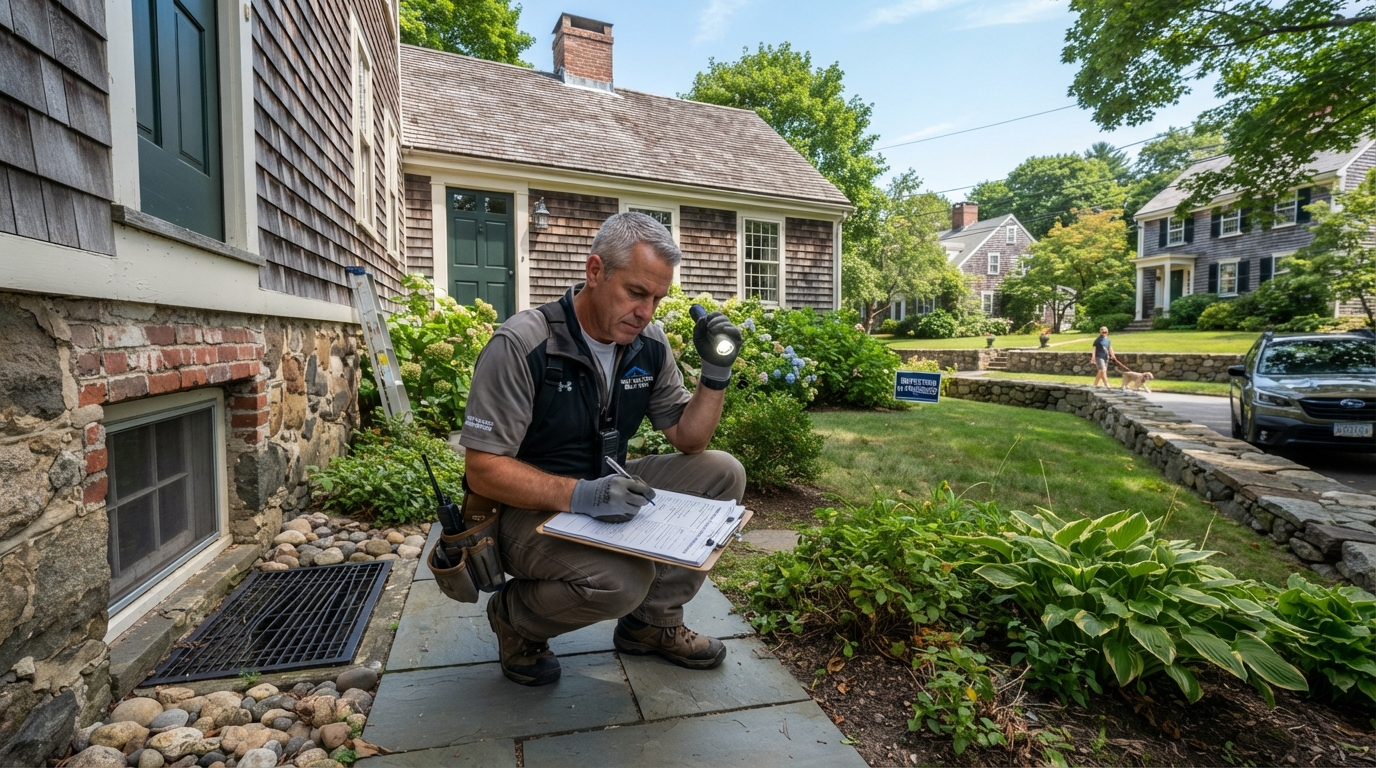
Questions get you information, but your own eyes get you the truth. Staging is designed to flatter — here's what to look past:
- Ceilings and walls — water stains, fresh paint on just one wall (hiding damage?)
- Odors — musty (moisture/mold), smoke, pet, or heavy fragrance masking something
- Water pressure — run a faucet, flush a toilet
- Cabinets and closets — open them; signs of damage, water, or pests
- Basement and attic — moisture, mold, insulation, structural signs
- Windows and floors — do windows open smoothly? Any soft spots in flooring?
- The neighborhood — parking, noise, condition of neighboring homes
Red Flags to Watch For
- Fresh paint on just one wall or ceiling — possible water damage
- Strong odors or heavy air freshener — masking smoke, pets, or mold
- Signs of deferred maintenance throughout
- A listing agent who dodges direct questions
- Foundation cracks, especially horizontal or stair-step
- Water stains, efflorescence in basement
- A home listed a long time with no price drops
None of these are automatic dealbreakers — but each warrants investigation during your home inspection. Note them and follow up.
What to Bring to an Open House
- A notepad or phone for notes
- A tape measure for furniture sizing
- A phone for photos (ask permission first)
- Your list of must-haves and dealbreakers
- Your pre-approval letter, if you're serious and ready to act
The Bottom Line
An open house is a fact-finding mission, not a commitment. Ask smart questions, look past the staging, and gather the information you need to decide. Then bring everything to your own buyer's agent, who'll help you evaluate, negotiate, and protect your interests. The right questions at the open house save you from the wrong home later.