If you are buying a home on the North Shore and putting less than 20% down, your lender will require Private Mortgage Insurance — usually called PMI. For many first-time buyers, PMI is the part of the mortgage that feels the most confusing and the most frustrating. It is an extra monthly cost that does not build equity or pay down your loan. But understanding how PMI works, what it costs, and how to get rid of it can save you thousands of dollars over the life of your mortgage.
The Short Version
PMI is a monthly insurance premium your lender requires when your down payment is less than 20% of the home's price. It typically costs 0.5% to 1.5% of your loan amount per year. On a $570,000 loan, that is roughly $238 to $713 per month.
PMI is not permanent. Federal law requires lenders to automatically cancel it when your loan balance reaches 78% of the original home value. You can request cancellation at 80% if you can prove your home has appreciated. You can also avoid PMI entirely with a piggyback loan, lender-paid mortgage insurance, or certain government-backed loan programs.
This article provides general information about PMI for educational purposes. I am a real estate professional, not a mortgage lender. Always consult a licensed mortgage professional about your specific loan terms and PMI requirements.
What Is PMI in Plain English?
PMI is an insurance policy that protects your lender, not you. If you stop making mortgage payments and the lender has to foreclose, PMI helps reimburse the lender for their losses. You pay the premium, but the lender is the beneficiary.
Lenders require PMI when your down payment is less than 20% because loans with smaller down payments are statistically riskier. The 20% threshold is not a random number — it represents the point where lenders generally feel comfortable that they can recover their money by selling the home if the borrower defaults.
PMI is added to your monthly mortgage payment automatically. You will see it as a separate line item on your monthly statement. It does not build equity, does not pay down your principal, and does not benefit you directly. It is purely a cost of borrowing with less than 20% down.

How Much Does PMI Cost on a North Shore Home?
PMI typically costs between 0.5% and 1.5% of your loan amount per year, paid in monthly installments. The exact rate depends on several factors:
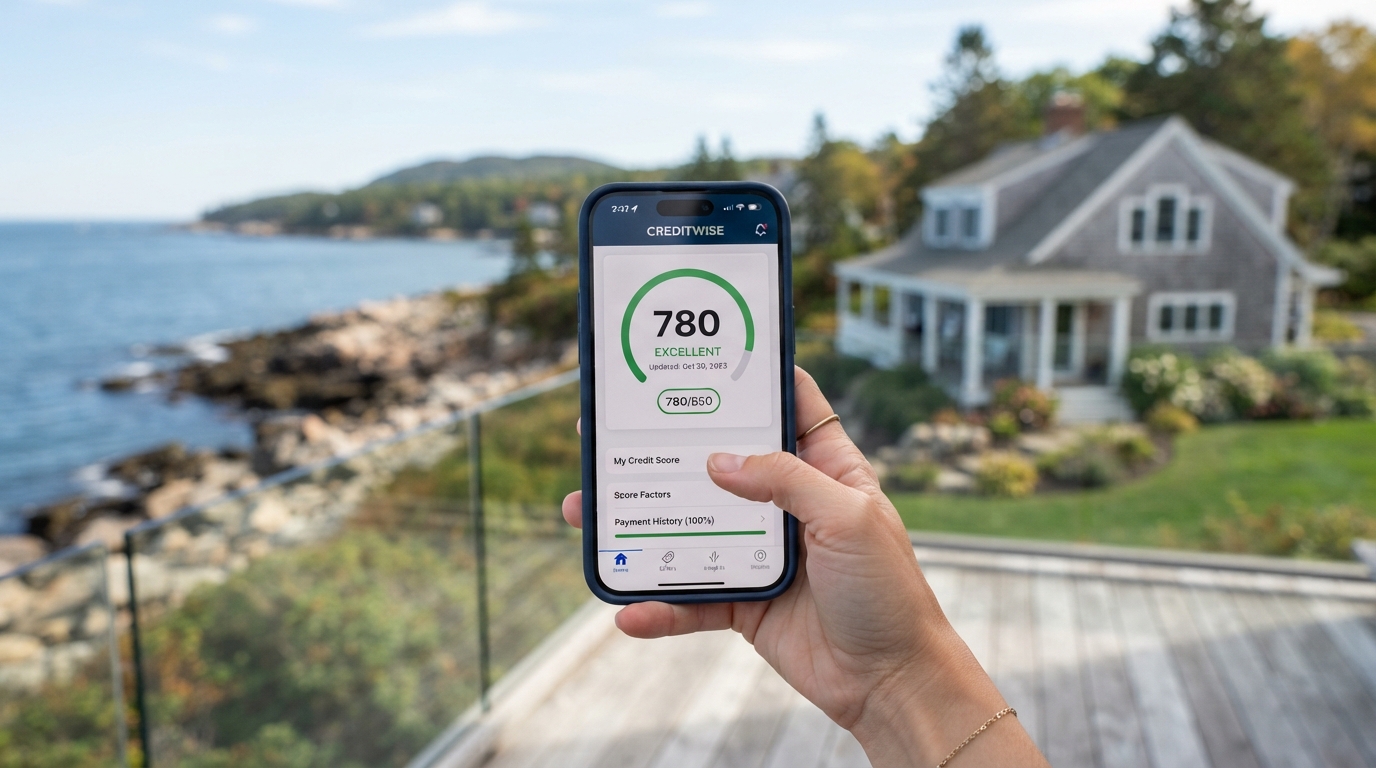
- Your credit score: Higher credit scores get lower PMI rates. A borrower with a 780 credit score might pay 0.5%, while a borrower with a 680 score might pay 1.2% or more.
- Your down payment size: 5% down costs more in PMI than 15% down, because the loan is riskier.
- Your loan type: Fixed-rate vs. adjustable-rate loans can have different PMI pricing.
- Your loan amount: Larger loans may have slightly different PMI pricing structures.
Real-World PMI Example on the North Shore
Let's say you buy a home in Beverly for $600,000 with 5% down ($30,000). Your loan amount is $570,000.
PMI at 0.5%
$238/mo
~$2,856/year
PMI at 1.0%
$475/mo
~$5,700/year
PMI at 1.5%
$713/mo
~$8,550/year
At 1.0% PMI, you would pay $475 per month until you reach 20% equity. That is $5,700 per year — money that is not building equity or reducing your loan balance.
When Is PMI Required?
PMI is required on conventional loans when your down payment is less than 20% of the home's purchase price or appraised value, whichever is less. Here is a quick breakdown:
PMI Required
Conventional loans with less than 20% down. This is the most common scenario for first-time and move-up buyers on the North Shore.
No PMI Required
Conventional loans with 20% or more down. Also, VA loans do not require PMI for eligible veterans and active-duty service members.
FHA loans have their own insurance called Mortgage Insurance Premium (MIP), which works differently. MIP on FHA loans often lasts for the life of the loan unless you put more than 10% down or refinance to a conventional loan. This is an important distinction if you are comparing loan types.
How to Get Rid of PMI
The good news is that PMI is temporary. There are several ways to eliminate it:
1. Automatic Cancellation at 78%
Under the federal Homeowners Protection Act, your lender must automatically cancel PMI when your loan balance reaches 78% of the original value of your home — as long as your payments are current. You do not need to ask for this. It happens automatically.
For example, if you bought a $600,000 home with a $570,000 loan, PMI would automatically end when your loan balance drops to $468,000 (78% of $600,000). On a 30-year loan at 6.5%, that would take roughly 11 years of normal payments.
2. Request Cancellation at 80%
You can request PMI cancellation earlier — at 80% loan-to-value — if you can prove your home has appreciated or you have made extra payments. This requires:
- A good payment history (no late payments in the past 12 months)
- Proof that your home has not declined in value
- Often, a new appraisal paid for by you (typically $400-$600)
- No other liens on the property
On the North Shore, where home values have been rising steadily, this is a realistic strategy. If your home appreciates from $600,000 to $700,000, your 80% threshold is reached much faster than waiting for the loan balance to drop to 78% of the original value.
3. Make Extra Principal Payments
Every extra dollar you pay toward your principal reduces your loan balance faster. Even small additional payments — $100 or $200 per month — can help you reach 80% equity years earlier, saving thousands in PMI premiums.
4. Refinance When You Reach 20% Equity
If home values have risen and you now have 20% equity, refinancing to a new conventional loan can eliminate PMI. This is especially relevant for North Shore homeowners who bought a few years ago and have seen appreciation. The key is making sure the savings from dropping PMI outweigh the closing costs of refinancing.
How to Avoid PMI Without 20% Down
If you do not have 20% down but want to avoid PMI, there are alternatives:
Piggyback Loan (80/10/10)
You take a first mortgage for 80%, a second mortgage (or HELOC) for 10%, and put 10% down. No PMI because the first mortgage is at 80%. But the second mortgage has a higher interest rate.
Lender-Paid Mortgage Insurance
The lender pays the PMI for you in exchange for a slightly higher interest rate. You never see a PMI charge, but your rate is higher for the life of the loan unless you refinance.
VA Loan (No PMI)
Eligible veterans, active-duty service members, and some surviving spouses can get VA loans with 0% down and no PMI. VA loans do have a funding fee, but no monthly mortgage insurance.
USDA Loan (No PMI)
For homes in eligible rural areas (some North Shore towns qualify), USDA loans offer 0% down with no PMI. They have an annual fee, but it is typically lower than conventional PMI.
Should You Wait for 20% Down or Buy Now and Pay PMI?
This is one of the most common questions I hear from North Shore buyers, especially after the August 2026 rate spike. The answer depends on your situation, but here is the honest math:
Let's say you want to buy a $600,000 home. You have 10% down ($60,000). PMI at 1.0% would cost about $475/month, or $5,700/year. If it takes you 3 years to reach 20% equity through a combination of paying down principal and home appreciation, you would pay roughly $17,100 in PMI over that period.
Now consider the alternative: you wait 3 years to save the full 20% ($120,000). If North Shore home prices rise 4% per year, that $600,000 home would cost approximately $675,000 in three years. Your 20% down payment would need to be $135,000 instead of $120,000. And your loan amount would be $540,000 instead of $480,000 — meaning higher monthly payments for the life of the loan.
The Key Takeaway
PMI is temporary. Price appreciation is permanent. If buying now with PMI gets you into a home that appreciates by $75,000 over three years, paying $17,100 in PMI during that time is a reasonable trade-off. The decision should be based on your monthly budget comfort, not just the PMI cost alone.
PMI and Your Monthly Budget
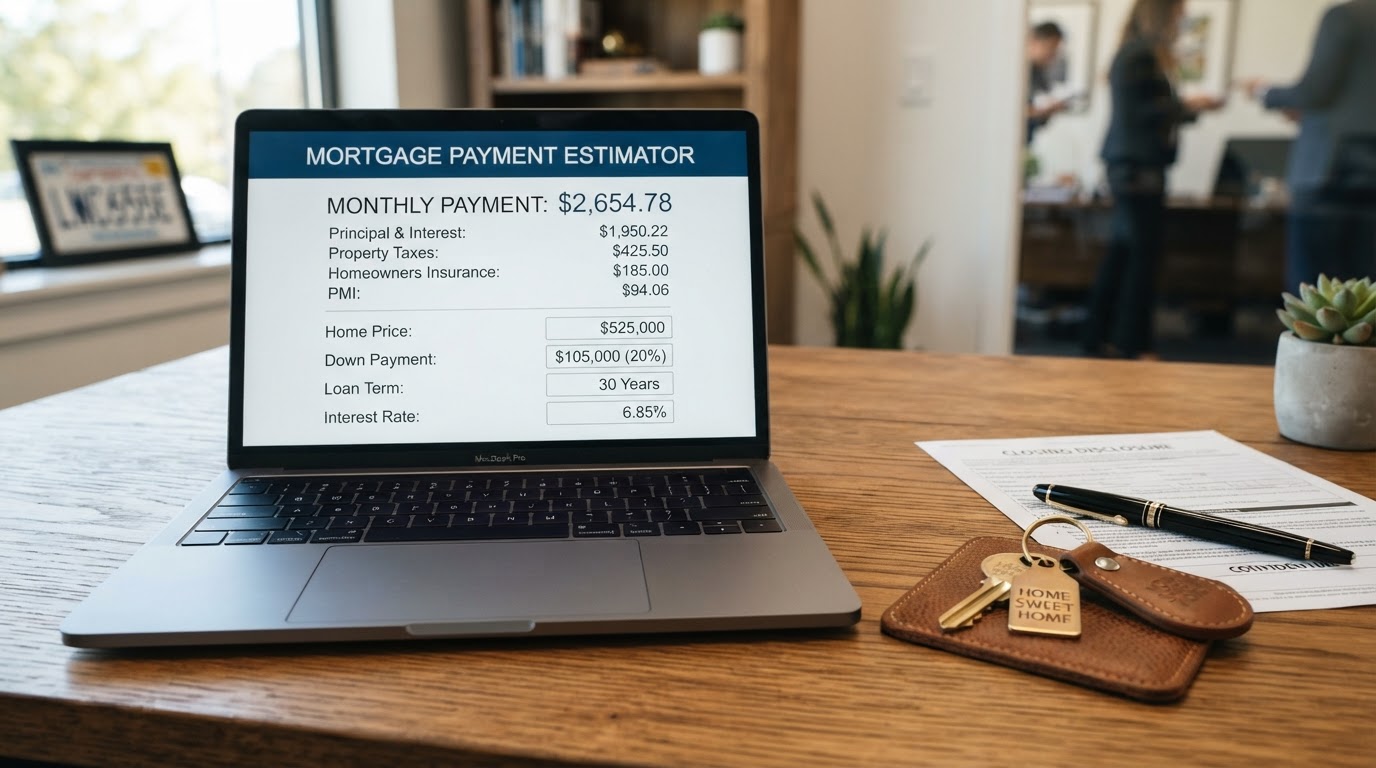
When calculating how much home you can afford, PMI must be included in your monthly payment estimate. Your total monthly housing cost — principal, interest, property taxes, homeowners insurance, and PMI — should not exceed what you can comfortably pay each month.
On the North Shore, where property taxes are significant, PMI can push your monthly payment higher than expected. A $570,000 loan at 6.55% with 1% PMI, plus $6,000/year in property taxes and $1,500/year in homeowners insurance, would cost approximately:
That $475 PMI line item is real money. But it goes away. Once you reach 20% equity, your payment drops by $475/month — permanently. That is money back in your pocket every month for as long as you own the home.
Questions to Ask Your Lender About PMI
Before committing to a loan, ask your lender these specific questions:
- What is my estimated PMI rate based on my credit score and down payment?
- How much will PMI add to my monthly payment?
- What are the requirements for requesting PMI cancellation at 80%?
- Will I need a new appraisal to cancel PMI, and what does that cost?
- Is lender-paid mortgage insurance available, and how would it affect my rate?
- How long will it take to reach 78% loan-to-value with normal payments?
- Can I make extra principal payments to reach 80% faster?
The Bottom Line for North Shore Buyers
PMI is not a penalty — it is the cost of buying a home with less than 20% down. On the North Shore, where median home prices exceed $800,000, saving a full 20% down payment can take years. PMI lets you buy sooner, build equity through appreciation, and establish yourself in a community while working toward the 20% equity milestone.
The key is understanding the numbers. Know what your PMI will cost, know when it will end, and have a plan to reach 20% equity as quickly as possible. Whether that means making extra principal payments, requesting a reappraisal after appreciation, or refinancing when the time is right, PMI is a temporary cost on the path to homeownership — not a permanent one.

Kathleen's Take
Kathleen Militello · REALTOR® · eXp Realty · Licensed Since 2003
I have watched North Shore buyers delay purchasing for years trying to save 20% down, only to find that home prices rose faster than their savings. PMI is not exciting, but it is a tool — and a temporary one. If buying now with PMI gets you into a home that appreciates $50,000 over three years, the $15,000 you paid in PMI during that time was a reasonable investment. The question is not just "can I avoid PMI?" — it is "what does waiting cost me?" Talk to a lender, run the numbers, and make the decision based on your actual financial picture, not a rule of thumb.
Related Reading
Get Pre-Approved
Start the conversation with a lender about your loan options and PMI costs.
Closing Costs Guide
Understand all the costs beyond your down payment, including PMI.
2026 Buyer's Checklist
Everything North Shore buyers need to know before making an offer.
Hidden Costs of Buying Your First Home
PMI is just one of several costs first-time buyers often overlook.
Should I Wait or Buy Now?
The honest math on what waiting costs versus buying now.
Mortgage Calculator
Estimate your monthly payment including PMI, taxes, and insurance.
Frequently Asked Questions About PMI
Have Questions About PMI or Your Buying Budget?
I can help you understand how PMI fits into your monthly budget and connect you with trusted local lenders who will give you straight answers about your loan options.