
Gloucester is the city that most people have seen in photographs but few truly understand until they spend time here. They know the fishing boats, the rocky coastline, the image of a rugged New England port that has been working the Atlantic since 1623. But the people who actually live here know a Gloucester that the postcards never capture.
The real Gloucester is a city of neighborhoods, each with its own personality. It has two of the best beaches on the entire East Coast, an art colony that has been continuously active for over a century, a downtown that has found its second wind with restaurants and breweries, and a working waterfront that still sends boats out into the North Atlantic every day. It is a place where a lobsterman, a painter, a tech worker commuting to Boston, and a retiree watching the sunset from Eastern Point can all call home.
I have been selling real estate on the North Shore since 2003, and Gloucester has always been one of my favorite markets. The diversity of housing is extraordinary. You can find a modest cottage walking distance to Good Harbor Beach, a converted loft above a Main Street storefront, a grand shingle-style estate on the ocean, or a quiet village home in Annisquam that feels a world away from the city. No other North Shore community offers this range.
If you are trying to figure out whether Gloucester is the right fit for your next move, this guide will walk you through what it is actually like to live here. Not the tourist version. The resident version.
Where Gloucester Is Located
Gloucester sits on Cape Ann, approximately 35 miles northeast of Boston. It is bordered by Rockport to the east, Essex to the west, and the Atlantic Ocean on three sides. This peninsula setting gives Gloucester more coastline than any other community on the North Shore.
Route 128 runs directly into Gloucester, making it one of the few coastal communities with direct interstate highway access. The drive to Boston takes 60 to 75 minutes depending on traffic. The MBTA Commuter Rail serves Gloucester on the Rockport branch of the Newburyport/Rockport Line, with the trip to North Station taking 60 to 70 minutes.
One thing commuters should know: trains on the Rockport branch run less frequently than the Newburyport branch. If you plan to commute daily, check the schedule carefully. The train is reliable, but the gaps between trains are longer than what you would find on the Newburyport line. For hybrid workers who commute two or three days a week, this is rarely an issue.
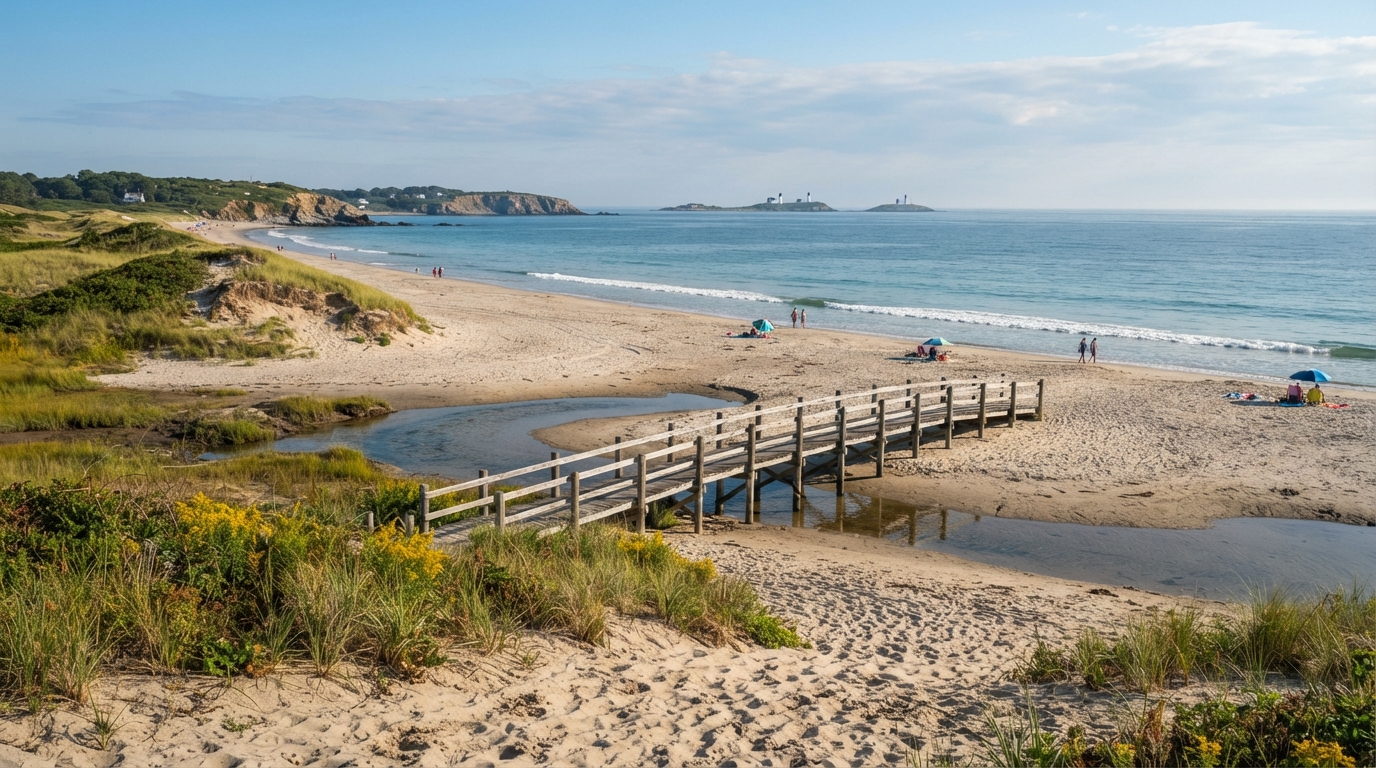
Good Harbor Beach is one of two world-class beaches that make Gloucester a coastal living destination unlike any other on the North Shore. | Neighborhood Guides
The Working Waterfront: America's Oldest Fishing Port
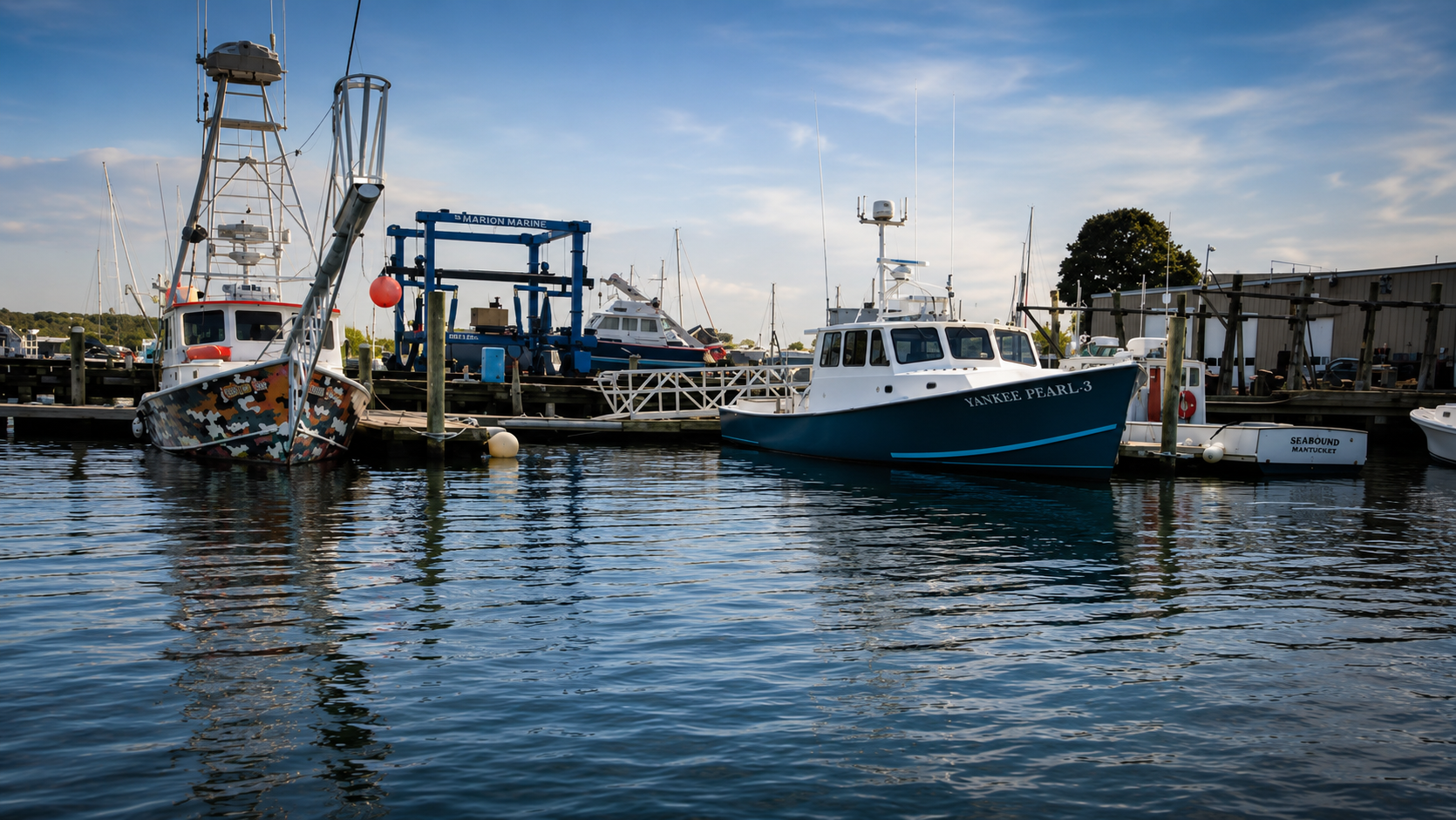
Gloucester was founded in 1623, making it the oldest fishing port in the United States. Over 400 years later, the waterfront is still working. Fishing boats still go out. Lobstermen still haul traps. The harbor still processes and ships seafood to restaurants across New England. This is not a preserved historic site. It is a living, working industry that shapes the city's identity every single day.
The Gloucester Marine Railways and the harbor infrastructure along Rogers Street are where the working port is most visible. You can watch boats being repaired, see the fish pier in operation, and walk along Stacy Boulevard to the Fisherman's Memorial, a bronze statue dedicated to the thousands of Gloucester fishermen lost at sea over the centuries. It is one of the most moving monuments on the North Shore, and it reminds you that this city's relationship with the ocean is not recreational. It is foundational.
For residents, the working waterfront means something specific: Gloucester is not a manufactured coastal experience. The salt in the air, the sound of boat horns, the sight of trawlers heading out at dawn. These are real. This authenticity is what draws people to Gloucester and what keeps them here. If you are considering buying waterfront property, few places on the North Shore offer a more genuine maritime setting.
The fishing industry also means that Gloucester has some of the freshest seafood you will find anywhere. The restaurants along Main Street and the harbor get their fish directly from the boats that caught it that morning. You can read more about the fishing villages that shaped the North Shore in our historical guide.
Two of the Best Beaches on the East Coast
Gloucester is the only North Shore community with two genuinely world-class beaches, and they could not be more different from each other. This is one of the biggest reasons people choose to live here.
Good Harbor Beach is a wide, sandy ocean beach at the eastern edge of the city. It faces directly into the Atlantic, which means real waves, real surf, and the kind of beach experience you usually associate with Cape Cod or Rhode Island. A tidal creek runs behind the beach, and at low tide you can walk out onto sandbars that extend hundreds of feet. During the summer, it draws families, surfers, and beachgoers from across the region. Residents with a beach sticker can park easily. Non-residents pay for daily passes, and the lot fills up early on hot summer weekends.
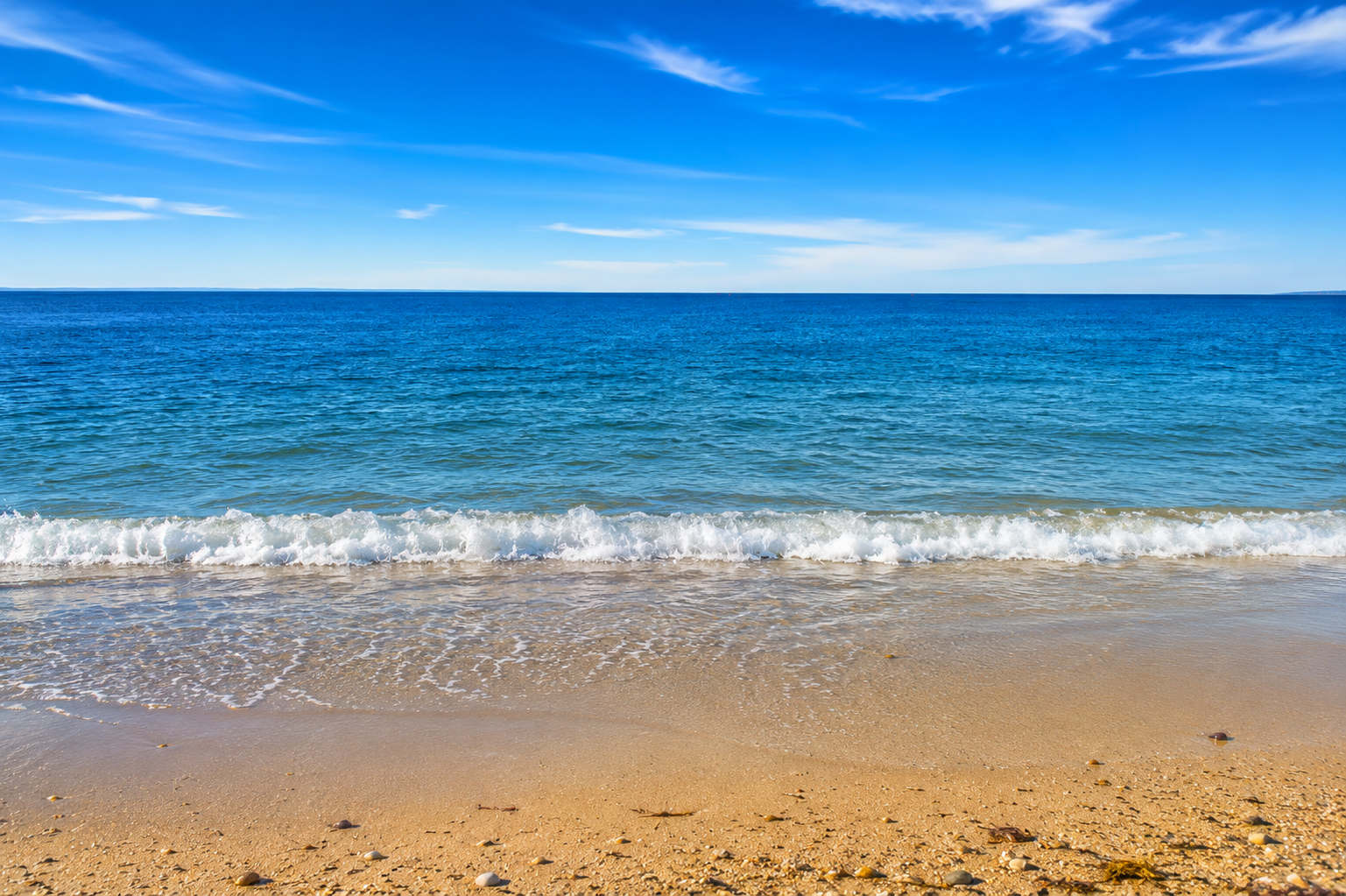
Wingaersheek Beach is on the opposite side of the city, facing northwest into the Annisquam River. It is not an ocean beach. It is a tidal beach, and at low tide it transforms into a landscape of white sand bars, smooth granite rock formations, and shallow tidal pools that stretch for what feels like miles. The water is calm and warm by New England standards. Families with young children love Wingaersheek because the tidal pools are safe, fascinating, and endlessly explorable. At high tide, much of the beach disappears, which is why checking the tide chart before you go is essential.
Having two beaches this good in one city is a remarkable advantage. If you are buying a home and beach access is a priority, Gloucester offers something no other North Shore town can match. Properties within walking distance of either beach command premium prices, but homes a short drive away can still offer easy access at a more accessible price point.
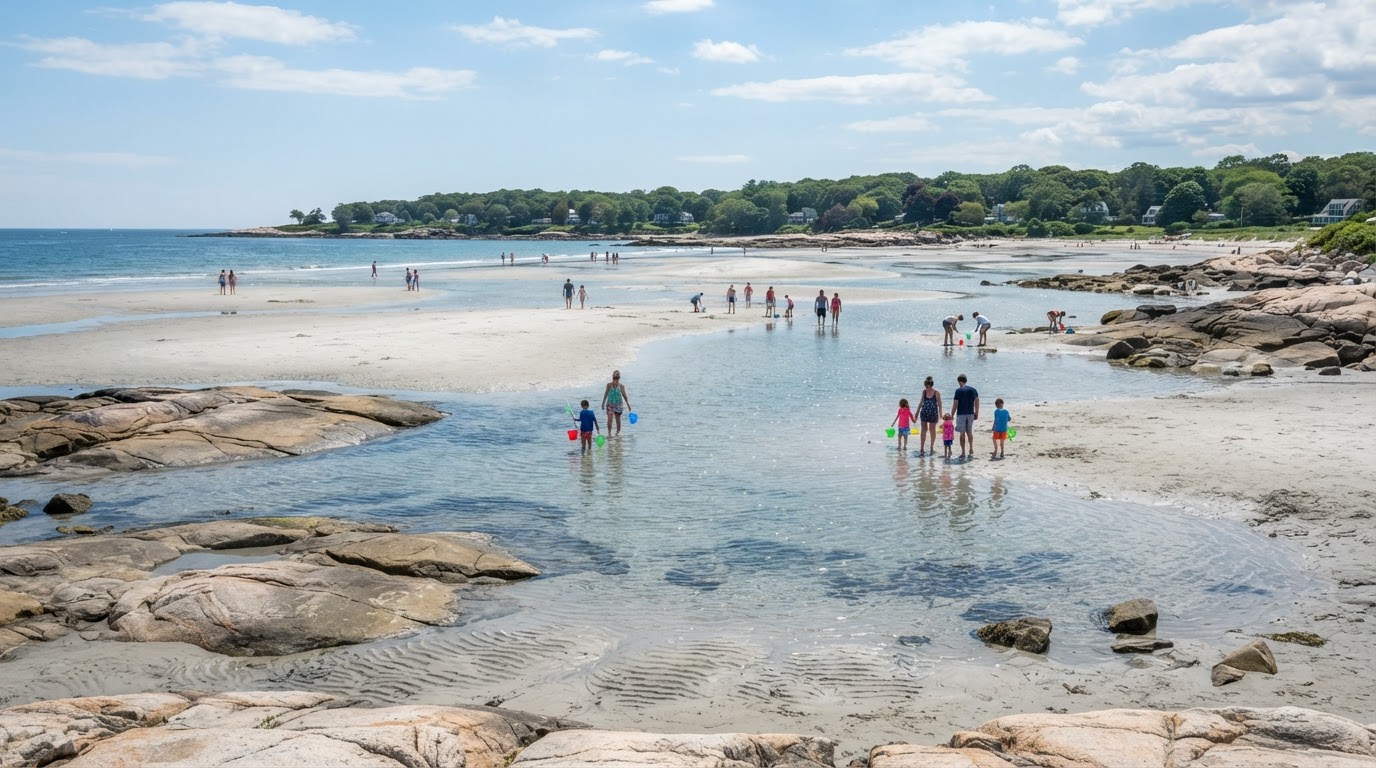
Wingaersheek Beach at low tide reveals sand bars and tidal pools that make it one of the most unique beaches in New England. | Neighborhood Guides
Rocky Neck: The Oldest Working Art Colony in America
Rocky Neck is a narrow peninsula that extends into Gloucester Harbor, and it has been home to a working art colony since the early 1900s. It is the oldest continuously operating art colony in the United States. Artists like Winslow Homer, Edward Hopper, and Childe Hassam all spent time painting here, and the tradition continues today with dozens of working studios and galleries.
Walking Rocky Neck feels different from anywhere else on the North Shore. The narrow lane is lined with colorful waterfront buildings that house artist studios, galleries, and some of the best waterfront restaurants in the city. You can watch a painter at work, browse a gallery, eat lunch overlooking the harbor, and watch fishing boats unload their catch, all within a 10-minute walk.
For residents, Rocky Neck is both a cultural destination and a neighborhood. The homes here are a mix of historic cottages, converted studios, and waterfront properties with direct harbor access. Inventory is tight because the neighborhood is small and desirable. If you want to live in a place where creativity and maritime history intersect daily, Rocky Neck is unlike anywhere else on the North Shore.
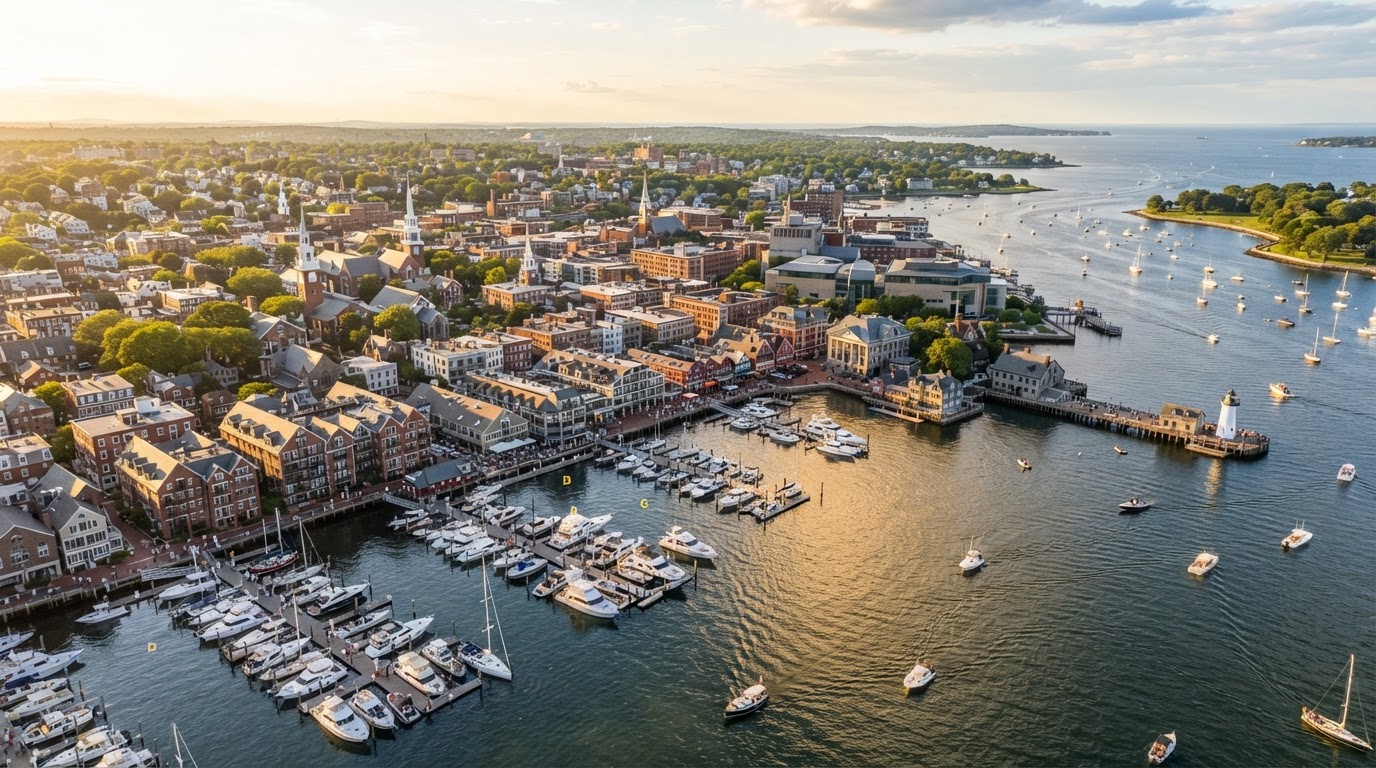
The waterfront lifestyle in Gloucester extends well beyond Rocky Neck. The entire harbor frontage offers opportunities for buyers seeking homes with docks, water access, or harbor views.
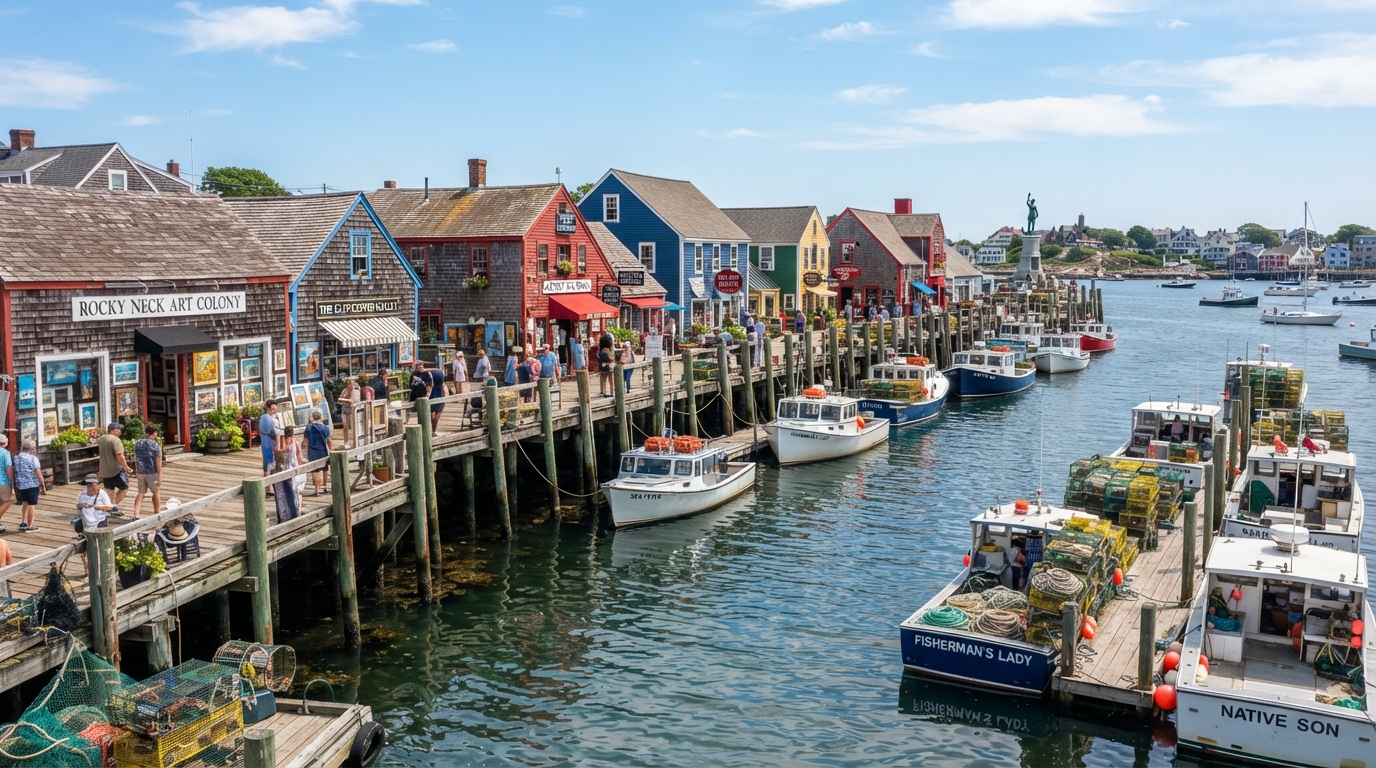
Rocky Neck Art Colony has been a working creative community for over a century, making it the oldest of its kind in the United States. | Neighborhood Guides
Downtown Gloucester: Main Street's Second Wind
Main Street in Gloucester has gone through a genuine revitalization over the past decade. What was once a working-class downtown with a few reliable spots has become a destination for dining, craft beer, and local retail. The street is lined with restaurants ranging from Italian to farm-to-table, several craft breweries, coffee shops, and independent stores that give the downtown a personality you will not find in a strip mall.
The Cape Ann Museum sits just off Main Street and is one of the best small museums in New England. Its collections cover the maritime history, art, and culture of Cape Ann, including works by Fitz Henry Lane and other artists who were drawn to the region's light and coastline. The museum anchors the downtown culturally and gives residents a reason to be proud of their city's story.
The commuter rail station is located right downtown, which means residents who live within walking distance can catch a train to Boston without driving. The downtown residential options include condo conversions above storefronts, historic multifamily homes, and single-family properties on the side streets radiating out from Main Street.
For buyers who want walkable downtown living, Gloucester's Main Street offers a more affordable entry point than Newburyport or Salem, while still delivering genuine walkability and a strong restaurant scene.
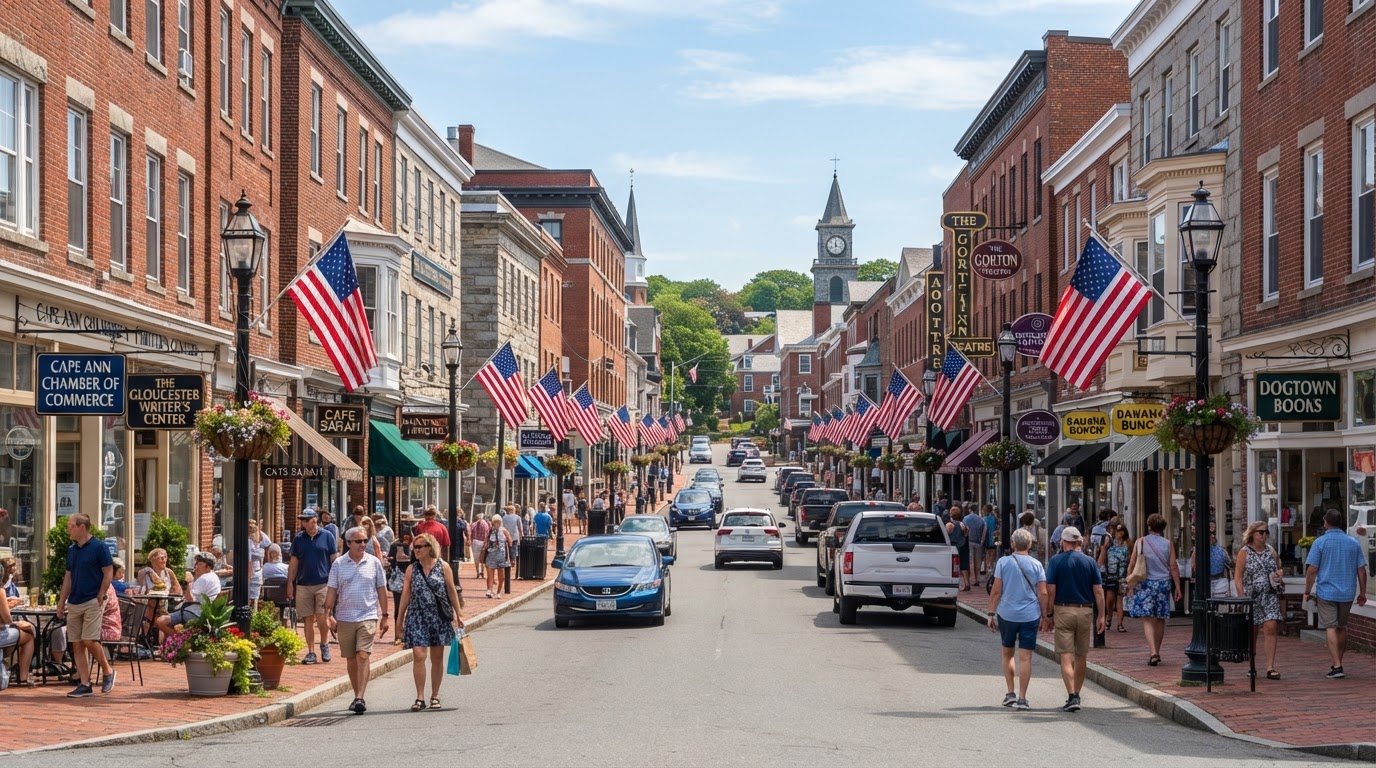
Main Street Gloucester has seen a genuine revitalization with restaurants, breweries, and independent retail giving the downtown new energy. | Neighborhood Guides
Gloucester's Neighborhoods: A City of Distinct Personalities
Gloucester is not a single community. It is a collection of neighborhoods, each with its own character, price point, and lifestyle. Understanding these neighborhoods is essential if you are buying here, because the experience of living in Annisquam is completely different from living in East Gloucester or downtown.
Annisquam is a village at the northern tip of Gloucester that feels like its own small town. It has a yacht club, a lighthouse, a small harbor, and a collection of historic homes that range from modest cottages to substantial waterfront properties. Annisquam is quiet, wooded, and genuinely removed from the downtown energy. Buyers who want privacy and a village atmosphere gravitate here.
East Gloucester is the neighborhood closest to Good Harbor Beach. It is residential, household-oriented, and offers a mix of housing types from mid-century ranches to newer construction. The streets are walkable to the beach, which makes East Gloucester one of the most desirable areas for families and summer residents.
Bass Rocks and Eastern Point are Gloucester's premium oceanfront neighborhoods. These are the areas where you find grand shingle-style estates, oceanfront cottages perched on rocky bluffs, and some of the most dramatic coastal views on the North Shore. Inventory is extremely limited, and prices reflect that. If you are looking for boating estates and deep-water access, this is where the conversation starts.
Downtown Gloucester offers condo living, multifamily investment properties, and walkable access to restaurants, the train, and the harbor. It is the most affordable entry point into the Gloucester market and attracts first-time buyers, investors, and commuters who want to live without a car.
You can explore more about Gloucester's neighborhoods and waterfront homes in our dedicated community pages.
Dining and Culture: More Than a Fishing Town
Gloucester's restaurant scene has grown significantly over the past decade, and it now rivals any dining destination on the North Shore. The advantage of living in a working fishing port is that the seafood is as fresh as it gets. Several restaurants on Main Street and along the harbor buy directly from the boats, which means the fish on your plate was likely swimming that morning.
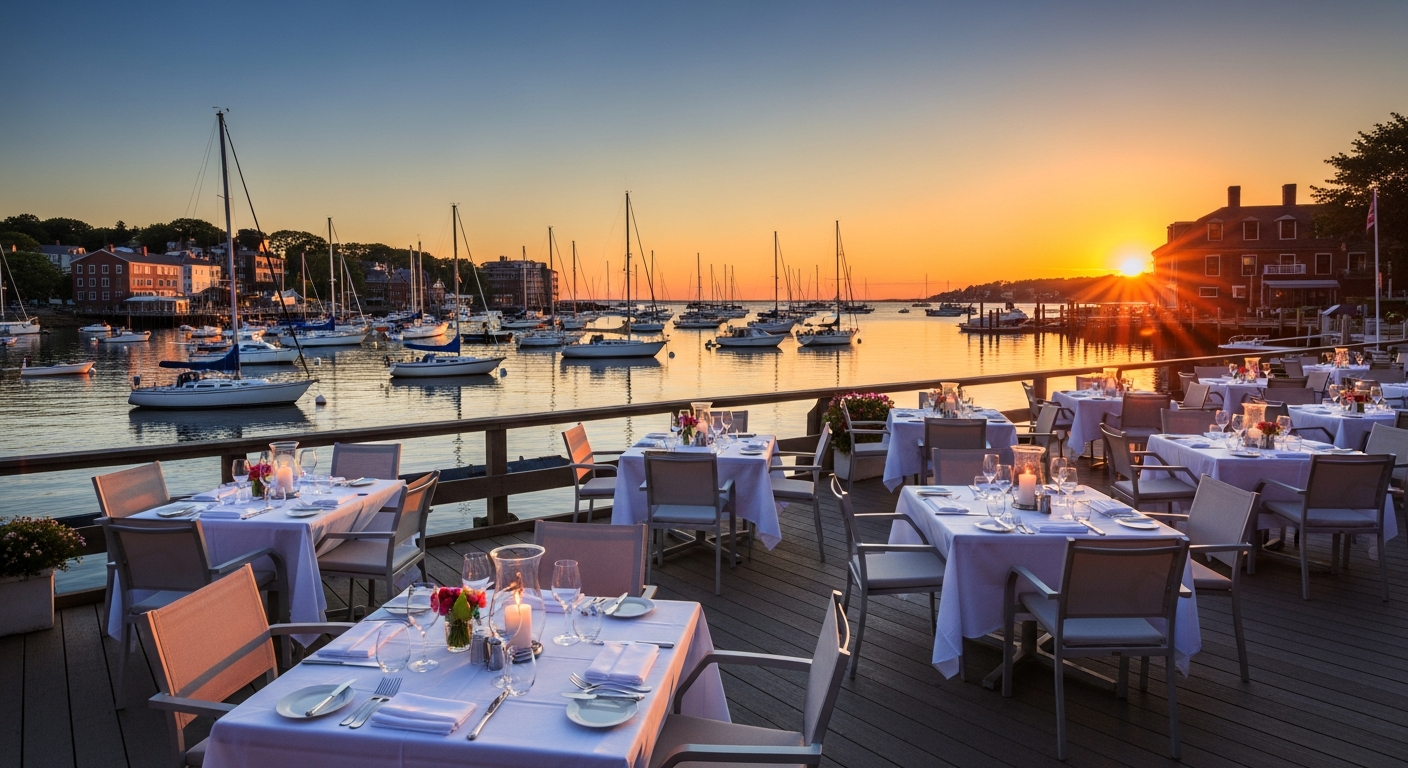
Main Street offers everything from casual lobster rolls to upscale Italian, craft breweries, and farm-to-table dining. The waterfront restaurants at Rocky Neck and along the harbor offer some of the best oceanfront dining experiences in Massachusetts. Sitting on a deck overlooking Gloucester Harbor with a plate of fresh catch is a routine that residents never get tired of.
Culturally, Gloucester is anchored by the Cape Ann Museum, the Rocky Neck Art Colony, and a calendar of events that includes the St. Peter's Fiesta, a centuries-old celebration of the fishing community. The city also hosts the Gloucester Blues Festival, the Gloucester Writers Center events, and a growing film and arts scene. There is always something happening, but it never feels overwhelming the way a bigger city might.
The Commute: What to Expect
The MBTA Commuter Rail serves Gloucester on the Rockport branch of the Newburyport/Rockport Line. The trip from Gloucester station to North Station takes 60 to 70 minutes. The station is downtown, which makes it walkable for residents in the downtown and harbor area. For residents in Annisquam, East Gloucester, or Eastern Point, driving to the station is typically necessary.
By car, the drive to Boston is approximately 35 miles via Route 128 south to I-95. Without traffic, the trip takes about 60 minutes. During rush hour, expect 75 to 90 minutes. Route 128 also connects Gloucester to the tech corridor along Route 128 and Route 3, which makes it a reasonable commute for workers heading to Burlington, Woburn, or Lexington.
The key consideration for Gloucester commuters is that the Rockport branch has fewer trains than the Newburyport branch. If you are comparing Gloucester to Beverly or Salem, both of which have more frequent service, the train schedule is worth reviewing before you commit. For hybrid workers who commute two or three days a week, the schedule is usually manageable.
If you want to compare Gloucester's commute against other North Shore towns, the town-by-town guide breaks down MBTA access, drive times, and beach access for all 12 communities.
The Housing Market: What Buyers Find in Gloucester
Gloucester's single-family home prices typically range from $400,000 to over $2 million. That is one of the widest price ranges on the North Shore, and it exists because the housing stock is so diverse. You can find a modest cottage near downtown, a mid-century ranch in East Gloucester, a historic colonial in the village of Annisquam, or an oceanfront estate in Bass Rocks.
The lower end of the market, $400,000 to $600,000, typically includes smaller homes, cottages, and condos. These are often older properties that may need updates, but they offer an entry point into a community that many buyers assume is out of reach. The condo market in downtown Gloucester is particularly worth exploring for first-time buyers.
The middle of the market, $600,000 to $1 million, includes solid longtime homes in neighborhoods like East Gloucester, Lanesville, and West Gloucester. These homes tend to be larger, newer, and closer to the beaches. This is where most move-up buyers focus their search.
The upper end of the market, $1 million to $2 million and beyond, includes waterfront and water-view properties in Eastern Point, Bass Rocks, Annisquam, and along the harbor. These properties are limited in supply and hold their value well. If you are interested in exclusive coastal enclaves, Gloucester's premium neighborhoods are worth serious consideration.
For first-time buyers, Gloucester can be more accessible than people expect. The lower price points and condo options make it possible to enter the market, and the lifestyle benefits are exceptional. Using a mortgage calculator can help you understand your purchasing power.
If you are considering selling, Gloucester's limited inventory and strong demand for coastal property make it a solid market for pricing strategically. You can check your home's current value to see where you stand.
A Realtor's Take
I have been selling homes in Gloucester for over 20 years, and the thing that surprises buyers most is how much variety exists within one city. People come in expecting a fishing town and discover a place with two of the best beaches in New England, an art colony that has been active for a century, a downtown with genuinely good restaurants, and neighborhoods that range from quiet villages to oceanfront estates.
The buyers I see succeed in Gloucester are the ones who understand the neighborhood differences before they start looking. If you want walkable downtown living with train access, we focus on the area around Main Street. If you want beach proximity for your loved ones, East Gloucester is where we concentrate. If you want privacy and a village feel, Annisquam is the answer. And if you want oceanfront luxury, we look at Eastern Point and Bass Rocks. Gloucester rewards buyers who know what they want and work with someone who understands the neighborhoods.
One thing I always tell clients: do not let the commute schedule discourage you without checking it yourself. The Rockport branch runs less frequently than the Newburyport line, but for hybrid workers who commute two or three days a week, it works. And the lifestyle you get in return, living in a place with this much coastline, this much history, and this much genuine character, is worth the trade-off for most people who choose Gloucester.
Frequently Asked Questions
What is it like to live in Gloucester, MA?
Living in Gloucester means waking up to ocean views, walking to two world-class beaches, and living in America's oldest fishing port. The city has a working waterfront, a thriving arts scene at Rocky Neck, diverse neighborhoods from Annisquam to East Gloucester, and an MBTA Commuter Rail ride of 60 to 70 minutes to Boston. It is a genuine year-round community, not just a summer destination.
How long is the commute from Gloucester to Boston?
The MBTA Commuter Rail trip from Gloucester station to North Station takes 60 to 70 minutes on the Rockport branch of the Newburyport/Rockport Line. Trains run less frequently than the Newburyport branch, so commuters should check the schedule carefully. By car, the drive to Boston is approximately 35 miles via Route 128 and typically takes 60 to 75 minutes depending on traffic.
What are the best beaches in Gloucester?
Gloucester has two of the best beaches on the North Shore. Good Harbor Beach is a wide, sandy ocean beach with gentle waves and a tidal creek. Wingaersheek Beach features white sand bars, smooth rock formations, and shallow tidal pools at low tide. Both require resident stickers or daily passes during the summer season.
What are the best neighborhoods in Gloucester?
Gloucester's notable neighborhoods include Annisquam for a quiet village feel with a yacht club and lighthouse, East Gloucester for proximity to Good Harbor Beach, Rocky Neck for waterfront artist studios and galleries, Bass Rocks and Eastern Point for oceanfront estates, and downtown Gloucester for walkable access to restaurants, shops, and the commuter rail.
What is the housing market like in Gloucester, MA?
Gloucester's single-family home prices typically range from $400,000 to over $2 million. The city offers one of the widest price ranges on the North Shore because the housing stock is so diverse, ranging from modest cottages near downtown to oceanfront estates in Eastern Point and Bass Rocks. Waterfront and water-view properties command significant premiums.
Is Gloucester, MA walkable?
Downtown Gloucester is walkable, with Main Street offering restaurants, shops, the Cape Ann Museum, and the commuter rail station within a compact area. Rocky Neck is walkable within its own district. However, many of Gloucester's residential neighborhoods, including Annisquam, East Gloucester, and Eastern Point, are more car-dependent and spread out.
Does Gloucester have good restaurants?
Gloucester has one of the best restaurant scenes on the North Shore. Main Street is lined with options from fresh seafood and Italian to craft breweries and farm-to-table dining. The waterfront restaurants at Rocky Neck and along the harbor offer some of the best oceanfront dining in Massachusetts. The city's working fishing port means the seafood is as fresh as it gets.
What is Rocky Neck in Gloucester?
Rocky Neck is the oldest working art colony in the United States. It is a waterfront district of artist studios, galleries, and restaurants on a narrow peninsula in Gloucester Harbor. Artists have been working there since the early 1900s, and it remains an active creative community that draws visitors and residents year-round.
What schools are in Gloucester, MA?
Gloucester operates its own public school system including Gloucester High School, O'Maley Innovation Middle School, and several elementary schools. The city also has private school options and is close to independent schools in neighboring communities. Gloucester's schools serve a diverse student population drawn from across the city's neighborhoods.
Is Gloucester a good place to invest in real estate?
Gloucester attracts real estate investors because of its strong seasonal rental demand, year-round tourism, working waterfront, and growing arts scene. multifamily properties near downtown and vacation rental properties near the beaches have historically performed well. Waterfront and water-view properties tend to hold value strongly due to limited supply.
Final Thoughts
Gloucester is the city that rewards people who look beyond the surface. They come for the fishing port and discover a community with two world-class beaches, a century-old art colony, a revitalized downtown, and neighborhoods that range from quiet villages to oceanfront estates. They come for the coastline and discover a place with genuine depth.
What makes Gloucester work is its authenticity. This is not a manufactured coastal experience. The fishing boats still go out. The artists still paint. The restaurants still serve fish caught that morning. The residents still gather at St. Peter's Fiesta to celebrate the community that has been here for 400 years. Living in Gloucester means being part of something real.
The housing market reflects that desirability. The price range is wide enough to accommodate first-time buyers and luxury estate buyers alike. The neighborhoods are distinct enough that there is a Gloucester for nearly every lifestyle. Whether you want a condo walking distance to the train, a household home near Good Harbor Beach, or an oceanfront property in Eastern Point, Gloucester has options worth exploring.
If you are ready to see what Gloucester has to offer, search current homes for sale, check your home's current value, or reach out to talk about your goals. I have been helping buyers and sellers in Gloucester for over 20 years, and I would be glad to help you find your place in this city.
Related Articles

Thinking About Gloucester?
Whether you're buying, selling, or just exploring your options, I'm happy to share local insights and a clear view of the Gloucester market.