
Purchase Price & Deposit
What you're willing to pay and the earnest money showing you're serious.
Buying your first home can feel overwhelming, but it doesn't have to be. I'll walk you through the process clearly so you can move forward with confidence on the North Shore.

Financing, inspections, offers, timing, and contracts—it feels like a lot because it is a lot. But you don't have to figure it out alone.
My job is to take the confusion out of the home buying process, answer every question you have, and protect your interests from the first showing to the closing table.
Book a Free Buyer ConsultationHere is exactly how we get you from looking online to holding the keys to your new home.
Know exactly what you can afford before we start looking.
We'll tour homes that match your lifestyle and budget.
I'll help you write a smart, competitive offer.
We uncover the home's true condition and negotiate repairs.
Your lender verifies value and issues a mortgage commitment.
Transfer utilities and verify the home's condition.
Sign the final paperwork and officially become a homeowner.
The keys are yours, and I remain your real estate resource.
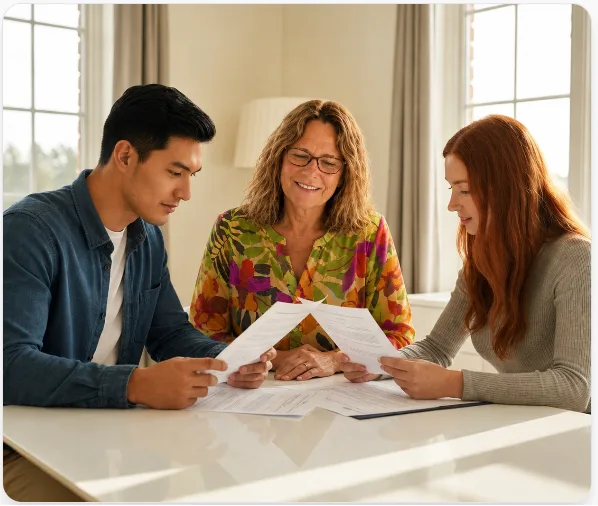
Before you fall in love with a house, you need to know exactly what you can afford. A mortgage pre-approval tells you your price range, your estimated monthly payment, and the cash you'll need to close.
Just as importantly, sellers on the North Shore will not take an offer seriously without a solid pre-approval letter attached. It proves you are a ready, willing, and able buyer.
Searching for a home is about more than just counting bedrooms. We'll build a custom search based on your lifestyle, commute, desired school districts, and neighborhood feel.
When we tour homes, I help you avoid shiny-object distraction. While you look at the layout and the kitchen, I'm looking at the roof, the heating system, the resale potential, and hidden issues that could cost you money down the road.
Start Your Custom SearchWant to share your preferences now? Register your home search and the team will bring you homes that fit.

When you find the right house, I'll help you structure a smart, competitive offer. In Massachusetts, an offer includes your purchase price, your initial deposit, your closing date, and specific contingencies that protect you.
A strong offer isn't always just about the highest price. Sometimes, flexible terms or specific timelines make your offer the one the seller chooses. I'll guide you on exactly how to position yourself for success without overpaying.
What you're willing to pay and the earnest money showing you're serious.
Protections for mortgage approval and home inspection results.
Closing dates and specific requests that appeal to the seller.
An accepted offer is the starting point, not the final contract. In Massachusetts, the binding deal is the Purchase & Sale Agreement (P&S), a second contract you sign after the inspection period. The P&S replaces the offer and sets the deadlines, deposit, and contingencies that actually govern your purchase.
At this stage, you'll typically put down the balance of your deposit (often to a total of around 5% of the purchase price), and your attorney will review the terms before you sign. Working with a Massachusetts real estate attorney is standard practice here, and it is one of the most important protections a buyer has.
You should always know exactly what you are buying. The home inspection is your chance to have a licensed professional examine the home's structure, systems, and safety.
If the inspector finds significant hidden issues, we have options. We can negotiate repairs with the seller, ask for a credit so you can fix it yourself, or, if the problem is too severe, walk away. Whether you can recover your deposit depends on the inspection contingency in your signed agreements, the offer and the P&S, and on Massachusetts law, so we will review the exact language before we act.
The same is true of your financing protections: your rights to cancel, renegotiate, or recover your deposit come from the signed agreements and applicable law, not from a general rule. That is why the P&S is reviewed by a Massachusetts real estate attorney, and why I make sure you understand what you are signing before you sign it.
I will help you separate standard maintenance items from major red flags, keeping the process calm and focused.
Once the P&S is signed, your lender takes the wheel. They will order an appraisal to verify the home is worth what you've agreed to pay. Once the appraisal clears and your financial documents are fully reviewed, the lender issues a “Mortgage Commitment,” and eventually, the magic words: “Clear to Close.”
An independent appraiser evaluates the home. If it appraises at or above the purchase price, you're good to go. If it comes in low, we negotiate.
A formal letter from your lender stating they have approved your loan, subject to final conditions like a clean title.
The final green light. Your loan is fully approved, and the closing attorney can schedule your closing day.
In the days before closing, you'll set up your utilities (gas, electric, water) and we'll do a final walkthrough of the empty house to ensure it's in the agreed-upon condition. If there's an oil tank, we'll verify the final reading.
On closing day, you'll bring your ID and a certified check (or wire transfer) for your closing costs. You'll sign a stack of paperwork with the closing attorney. Once the deed is recorded at the Registry of Deeds, the home is officially yours, and the keys are released!
My support doesn't end when you get the keys. As a homeowner, you'll likely need plumbers, electricians, landscapers, or advice on renovations.
I remain your lifelong real estate resource. Whenever you have a question about your home's value, equity, or local contractors on the North Shore, I'm just a phone call away.
From Beverly to Newburyport, the North Shore offers coastal living, historic town centers, and commuter access to Boston. You aren't just buying a house; you're choosing a community, a commute, and a way of life.
Each town has its own housing stock, tax rate, and coastal exposure. Here is what first-time buyers should weigh as they compare communities.
Much of the North Shore's charm is old houses. Many homes predate modern heating, electrical, and plumbing standards, so budget for updates and ask about the age of the roof, systems, and windows. Historic district rules in towns like Salem and Newburyport can also limit exterior changes.
Historic homes on the North ShoreEvery town sets its own tax rate, so two homes at the same price can carry very different annual tax bills. Check the current rate, the assessed value, and how taxes have trended before you lock in a monthly budget.
Homes near the water may need flood insurance through the National Flood Insurance Program plus separate wind coverage. Premiums vary with flood zone and elevation, so get quotes early and check the flood-zone answer before you fall in love with a view.
Flood zones when buyingCommuter rail lines serve Beverly, Salem, Ipswich, Newburyport, Gloucester, and Rockport, and Route 128 and I-95 are the main driving corridors. A 30-minute difference in commute can change which town is right for you, so test the drive at rush hour.
Commuter rail access on the North ShoreCondo buyers should review the association's budget, reserves, and rules before offering. Some buildings have owner-occupancy requirements, and FHA keeps an approved list of buildings it will finance.
Buying a condo on the North ShoreHomes outside town sewer service depend on Title 5 septic systems. A failed system can cost tens of thousands of dollars to replace, so the inspection and the Title 5 report matter on any older home.
Septic systems and wellsMassachusetts has two statewide programs built for first-time buyers, plus federal loans and a few local town programs. Here is how each one works, who qualifies, and where to get the current numbers.
Statewide
MassHousing finances income-qualified Massachusetts buyers with 30-year fixed-rate mortgages, down payments as low as 3%, and an MI Plus option that can eliminate private mortgage insurance for eligible borrowers.
Statewide
ONE Mortgage is a 30-year fixed-rate loan for low- and moderate-income first-time buyers: a 3% down payment, no private mortgage insurance, and a below-market rate through participating lenders.
Federal
FHA loans are insured by the federal government and are a common first-time buyer option: a 3.5% down payment with a credit score of 580 or higher, and the down payment can come entirely from gifts or assistance.
Federal
VA loans are available to eligible veterans, active-duty service members, Guard and Reserve members, and some surviving spouses: $0 down payment and no private mortgage insurance.
Federal
USDA Section 502 loans offer $0 down and 100% financing for modest single-family homes in USDA-eligible rural areas, with income limits set by county and household size.
Private
Fannie Mae HomeReady and Freddie Mac Home Possible are conventional loans designed for income-qualified buyers with as little as 3% down, and many local lenders offer their own 3% conventional options.
Town programs
A few North Shore towns run their own down payment assistance programs for income-qualified buyers. Beverly and Essex currently rely on the statewide programs, so check your town before assuming a local program exists.
Program terms, income limits, and availability change. Always confirm the current rules with the program or a participating lender before you rely on a number, and read the site's deeper look at Massachusetts first-time buyer programs for the full picture.
Most first-time buyers assume they need a 20% down payment. In Massachusetts, many qualified buyers close with far less cash than they expected. The key is understanding the three separate buckets of cash you actually need.
The part of the purchase price you pay upfront; the rest is financed. On a $550,000 home, 3% is $16,500 and 20% is $110,000, which is why most first-time buyers target 3% to 10%.
Lender fees, title and recording charges, the closing attorney, prepaid taxes and insurance, and inspections. In Massachusetts, plan for roughly 2% to 4% of the purchase price.
Money left in your account after closing. Lenders often want to see a few months of mortgage payments in reserve, and you will want a cushion for the first repair or appliance.
Qualified Massachusetts buyers have real options for shrinking the cash they need at closing:
Here is what the upfront cash can look like on a $550,000 home with 3% down. These are illustrative figures, not a quote; your lender and closing attorney will give you exact numbers.
With up to $30,000 in MassHousing assistance applied to the down payment and closing costs, your own cash could drop to roughly $10,000 including reserves. That is the difference between waiting another year and buying now, for many first-time buyers.
Short, straight answers to the questions North Shore first-time buyers ask most. The Ask Kathleen library covers each topic in full.
For many first-time buyers, 3% is enough. MassHousing and ONE Mortgage both offer 3% down programs, several conventional loans allow 3% down, and FHA requires 3.5% with a 580 credit score. Eligible veterans can use a VA loan with $0 down. The exact number depends on the loan program, your credit, and the purchase price.
Massachusetts has two statewide programs built for first-time buyers: MassHousing, with down payment assistance up to $30,000, and ONE Mortgage through the Massachusetts Housing Partnership, with 3% down and no private mortgage insurance. Salem, Gloucester, Newburyport, and Ipswich also run local assistance programs. The programs section above links to each official source.
No. 20% down avoids private mortgage insurance on a conventional loan, but it is not required. Most first-time buyers on the North Shore put down 3% to 10%. With less than 20% down on a conventional loan, you typically pay private mortgage insurance until you build enough equity.
FHA loans accept a 580 score with 3.5% down, and 500 with 10% down. MassHousing and most conventional lenders look for 620 or higher. VA loans have no official minimum, though most lenders want around 620. Your lender also weighs your debt-to-income ratio and your savings.
Plan for roughly 2% to 4% of the purchase price. That covers lender fees, title and recording charges, the closing attorney, prepaid property taxes and insurance, and inspection costs. On a $550,000 home, that is roughly $11,000 to $22,000. The closing costs answer on this site walks through the line items.
Yes. MassHousing, ONE Mortgage, FHA, and 3% conventional programs all allow condos. The catch is the building: some associations have owner-occupancy rules, some have thin budgets or reserves, and FHA requires the building to be on its approved condo list. Review the condo documents before you commit.
Yes, both are common on the North Shore. FHA offers 3.5% down with a 580 credit score and allows the down payment to come from gifts or assistance. VA offers $0 down for eligible veterans with no private mortgage insurance. Both require an appraisal, and a strong pre-approval helps your offer compete.
The lender only funds up to the appraised value, so you and the seller have to bridge the gap. Options include renegotiating the price, meeting in the middle, bringing more cash, or walking away if your Purchase and Sale Agreement allows it. Your financing contingency and P&S terms define your rights, so review them with your attorney.
Since October 15, 2025, sellers in Massachusetts cannot require or pressure you to waive a home inspection; you may waive it only knowingly and voluntarily after receiving the required disclosure. After the inspection, your remedies depend on the inspection contingency in your signed agreements. A licensed inspector examines the structure, systems, and safety.
Many North Shore homes are a century old or more. Budget for older heating systems, aging roofs, and possible electrical and plumbing updates. Check for septic systems and Title 5, coastal flood exposure, and historic district rules that can limit changes. A thorough inspection and an attorney review of the P&S matter even more on older homes.

Kathleen Militello
REALTOR® · eXp Realty
Licensed Since 2003
I have lived and worked on Boston's Coastal North Shore for more than two decades, and I have been licensed since 2003. I listen first, tell you what I really think, and make sure you understand your options before you decide. That is what Experience Matters means to me.
Meet KathleenTell me about your goals and I'll help you take the next step.
Tools to run your numbers, register your search, and dig deeper into Massachusetts programs and the North Shore.
Tool
Learn what a lender reviews and why a pre-approval letter matters before you start touring homes.
Open resourceTool
Estimate your monthly payment, taxes, and insurance for a North Shore home.
Open resourceTool
Tell the team what you are looking for and get homes that match your budget and lifestyle.
Open resourceLocal Insights
A deeper look at MassHousing and ONE Mortgage, with the current numbers and how they work on the North Shore.
Open resourceLocal Insights
The full guide to buying your first home here, from choosing a town to closing day.
Open resourceLocal Insights
A practical savings roadmap for your first home on the North Shore, covering the down payment, closing costs, and reserves.
Open resourceAsk Kathleen
A preapproval is a lender's written statement of how much they are willing to lend you based on a real review of your finances. Sellers treat it as proof you are a serious buyer.
Read the answerAsk Kathleen
You can afford what your lender says you can afford, then trim for your real life: the payment that works on paper should also survive your actual spending, savings goals, and the way you want to live.
Read the answerLocal Insights
Fall is one of the best seasons to start your home search on the North Shore. The spring crowd is gone, sellers are motivated, and you could be in before the new year.
Read the answer