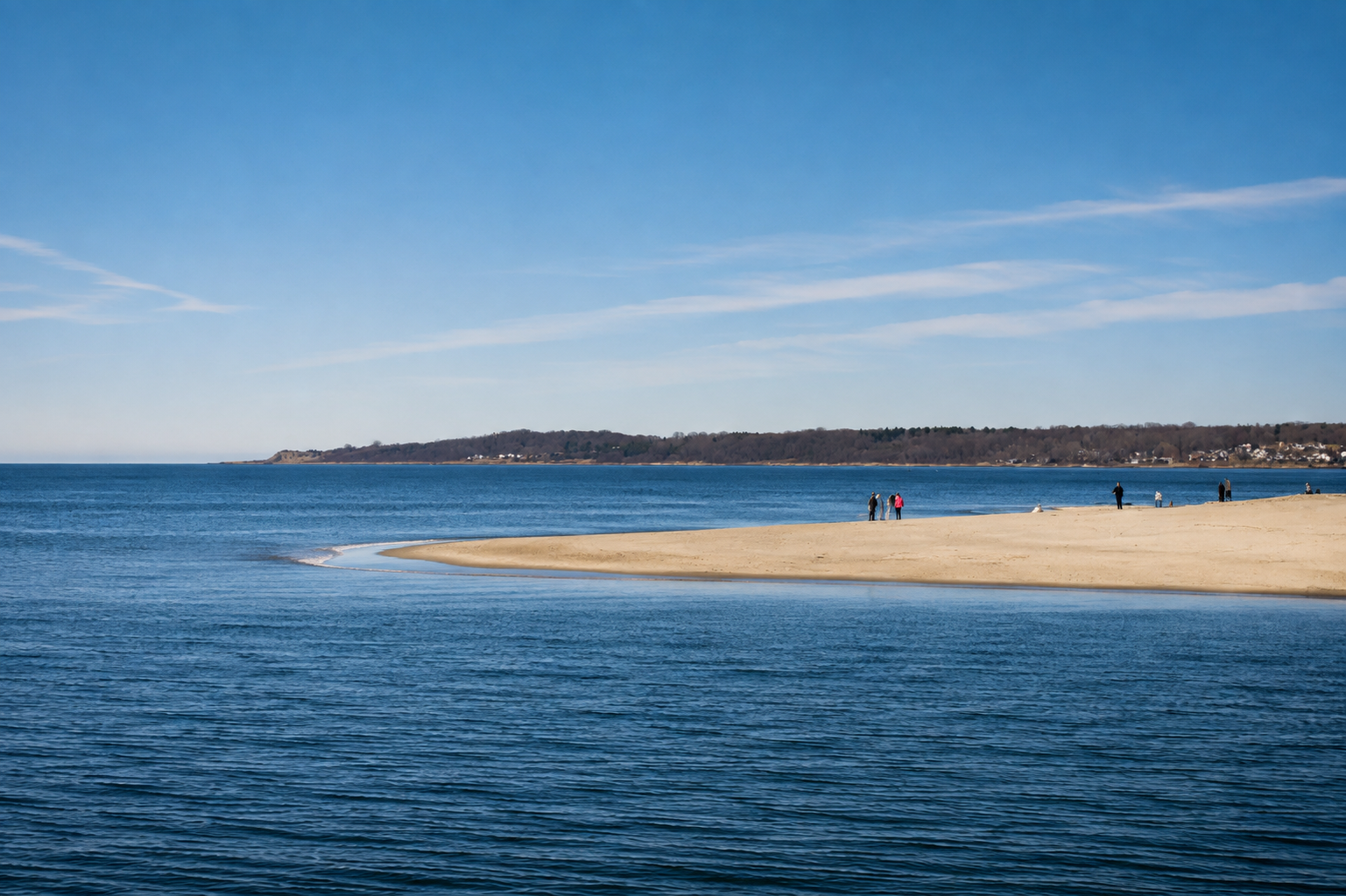
Life in Ipswich is organized around the river and the beach. The village center works like a small New England downtown: shops and restaurants along Market Street and Depot Square, the public library, the Choate Bridge over the tidal river, and the train station at the edge of it all. A few minutes east, the world changes to dunes, marsh, and the open beach at Crane Beach and the Crane Estate.
The year has a rhythm. Summer brings the beach crowds and the famous timed-entry passes at Crane Beach, the estate grounds at Castle Hill, and the fried-clam line at the Clam Box. The rest of the year, Ipswich settles back into a working town: good schools, a real downtown, and quiet coastal streets. For many residents, the mix of "beach town in July, real town in February" is precisely the appeal.
The practical side matters. Beach parking runs on a resident sticker system in summer, and some lots are resident-only. Properties near the river, the marsh, and the necks can carry flood-zone considerations and insurance questions, and parts of town rely on septic systems, so Title 5 is a normal part of the buying conversation. Summer weekends bring traffic toward Argilla Road and Crane Beach.
Commuting is genuinely workable: the Ipswich station on the Newburyport/Rockport Line provides direct service to Boston's North Station, and Routes 1 and 128 connect the town to Greater Boston. That combination of deep history, real beach, and a rail line is why Ipswich draws the buyers it does. If this is starting to sound like your town, my answer on living in Ipswich goes deeper.