
Buying Your Next Home
Commuter Rail Access on the North Shore: Which Towns Offer the Best Boston Commute?
Kathleen Militello · Published September 23, 2026 · Updated September 2026 · 9 min read · Boston's Coastal North Shore
Buying Your Next Home
Kathleen Militello · Published September 23, 2026 · Updated September 2026 · 9 min read · Boston's Coastal North Shore
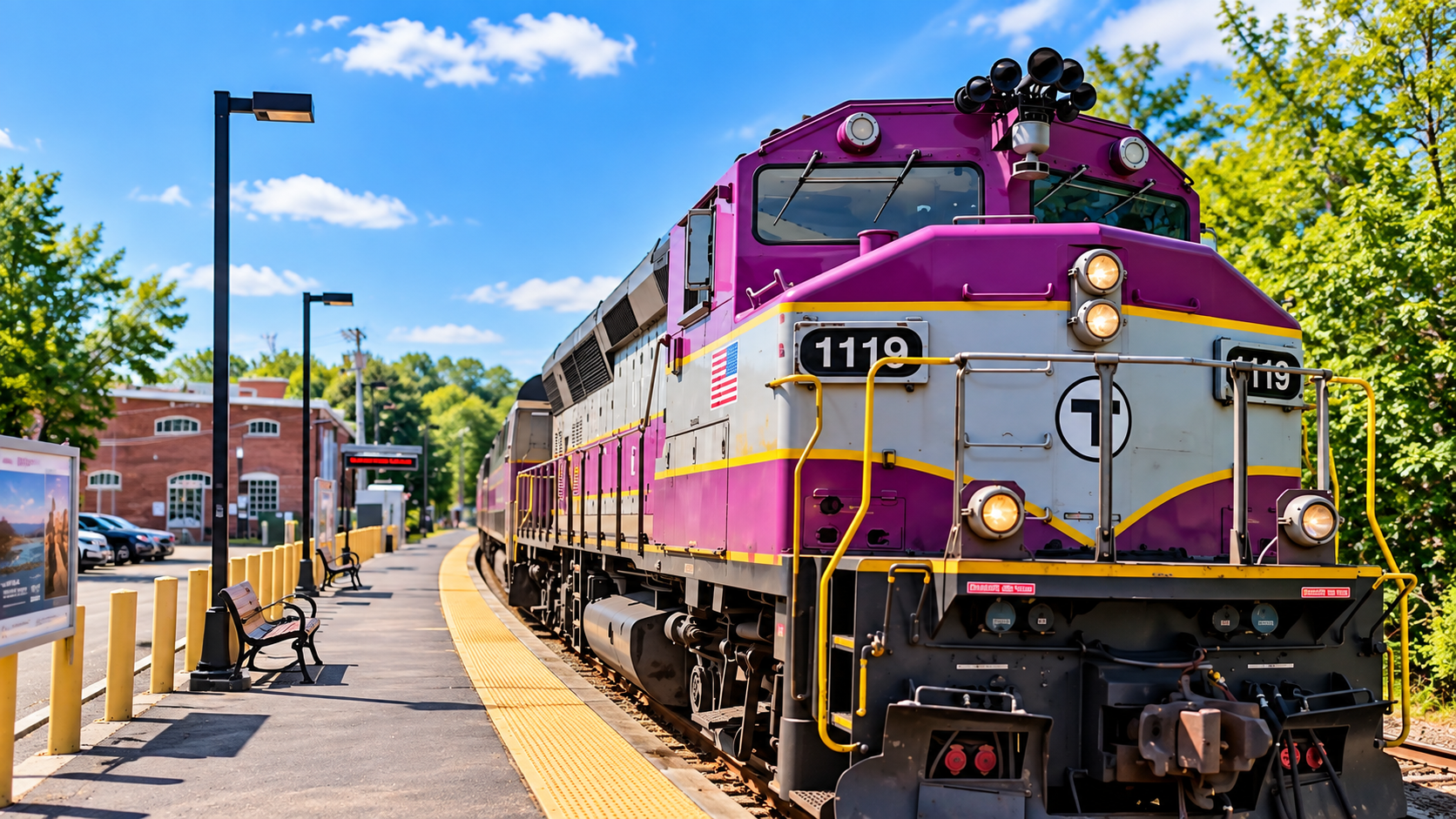
The right rail line can turn a coastal commute into the best part of the week, and the wrong station can quietly add an hour to your Saturdays. Here is how the lines on the North Shore fit together, in general terms, with honest guidance for matching a station to your week. Times and fares change, so the current schedule is the source for real numbers.
The Newburyport/Rockport Line is the coast's commuter spine. Headed north from Boston it serves the coastal towns one after another: Swampscott, Salem, Beverly, Manchester-by-the-Sea, Ipswich, Rowley, and Newburyport, with a stop at Hamilton on the branch and the Rockport branch continuing to Gloucester and Rockport.
The Haverhill Line serves the inland side of the shore: Haverhill at its end, Lawrence, Andover, and nearby inland stops on the way to Boston. The two lines are the difference between towns with station service and towns without it, and if the train is part of your week, the station and the schedule decide more about daily life than almost any feature in the house.
Travel time grows with distance, and the line runs express through some stretches, so the ride stays comfortable for a commute. In general, the coastal stops close to the city, such as Salem and Swampscott, ride shorter than the towns farther up the line, and the termini ride the longest of all. Frequencies vary through the day, with more trains in the morning and evening directions and fewer midday, and the schedule is the honest source for both time and frequency.
Rather than trusting a map, build the commute from the actual schedule: the train you would ride, in both directions, on the day of the week you would travel. A commuter rail commute that works is a lifestyle choice, not a guess.
Most stations have parking, with lots at the line ends and permit systems at the busy stops, and supply is the honest question. Ask how the parking really works at the exact station you would use, at the time you would use it, and what happens when the lot fills, because the crunch follows the popular stations.
Station access is its own reality check: walking distance, bike racks, and the ride to the platform all change the doorstep-to-train experience. The best station is the one you can reliably reach on the mornings that count.
The commute carries its own line item: the fare, the parking pass or lot fee, and the connection at each end, and fares change over time, so the current fare structure is the accurate source. Weigh it honestly, because the transportation line often decides whether a town fits a household's budget.
Add the trade-offs, fuel and parking at the station, and you have the real cost of the commute in numbers you can compare across towns. Some buyers discover a rail commute is worth real money and gladly pay it; others find the drive suits them better.
In general terms: Salem is a busy, walkable station town with one of the shorter rides on the coastal line. Swampscott sits close to the city with an ocean-adjacent commute. Beverly offers multiple stations across the middle of the coast. Manchester-by-the-Sea, Ipswich, and Rowley ride the coastal line between the city and the end of the line. Newburyport anchors the northern terminus with its terminal lot, and Gloucester and Rockport sit at the end of the Rockport branch. Hamilton has its own inland-coast stop, and the Haverhill Line towns, Haverhill, Lawrence, and Andover, trade the ocean view for the inland run.
Each station has its own personality and parking story, so treat the town view as a starting point and the schedule as the fact. Visit the station at the time you would use it, and the commute will tell you its own vote.
Great commuters treat the station as part of the household: the door at one end, the seat on the way, the walk at the other end. Some buyers test the commute, a week on the train and a week driving, before they commit to a town, and that week is the honest guide.
The best commute is the one that survives ordinary weeks, winter weather included, so build the season into the test and let the schedule decide. I know the stations and the rides from the coast I live on, and I will tell you what I really think before you commit to a town.
The Newburyport/Rockport Line serves the coastal towns from Newburyport, Rowley, Ipswich, Hamilton, and Manchester-by-the-Sea through Beverly, Salem, and Swampscott to Boston, with a Rockport branch to Gloucester and Rockport.
The Haverhill Line serves the inland side of the shore: Haverhill, Lawrence, Andover, and nearby inland stops.
Ride times and fares change, with times growing with distance and frequencies shifting through the day, so the current schedule is the honest source for real numbers.
Parking supply, station access, and the walk to the platform decide more about the commute than the ride time alone.
Test the commute in both directions on the day you would travel, winter weather included, before you commit to a town.
Ask Kathleen
Straight answers to the questions North Shore commuters ask most, from the article above.
The Newburyport/Rockport Line serves the coastal towns from Newburyport, Rowley, Ipswich, Hamilton, and Manchester-by-the-Sea through Beverly, Salem, and Swampscott, with the Rockport branch to Gloucester and Rockport. The Haverhill Line serves the inland side, including Haverhill, Lawrence, Andover, and nearby stops.
Most stations have parking, with permit systems at the popular stops, and supply varies by town and arrival time. Ask how the parking really works at the exact station you would use, at the time you would use it, because the crunch follows the busy stations.
In general terms, coastal stops close to the city, such as Salem and Swampscott, ride shorter than towns farther up each line, and the termini ride the longest. The honest answer is the current timetable, ridden in both directions on the day you travel.
Check the commuter rail's current schedule and fare information, which change over time, and test the commute itself in both directions on the day you would ride. The schedule, not a map, is the source for real numbers.
Related topics
Buying Your Next Home

Written by
Kathleen Militello, Realtor®
The Militello Team · eXp Realty · MA Salesperson License 9053343 · Serving Boston's Coastal North Shore
Keep reading
Committing to a town is a real decision, and the commute is a big part of it. Let's talk about what makes sense for you.
Kathleen Militello, Realtor / The Militello Team | eXp Realty
Experience Matters.