Essex questions people actually ask. Clear answers to the most common questions about living in this river town.
01 Where is Essex, Massachusetts?
Essex is a coastal town of about 3,675 residents in Essex County on Massachusetts’ North Shore, roughly 26 miles north of Boston. It sits at the western edge of Cape Ann, bordered by Gloucester to the east, Manchester-by-the-Sea to the south, Hamilton and Wenham to the west, and Ipswich to the north.
02 Is Essex on Cape Ann?
Yes. Essex is part of Cape Ann, the peninsula on the North Shore that also includes Gloucester and Rockport. Essex sits at the western edge of Cape Ann, where the peninsula meets the mainland.
03 What is Essex, Massachusetts known for?
Essex is known for its wooden shipbuilding history: since 1668 more than 4,000 vessels were launched on the Essex River. It is also the birthplace of the New England fried clam, invented at Woodman’s in 1916, and the town is ringed by the rivers and salt marshes of the Great Marsh.
04 Does Essex have a beach?
Essex has no sandy ocean beach within the town line. The waterfront is the Essex River and Essex Bay, with public access at the Town Landing boat ramp and a small access beach at Conomo Point. For ocean sand, Crane Beach in Ipswich and the Gloucester beaches are a short drive away.
05 Is there a train station in Essex?
No. The MBTA commuter rail does not stop in Essex. The nearest stations are Ipswich and Hamilton/Wenham on the Newburyport/Rockport Line, with West Gloucester also close to the eastern edge of town.
06 How far is Essex from Boston?
Essex is about 26 miles north of Boston. By car, Route 128 and Route 133 connect the town to Greater Boston. The nearest commuter rail stations, in Ipswich and Hamilton/Wenham on the Newburyport/Rockport Line, provide direct service to Boston North Station.
07 What is the Essex Shipbuilding Museum?
The Essex Shipbuilding Museum is at 66 Main Street, housed in the 1835 Essex Central Schoolhouse and the former A.D. Story Shipyard. Its centerpiece is the Evelina M. Goulart, a 1927 wooden fishing schooner, and the collection tells the story of the more than 4,000 vessels built on the Essex River.
08 Is Woodman’s really the birthplace of the fried clam?
Woodman’s of Essex traces the New England fried clam to July 3, 1916, when Lawrence "Chubby" Woodman and his wife Bessie first fried clams at their Main Street stand, at the joking suggestion of a visiting fisherman. The origin story is generally accepted across New England.
09 What are houses like in Essex?
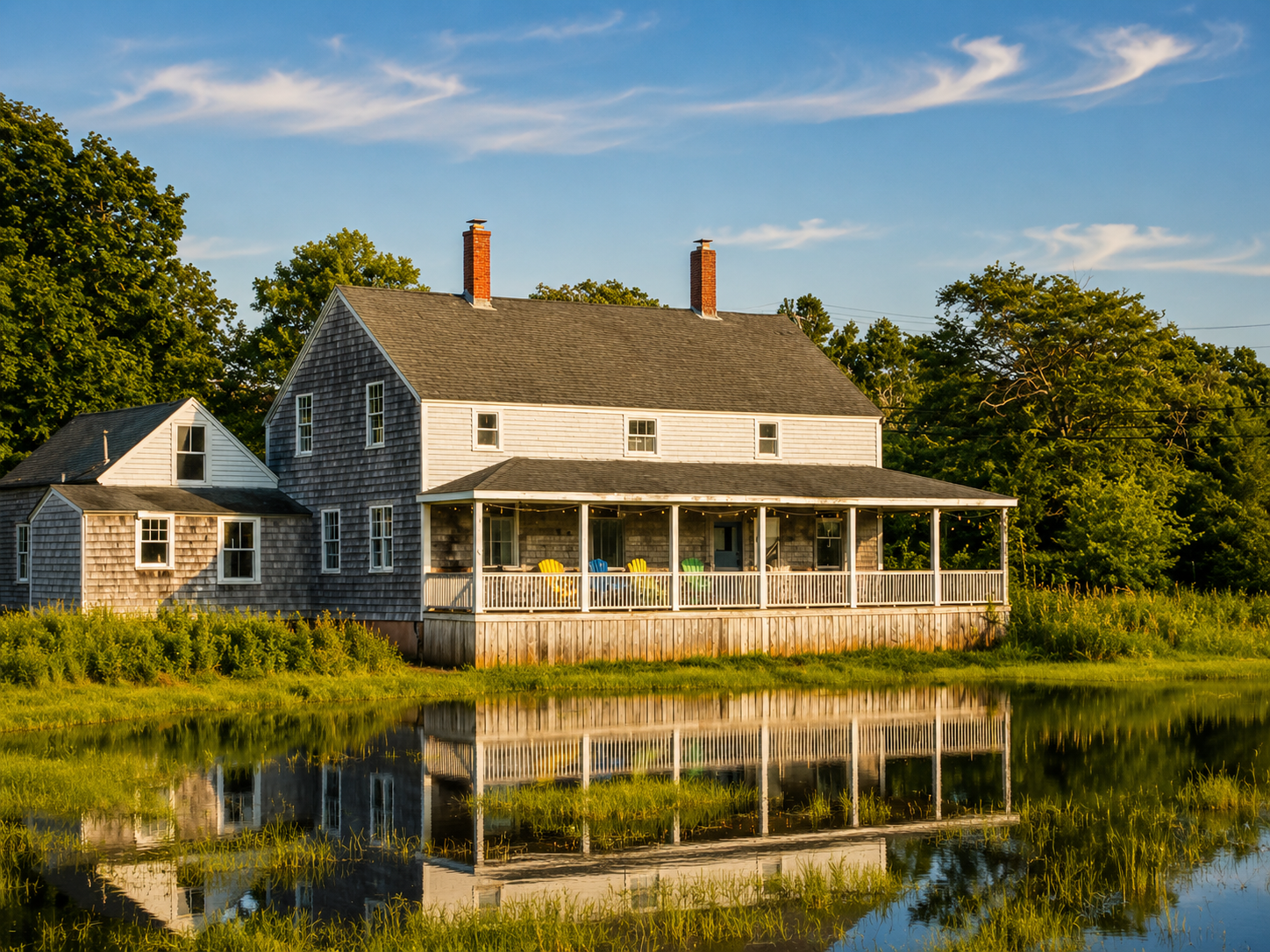
Essex housing includes antique riverfront homes in the village, marsh-side properties, newer homes on wooded lanes near Chebacco Lake, and seasonal cottages at Conomo Point. Much of the town relies on septic systems, so a Title 5 inspection is a normal part of the buying conversation.
10 Is Essex a good place to live year-round?
Essex is a small, tight-knit town of about 3,675 residents with a working coastal identity. Summer brings visitors for the clams and river cruises; winters are quiet. It is a town people choose deliberately, usually with the beach towns and commuter rail close by.
11 How does Essex compare with Gloucester?
Essex is a small river and marsh town with limited, tight housing, a two-street village center, and no ocean beach. Gloucester is a city with an active fishing harbor, multiple major beaches, a walkable downtown, and very high housing variety. The two border each other, so many residents enjoy both.
12 What should buyers know about coastal property in Essex?
Riverfront, marsh-adjacent, and Essex Bay properties may sit in FEMA-designated flood zones, which can affect mortgage requirements, insurance costs, and long-term planning. Flood risk is property-specific and depends on elevation, proximity to water, and the flood map designation, so buyers should review official FEMA flood maps before making an offer.
13 Where can I find Essex homes for sale?
Explore Essex homes for sale through Kathleen Militello, Realtor with eXp Realty, on her website, Essex County Homes for Sale.