
North Shore Living
Seven Centuries on the North Shore: From Fishing Villages to Summer Colonies
Kathleen Militello · Published October 12, 2026 · Updated October 12, 2026 · 10 min read
North Shore Living
Kathleen Militello · Published October 12, 2026 · Updated October 12, 2026 · 10 min read
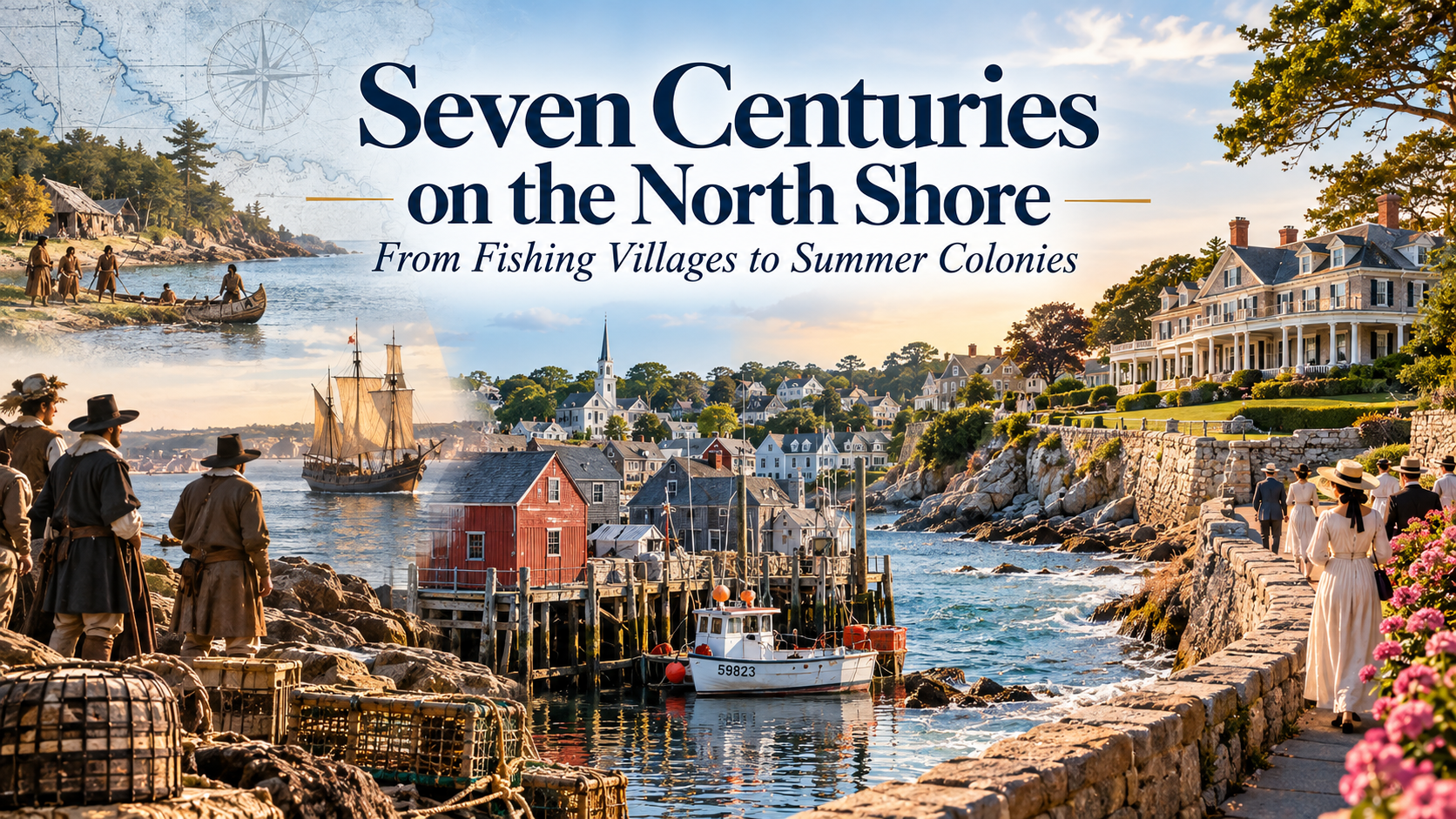
When you stand on a North Shore beach at low tide, you are standing on seven centuries of layers. The same harbors that once fed people from the water later launched their fishing fleets, drew their painters, and hosted their summer mansions. This coast does not keep its history behind glass. It keeps it in the streets, the harbors, and the rooflines, if you know where to look. I have walked these towns for more than twenty years, and the more I learn, the more I want to share: every harbor here has a story, and every story begins at the water's edge.
Key Takeaways
The North Shore was inhabited and fished for thousands of years before the first colonists arrived.
Shipbuilding and the fisheries built the coastal economy through the colonial and maritime eras.
The artist colonies of Gloucester and Rockport put the coast's light on the map.
The Gilded Age summer colony shaped today's coastal communities.
Every North Shore town carries its own layer of that history.
Before the ships
Long before any English sail appeared on the horizon, the coast was home. The Indigenous people of this shoreline lived on the water itself. They fished the estuaries of the Ipswich and Essex rivers, where fresh water meets the tide, and they clammed the tidal flats that still run silver at low water. Shellfish beds, river herring runs, and salt marshes fed communities here for thousands of years, a stretch of time that dwarfs everything that came after.
We still speak their geography every day, even when we do not know it. The place we call Ipswich was Agawam, the principal village of the Agawam people of the Pawtucket. Salem grew beside an inlet its people knew well. The old foot trails along the coast became roads we still drive, and the river bends where the clams lie are the same bends people returned to season after season, year after year. Even the harbor names we use today grew out of that older geography.
This is the layer most of us never see, and it is the foundation of every other chapter here. The coast has been a working water world, not a postcard, since long before it had a name anyone in Europe would recognize. Everything the later centuries built, they built on top of that first understanding of the water.
The English arrive
In the 1620s and 1630s, English settlers began arriving, and they built almost exactly what the water demanded. Salem, settled in 1626, grew into one of the oldest settlements on the coast, and Beverly took shape beside it within the same generation. The first economy was the oldest economy: fishing, and the farming that fed the fishers. Land was cleared, meetinghouses went up, and the harbor towns began to look like the New England we recognize. Salem's harbor became a busy colonial port almost immediately, and the water shaped everything about how the town grew.
Then came the shipwrights. The 1600s turned this shoreline into a place where a household could build its own future out of oak and pine. Essex, above all, became a village of master shipwrights, passing the craft from hand to hand, father to son, wharf to wharf. By the 1800s the town had launched more than four thousand wooden vessels, and it produced more two-masted fishing schooners than any other place in America, most of them bound for the Gloucester fleet. The vessels those yards launched were the trucks of their day, carrying fish to market and goods to port, and the skill that built them was the region's first great industry.
Stand on Essex's waterfront today and the arc is easy to trace: the same river that fed people pulled the ships that made the town. The Essex Shipbuilding Museum still keeps the craft alive, with an Essex-built schooner from 1927 at the dock and master builders still launching wooden vessels from the town's yards.
When the harbor was the highway
The 1700s and 1800s made the North Shore rich, and they made it rich in salt air. The fisheries boomed, and Gloucester built its fishing fleet into one of the most storied on the Atlantic. Fishermen first settled Gloucester in 1623, drawn by the same rich waters the Indigenous people had worked for centuries, and by the 1800s its schooners were sailing farther offshore than almost any fleet in the country. Gloucester still remembers the price of that trade: the Fisherman's Memorial statue on the boulevard faces the harbor it honors. Across Cape Ann, Rockport supplied the granite that paved and faced a growing nation, cut from the town's own quarries; for the better part of a century, the granite trade ran second only to fishing in what the coast produced.
Walk the hill streets of these towns and the era is still written on the houses. The captains' homes of Gloucester and Marblehead carry widow's walks on their roofs, small platforms where a captain's household once scanned the harbor for a returning sail. In Newburyport, the wharves on the Merrimack welcomed the tall ships, and by the late 1700s the waterfront had become one of the great shipbuilding and trading ports of its time, its vessels clearing for the West Indies and beyond. The old Custom House still stands on the waterfront, now a maritime museum that tells the story.
That age built the street patterns we still walk, the harbors we still use, and the pride of place these towns still carry. The ships are gone; the memory of their skill is not.
Light that became famous
In the late 1800s and early 1900s, something new happened on the coast: people began coming to look. Painters arrived in Gloucester and Rockport, drawn by the harbors, the fishing boats, the granite, and above all the light, that clear, silver-bright coastal light that makes ordinary water look like a painting waiting to happen. Artists had found Cape Ann even earlier, back in the mid-1800s, when Fitz Henry Lane painted its harbors, and by these decades the coast had become a destination for whole schools of painters.
Rocky Neck, across the harbor from downtown Gloucester, grew into one of the oldest continuously working artist colonies in the country, and its studios still open to visitors today. In Rockport, the little red fishing shack on the wharf, Motif Number 1, became one of the most painted buildings in America. The original was lost in the great blizzard of 1978 and rebuilt in its place, still red, still on the wharf, still posing for anyone with a brush or a camera.
With the artists came the summer visitors, and with the visitors came a new idea: the coast was a place to see, not just a place to work. That idea is still quietly running the region's galleries, its museums, and its calendar every summer. Walk Bearskin Neck in Rockport on a summer evening and you will see easels on the sidewalk and painters at the rail, doing exactly what their predecessors did a century ago.
The Gilded Age arrives
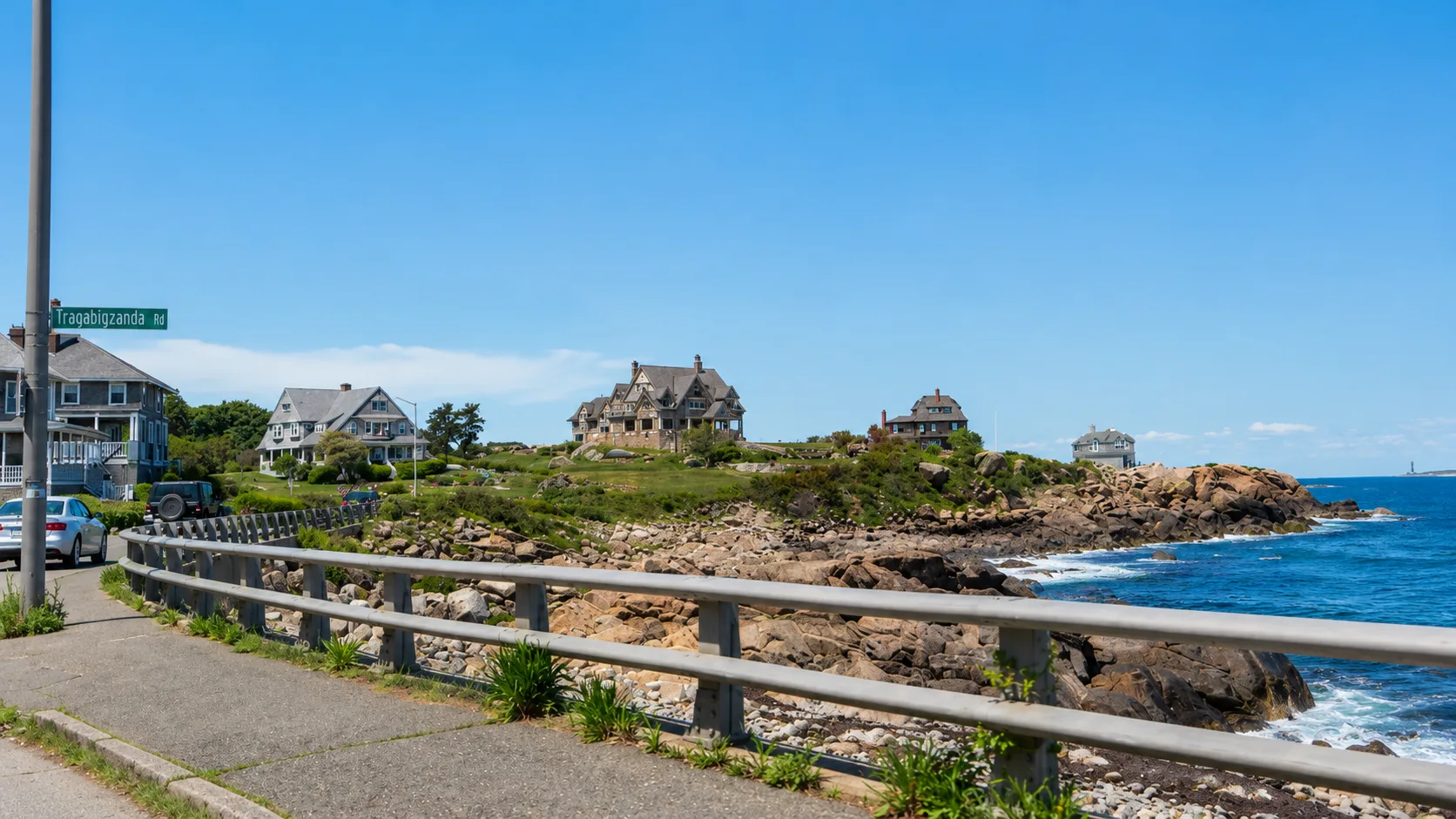
Then, in the Gilded Age, the wealthy came to stay. They built summer estates that turned whole towns into colonies of the coast. The Crane Estate at Castle Hill in Ipswich rose above the beach as a monument to one household's fortune: a Chicago industrialist bought the drumlin in the early 1900s, and by the 1920s a great house designed by architect David Adler crowned the hill, with gardens laid out by the Olmsted Brothers. Hammond Castle raised its stone towers on the ledge in Gloucester in the 1920s, the home, laboratory, and museum of inventor John Hays Hammond Jr., a pioneer of radio control who held hundreds of patents. In Manchester-by-the-Sea, grand shingle-style homes overlooked a harbor that had edged toward silence, and Singing Beach, famous for the way its dry sand squeaks underfoot, began filling with summer footsteps.
The summer colony did more than build big houses. It paid for the preservation that saved these towns, and it taught the region that its coastline was an asset worth protecting. The estates became public landscapes and museums: The Trustees now cares for the Crane Estate and its beach, and Hammond Castle Museum opens its rooms to visitors. What began as private pleasure became the region's shared inheritance.
That is the last layer, and it is the one you feel when you drive the ocean roads in June: a coast that learned, over seven centuries, to be lived on, worked, painted, and loved.
The coast as it is today
That history is why the North Shore feels the way it does: layered, salty, and alive. No town here is a blank page. Each one is a working waterfront, a granite quarry, an artist colony, or a summer estate that kept its character through the centuries, and that character is what makes the region so hard to match. Drive from Beverly to Newburyport and you pass through four centuries in an afternoon.
When you explore a town, you are reading that history in its streets. When you buy a home here, you are inheriting a place in it. A house in Essex carries the shipwrights' town; a house in Rockport carries the quarries and the painters; a house in Manchester-by-the-Sea carries the summer colony. Every North Shore town carries its own layer, and finding the one that fits you is one of the great pleasures of this market.
If you would like to see what the next chapter could look like, come explore a town with me. The history is here; the rest is still being written.
If you want to live inside this story, call or text me at (978) 500-1480 or set up a conversation. No pressure, just a walk through the towns and what their seven centuries could mean for yours. Warmly, Kathleen Militello, Realtor®, eXp Realty.
Ask Kathleen
Straight answers to the questions this season keeps bringing up, from the article above.
Salem, settled by English colonists in 1626, is among the oldest settlements on the coast, and Gloucester, settled in 1623, shares that distinction as the country's oldest fishing port. Neighboring towns like Beverly took shape within the same generation. The whole coast was colonized early, which is part of why its history runs so deep.
Essex was the great shipbuilding village, launching more than four thousand wooden vessels over more than three centuries and producing more two-masted fishing schooners than any other place in America, most of them for the Gloucester fleet. Newburyport was the other giant, a major shipbuilding and trading port on the Merrimack in the 1700s and early 1800s. Both towns still tell the story today, at the Essex Shipbuilding Museum and Newburyport's Custom House Maritime Museum.
In the late 1800s and early 1900s, painters were drawn to the fishing harbors and the dramatic coastal light, and they built artist colonies around Rocky Neck in Gloucester and around Rockport's harbor, where Motif Number 1, the little red fishing shack, became one of the most painted buildings in America. Rocky Neck is still one of the oldest continuously working art colonies in the country, and both towns remain full of working studios and galleries.
The Crane Estate at Castle Hill in Ipswich is a grand summer estate built for the Crane household in the early 1900s, with a great house designed by architect David Adler and grounds laid out by the Olmsted Brothers. Today it is owned by The Trustees and open to the public, with its mansion, gardens, and Crane Beach drawing visitors year-round.
Yes, many are open to the public. The Crane Estate and Crane Beach in Ipswich, Hammond Castle Museum in Gloucester, the Essex Shipbuilding Museum, and the Custom House Maritime Museum in Newburyport all welcome visitors, along with the working galleries and studios of Gloucester's Rocky Neck and Rockport's Bearskin Neck.
The same questions and answers, un-styled and sequential, so they can be read and extracted easily.
Q: What is the oldest town on the North Shore?
A: Salem, settled by English colonists in 1626, is among the oldest settlements on the coast, and Gloucester, settled in 1623, shares that distinction as the country's oldest fishing port. Neighboring towns like Beverly took shape within the same generation. The whole coast was colonized early, which is part of why its history runs so deep.
Q: Where did North Shore shipbuilding happen?
A: Essex was the great shipbuilding village, launching more than four thousand wooden vessels over more than three centuries and producing more two-masted fishing schooners than any other place in America, most of them for the Gloucester fleet. Newburyport was the other giant, a major shipbuilding and trading port on the Merrimack in the 1700s and early 1800s. Both towns still tell the story today, at the Essex Shipbuilding Museum and Newburyport's Custom House Maritime Museum.
Q: Why are Gloucester and Rockport known as art towns?
A: In the late 1800s and early 1900s, painters were drawn to the fishing harbors and the dramatic coastal light, and they built artist colonies around Rocky Neck in Gloucester and around Rockport's harbor, where Motif Number 1, the little red fishing shack, became one of the most painted buildings in America. Rocky Neck is still one of the oldest continuously working art colonies in the country, and both towns remain full of working studios and galleries.
Q: What is Castle Hill?
A: The Crane Estate at Castle Hill in Ipswich is a grand summer estate built for the Crane household in the early 1900s, with a great house designed by architect David Adler and grounds laid out by the Olmsted Brothers. Today it is owned by The Trustees and open to the public, with its mansion, gardens, and Crane Beach drawing visitors year-round.
Q: Can I visit North Shore historic sites today?
A: Yes, many are open to the public. The Crane Estate and Crane Beach in Ipswich, Hammond Castle Museum in Gloucester, the Essex Shipbuilding Museum, and the Custom House Maritime Museum in Newburyport all welcome visitors, along with the working galleries and studios of Gloucester's Rocky Neck and Rockport's Bearskin Neck.

Written by
Kathleen Militello, Realtor®
The Militello Team · AI Certified Agent™ · Certified Negotiation Specialist™ · eXp Realty
Kathleen knows the streets, the harbors, and the history of Boston's Coastal North Shore. Let her show you the town that fits the chapter you are starting.
Related Posts
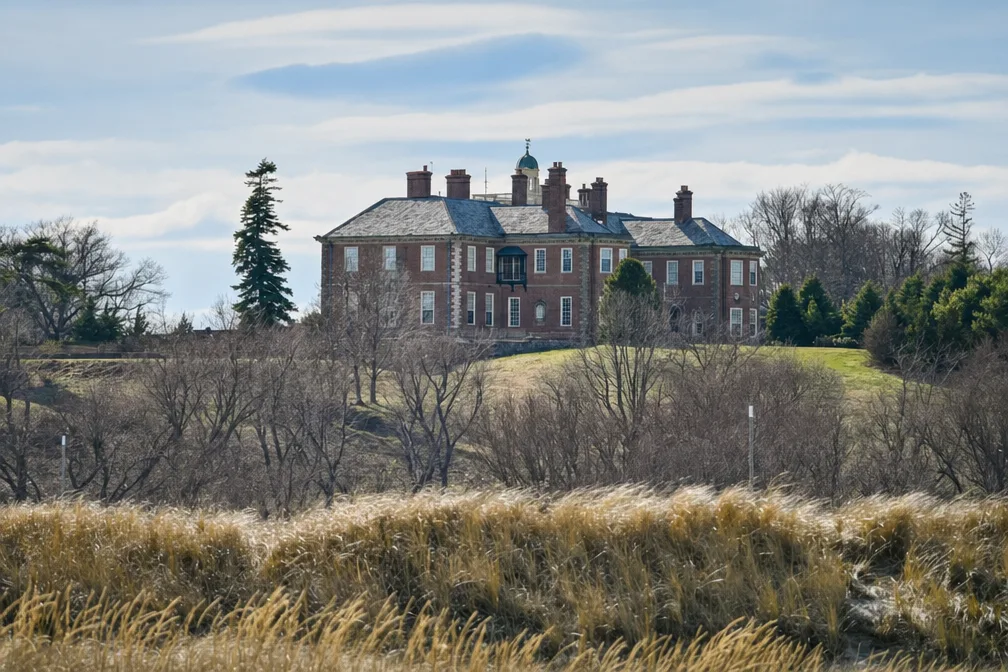 North Shore History Castle Hill and the Crane Estate: A Gilded Age Legacy on the North Shore
  North Shore History The People of Agawam: The Indigenous History of Ipswich Before the English Arrived
 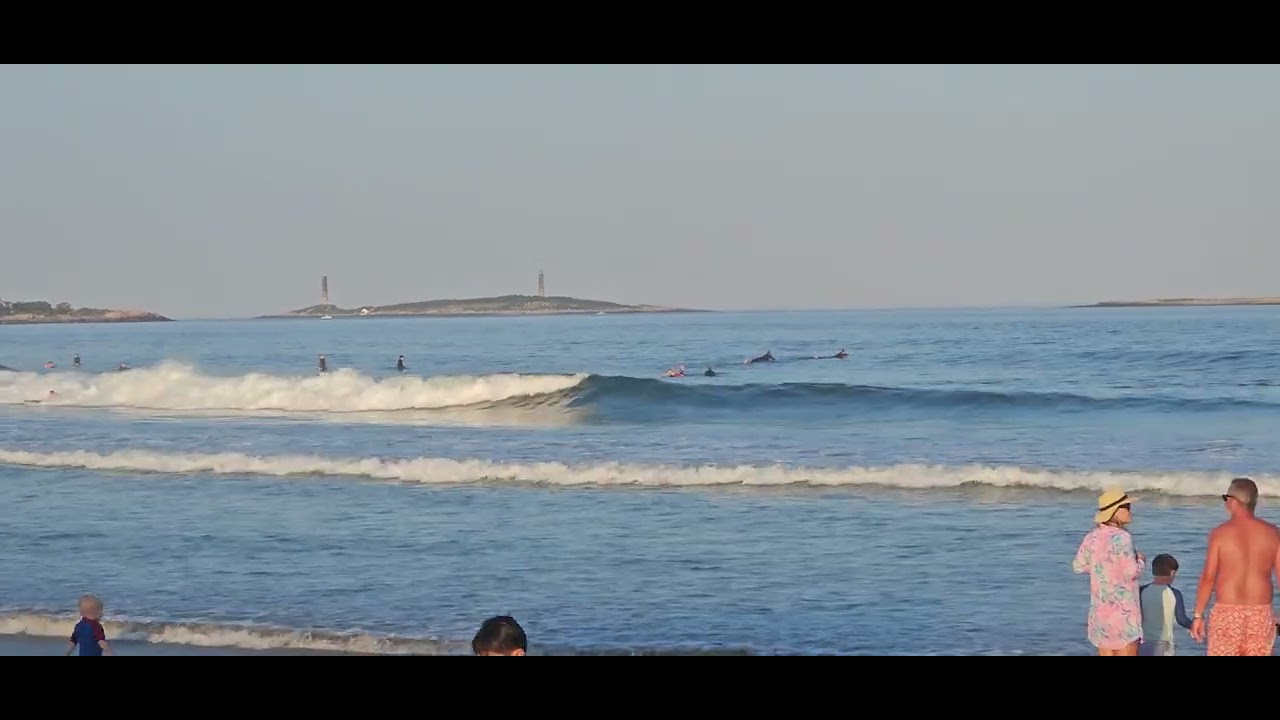 Town notes Cape Ann: Gloucester, Rockport, and Essex
 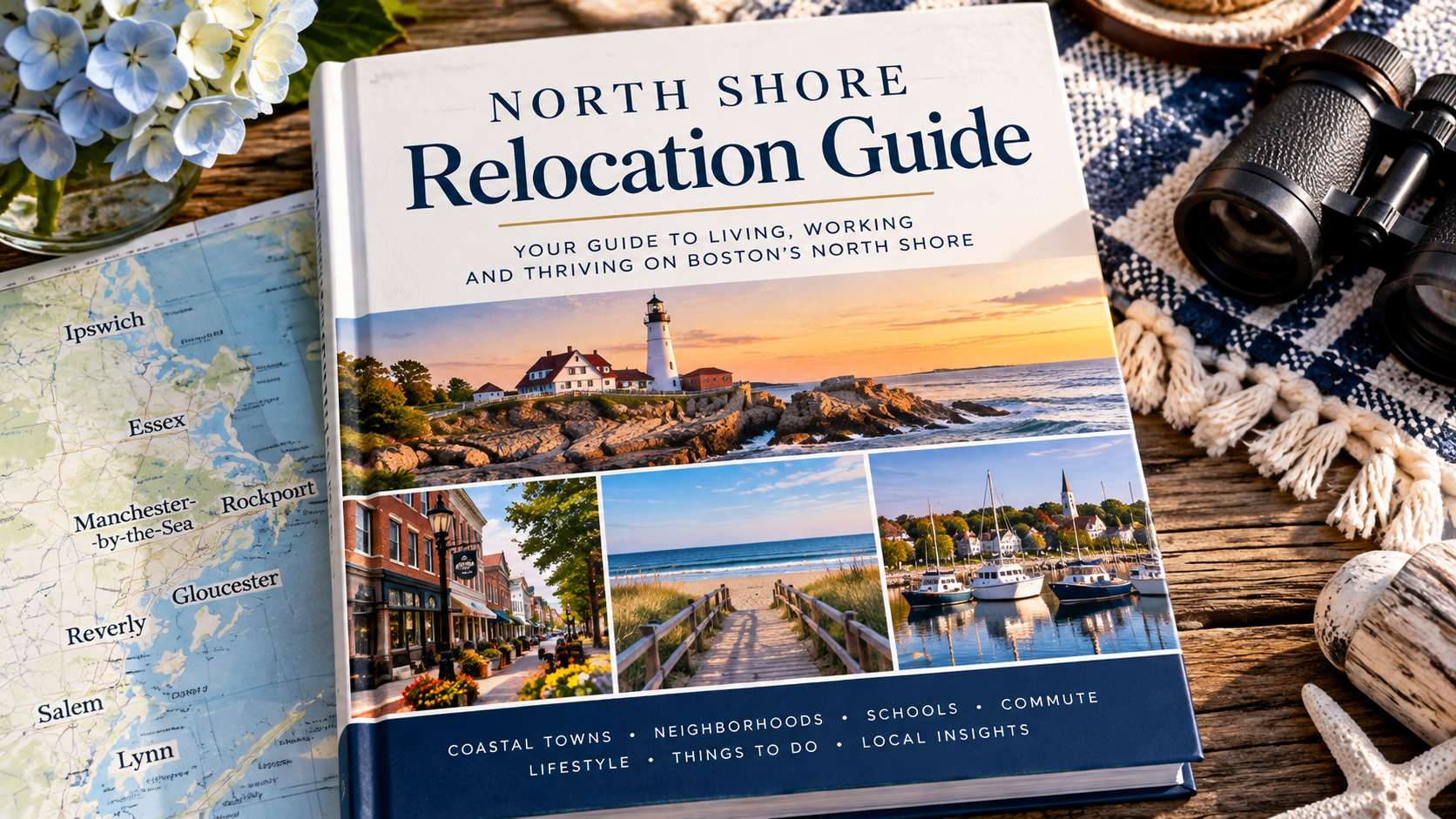 Moving & Relocation Moving to the North Shore: The Complete Relocation Guide
  Luxury Coastal Living Coastal Luxury on the North Shore: What Buyers Should Know
 From the page to the porch
A note can only tell you so much. Let Kathleen take you through the towns, the streets, and the options that actually fit.