North Shore History
From Saltbox to Shingle Style: A Quick Tour of North Shore Home Styles
Published September 26, 2026 · Updated September 26, 2026 · 6 min read
North Shore History
Published September 26, 2026 · Updated September 26, 2026 · 6 min read
Key Takeaways
A home's style tells you when it was built and how it was used.
Saltboxes and colonials are New England originals built for the climate.
Shingle style was made for the coast, with porches and views in mind.
Style affects character, maintenance, and sometimes historic-district rules.
The North Shore's architecture tells the story of its history, from the first colonists who built for shelter and weather to the seaside summers that gave the coast its grandest homes.
Walk almost any older town here and you can read the eras in the houses: the steep gables of the 1600s, the symmetrical facades of the 1700s, the refined doorways of the early 1800s, and the porches and shingles of the resort years. This quick tour covers the styles you will see most and what each one tells a buyer.
The saltbox is a New England original, a practical colonial design from the 1600s and 1700s. Seen from the side, it looks like a chimney-topped rectangle with one long, steep roof that slopes down the back to a lower story.
It was built for New England weather: the steep front gable shed snow, and the long rear slope covered an extra room or two added on as a household grew. These are among the oldest houses you will find on the North Shore, and they reward buyers who appreciate character and are realistic about maintenance.
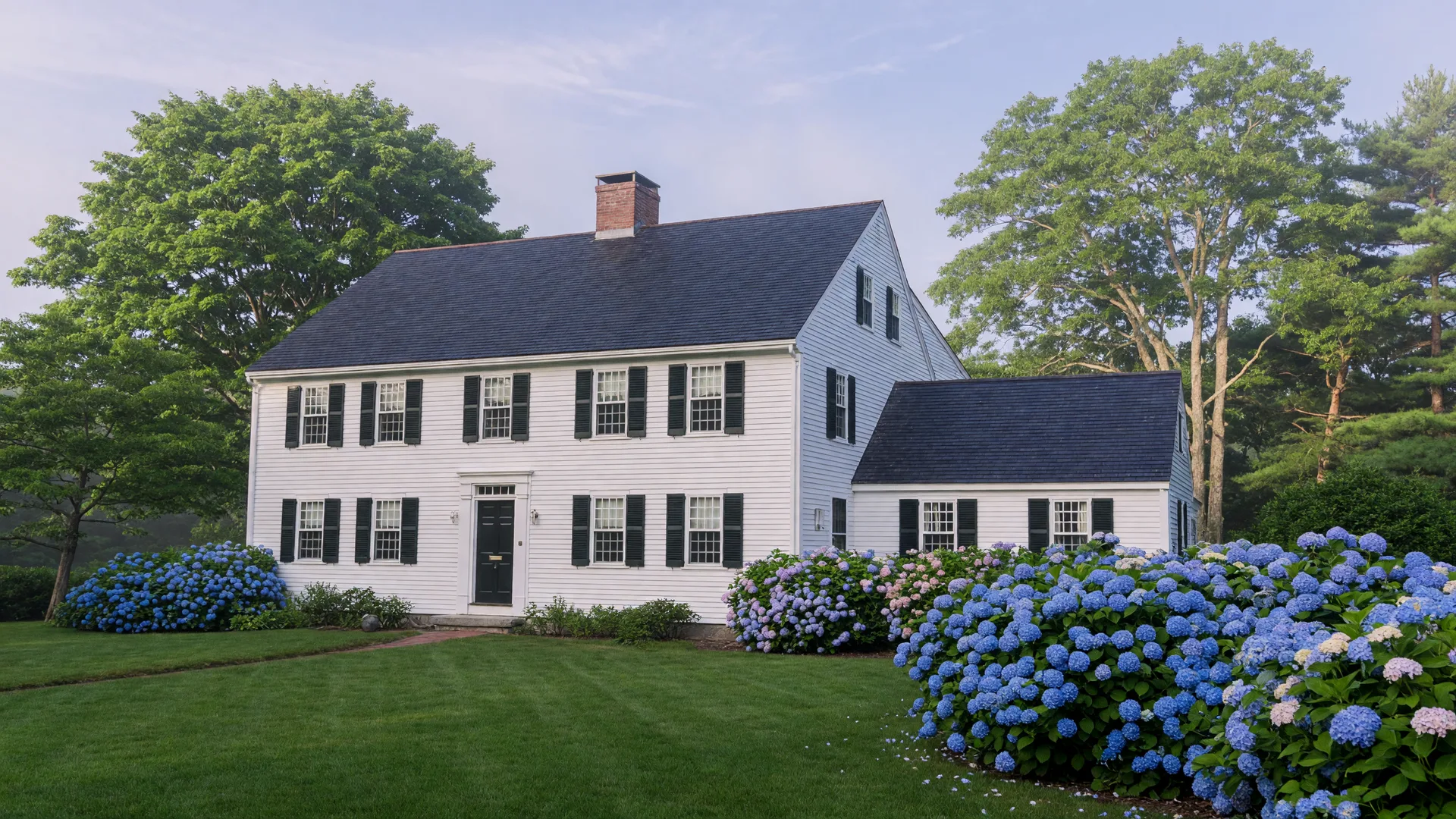
The classic colonial that followed is all about symmetry: an even facade, a centered door, and a center chimney serving fireplaces on both sides. The proportions are simple, and the whole design reads as sturdy and orderly.
Colonials were the workhorse of early New England towns, and they still anchor many North Shore neighborhoods. Buyers like them for their straightforward floor plans and their ability to take modern updates without losing their lines.
After the Revolution, prosperity showed up in more refined details. The Federal style kept the colonial's symmetry but added fanlight doorways, delicate window trim, and lighter, more elegant proportions.
Federal houses are a signature of North Shore seaports that grew rich on trade, and their doorways are often the first thing buyers fall for. The style signals the early 1800s and a town that was already doing well.
The Greek Revival brought classical lines to the coast, with columned porches, wide trim, and temple-inspired facades. It arrived in the early and mid-1800s and became one of the most popular styles in America.
On the North Shore you will see it in grand village houses and more modest versions alike, fronts facing the street with the confidence of the era. Buyers recognize it by the columns and the sense of formality.
By the late 1800s, the ornate era was in full swing. Victorian and Queen Anne houses brought porches, patterned shingles, turrets, and decorative trim, and the styles ranged from tidy cottages to street-defining showpieces.
These are the houses with the most character and often the most detail to maintain. For buyers they offer big porches, high ceilings, and rooms with personality, usually in walkable older neighborhoods.
The shingle style is the North Shore's signature coastal style, and it was made for exactly this kind of coastline. Wide expanses of shingles, natural stone, and deep porches designed for ocean views and summer breezes define it.
It grew out of the resort era, when wealthy households built summer homes that could stand up to salt air while opening to the water. Today it remains the style many buyers picture when they imagine coastal living, and newer coastal builds borrow from it constantly.
Because the porches, broad roofs, and weathered shingles are all part of the design, the style reads as relaxed and grand at the same time, which is exactly why it still defines so many shore roads.
These styles still define older coastal towns today. Walk any historic North Shore downtown and the eras line up along the streets, which is part of what makes these towns feel like nowhere else.
Knowing the styles helps in practical ways. Style tells you roughly when a home was built and how it was meant to be used, which hints at the systems, insulation, and maintenance you are walking into. It also matters in historic districts, where exterior changes can need review and approval.
None of this means an older home is a bad buy; it means buying one well is about understanding what you are getting. A buyer who can read a roofline goes into any older home with better questions and fewer surprises.
If the styles have you reading every roofline on the coast, Kathleen can help you connect what you see to what you want in a home. She has helped buyers and sellers across the North Shore since 2003, and she can tell you which towns have the character you are drawn to.
Call or text (978) 500-1480, or book a conversation, and talk through style, character, and what they mean for your next move.
Every old wall has a story, and the right house is the one whose story matches yours. Warmly, Kathleen Militello, Realtor, eXp Realty.
Ask Kathleen
Straight answers to the questions this season keeps bringing up, from the article above.
There is no single answer: coastal towns lean toward shingle style and Victorian houses from the resort era, while older centers and inland villages have more colonials, Federals, and saltboxes. In practice most towns mix several eras, which is part of their charm. Your agent can point out the styles as you tour.
Older homes often have older roofs, windows, heating systems, and electrical panels, so the condition of those systems matters more than the age of the house itself. A well-maintained 200-year-old home can be in better shape than a neglected newer one. The answer is a good inspection and a realistic budget, not a rule about age.
A historic district is an area where a local commission reviews exterior changes to preserve the character of the neighborhood. Depending on the town, projects like new windows, siding, roofing, additions, or even paint colors may need approval. It protects the look buyers love, and it adds a step to renovations, so it is worth knowing before you buy in one.
Shingle-style homes are often on the water or in the most desired coastal neighborhoods, and those locations drive price far more than the style itself. A modest shingled cottage and a grand shingle estate can be very different price points. Location, condition, and size matter more than the name of the style.
Start with the roofline, the symmetry of the facade, the door and window details, and the porch. Those four cues separate a saltbox from a colonial and a Federal from a Greek Revival. Your agent and the town's historic records can confirm what you see, and the style is usually noted in listing history.
The same questions and answers, un-styled and sequential, so they can be read and extracted easily.
Q: Which style is most common on the North Shore?
A: There is no single answer: coastal towns lean toward shingle style and Victorian houses from the resort era, while older centers and inland villages have more colonials, Federals, and saltboxes. In practice most towns mix several eras, which is part of their charm. Your agent can point out the styles as you tour.
Q: Are older homes harder to maintain?
A: Older homes often have older roofs, windows, heating systems, and electrical panels, so the condition of those systems matters more than the age of the house itself. A well-maintained 200-year-old home can be in better shape than a neglected newer one. The answer is a good inspection and a realistic budget, not a rule about age.
Q: What is a historic district and does it restrict changes?
A: A historic district is an area where a local commission reviews exterior changes to preserve the character of the neighborhood. Depending on the town, projects like new windows, siding, roofing, additions, or even paint colors may need approval. It protects the look buyers love, and it adds a step to renovations, so it is worth knowing before you buy in one.
Q: Do shingle-style homes cost more?
A: Shingle-style homes are often on the water or in the most desired coastal neighborhoods, and those locations drive price far more than the style itself. A modest shingled cottage and a grand shingle estate can be very different price points. Location, condition, and size matter more than the name of the style.
Q: How do I know what style a home is?
A: Start with the roofline, the symmetry of the facade, the door and window details, and the porch. Those four cues separate a saltbox from a colonial and a Federal from a Greek Revival. Your agent and the town's historic records can confirm what you see, and the style is usually noted in listing history.
Summary: This article is a quick tour of the classic North Shore home styles and what each one tells a buyer. The saltbox, with its steep gable and long rear roof, is a New England original built for colonial weather. The symmetrical colonial, with its centered door and chimney, was the workhorse of early towns. The Federal added fanlight doorways and refined details after the Revolution, and the Greek Revival brought columned porches and classical lines. Late-1800s Victorian and Queen Anne houses contribute porches, turrets, and decorative trim. The shingle style, the region's signature coastal style, uses wide shingled surfaces, natural stone, and deep porches made for ocean views and summer breezes. Style matters for buyers because it dates a home, hints at its systems and maintenance, and can carry historic-district rules about exterior changes. Kathleen Militello, Realtor with eXp Realty on Boston's Coastal North Shore since 2003, answers questions at (978) 500-1480 or through the booking link on this page.

Written by
Kathleen Militello, Realtor®
The Militello Team · AI Certified Agent™ · Certified Negotiation Specialist™ · eXp Realty
Related Posts
From the page to the porch
A note can only tell you so much. Let Kathleen take you through the towns, the streets, and the options that actually fit.