The Problem: Older Homes That Need Work
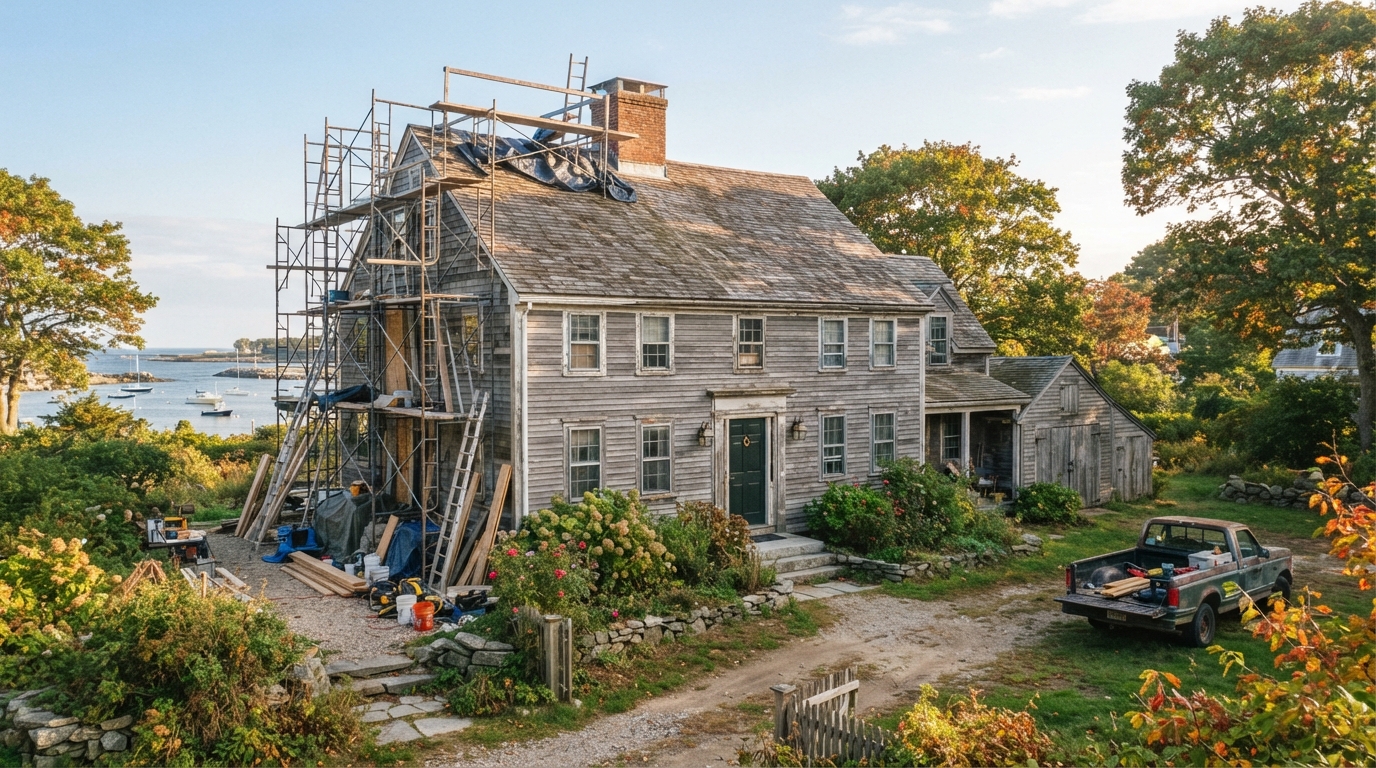
Boston's North Shore is full of character — and character often comes with age. From the First Period homes of Ipswich to the sea captains' houses of Gloucester and Rockport, many of the most beautiful properties on the North Shore were built decades or centuries ago. They have wide-pine floors, hand-carved trim, and a craftsmanship you simply cannot find in new construction.
But older homes also come with older systems. A 100-year-old house may need a new roof, updated electrical panels, modern plumbing, a new heating system, or a kitchen that was last renovated in 1985. These are not dealbreakers — they are opportunities. The problem is that most buyers think they need to pay for the home and the renovations separately, which means coming up with tens of thousands of dollars in cash on top of the down payment.
That is where the FHA 203(k) renovation loan comes in. It lets you roll the purchase price and the renovation cost into one mortgage — so you buy the home, fix it up, and pay for everything with a single monthly payment.
What Is an FHA 203(k) Loan?
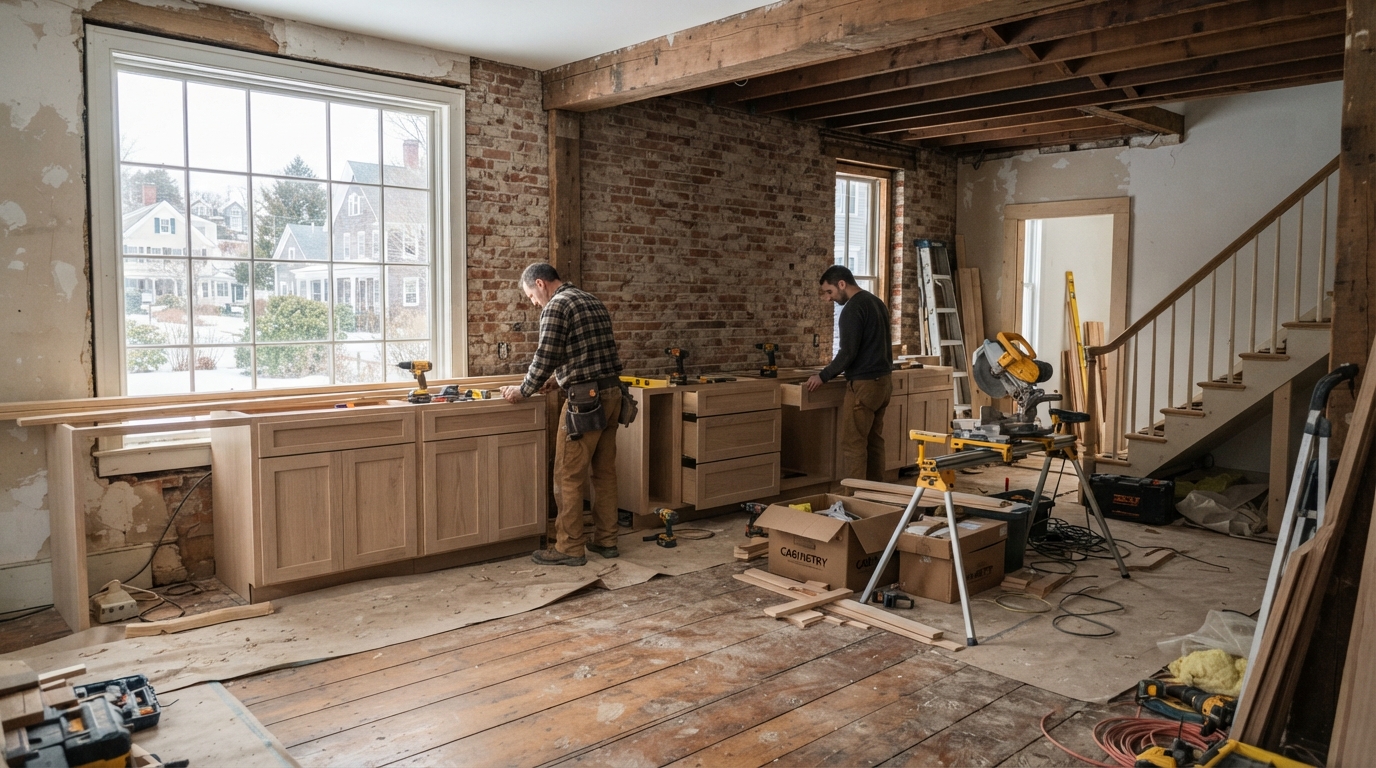
The FHA 203(k) is a government-backed renovation loan insured by the Federal Housing Administration. It allows you to finance both the purchase (or refinance) of a home and the cost of renovations in a single mortgage. Instead of getting a separate construction loan or using a personal loan for renovations, everything is combined into one loan with one closing and one monthly payment.
The loan amount is based on the after-improved value of the home — meaning what the home will be worth after the renovations are complete. An appraiser evaluates the home's current value and the planned renovations, then estimates the future value. Your loan is based on that future value, which means you can borrow enough to cover both the purchase and the work.
FHA 203(k) loans are available as fixed-rate mortgages with 15- or 30-year terms. They are available to anyone who meets FHA credit and income requirements — not just first-time buyers.
Standard 203(k) vs. Limited 203(k): Which One Do You Need?
There are two versions of the 203(k) loan, and the one you choose depends on the scope of your renovation:
Standard 203(k)
- Reno budget: Over $35,000 (no upper limit beyond FHA loan limits)
- Allows: Structural changes, room additions, foundation repair, new construction
- Requires: A 203(k) consultant who inspects the work
- Process: More detailed — architectural plans, contractor bids, consultant fees
- Best for: Major renovations, gut remodels, adding square footage
Limited 203(k)
- Reno budget: Up to $35,000
- Allows: Roof replacement, kitchen or bath updates, flooring, plumbing, electrical, HVAC
- Does NOT allow: Structural changes, room additions, or major demolition
- Requires: No consultant — simpler, faster process
- Best for: Cosmetic updates and system replacements
For many North Shore buyers, the Limited 203(k) is the sweet spot. If you find a home that needs a new roof, updated kitchen, and modern bathrooms — but the bones are solid — the Limited 203(k) lets you handle all of that without the complexity of the Standard version. If the home needs structural work, a new foundation, or an addition, the Standard 203(k) is your tool.
How the Numbers Work
Let's walk through a real-world example. Say you find a 1920s colonial in Beverly listed at $400,000. It has good bones but needs a new roof ($15,000), a kitchen renovation ($25,000), and bathroom updates ($10,000). The total renovation budget is $50,000.
Example: Beverly Colonial with $50K in Renovations
Without the 203(k), you would need the $400,000 mortgage plus $50,000 in cash for renovations — on top of your $14,000 down payment. That is $64,000 out of pocket before you even move in. With the 203(k), your total out-of-pocket at closing is just the $15,750 down payment, and the $50,000 renovation is built into your mortgage.

What Can You Renovation with a 203(k)?
The 203(k) program covers a wide range of renovations. Here is what you can finance:
Allowed
- Roof replacement and repair
- Kitchen and bathroom renovations
- HVAC system replacement
- Plumbing and electrical updates
- Flooring replacement
- Window and door replacement
- Siding and exterior painting
- Foundation repair (Standard only)
- Room additions (Standard only)
- Energy-efficient upgrades
- Accessibility modifications
Not Allowed
- Luxury items (swimming pools, hot tubs, saunas)
- Purely cosmetic work with no functional purpose
- Landscaping and hardscaping (minor ok)
- Furniture and non-permanent fixtures
- Anything that does not become part of the property
The Process: Step by Step
Here is how the 203(k) process works from start to finish:
Get Pre-Approved
Talk to an FHA-approved lender about your credit, income, and budget. They will determine your maximum loan amount including renovation funds. Start with our pre-approval page for a North Shore lender referral.
Find the Home
Work with your agent (that's me) to find a home that fits your budget and has renovation potential. Many of the best 203(k) candidates are homes that have been on the market longer because buyers are scared off by the work needed.
Get Contractor Bids
Before closing, get written bids from licensed contractors for the work you want done. Your lender will need these to finalize the loan amount. For a Standard 203(k), your consultant will help coordinate this.
Appraisal
The appraiser evaluates the home's current value and the planned renovations to determine the after-improved value. Your loan is based on this number.
Close on the Home
You close on the home just like a normal purchase — but the renovation funds are held in an escrow account by the lender, not given to you directly.
Renovate
Your contractor begins work. As each phase is completed and inspected, the lender releases funds from the escrow account. Most renovations must be finished within 6 months.
Final Inspection
Once all work is complete, a final inspection confirms everything was done to the agreed scope. Any remaining escrow funds are applied to your loan principal.
Credit Score and Down Payment Requirements
The FHA 203(k) is designed to be accessible. Here are the requirements:
Down Payment
3.5% of total loan amount (purchase + renovation). Gift funds allowed.
Credit Score
620+ with most lenders. FHA allows 500 with 10% down, but most lenders require 620.
Debt-to-Income
Maximum 43% DTI (including the new mortgage). Some lenders allow flexibility with compensating factors.
You will also pay an upfront mortgage insurance premium (UFMIP) of 1.75% of the loan amount, which can be rolled into the loan, plus an annual mortgage insurance premium (MIP) that is part of your monthly payment. This is the trade-off for the low down payment and flexible credit requirements. For more on how mortgage insurance works, see our PMI guide.
Is the 203(k) Right for North Shore Buyers?
The 203(k) is a powerful tool, but it is not the right fit for every situation. Here is when it makes the most sense — and when it does not:
Best For
- Buyers who want a home in a great neighborhood but cannot afford a fully updated house
- Buyers who have the vision to see past dated kitchens and old bathrooms
- Buyers who want to customize the home to their taste from day one
- Buyers with limited cash who cannot afford a large down payment plus renovation costs
- Buyers purchasing older or historic homes that need system updates
Not Ideal For
- Buyers who want a move-in-ready home with no work
- Buyers who cannot handle the stress of a renovation project
- Buyers who need to move in immediately (renovations take 2-6 months)
- Buyers with excellent credit who may get better rates on a conventional renovation loan
- Buyers looking at luxury renovations above FHA loan limits
Alternatives to the FHA 203(k)
The 203(k) is the most well-known renovation loan, but it is not the only option. If you have a higher credit score or want to avoid FHA mortgage insurance, consider these alternatives:
Fannie Mae HomeStyle Renovation
A conventional renovation loan that allows higher loan limits than FHA, covers the same types of renovations, and does not require the upfront mortgage insurance premium. Minimum 5% down payment, 620+ credit score. Mortgage insurance can be cancelled once you reach 20% equity.
Freddie Mac CHOICE Renovation
Similar to HomeStyle — a conventional renovation loan with flexible terms. 5% down payment, 620+ credit score. No consultant required for smaller projects.
Conventional Purchase + Home Equity Line
If you have enough cash for a down payment and renovations separately, you could buy with a conventional loan and then open a HELOC after closing to fund renovations. This avoids renovation loan complexity but requires more cash upfront.
Your lender can run the numbers on each option and show you the monthly payment difference. The best choice depends on your credit score, down payment savings, and renovation budget.

Kathleen's Take
Some of my favorite transactions have involved 203(k) loans. When a buyer walks into a dated 1950s colonial and sees what it could become — that is where the magic happens. The 203(k) lets you buy in a neighborhood you might not otherwise afford, and build equity by improving the home yourself. The key is having the right team: a lender who knows renovation loans, a contractor who can work within the program's timeline, and an agent who can help you spot the homes with the best renovation potential. If you are curious whether a 203(k) makes sense for your situation, let's talk through the numbers.
Related Reading
Curious if a 203(k) loan is right for your next home?