North Shore History
The Great Fires of Gloucester
Kathleen Militello · Published October 16, 2026 · Updated October 16, 2026 · 8 min read
North Shore History
Kathleen Militello · Published October 16, 2026 · Updated October 16, 2026 · 8 min read
Downtown Gloucester burned twice in the 1800s: once in 1830, when fire destroyed 27 dwelling houses and 43 stores and workshops near the town landing, and again in 1864, when a pre-dawn blaze leveled about 103 buildings in the biggest fire in the city's history. The way Gloucester fought those fires, with bucket brigades, hand-pumped engines, and finally a fast rebuild, is written all over the downtown streets you can still walk today. I have guided buyers and sellers through Gloucester's older homes since 2003, and this history explains a surprising amount about what those houses are really like. It is also why, when it comes to older construction, knowing the story behind a home matters as much as knowing its price.
Key Takeaways
The Great Fire of 1830 destroyed 27 dwelling houses and 43 stores and workshops from the town landing to Porter Street.
The Fire of 1864 destroyed about 103 buildings on both sides of Front Street from Porter Street to Duncan Street, the biggest fire in Gloucester's history.
Before the engines came, Gloucester fought fires with bucket brigades; the town bought its first fire engines in 1793.
After the 1830 fire the town voted to buy newer and better fire engines, and after 1864 Gloucester rebuilt quickly.
Much of downtown Gloucester still standing today dates from the rebuild era, so older homes reward a closer look at their true history.
Bucket brigades and the first engines
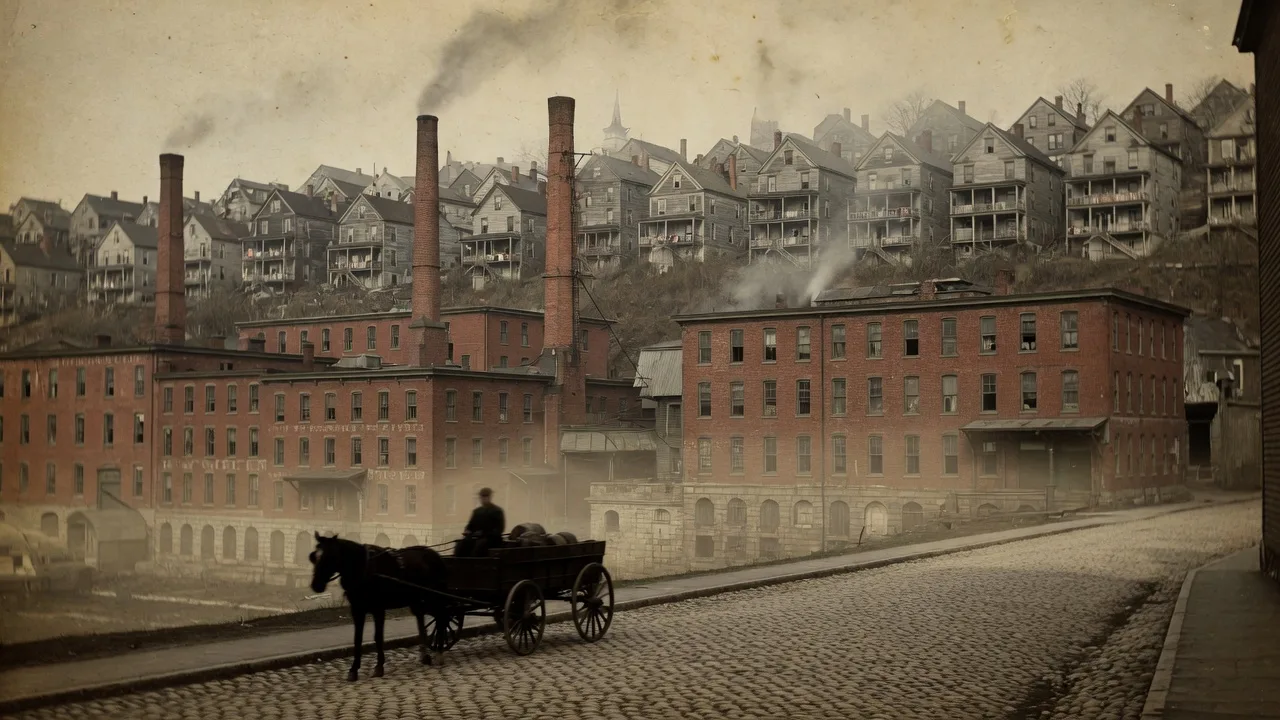
For much of Gloucester's early history, the town had no fire engines at all. When a fire broke out, neighbors fought it with a bucket brigade: a line of people passing buckets of water hand to hand from a well or a cistern to the flames. A cistern is an underground tank that holds water. Bucket brigades only worked when the fire was small, the line was long, and the water was close.
That is why the town bought its first fire engines in 1793. An engine was a manual pump on wheels, worked by hand, that could push water farther and harder than any bucket brigade. The first engine houses stood on Middle Street near the Sawyer Free Library and on Center Street, and the early engines had names, more like proud town possessions than pieces of equipment.
These were real improvements, but downtown Gloucester in the early 1800s was still a crowded district of wooden buildings standing close together. Even a good engine crew could only do so much, and the stage was set for the first great test.
A Thursday in September
On Thursday, September 16, 1830, a house on the western end of Front Street, now Main Street, caught fire. The house was owned and occupied by Samuel Gilbert, and from that one house the fire spread through the heart of downtown.
By the time it was out, the fire had destroyed 27 dwelling houses and 43 stores and workshops, most with their contents, across the downtown area from the town landing to Porter Street. A dwelling house is a home, and a workshop is a place where people made things. Nearly everything the homeowners and shopkeepers of that district owned went up with the flames.
The fire also taught Gloucester a hard lesson. The engines bought in 1793 were a start, but they were no match for a blaze of this size. After the 1830 fire, the town voted to buy newer and better fire engines, the first step toward the fire protection the city would later need.
The biggest fire in the city's history
On February 18, 1864, around four in the morning, a fire was discovered in a tailor's shop on Front Street. The night was bitterly cold, below freezing, and the fire moved fast through the crowded wooden district.
Before it was contained, the blaze destroyed about 103 buildings, including both sides of Front Street from Porter Street to Duncan Street. It is remembered as the biggest fire in Gloucester's history.
A fire that size could have ended the downtown. Instead, it set off one of the fastest rebuilds the town had ever seen, and the shape of that rebuild is the Gloucester you walk through today.
A downtown reborn
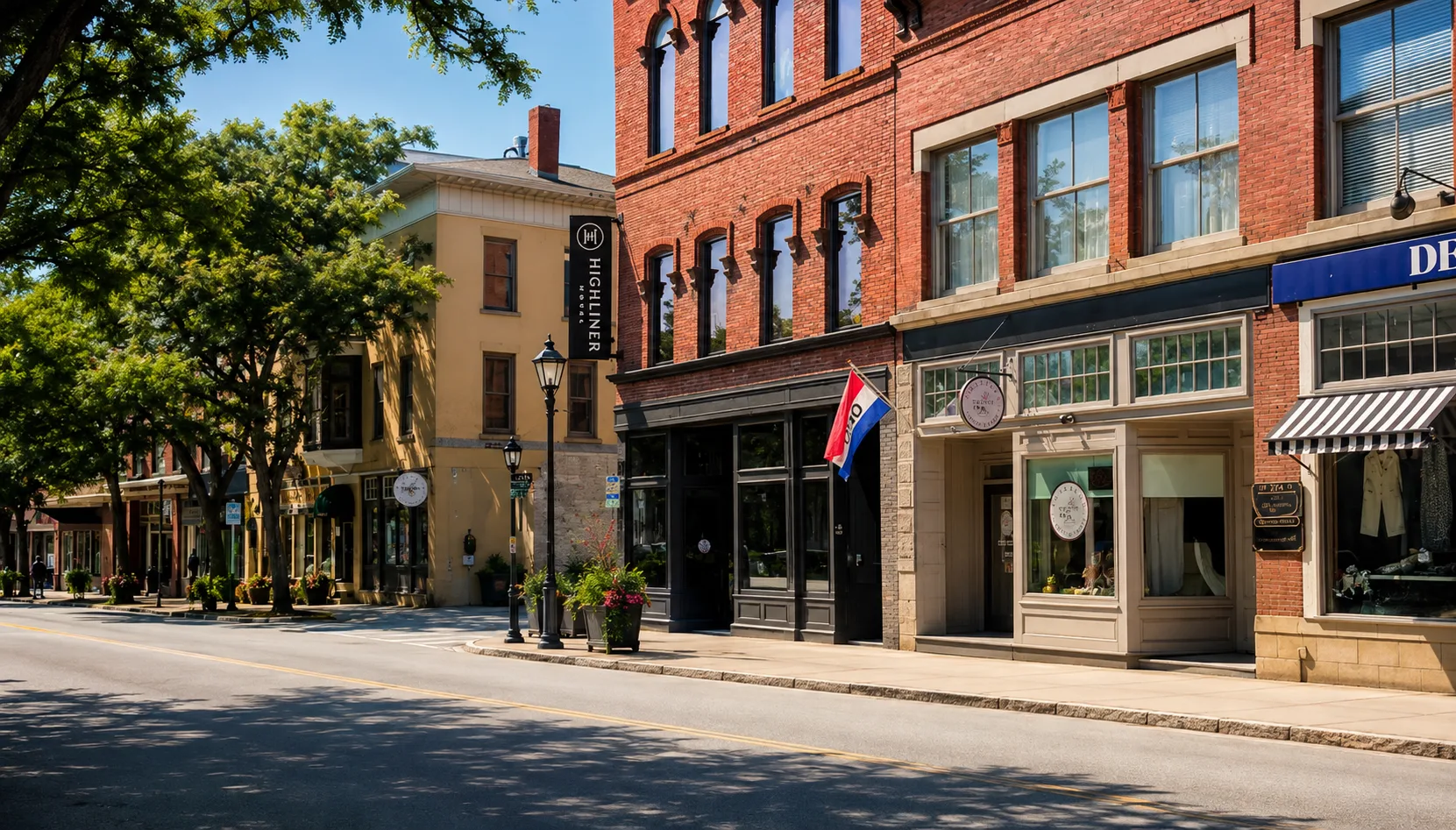
The town rebuilt quickly, and many of the buildings that replaced the ones lost in 1864 still stand today in downtown Gloucester. Look down the same streets now and you can still see the era in the construction: solid brick and stone where wood had burned, and wider street lines that gave fire and engines room to work.
The rebuild era gave Gloucester the commercial core it still uses, with storefronts on the ground floors, homes and workshops above, and streets laid out for a working seaport. The lesson of 1830, that better firefighting pays for itself, carried straight through the rebuilding.
That is the part of this story I love most. A disaster that could have ended downtown instead produced the downtown residents and visitors still walk through more than a century and a half later.
Reading the layers of an older home
Here is the connection I want every buyer and seller to hold onto: because so much of downtown was rebuilt in the years after 1864, many of Gloucester's older buildings date from the rebuild era. A building can look older than it is, newer than it is, or somewhere in between.
Homes that look historic may have been rebuilt or updated many times over the decades. A wall that looks three hundred years old may sit on a foundation poured in the 1870s. A window from the 1960s may sit inside original timber framing. House history is rarely one date. It is a stack of dates, one renovation on top of another.
None of that makes an older home better or worse than a newer one. It simply means the honest answer to “how old is this house?” is usually “it depends,” and the useful question is what each owner did to it, when, and how well. Those are exactly the questions worth asking before you buy, and worth preparing for before you sell. If you are weighing an older home, the Ask Kathleen answer on historic homes is a good next stop.
Experience matters
That is where my experience comes in. My job is to help you understand exactly what you are looking at, whether you are buying an older home or thinking about selling one you have owned for years. I can help buyers and sellers understand a home's real history and what to look for in older construction: the bones, the systems, and the surprises in between.
I have lived and worked on Boston's Coastal North Shore since 2003, as a Realtor® with eXp Realty, and Gloucester has been part of my market the whole way. If you want to know what an older home is really made of, call me at (978) 500-1480 or book a conversation. No pressure, just straight talk about what you are getting into and what makes sense for you.
Every old house has a story, and Gloucester's great fires are a big part of why the downtown looks the way it does. If you are thinking about buying or selling an older home here, I would love to help you read that story. Warmly, Kathleen Militello, Realtor®, eXp Realty.
Ask Kathleen
Straight answers to the questions this season keeps bringing up, from the article above.
The Fire of 1864, on February 18 of that year. It destroyed about 103 buildings, including both sides of Front Street from Porter Street to Duncan Street, and it is remembered as the biggest fire in Gloucester's history.
Yes. The fire destroyed a defined stretch of Front Street, so buildings outside that path survived. Most of today's downtown, though, dates from the quick rebuild that followed, which is why many older-looking buildings are actually from the later 1800s.
Start with the building itself: framing, foundation, materials, and construction details each tell part of the story. Then compare what you find with the building's paper record. A local agent who knows the area's building history can help you read both and give you a realistic picture of what the house was, and what it has become.
Because so much of downtown Gloucester was rebuilt after the fires, and because every generation of owners updates homes. A house may keep original beams behind modern walls, add a new chimney to an old roof, or hold a 1960s kitchen inside an 1800s shell. Looking historic and being historic are two different questions, and both are worth answering.
The fire began at a house owned and occupied by Samuel Gilbert on the western end of Front Street, now Main Street. From that house the flames spread through the downtown and destroyed 27 dwelling houses and 43 stores and workshops.
The same questions and answers, un-styled and sequential, so they can be read and extracted easily.
Q: When was the biggest fire in Gloucester?
A: The Fire of 1864, on February 18 of that year. It destroyed about 103 buildings, including both sides of Front Street from Porter Street to Duncan Street, and it is remembered as the biggest fire in Gloucester's history.
Q: Do any buildings from before the 1864 fire survive?
A: Yes. The fire destroyed a defined stretch of Front Street, so buildings outside that path survived. Most of today's downtown, though, dates from the quick rebuild that followed, which is why many older-looking buildings are actually from the later 1800s.
Q: How can I find out the true age of a house in Gloucester?
A: Start with the building itself: framing, foundation, materials, and construction details each tell part of the story. Then compare what you find with the building's paper record. A local agent who knows the area's building history can help you read both and give you a realistic picture of what the house was, and what it has become.
Q: Why does a historic-looking house sometimes turn out to be younger than it looks?
A: Because so much of downtown Gloucester was rebuilt after the fires, and because every generation of owners updates homes. A house may keep original beams behind modern walls, add a new chimney to an old roof, or hold a 1960s kitchen inside an 1800s shell. Looking historic and being historic are two different questions, and both are worth answering.
Q: What caused the great fire of 1830?
A: The fire began at a house owned and occupied by Samuel Gilbert on the western end of Front Street, now Main Street. From that house the flames spread through the downtown and destroyed 27 dwelling houses and 43 stores and workshops.

Written by
Kathleen Militello, Realtor®
The Militello Team · AI Certified Agent™ · Certified Negotiation Specialist™ · eXp Realty
Keep your reading going
Every home is different, and this article is general background on Gloucester's fire history, not an inspection or a promise about any specific property. Kathleen Militello is a Realtor® with eXp Realty, MA Salesperson License 9053343. All real estate services are offered in accordance with the Fair Housing Act and Equal Housing Opportunity.
From the page to the porch
A note can only tell you so much. Let Kathleen take you through the towns, the streets, and the options that actually fit.