
Neighborhood Guides
Manchester-by-the-Sea: Singing Beach, Harbor Traditions, and Shoreline Living
Kathleen Militello · Published November 3, 2026 · 7 min read · Boston's Coastal North Shore
Neighborhood Guides
Kathleen Militello · Published November 3, 2026 · 7 min read · Boston's Coastal North Shore
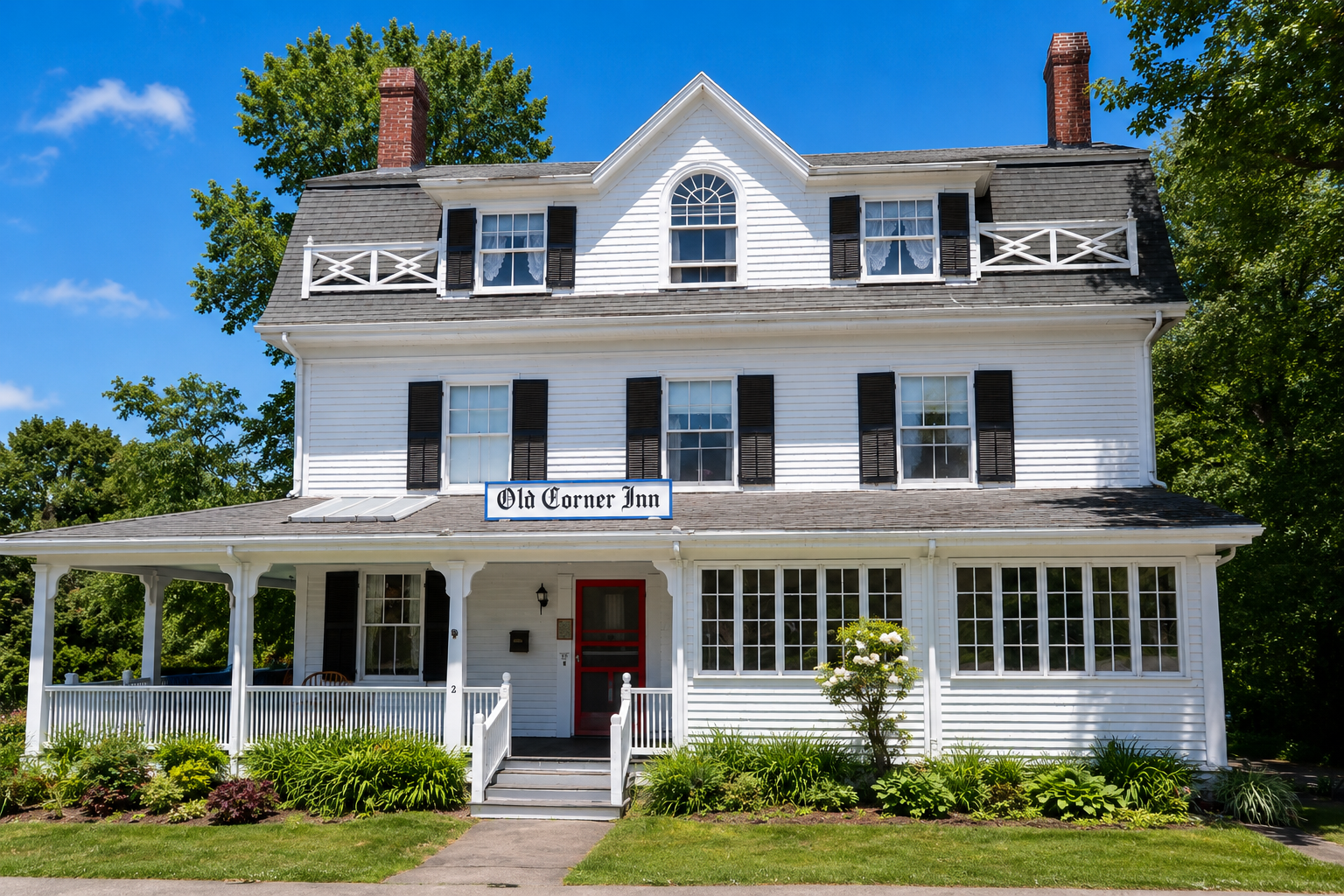
Manchester-by-the-Sea, Massachusetts, sits on the southern side of Cape Ann where the peninsula meets the mainland, a town of singing sands, harbor traditions, and shoreline living on Boston's Coastal North Shore. Settled by English colonists in 1629 and incorporated in 1645, it grew from a fishing village into a storied summer colony of grand estates, and today it is home to around 5,400 people. This guide covers how the fishing town became a seaside legend, the harbor landmarks that shape everyday life, and what residential life looks like here today, from Kathleen Militello, Realtor®.
Manchester's story begins in 1629, when English colonists first settled the area on the southern side of Cape Ann, where the peninsula meets the mainland, according to Wikipedia and the town's own history. The town was officially incorporated as Manchester in 1645, and its early years were shaped entirely by the water.
The land had a long history before the colonists arrived. The Agawam people lived in the area when Europeans first came, and the town's history records that in 1700, Manchester's selectmen paid three grandchildren of Agawam sachem Masconomo a small sum for the rights to the land. It is a quiet, human detail that says a lot about how this coast changed hands.
Fishing was the town's major early industry, as Wikipedia notes, and for generations the harbor drove the local economy. What survives of that era, the boatways, the mooring fields, and the working waterfront, still shapes the town's character today.
By the Gilded Age, Manchester had evolved into something new: a storied summer colony of grand estates, where wealthy city buyers built seaside homes along the shore. That transformation, described in town history and travel writing alike, gave the town the layered character it still has, and today the 2020 Census counts a population of around 5,400.
Manchester is a fitting name for a town on the water, but the "by-the-Sea" came later, and it almost did not happen at all. The story, told by Northshore Magazine and the town's own history, begins with James T. Fields, a Boston book publisher who bought Thunderbolt Hill in Manchester in the 1870s.
Fields adopted the "by-the-Sea" moniker and it caught on, carried in train conductors' station calls as the train pulled into town. For more than a century, that was how people spoke of the place, even though the official name on the map remained simply Manchester.
In 1990, townspeople finally made it official, voting by a one-vote margin to change the town's name to Manchester-by-the-Sea. That one-vote margin says something about a town that takes its identity seriously.
The harbor is the heart of everyday life here. Tuck's Point, a harborside town park, anchors one end of it with its iconic white-railed rotunda over the water, a pier where boaters tie up, and a chowder house, as Zimman's and Sherwood & Company describe it. It is the kind of place people bring visitors, and then stay for the view themselves.
Masconomo Park, the village green on the inner harbor, holds the town's civic life, with a bandstand for free summer concerts, a baseball field, a playground, and sweeping lawns looking out over the harbor, according to Zimman's and TravelAwaits. On a summer evening, it is the whole town in one green space.
In between, the harbor does the work it has always done: moorings fill the water from spring through fall, skiffs and launches move between pier and mooring, and the catch still comes in. Harbor traditions here are not a museum exhibit, they are the schedule.
Outdoors, Manchester-by-the-Sea is a town of short walks to big rewards. Singing Beach sits about a mile from town center and is named for its sand, which squeaks when you walk on it, a quirk that has charmed visitors for generations, with Wikipedia, TripAdvisor, and Sherwood & Company all noting it.
Singing Beach offers just under half a mile of shoreline and a bathhouse from the early 1920s, and it is a walk from the commuter-rail station, which makes it one of the easiest beaches on the North Shore to reach without a car.
For a longer ramble, the Coolidge Reservation's Ocean Lawn opens onto wide ocean views, and its trail is an easy loop of about two miles, as TravelAwaits describes it. Roughly two miles of gentle walking with open water at the turn is hard to beat.
Residential life in Manchester-by-the-Sea is defined by walkability and water. Neighborhoods close to the town center put the harbor, the train, and Singing Beach within easy reach, and the classic coastal housing stock gives the streets a settled, seaside feel.
Commuter access is straightforward. The town has direct commuter-rail service from Boston's North Station on the Rockport line, per the travel guides, which makes shoreline living practical for people who still work in the city.
That mix is the appeal for buyers: a true coastal town with a working harbor, protected open space, a beach you can walk to, and a train ride to Boston. It is the kind of place where shoreline living is part of the daily routine, not a vacation itinerary.
Manchester-by-the-Sea offers residents and buyers something increasingly rare on the coast: a town that has kept its harbor, its history, and its open space all at once. You can sit on Singing Beach in the morning, walk the Ocean Lawn in the afternoon, and be at Tuck's Point for the evening boats, all within a short distance of home.
For buyers, that means distinctive homes in a walkable coastal setting with real commuter access. For sellers, it means a market of buyers drawn specifically to that combination, which is why presentation and pricing matter so much in a town this special.
I know Manchester-by-the-Sea and the towns around it, and I will tell you what I really think. Whether you are exploring a move here, thinking about selling, or just starting to ask questions, let's look at your options. Because in real estate, experience matters.
Manchester-by-the-Sea was first settled by English colonists in 1629 and incorporated as Manchester in 1645, on the southern side of Cape Ann where the peninsula meets the mainland.
The Agawam people lived in the area when Europeans arrived; in 1700, Manchester's selectmen paid three grandchildren of Agawam sachem Masconomo a small sum for the rights to the land.
The "by-the-Sea" name came from Gilded Age Boston book publisher James T. Fields, who bought Thunderbolt Hill in the 1870s and adopted the moniker, and in 1990, by a one-vote margin, townspeople made it official.
Singing Beach, about a mile from town center, is named for sand that squeaks when walked on and offers just under half a mile of shoreline with a bathhouse from the early 1920s.
Tuck's Point and Masconomo Park anchor daily harbor life with the white-railed rotunda, a bandstand for free summer concerts, and sweeping lawns over the inner harbor, and the town has direct commuter-rail service from Boston's North Station on the Rockport line.
Ask Kathleen
Straight answers to the questions about living in Manchester-by-the-Sea that come up most, from the article above.
The town was incorporated as Manchester in 1645. The "by-the-Sea" name came from James T. Fields, a Boston book publisher who bought Thunderbolt Hill in the 1870s and adopted the moniker, which train conductors' station calls carried into common use. In 1990, by a one-vote margin, townspeople officially changed the town's name to Manchester-by-the-Sea.
Singing Beach sits about a mile from town center and is named for its sand, which squeaks when you walk on it. It offers just under half a mile of shoreline, a bathhouse from the early 1920s, and it is a walk from the commuter-rail station.
The Agawam people lived in the area when Europeans first arrived. The town's history records that in 1700, Manchester's selectmen paid three grandchildren of Agawam sachem Masconomo a small sum for the rights to the land. The town was first settled by English colonists in 1629 and officially incorporated as Manchester in 1645.
Related topics
manchester by the sea real estate ·manchester by the sea homes for sale ·living in manchester by the sea massachusetts ·singing beach manchester by the sea ·manchester by the sea harbor ·tucks point manchester by the sea ·masconomo park manchester ·coolidge reservation ocean lawn ·manchester by the sea history ·manchester 1645 incorporation ·james t fields thunderbolt hill ·manchester by the sea commuter rail ·cape ann north shore towns ·boston coastal north shore real estate ·the militello team

Written by
Kathleen Militello, Realtor®
The Militello Team · eXp Realty · MA Salesperson License 9053343 · Serving Boston's Coastal North Shore
Keep reading
Manchester-by-the-Sea is a town I know well, from the singing sand at the beach to the harbor lights at Tuck's Point. Whether you are weighing a coastal home, wondering how the commuter rail would fit your week, or trying to figure out which North Shore town suits you, I can help you make sense of it. Let's look at your options.
You don't have to figure this out alone. Reach out through the Meet with Kathleen page, or book a conversation directly, and I will tell you what I really think.
Kathleen Militello, Realtor®
The Militello Team | eXp Realty
Experience Matters.