
Neighborhood Guides
Essex, Massachusetts: The Small Town With a Remarkable Maritime Past
Kathleen Militello · Published October 19, 2026 · Updated October 2026 · 12 min read · Essex
Part 2 of our 12 North Shore Communities Comparison
Neighborhood Guides
Kathleen Militello · Published October 19, 2026 · Updated October 2026 · 12 min read · Essex
Part 2 of our 12 North Shore Communities Comparison
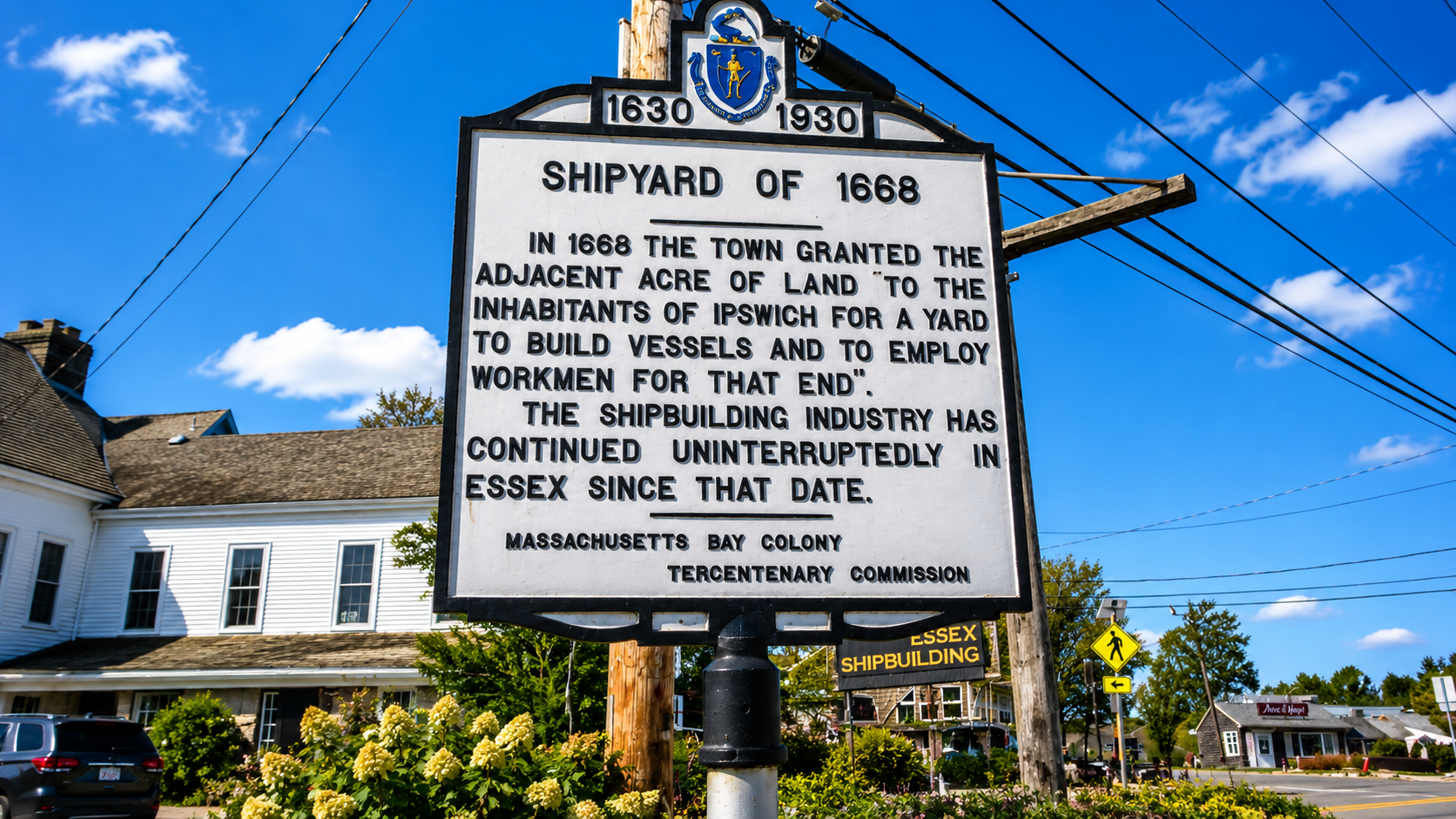
Drive into Essex along the Essex River and the town can feel suspended in time: a compact village, marsh grass in every direction, and a working boatyard still turning out wooden hulls. It is a small town, but its story is a large one. For nearly three centuries the yards along this waterway built wooden ships that fished the North Atlantic and carried explorers into the Arctic, and the craft never fully left. This guide goes beyond the postcard to show you the Essex I know: the history that made it famous, the landscape that surrounds it, what daily life actually feels like, and the honest questions to weigh before you consider a move.
Key Takeaways
Essex is America's oldest continuously active shipbuilding community: more than 4,000 wooden vessels were built here between 1668 and 1950, including more fishing schooners than anywhere else in America.
The Essex Shipbuilding Museum, founded in 1976 in the old Essex Central School House built in 1835, holds more than 10,000 objects, more than 30,000 photographs, and more than 500 shipbuilding tools, and it docks the Evelina M. Goulart, an Essex-built 1927 schooner that fished for swordfish.
The Essex River is tidal, so boating and kayaking depend on the tide, and the surrounding Great Marsh is the largest salt marsh in New England, providing wildlife habitat and flood and erosion protection.
Essex has no commuter rail station and no extensive downtown shopping district, so daily errands mean driving; downsizers face limited smaller-home and one-level options and should also look at nearby towns.
Essex sits along the tidal Essex River, a compact town where the past is not locked away in a display case. It is still working. Boatyards, marsh grass, and old wooden hulls are part of the everyday view, and a visitor could drive through and think of Essex as simply a pretty river town. That would understate what happened here: this small community became the most prolific builder of wooden fishing schooners in the country.
This is the second guide in our 12 North Shore Communities Comparison. For the wider picture of the town, start with our Essex community guide and my Ask Kathleen answer on what it is like to live in Essex. Here we go deeper into the maritime past, the river and the marsh, and what they mean for how people actually live in Essex today.
Essex had everything a shipbuilding town needed: white oak and pine in the surrounding woods, a tidal river for launching hulls, and craftsmen who passed the trade down through generations. The town set aside an acre for a shipyard in 1668 and is recognized as America's oldest continuously active shipbuilding community. Between 1668 and 1950, Essex built more than 4,000 wooden vessels, more fishing schooners than anywhere else in America.
Shipbuilding boomed after the War of 1812, when the fishing schooner came into its own. These vessels were built to let fishermen sail far offshore and withstand rough seas, and they worked so well that captains traveled from other ports to contract boats in Essex. By the early 1840s, the town had turned from running its own fishing fleet to year-round shipbuilding, and by the late 1840s into the 1850s, fifteen shipyards launched more than 50 vessels a year, most of them for the Gloucester fleet.
The documented record needs no embellishment. Local lore sometimes adds colorful legends to Essex's shipbuilding story, so I like to keep the two separate: the numbers above are verified history. The story stays alive today through the Essex Shipbuilding Museum, founded in 1976 in the old Essex Central School House built in 1835, with collections of more than 10,000 objects, more than 30,000 photographs, and more than 500 shipbuilding tools.
The Essex River is the reason the town exists, and it is tidal. That one fact governs everything about boating here: the depth and passability of the water change with the tide, so launch and return times depend on it. Kayakers and small boaters plan their trips around the tide rather than fighting it.
Around the river lies the Great Marsh, the largest salt marsh in New England and the largest continuous salt marsh system north of Long Island. It stretches more than 20,000 acres from Gloucester to Salisbury across Essex, Ipswich, Rowley, Newbury, Gloucester, and surrounding towns, and is recognized as a Western Hemisphere Shorebird Reserve Network site. Beyond its beauty, the marsh provides wildlife habitat and flood and erosion protection.
Much of this landscape can only be seen from the water. Kayakers paddle a maze of creeks and islands, plan around the tides, and expect greenhead flies, which can be intense in July and early August. The scenery shifts with the seasons, and that quiet, changing landscape is a large part of why people fall for Essex.
Riverfront living in Essex is quieter and marsh-framed, a different experience from open-ocean living in a beach town. The water runs on a tidal rhythm, not an ocean one.
Essex is well known for seafood restaurants and antique shops, and both are genuinely part of the town's character. The village center and commercial corridor run along Main Street and Route 133, where you find the restaurants, the antiques, and the businesses residents actually use.
Be accurate about the scale: Essex has a recognizable village center and commercial corridor, but not the extensive downtown shopping district you find in Beverly or Newburyport. For a wider range of shopping, services, and errands, residents drive to nearby towns. Seasonal traffic and tourism bring visitors in the warm months, and residents plan around them.
Day to day, Essex is a small community where driving is the everyday reality. There is no commuter rail station in Essex; the nearest Rockport line stations are in neighboring towns, including West Gloucester and Gloucester. If you live here, you plan on driving for errands and most trips. That is part of the honest picture of Essex living.
Essex does not have the formal, named neighborhoods you find in larger towns, so it is more useful to think in terms of settings: the village center, areas along the Essex River, residential and inland streets, marsh-adjacent locations, and rural and secluded roads.
The village center is where the restaurants, antiques, and river come together, and it is the heart of the town. Riverfront areas are quieter and marsh-framed. Inland and residential streets offer more conventional New England living. Marsh-adjacent locations trade close water views for the realities of a wetland landscape, and rural and secluded roads give the most privacy and the most dependence on the car.
The housing stock reflects the town's age: historic homes, cottages, traditional New England houses, and waterfront properties. Historic character is a large part of the appeal, and it comes with realistic upkeep expectations. Waterfront and riverfront properties are special, and they also come with the coastal realities discussed next.
For many long-time Essex residents, the appeal of downsizing is staying put: remaining in the small town they know, near the river, the marsh, and the routines of decades. Staying close to home is often the whole point of the move.
The honest challenge is inventory. Smaller homes and condominiums can be harder to find in Essex, and one-level living and accessibility options are limited. A smaller house does not automatically mean lower maintenance; many of the older homes in town still ask for the upkeep older homes always ask for.
If the right fit is not available in Essex, nearby towns remain realistic alternatives that keep you close to the community you love. This is a conversation I have often, and it is best to look at what actually exists rather than assume a smaller place will appear. Nothing here should be read as saying any particular property is currently available; the market changes, and the right search starts with what is real. My step-by-step downsizing guide walks through the process, and this piece on moving from a big house to a coastal base covers the trade-offs directly.
These are considerations to research at a specific address, not reasons to avoid Essex. Every property is different, and the address matters as much as the town.
Flood zones are property-specific, so research the exact address rather than assuming the whole town floods.
Wetlands and conservation restrictions can limit what owners may do on marsh-adjacent land, so know what applies to the specific lot.
Many homes rely on septic systems and private wells, which brings its own inspection and maintenance conversation.
Historic homes need a realistic upkeep budget, as any older house does.
Driving is required for everyday errands, and there is no train station in town.
Seasonal traffic and tourism are part of warm-month life.
Two of my Ask Kathleen answers go deeper on the practical side. This one on coastal maintenance covers what waterfront ownership asks of you, and this one on flood zones explains flood risk at a specific address. Both are worth reading before you look seriously at marsh-adjacent or riverfront property.
None of this is meant to talk you out of Essex. It is the difference between falling for a postcard and choosing a town with open eyes, and that is the kind of decision I help people make every week.
Essex rewards people who want a small, coastal, character-rich town and who are honest about what that means: driving for errands, seasonal crowds, tidal water, and the upkeep that comes with old houses and salt air. If that sounds like a fair trade, Essex offers a quality of life that is hard to find elsewhere on the North Shore.
There is a real difference between enjoying Essex as a visitor, stopping for a meal or a kayak trip, and living here year-round. Both are legitimate. The question is whether the everyday rhythm fits your life, and the only way to know is to spend time in the town in different seasons and at different times of day.
That is exactly the kind of decision I help people make. I am Kathleen Militello, Realtor® with eXp Realty, and helping people find the right North Shore town is what I do. Call me at (978) 500-1480 or book a conversation, and we will look at whether Essex, or the town next door, fits the way you want to live. Warmly, Kathleen
Ask Kathleen
Straight answers to the four questions buyers and downsizers ask most about Essex, drawn from this article.
Essex set aside an acre for a shipyard in 1668 and is recognized as America's oldest continuously active shipbuilding community. Between 1668 and 1950 the town built more than 4,000 wooden vessels, and it produced more wooden fishing schooners than anywhere else in America. The Essex Shipbuilding Museum, founded in 1976 in the old Essex Central School House built in 1835, keeps that story alive with more than 10,000 objects, more than 30,000 photographs, and more than 500 shipbuilding tools.
Yes, with one important caveat: the Essex River is tidal, so depth and passability change with the tide and launch and return times depend on it. Kayakers paddle a maze of creeks and islands in and around the Great Marsh, much of which can only be seen from the water, and should plan around tides and the greenhead flies that can be intense in July and early August.
No. There is no commuter rail station in Essex. The nearest Rockport line stations are in neighboring towns, including West Gloucester and Gloucester, so driving is the everyday reality for commuting and errands.
It can be, when staying in a familiar small town is the goal, and for many residents that is exactly the appeal. The honest challenges are that smaller homes and condominiums can be harder to find, one-level living and accessibility options are limited, and a smaller house does not automatically mean lower maintenance. Nearby towns remain realistic alternatives if the right fit is not available in Essex.
Independent sites worth a look for general market and school information.

Written by
Kathleen Militello, Realtor®
The Militello Team · AI Certified Agent™ · Certified Negotiation Specialist™ · eXp Realty
Keep your reading going
Whether you are buying, selling, or downsizing, the right first step is a real conversation about what you want. I know this town, and I will tell you what I really think.
Related Posts
 Downsizing on the North Shore From Big House to Coastal Base: A Sea-Change Buyer's Guide for Empty Nesters
 Downsizing on the North Shore Downsizing on the North Shore: A Step-by-Step Guide to Your Next Chapter
 Town notes Cape Ann: Gloucester, Rockport, and Essex
 North Shore History The People of Agawam: The Indigenous History of Ipswich Before the English Arrived
From the page to the porch
A note can only tell you so much. Let Kathleen take you through the towns, the streets, and the options that actually fit.