Selling Your Home
Pulling Permits for Home Improvements: Why Closing Them Out Matters When You Sell
Published September 29, 2026 · Updated September 2026 · 7 min read
Selling Your Home
Published September 29, 2026 · Updated September 2026 · 7 min read
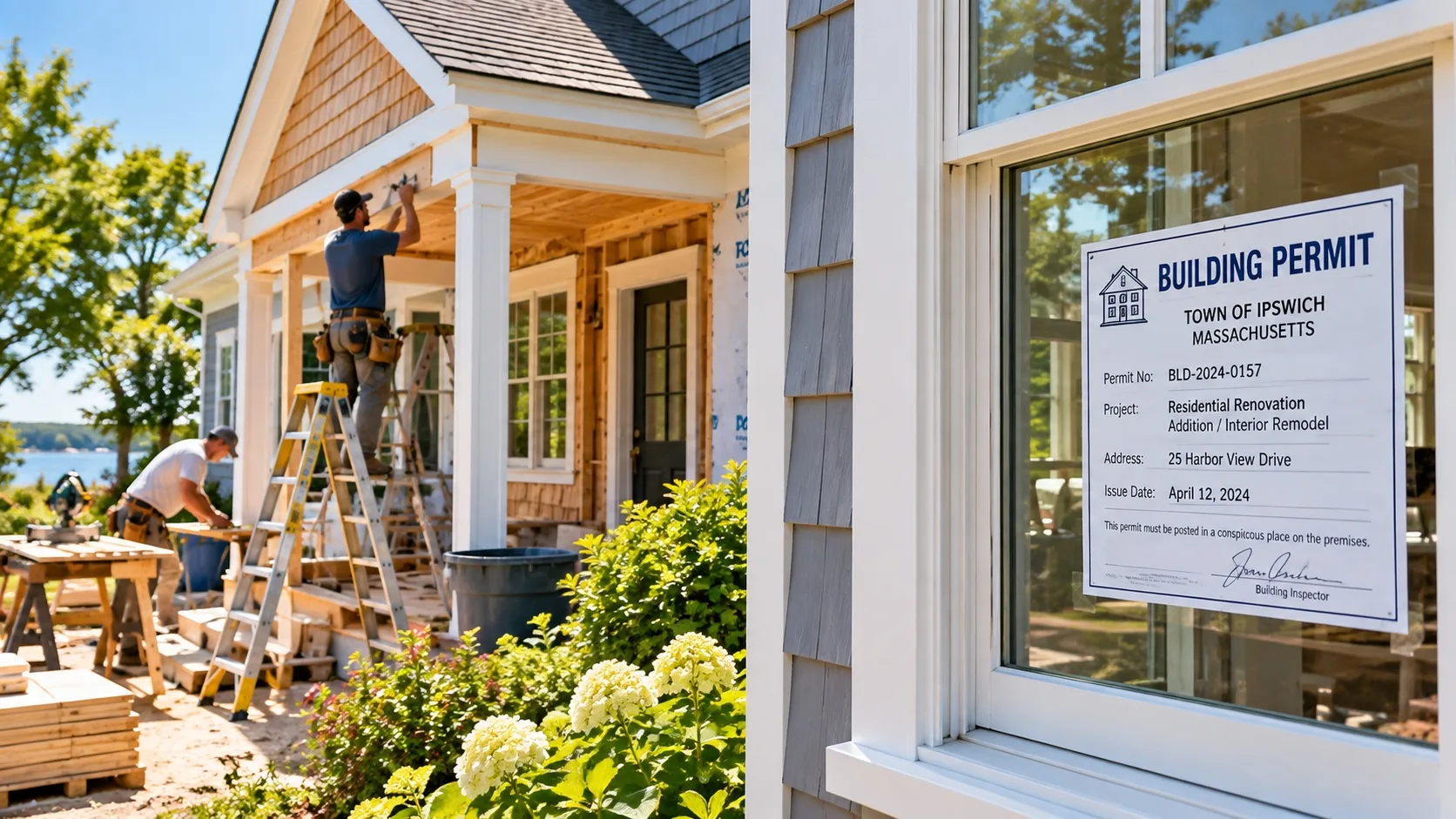
The work is long done. The kitchen looks great, the addition has been finished for years, and the contractor was paid long ago. But if the town never signed off on the permit, the file stays open, quietly, in the building department's records. It rarely causes a problem while you live there. It tends to surface when a sale is underway, which is exactly when you do not want a surprise.
Key Takeaways
An open permit means a project never received its final inspection and town sign-off, so the record stays open even when the work is finished and paid for.
Buyers' agents, real estate attorneys, lenders, and title companies routinely check permit records before closing, so an open permit usually surfaces in the middle of a sale.
Protect yourself from the start: put permit close-out before final payment in the contract, get the permit number, and keep the paperwork with your deed.
You can still sell with open permits: close the permit out with a final inspection, disclose it, or work out the resolution with the buyer, and a pre-listing check is a smart first step.
Permits are paperwork, and paperwork is easy to forget. When a renovation goes well, no one thinks about the town's copy of the permit. The inspector who was supposed to come back for a final look never did, or the contractor assumed the job was complete and moved on. Either way, the town's record stays open, and the town does not close the file on its own.
That open record usually stays harmless through normal life. It does not come up when you refinance, when you buy a new furnace, or when the house just keeps getting lived in. It becomes relevant when a sale gets underway, because that is when someone starts looking at your property with a closing date in mind, and that is when the permit record finally gets checked.
When a contractor pulls a permit, the town issues one for a specific scope of work: an addition, a deck, a bathroom renovation, new electrical, new plumbing. When that work is done, most projects require a final inspection. The inspector comes out, verifies the work matches the permit, and signs off. The town then closes the file, usually by issuing a certificate of completion or a certificate of occupancy, depending on the work.
An open permit is a permit that never made it through that final step. The work can be finished, and finished well. But because the final inspection and sign-off never happened, the town's record shows the project as incomplete. That is the whole difference: the work is done, and the file is not.
Local building departments keep closer track of open permits than they did years ago. Permit records are electronic in most towns now, which means an open permit is easy to find with a quick lookup by address. Towns care because an un-inspected project is a safety and code question, and because a permit that was never closed out may mean work that was never checked.
Buyers' agents and real estate attorneys check for open permits as a routine part of a sale, the same way they check tax records and title. It is not that an open permit means the work is bad. It is that the seller needs to explain it before closing, and lenders and title companies want that explanation before they commit.
Here is a version of this I hear often. A homeowner hires a contractor for a renovation. The contractor finishes the work, collects the final payment, and moves on to the next job. What never happens is the last step: scheduling the final inspection with the town and closing out the permit.
The contractor may assume the town will call, or simply lose track of the file between jobs. The homeowner assumes the permit was closed when the job wrapped up, because no one mentioned it again. Years later, when the home goes on the market, the open permit shows up in the town's records, and the seller learns that the town still considers the project unfinished.
Kitchens and bathrooms are the projects I most often see end up in this spot. If you are trying to decide whether a kitchen or bathroom renovation is worth taking on before a sale at all, my answer to whether kitchen and bathroom renovations pay off when you sell is worth reading first.
An open permit on its own does not stop a sale. But it can slow one down, and it can complicate the steps around closing. A buyer's lender may want the matter resolved before financing a home with an incomplete record. The title company may flag it. And the attorneys on both sides usually want it addressed before they schedule a closing date.
In some towns, an open permit can also hold up new work: the building department may not issue a new permit for the property until the old one is resolved. The common theme is delay and extra conditions, not ruin. Homes sell with open permits every year. The key is knowing about the record early and handling it deliberately, instead of discovering it at the last minute.
Repairs are a separate question but a related one: buyers look at what is unfinished. My guide to which repairs are worth doing before you sell can help you decide what to fix and what to leave alone.
If you are hiring a contractor now, the permit belongs in your contract. Decide up front who pulls the permit. Ask for the permit number once it is issued. And put it in writing that the contractor must provide proof the permit was closed out, including the final inspection sign-off, before final payment. That one line protects you for years.
Keep the paperwork in the same place you keep the deed and the insurance policy: the permit, the permit number, the inspection records, and the certificate of completion once you have it. When you sell, organized records answer questions in minutes instead of days. My fall home maintenance checklist makes the same case from the upkeep side: dated records make every later step easier.
Get to know your town's building department. Most North Shore towns will tell you over the phone or online whether a property has open permits, and many have searchable permit records by address. If a contractor is dragging their feet on the final inspection, you can schedule the inspection yourself through the building department. You do not have to wait for them.
And when you are choosing which projects to take on at all, my take on which updates genuinely add value may help you spend your money where it matters.
You can still sell with open permits. The path depends on the project. If the work was done correctly, the straightforward fix is usually to schedule the final inspection, have the town sign off, and close the permit out before listing. If the work was never finished, or the contractor cannot be found, the answer is different: disclose it clearly and work out with the buyer how the remaining items will be handled, which can mean a credit or a written agreement.
A pre-listing check of your town's permit records is a smart first step, and it pairs naturally with a pre-listing home inspection. Knowing what the records say before you list means you can address it calmly instead of discovering it mid-transaction. My guide to disclosures when selling in Massachusetts explains what you are responsible for sharing, and every way to sell, compared on one page, is there when you are weighing your options.
Buyers should know this one too: the responsibility for an open permit can follow the property, not the person who started the work. If you buy a home with an open permit, you may be the one left to resolve it, either with the town or with the contractor's unfinished work. Checking the permit records before closing is part of good due diligence on the buy side.
Ask your buyer's agent to dig into it, or check the town's online records yourself before you write an offer. A house you love with a small open-permit item is usually a manageable conversation. A surprise discovered after closing is not.
If you are planning work on your home, or wondering whether an older renovation ever got its sign-off, you do not have to figure it out alone. Ask Kathleen: I can help you check your town's permit records, understand what an open item would mean for a future sale, and plan ahead before you list. Book a conversation or call (978) 500-1480, and we will look at your home and your situation together. And if you are curious what your home could sell for today, my home value review gives you a real number with no pressure to list.
Ask Kathleen
Straight answers to the questions this season keeps bringing up, from the article above.
An open permit is a permit that was issued for work on a property but never received its final inspection and sign-off, so the town's record stays open even when the work itself is finished. Closing it out means getting the final inspection done and the certificate of completion or occupancy issued.
Yes, you can still sell. The open item usually needs to be handled first: schedule the final inspection and close the permit out, disclose it and work out an agreement with the buyer, or resolve it before closing. Buyers' agents, attorneys, and lenders routinely check permit records, so knowing your status early is the smartest move.
The town's records follow the property, so at sale time the responsibility lands on the homeowner. That is why it is worth putting in the contract that the contractor must provide proof of the final inspection and permit sign-off before final payment, and why you should keep the permit number and paperwork yourself.
Contact your town's building department and ask for the permit history for your address. Many towns now publish searchable permit records online, and a quick phone call will usually confirm whether anything is still open.
The permit stays open in the town's records and can surface when you sell. You can schedule the final inspection yourself, even without the contractor, and work with the building department to close the file. Requiring permit close-out before final payment is how you prevent this from the start.
Not for every project, but most structural, electrical, plumbing, and mechanical work requires a permit under the Massachusetts building code. Simple finish work, like painting, typically does not. Rules vary by town and by project, so check with your town's building department before the work begins.
The same questions and answers, un-styled and sequential, so they can be read and extracted easily.
Q: What is an open permit?
A: An open permit is a permit that was issued for work on a property but never received its final inspection and sign-off, so the town's record stays open even when the work itself is finished. Closing it out means getting the final inspection done and the certificate of completion or occupancy issued.
Q: Can I sell my home in Massachusetts with an open permit?
A: Yes, you can still sell. The open item usually needs to be handled first: schedule the final inspection and close the permit out, disclose it and work out an agreement with the buyer, or resolve it before closing. Buyers' agents, attorneys, and lenders routinely check permit records, so knowing your status early is the smartest move.
Q: Who is responsible for closing out a permit, me or the contractor?
A: The town's records follow the property, so at sale time the responsibility lands on the homeowner. That is why it is worth putting in the contract that the contractor must provide proof of the final inspection and permit sign-off before final payment, and why you should keep the permit number and paperwork yourself.
Q: How do I check if my home has open permits?
A: Contact your town's building department and ask for the permit history for your address. Many towns now publish searchable permit records online, and a quick phone call will usually confirm whether anything is still open.
Q: What happens if a contractor never closes out the permit?
A: The permit stays open in the town's records and can surface when you sell. You can schedule the final inspection yourself, even without the contractor, and work with the building department to close the file. Requiring permit close-out before final payment is how you prevent this from the start.
Q: Do I need a permit for every home improvement project?
A: Not for every project, but most structural, electrical, plumbing, and mechanical work requires a permit under the Massachusetts building code. Simple finish work, like painting, typically does not. Rules vary by town and by project, so check with your town's building department before the work begins.

Written by
Kathleen Militello, Realtor®
The Militello Team · AI Certified Agent™ · Certified Negotiation Specialist™ · eXp Realty
Related Posts
From the page to the porch
A note can only tell you so much. Let Kathleen take you through the towns, the streets, and the options that actually fit.