Neighborhood Guides
The Second Look: How Smart Buyers Really Get to Know a Neighborhood
Published September 27, 2026 · Updated September 2026 · 6 min read
Neighborhood Guides
Published September 27, 2026 · Updated September 2026 · 6 min read
Key Takeaways
The house sells the daydream. The neighborhood makes the daily life.
One visit is never enough. Revisit at different hours of the day and week.
Walk beyond the block, and talk to the people who live there.
Check the neighborhood at night and on weekends before you decide.
A first visit tells you about the house. It rarely tells you about the street, because a street is a different place at different hours. Traffic, noise, parking, light, and the general feel of a block all change across a day and across a week, and a single snapshot can mislead you in either direction.
A quiet side street at eleven in the morning can be a river of cars at five. A sunny room you loved at noon can sit in shadow by four. A neighborhood that hums with people on a Saturday can be nearly empty on a Tuesday, or the reverse. None of those versions is fake. They are all the same street; you just need to see more than one of them.
That is the whole point of the second look: not to catch the neighborhood doing something wrong, but to learn what it actually does.
Weekday morning commute: be on the road at the hour you would actually commute. You learn the real traffic, whether parking is already claimed, and how school drop-off moves through the area. If you ride the rail, spend that hour at the station you would use.
Lunch hour: see who is out, whether you can walk to a coffee shop or a sandwich place, and whether the streets feel comfortable mid-day. This is also when trucks, deliveries, and the everyday errands of a working street show up.
Evening: watch the light in the rooms that mattered to you, listen for the noise you did not hear at noon, and notice when people come home. A street can feel completely different at dusk, and the evening is when many neighborhoods do their real living.
Weekend: this is the neighborhood's character test. Are people out walking, are yards being tended, is there life at the corner store or the common? The weekend shows a community as it chooses to be, not as it performs during a showing.
Once you know the house works, walk the streets the way you would live them. Measure the distance to the places you will actually use: the grocery store, the coffee shop, the train station, the school, the park. A listing you love can sit on a drive-everywhere block even in a walkable town, and the reverse is true too.
Look at the sidewalks. Do they connect the places you want to walk to, and are they maintained? Good sidewalks and street trees make daily errands pleasant; a street without them quietly makes the car the default. Maintenance also tells you how a neighborhood treats itself: cared-for yards, tidy porches, and clean corners usually cluster together, and so does the opposite.
Then walk beyond the block. Head a few streets in each direction and let the character extend or change. A great block can sit one street away from a very different one, and the surrounding streets are what you will actually pass on every walk and every drive. The neighborhood checklist on this site lists what to notice along the way.
The people who live on the street will describe the area more honestly than any listing, because they have no reason to sell you on it. A neighbor in a yard, a person walking a dog, a shopkeeper two blocks over: most are glad to answer a few polite questions, especially when they know you are thinking of moving in.
Ask about the commute they actually make, not the one that sounds good on paper. Ask about schools if you are moving with children, and how households learn which school their street feeds. Ask about noise at night, about parking on weekends, and about how the community looks out for one another. Ask what they love and what they would change. You are listening for patterns across several answers, not for one enthusiastic one.
Respect people's time and privacy. A pleasant five-minute chat on a porch is welcome; interrupting a household's evening is not. The school district guide explains the address-by-address way assignments actually work, and the commuter rail guide shows how to check a real commute.
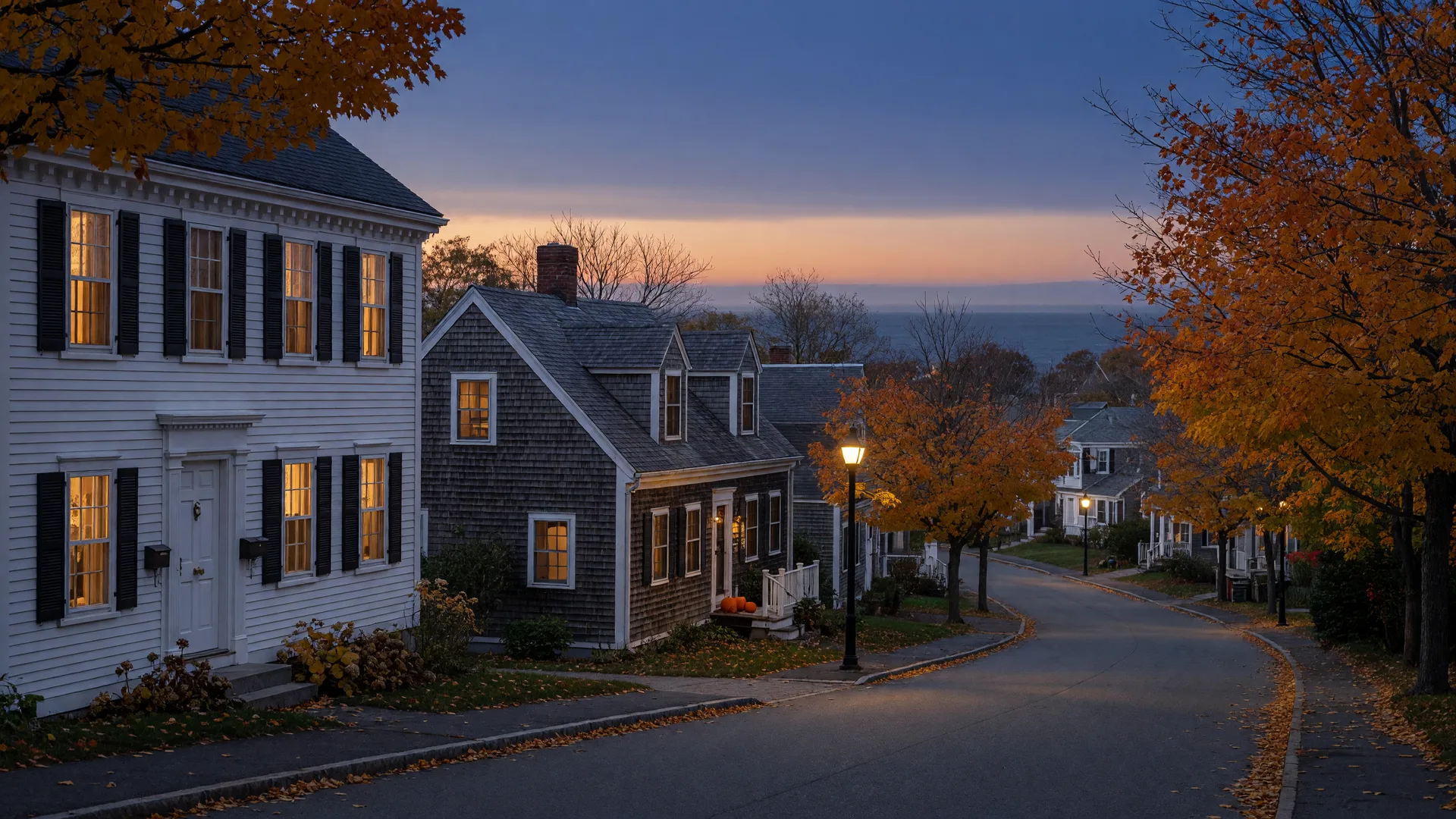
Before you decide, go back after dark. Notice the streetlights: which streets are covered, which corners stay dark, and whether you would feel comfortable walking from the car to the door. Watch whether quiet hours are actually quiet, and whether the neighborhood settles down or stays active well into the evening.
Test weekend parking the way you would live it. If you will host guests or park on the street yourself, an ordinary Saturday night tells you the truth about availability that a weekday visit cannot. Households that commute to the train park differently from those that drive everywhere, and the difference shows on weekends.
And remember the seasons. On the coastal North Shore, a neighborhood changes through the year: summer crowds and beach traffic, fall leaves and the school rhythm, the quieter deep winter, and the spring mud season. If you can manage a visit in more than one season, do it. Otherwise, ask the year-round residents what shifts when the weather does, because the neighborhood you see in September is one version of a place that has several.
If a home on the North Shore has you seriously interested, give the neighborhood the same attention you gave the house. Come back for a second look, walk the streets beyond the block, talk to the people who live there, and check the place at night and on a weekend before you decide.
Or tell me what you are looking for, and I will share how the neighborhoods on your list actually live: the commutes, the parking, the light, and the rhythm of each town across the year. I know these streets from daily life, and I will tell you what I really think. Call or text (978) 500-1480, or book a conversation. No pressure. Just a straight read on the places you are considering.
Ask Kathleen
Straight answers to the questions this season keeps bringing up, from the article above.
The practical minimum is two visits at genuinely different times: one on a weekday and one on a weekend, with at least one of them including the evening. If the street matters a lot to you, add a visit after dark and, when you can, a visit in a different season. There is no magic number. The goal is to see the neighborhood in more than the single hour your first appointment showed you.
There is no single best time, because each time answers a different question. The morning commute shows traffic and school drop-off. Midday shows walkability and parking. Evening shows light, noise, and when the street comes alive. Weekends show the community's character. Visit the hours you will actually be home, and if you are not sure which hours those are, that itself is a useful thing to figure out before you choose.
Yes, politely. A neighbor in a yard, someone walking a dog, or a local shopkeeper often gives you a more honest read on a street than any other source, and most are glad to chat briefly. Ask open questions about the commute, noise, parking, schools, and how the neighborhood feels in different seasons. You are listening for patterns across several answers, not for one enthusiastic opinion.
For schools, the honest method is address-specific: look up the exact street on the district's website, because assigned schools are set by attendance boundaries and can change a block away. For commutes, test the actual route at commuting hours, or check the real schedule from the station if you ride the rail. Town-level answers are a starting point, never a guarantee for a particular address.
Expect seasonal change, especially on the coast. Summer crowds, fall tourism, winter quiet, and spring conditions all reshape a neighborhood, and none of them is the only real version. Visit in more than one season when you can, and ask year-round residents what actually shifts. Understanding the rhythm of a place is part of choosing it well. It only becomes a problem when it surprises you.
The same questions and answers, un-styled and sequential, so they can be read and extracted easily.
Q: How many times should I visit a neighborhood?
A: The practical minimum is two visits at genuinely different times: one on a weekday and one on a weekend, with at least one of them including the evening. If the street matters a lot to you, add a visit after dark and, when you can, a visit in a different season. There is no magic number. The goal is to see the neighborhood in more than the single hour your first appointment showed you.
Q: What time of day is best to visit?
A: There is no single best time, because each time answers a different question. The morning commute shows traffic and school drop-off. Midday shows walkability and parking. Evening shows light, noise, and when the street comes alive. Weekends show the community's character. Visit the hours you will actually be home, and if you are not sure which hours those are, that itself is a useful thing to figure out before you choose.
Q: Should I talk to the neighbors?
A: Yes, politely. A neighbor in a yard, someone walking a dog, or a local shopkeeper often gives you a more honest read on a street than any other source, and most are glad to chat briefly. Ask open questions about the commute, noise, parking, schools, and how the neighborhood feels in different seasons. You are listening for patterns across several answers, not for one enthusiastic opinion.
Q: How do I check schools and commutes?
A: For schools, the honest method is address-specific: look up the exact street on the district's website, because assigned schools are set by attendance boundaries and can change a block away. For commutes, test the actual route at commuting hours, or check the real schedule from the station if you ride the rail. Town-level answers are a starting point, never a guarantee for a particular address.
Q: What if a neighborhood changes seasonally?
A: Expect seasonal change, especially on the coast. Summer crowds, fall tourism, winter quiet, and spring conditions all reshape a neighborhood, and none of them is the only real version. Visit in more than one season when you can, and ask year-round residents what actually shifts. Understanding the rhythm of a place is part of choosing it well. It only becomes a problem when it surprises you.
Summary: This guide is for North Shore buyers who want to choose a neighborhood as carefully as they choose a house. Buyers naturally fall for the house first, but the neighborhood is where daily life actually happens, so the second look, a return visit at a different time of day, matters. One visit is never enough, because traffic, noise, parking, light, and the feeling of a street change across a day and a week. Visit at different times: the weekday morning commute, the lunch hour, the evening, and the weekend each reveal something different. Walk the streets beyond the block to measure the distance to the places you use, and check sidewalks, maintenance, and the character of surrounding streets. Talk to the people who live there, and ask about schools, commutes, noise, and community. Check the neighborhood at night and on weekends for quiet hours, streetlight coverage, parking reality, and seasonal differences. Kathleen Militello, Realtor and Certified Negotiation Specialist with eXp Realty serving Boston's Coastal North Shore, is happy to talk through neighborhoods across the North Shore; reach her at (978) 500-1480 or through the booking link on this page.

Written by
Kathleen Militello, Realtor®
The Militello Team · AI Certified Agent™ · Certified Negotiation Specialist™ · eXp Realty
Related Posts
From the page to the porch
A note can only tell you so much. Let Kathleen take you through the towns, the streets, and the options that actually fit.