
Ask Kathleen · North Shore History
Did the American Revolution Really Begin in Ipswich? The Tax Revolt of 1687
Kathleen Militello, Realtor® · Published October 26, 2026 · Updated October 2026 · 8 min read · Boston's Coastal North Shore
Ask Kathleen · North Shore History
Kathleen Militello, Realtor® · Published October 26, 2026 · Updated October 2026 · 8 min read · Boston's Coastal North Shore
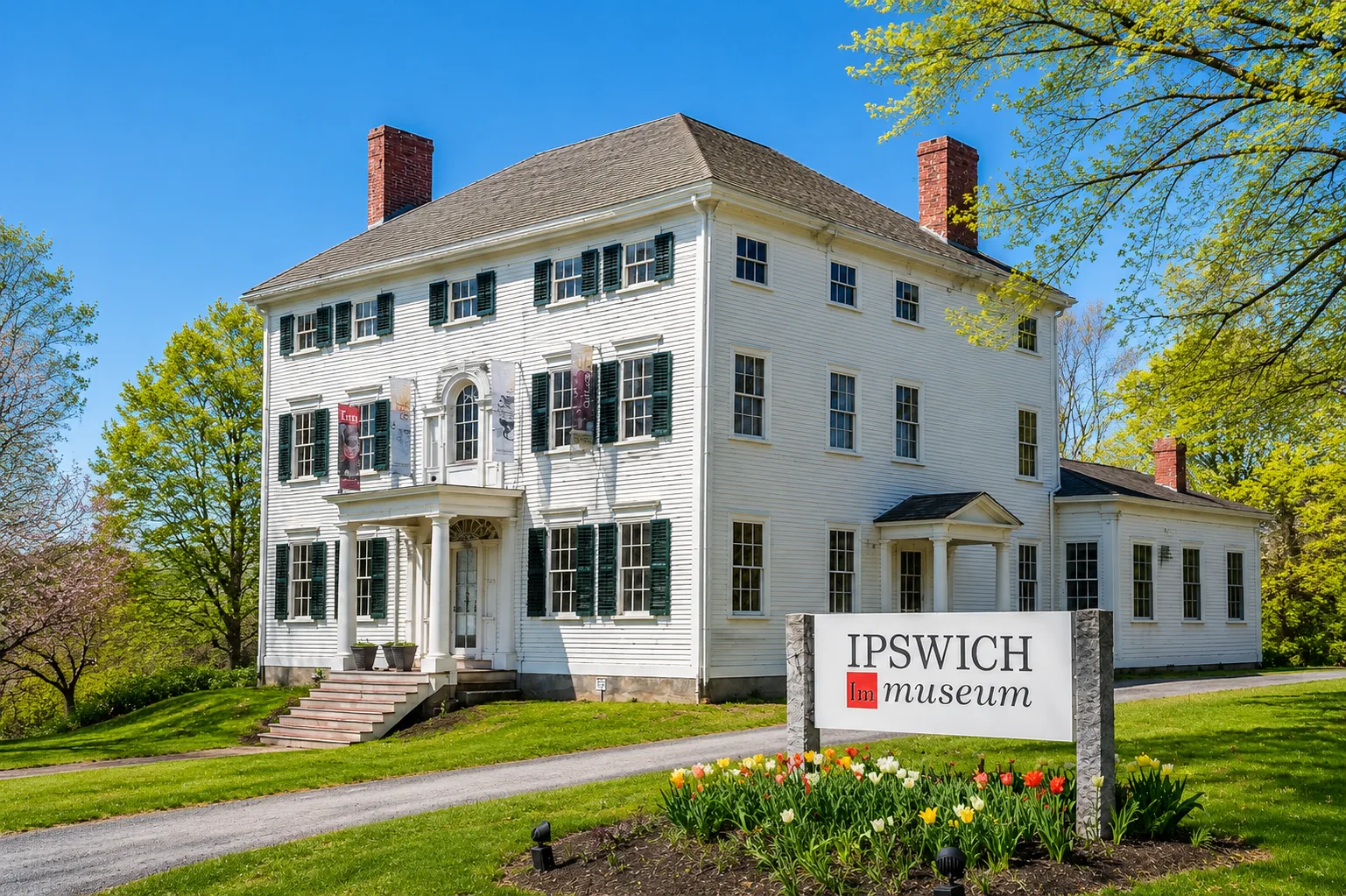
Ipswich, Massachusetts, holds a surprising piece of local history: a roadside marker that connects this quiet coastal town to the very beginning of the American Revolution. The claim is real, and the story behind it is remarkable, but the honest answer to the question it raises is more interesting than a simple yes or no.
In 1930, the Massachusetts Bay Colony-Tercentenary Commission erected a historical marker in Ipswich titled "Revolution of 1689." It still stands in the town today, and its text makes a striking claim.
The marker reads: "Here on August 23, 1687, the citizens of Ipswich, led by the Reverend John Wise, denounced the levy of taxes by the arbitrary government of Sir Edmund Andros, and from their protest sprang the American revolution of 1689."
The marker commemorates a town meeting held on August 23, 1687, a meeting at which the people of Ipswich voted to refuse a tax. To understand why that vote matters to the story of American independence, you have to understand the world those townspeople were living in.
In 1684, England annulled the charter of the Massachusetts Bay Colony, the document that had governed the colony and its towns for decades. Two years later, in 1686, the colonies were brought together under a new royal government called the Dominion of New England.
Sir Edmund Andros, who had been governor of New York, arrived in Boston in December 1686 as royal governor. He claimed that the colonists had left behind their rights as Englishmen, and he imposed a property tax on the towns without the approval of any elected legislature.
To the people of the North Shore, this felt like a deep violation. They were English subjects, and English subjects expected their taxes to be approved by representatives they had chosen. A tax levied by royal decree, with no elected voice anywhere in the process, struck at something they considered a right. That is the background to the stand Ipswich took the next summer.
The day before the town meeting, on August 22, 1687, the Reverend John Wise, minister at Chebacco Parish in Ipswich, was outraged by the new tax. He rode out to rally the Appleton brothers and other town leaders, calling the men of influence in the town to take a stand.
On August 23, 1687, a town meeting was organized, and Wise addressed the assembled townspeople with an impassioned speech. His words moved the meeting to vote that no taxes should be levied without the consent of the people.
Think about what that vote meant. It was not a petition and not a polite request for reconsideration. The people of Ipswich stood up at their own town meeting and refused, in plain terms, to accept a tax that had not been approved by anyone they had elected. It was one of the earliest clear statements of what would one day be called taxation without representation.
The price came quickly. Wise and several others, including the Appletons and the Ipswich selectmen, were arrested, taken to Boston, tried, imprisoned, and fined heavily.
Wise was also removed from his ministry for a time. It is worth pausing on that. The people who stood up that day were not radicals far from power. They were the respected figures of their town, a minister and its selectmen, and they paid a personal price for doing what they believed was right.
Two years later, in 1689, Andros was overthrown in Boston during what is known as the Revolution of 1689, a revolt connected to the Glorious Revolution taking place in England at the same time.
Wise was restored to his ministry, and he later served as an Ipswich representative to the General Court. The men who had been punished for their stand were vindicated, and the arbitrary royal government they had resisted was gone.
This is the moment the marker points to when it speaks of the "American revolution of 1689." In the marker's telling, the Ipswich protest of 1687 sprang forward into that 1689 overthrow of royal rule. It is a proud reading of local history, and it is not hard to see why the town treasures it.
Here is the honest answer. The revolt of 1687 was a landmark early stand against taxation without representation, and it is part of the long road that led to American independence. But the American Revolution as we know it, the war for independence, began with the fighting at Lexington and Concord in April 1775, more than eight decades later. In fact, the marker's own "American revolution of 1689" came a full 86 years before the shot heard round the world.
So the claim on the marker deserves to be read with warmth and care. Because of the 1687 stand, Ipswich is sometimes called the "Birthplace of American Independence," a claim reflected in the town seal. That is a proud piece of local heritage, and it should be respected. The people of Ipswich did stand against arbitrary rule before almost anyone else, and their courage matters.
What the marker does not claim, and what the history does not support, is that the Revolutionary War itself began in Ipswich. The 1687 revolt was a forerunner, an early and principled chapter in a story that took generations to unfold. Honoring the chapter without confusing it with the war is the accurate way to tell the story, and it makes the real achievement of those townspeople easier to see.
In 1687, the people of Ipswich, led by Reverend John Wise, voted at a town meeting to refuse a royal property tax levied without any elected approval, an early stand against taxation without representation.
Wise and other leaders, including the Appletons and the Ipswich selectmen, were arrested, tried in Boston, imprisoned, and fined heavily, and Wise was briefly removed from his ministry.
The marker's "American revolution of 1689" refers to the overthrow of Governor Edmund Andros in Boston in 1689, a full 86 years before Lexington and Concord in April 1775.
Because of the 1687 stand, Ipswich is sometimes called the "Birthplace of American Independence," a claim reflected in the town seal and honored as a proud piece of local heritage.
The Ipswich revolt was a forerunner of American resistance, but the American Revolutionary War began with the fighting at Lexington and Concord, not in Ipswich.
Ask Kathleen
Straight answers to the questions about the Ipswich tax revolt that come up most, from the article above.
On August 23, 1687, the citizens of Ipswich, led by Reverend John Wise, voted at a town meeting that no taxes should be levied without the consent of the people, refusing a property tax imposed by Governor Edmund Andros without any elected approval. The stand is commemorated by a 1930 historical marker in Ipswich.
Reverend John Wise was the minister at Chebacco Parish in Ipswich. Outraged by the new tax, he rode out on August 22, 1687 to rally the Appleton brothers and other town leaders, and the next day he addressed the assembled townspeople with an impassioned speech that moved the town to refuse the tax.
Yes. Wise and several others, including the Appletons and the Ipswich selectmen, were arrested, taken to Boston, tried, imprisoned, and fined heavily. Wise was also removed from his ministry for a time, though he was restored after the overthrow of Governor Andros in 1689.
The Revolution of 1689 was the overthrow of Governor Edmund Andros and royal rule in Boston in 1689, connected to the Glorious Revolution in England. Afterward, John Wise was restored to his ministry and later served as an Ipswich representative to the General Court. This is the event the marker in Ipswich calls the "American revolution of 1689."
The revolt of 1687 was a landmark early stand against taxation without representation and part of the long road to independence, but the American Revolution as we know it began with the fighting at Lexington and Concord in April 1775, a full 86 years after the marker's 1689 reference. Ipswich's claim, reflected in its town seal as the "Birthplace of American Independence," is a proud piece of local heritage that honors that early stand.
Related topics
Ipswich tax revolt 1687 ·Reverend John Wise ·Sir Edmund Andros ·Dominion of New England ·Massachusetts Bay Colony charter ·Revolution of 1689 ·Birthplace of American Independence ·taxation without representation ·Ipswich town meeting ·Chebacco Parish ·Ipswich history ·North Shore history ·historic Ipswich Massachusetts ·colonial New England history ·The Militello Team
If you are curious about Ipswich history, or about what it would be like to buy or sell a home here, I would love to talk. I know the town, I know its story, and I will tell you what I really think about what makes sense for you. You do not have to figure this out alone.

Written by
Kathleen Militello, Realtor®
The Militello Team · eXp Realty · MA Salesperson License 9053343 · Serving Boston's Coastal North Shore
Keep reading
Whether you are curious about the story behind the marker or about what it would be like to buy or sell a home in Ipswich, I would love to talk. Reach out through the Meet with Kathleen page, or book a time that works for you.
Kathleen Militello, Realtor®
The Militello Team | eXp Realty
Experience Matters.