
Ask Kathleen · North Shore History
The 1930 Tercentenary Markers: A 1930s Time Capsule Cast in Iron
Kathleen Militello, Realtor® · Published October 29, 2026 · Updated October 2026 · 7 min read · Boston's Coastal North Shore
Ask Kathleen · North Shore History
Kathleen Militello, Realtor® · Published October 29, 2026 · Updated October 2026 · 7 min read · Boston's Coastal North Shore
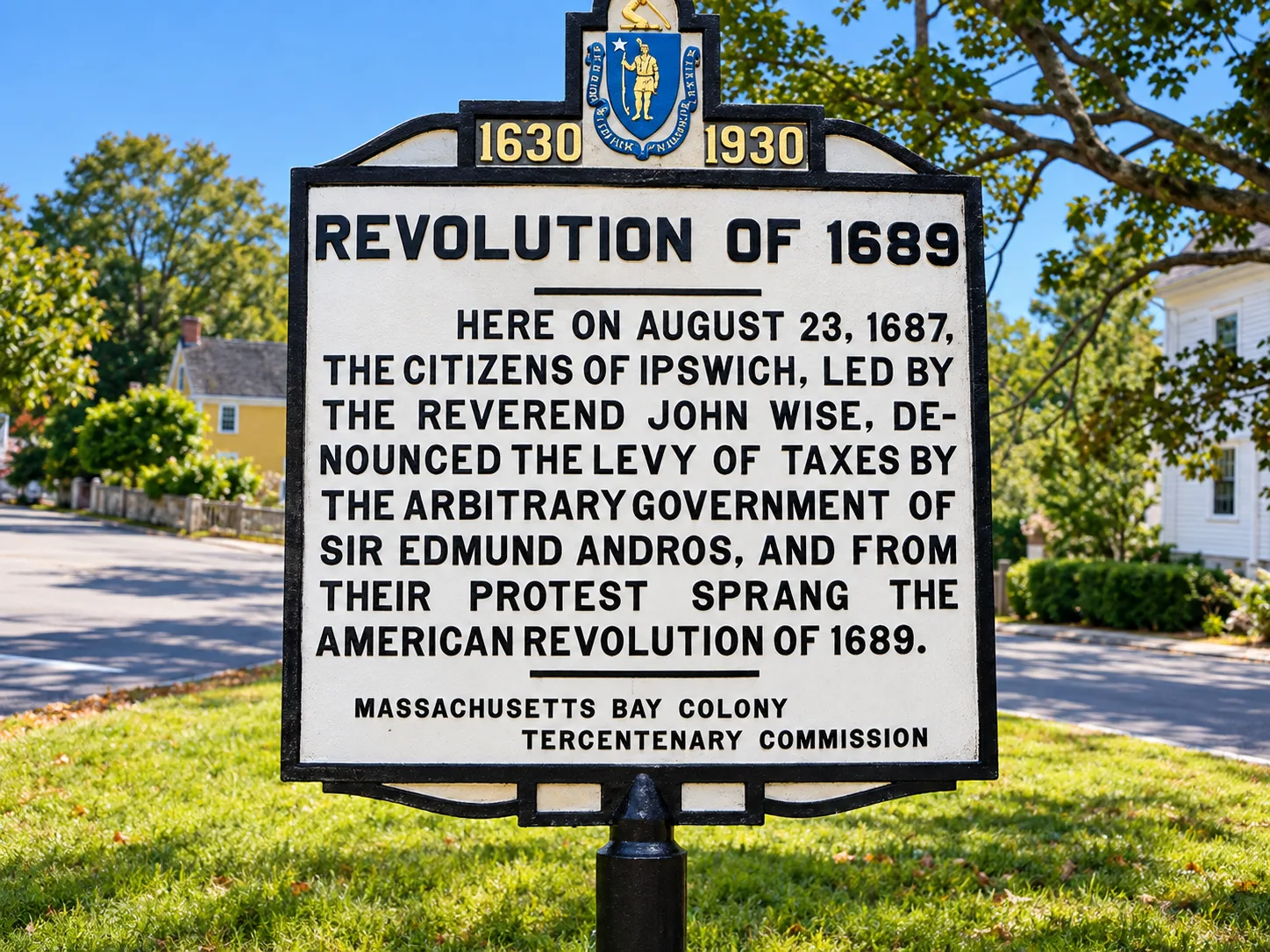
Cast-iron signs installed in 1930 still stand at crossroads across the North Shore, marking the moments that shaped this coast. These are the Massachusetts Bay Colony Tercentenary markers, a Depression-era public history project that put the state's past on the roadside, and the ones that survive now read like a time capsule cast in iron. Here is the story of who made them, who wrote them, and why local history still matters when you buy or sell a home on the North Shore.
In 1928, the Massachusetts legislature created the Tercentenary Commission to plan the celebration of the 300th anniversary of the Massachusetts Bay Colony. In 1930, the state Department of Public Works installed 275 cast-iron markers in 96 municipalities across Massachusetts.
The timing puts them in a specific moment. 1930 was an early year of the Great Depression, and this was a public history project built for hard times: a state putting its past on display along the roads people already traveled. The markers were designed to teach, and they were designed to last.
Today they are one of the ways the North Shore's deep history shows up in ordinary places. You round a corner in Ipswich, Gloucester, Salem, or any of the towns between, and there it is: a paragraph of state history, cast in iron, still standing where it was bolted down nearly a century ago.
The marker texts were composed and edited by Samuel Eliot Morison, the Harvard historian. That is why the best of them read like small essays rather than generic roadside labels.
Morison brought a scholar's care. He wanted the marker to say what actually happened, in plain language, with room for the story. When you read a Tercentenary marker today, you are reading the words of a Harvard historian who cared how each episode was told.
It gives the program a human thread. A Depression-era state did not hand its history to a committee of copywriters; it handed it to Morison, and the difference is visible in the iron.
Almost a century of New England weather, road widening, and redevelopment have taken a toll. A 2011 inventory counted 147 markers still standing and 128 missing.
The local numbers tell the North Shore's part of the story. Fourteen markers were placed on Cape Ann, with 1 now missing, and 6 were placed around Salem. Gloucester restored its four markers in 2024-25, and MassDOT is currently restoring 21 markers across the state.
A missing marker does not mean a lost story. The places those signs marked are still there, and the history still belongs to the towns. The restoration work shows the markers are treated today as what they always were: civic monuments worth keeping.
The marker in the photograph at the top of this article stands in Ipswich, and its text is the program at its most pointed. It reads: "Revolution of 1689. Here on August 23, 1687, the citizens of Ipswich, led by the Reverend John Wise, denounced the levy of taxes by the arbitrary government of Sir Edmund Andros, and from their protest sprang the American Revolution of 1689."
Ipswich's refusal of Governor Andros's tax is one of the great early chapters of Massachusetts history, and the marker tells it as the moment the Revolution of 1689 began. In the marker's telling, a protest vote at a town meeting became the spring of a colony-wide change.
That is the time-capsule quality of the program. A reader in 1930 and a reader today find different things in the same sentences, but the marker itself has not changed in nearly a century. It still asks the same question of everyone who stops to read it: what does this place's past mean now?
Not far from Ipswich, the program tells a quieter kind of story. One of the 6 markers around Salem is the Salem Village marker, and its text concerns the Reverend Joseph Green (1697).
Where the Ipswich marker commemorates a political protest, the Salem Village marker remembers a minister. The contrast shows how wide the 1930 program cast its net: it put both a revolt and a minister's story on the roadside as equal parts of the colony's story.
It is a reminder that local history is rarely one thing. The same roads that carry the memory of an anti-tax protest also carry the memory of a minister who served his parish, and both were worth casting in iron.
This matters for more than curiosity. When you choose a North Shore town, you are choosing a place whose character was set over nearly four centuries, and the markers are a working example of how visible that history is. The same roads you drive every day carry the memory of the events that shaped the town around you.
For buyers, local history is a practical lens. It explains why a town looks the way it does: why a street follows an old shoreline, why a historic district protects certain houses, why one town center feels colonial and another feels industrial. That context helps you compare towns honestly instead of by surface impression.
For sellers, it is part of your home's story. A North Shore buyer walking a town with a visible past understands why an older house, a historic setting, or a century of neighborhood character carries meaning. Presenting that story well is part of presenting a home well.
This is the kind of local knowledge I bring to every conversation. If you are weighing a move anywhere on the North Shore, I can tell you honestly how each town's history shows up in day-to-day life, and what it means for the kind of home you are looking for.
The Massachusetts legislature created the Tercentenary Commission in 1928, and in 1930 the state Department of Public Works installed 275 cast-iron markers in 96 municipalities across Massachusetts.
The marker texts were composed and edited by Samuel Eliot Morison, a Harvard historian, which is why the markers read like careful mini-essays rather than generic roadside labels.
A 2011 inventory counted 147 markers standing and 128 missing. Fourteen were placed on Cape Ann with 1 now missing, 6 around Salem, and Gloucester restored its four markers in 2024-25 while MassDOT restores 21 more.
The survival and restoration of the markers show local history as living civic work, and that history gives buyers a practical lens on a town's character and sellers a real story to tell about a home's setting.
Ask Kathleen
Straight answers to the questions about the 1930 Tercentenary markers that come up most, from the article above.
They are cast-iron historical markers installed in 1930 by the Massachusetts Department of Public Works to mark the 300th anniversary of the Massachusetts Bay Colony. The legislature created the Tercentenary Commission in 1928, and 275 markers were installed in 96 municipalities across the state, including on Cape Ann and around Salem.
The marker texts were composed and edited by Samuel Eliot Morison, a Harvard historian. That is why the best markers read like small, carefully written essays about what happened at each site.
A 2011 inventory counted 147 markers standing and 128 missing. On Cape Ann, 14 were placed and 1 is now missing, and 6 were placed around Salem. Gloucester restored its four markers in 2024-25, and MassDOT is restoring 21 markers.
It reads: "Revolution of 1689. Here on August 23, 1687, the citizens of Ipswich, led by the Reverend John Wise, denounced the levy of taxes by the arbitrary government of Sir Edmund Andros, and from their protest sprang the American Revolution of 1689."
Local history is a practical lens on a town. It explains why a town looks and feels the way it does, which helps buyers compare communities honestly and helps sellers tell their home's real story. Understanding the character of a town is part of making a confident move on the North Shore.
Related topics
1930 Tercentenary markers ·Massachusetts Bay Colony Tercentenary Commission ·Samuel Eliot Morison ·cast-iron historical markers ·Ipswich Tercentenary marker ·Revolution of 1689 ·Reverend John Wise ·Salem Village marker ·Cape Ann history ·Gloucester history ·North Shore history ·Depression-era public history ·Ipswich history ·Massachusetts history ·The Militello Team
Local history is part of what makes the North Shore feel like home, whether you grew up here or are just arriving. If you are curious about a town's story, or about what it would be like to buy or sell a home here, I would love to talk. I know the North Shore, I know real estate, and I will tell you what I really think about what makes sense for you. You do not have to figure this out alone.

Written by
Kathleen Militello, Realtor®
The Militello Team · eXp Realty · MA Salesperson License 9053343 · Serving Boston's Coastal North Shore
Keep reading
Whether you are curious about the story behind the markers or about what it would be like to buy or sell a home in an Ipswich, Gloucester, Salem, or another historic North Shore town, I would love to talk. Reach out through the Meet with Kathleen page, or book a time that works for you.
Kathleen Militello, Realtor®
The Militello Team | eXp Realty
Experience Matters.