
Local Community Guides
The Grand Estates of the North Shore: How America's Wealthy Once Lived
Kathleen Militello · Published October 23, 2026 · 8 min read · Boston's Coastal North Shore
Local Community Guides
Kathleen Militello · Published October 23, 2026 · 8 min read · Boston's Coastal North Shore
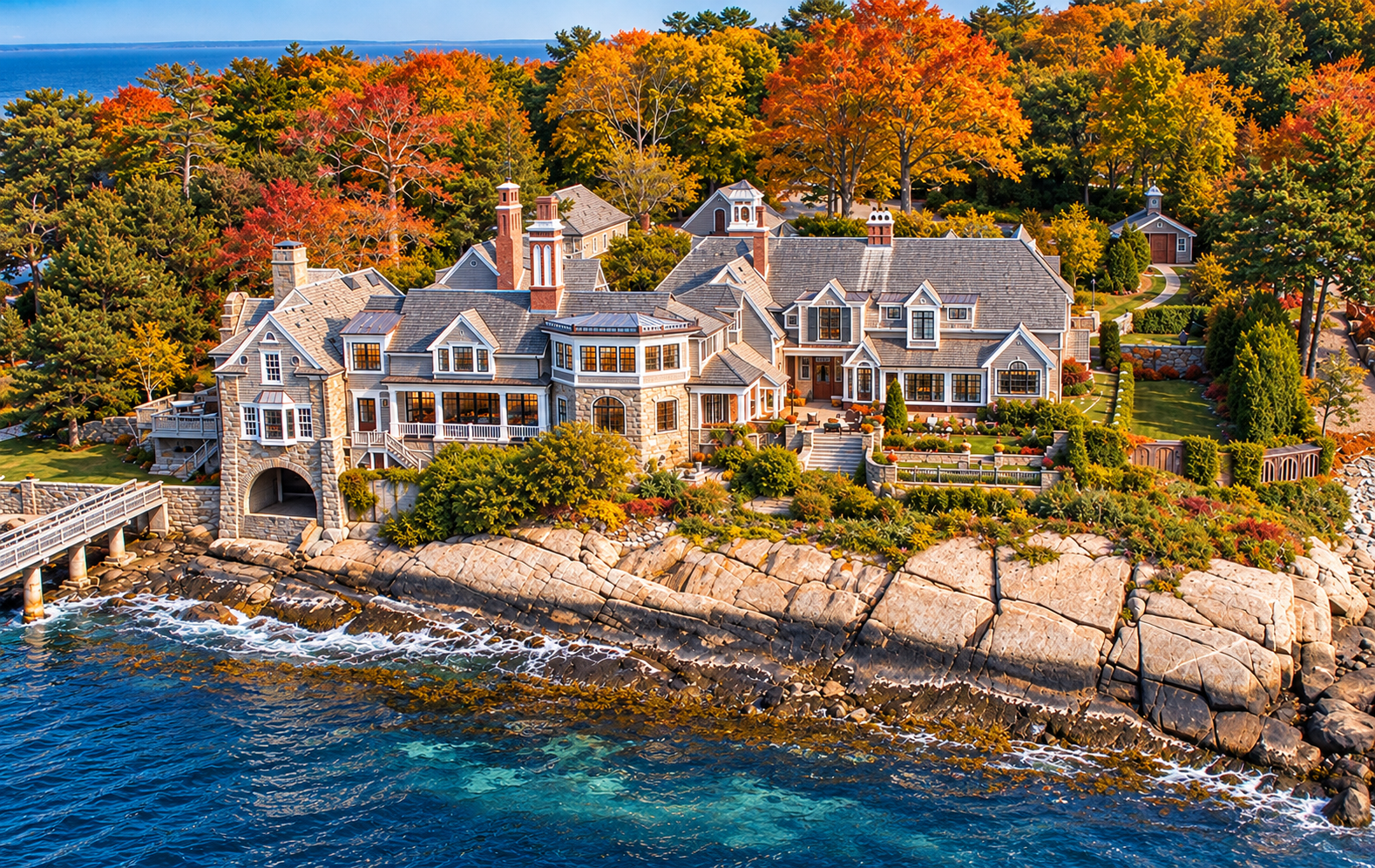
Before there were summer colonies elsewhere, there was the North Shore. In the 1800s, wealthy Bostonians and buyers from Philadelphia, New York, Washington D.C. and even Chicago began buying farms along the Massachusetts coast and turning them into grand summer estates. By the 1890s the region was celebrated as a summer destination for the social set, and the shoreline from Beverly to Gloucester filled with gracious “cottages” on a very grand scale. Here is how America's wealthy once lived, and where you can still see it today.
Long before they were known by their current names, the eastern part of Beverly was farmland along the ocean. In the late 1700s and early 1800s, wealthy buyers started building summer estates along the seashore, and the villages of Beverly Farms and Prides Crossing grew into a string of grand homes.
Charles G. Loring was one of the first three Bostonians to buy North Shore farms and create summer estates, purchasing his Prides Crossing property in 1844. Oliver Wendell Holmes Sr. and Jr. summered in Beverly Farms, and President William Howard Taft spent his summers in Beverly from 1909 to 1913, making it the “Summer White House.”
Today those same neighborhoods are still defined by stately shingle-style and Colonial Revival homes set along the water.
Richard Teller Crane Jr., heir to the Crane Company fortune, and his wife Florence bought the property in 1910. Working with architects and landscape designers, they transformed the seaside drumlin into one of America's great estates.
The home that stands today was completed in 1928: a Stuart-style mansion of roughly 57,000 square feet of living space, designed by architect David Adler, with gardens by the Olmsted Brothers. The Italian garden and casino complex were built earlier, between 1913 and 1915, by Frederick Law Olmsted Jr. and John Charles Olmsted.
The 165-acre estate on the Ipswich coastline included the famous Grand Allée leading toward the sea. In 1945, in Richard Crane's memory, a thousand acres of beach and dunes were given to The Trustees of Reservations.
Today the Crane Estate is open to the public, and its beach, gardens and grand house remain one of the North Shore's most beloved places.
Gloucester's rocky coast holds two estates that could not be more different in personality, yet both survive as museums.
Hammond Castle, in the Magnolia section of Gloucester, was built between 1926 and 1929 by John Hays Hammond Jr., an inventor known as the Father of Radio Control, who held more than 400 patents. He called his home Abbadia Mare, his “abbey by the sea.” The medieval-style structure was part home, part laboratory and part museum, built to hold his collection of Roman, Medieval and Renaissance artifacts, and today it operates as the Hammond Castle Museum overlooking the Atlantic.
Not far away, Beauport, the Sleeper-McCann House, began in 1907 on a rocky ledge over Gloucester Harbor. It was the summer home of Henry Davis Sleeper, one of America's first professional interior designers, who expanded the shingle-style house again and again until it reached 56 rooms filled with his collections. Beauport is a National Historic Landmark and part of Historic New England, and it remains one of the most influential historic houses in the country for interior design.
Many of the old estates were razed or subdivided over the decades, but the neighborhoods they created still define luxury living on the North Shore. Beverly Farms, Prides Crossing, Manchester-by-the-Sea and Magnolia continue to draw buyers who want stately homes, water views and a quiet coastal setting within easy reach of Boston.
For buyers today, visiting places like the Crane Estate or Beauport is a way to understand the craftsmanship, siting and sense of place that the original summer colony prized, and that still shows up in the area's finest homes. It is history you can walk through, and for many buyers it is history they want to live in.
The North Shore was one of America's earliest summer-colony destinations, with grand estates rising along the coast from the early 1800s.
Beverly Farms and Prides Crossing grew from farmland into a shoreline of summer estates, including President Taft's “Summer White House” years from 1909 to 1913.
Castle Hill on the Crane Estate shows the scale of the era: a roughly 57,000 square foot Stuart-style mansion completed in 1928 on a 165-acre estate.
Gloucester preserves two estate personalities as museums: inventor John Hays Hammond Jr.'s medieval-style castle and designer Henry Davis Sleeper's 56-room Beauport.
Ask Kathleen
Straight answers to the questions about the North Shore's grand estates that come up most, from the article above.
Beginning in the late 1700s and early 1800s, with estates like Charles G. Loring's Prides Crossing property in 1844 marking the early summer-colony era.
Richard Teller Crane Jr., heir to the Crane Company fortune, and his wife Florence; the mansion was completed in 1928 and the estate is now open to the public through The Trustees of Reservations.
Yes, it operates as Hammond Castle Museum in the Magnolia section of Gloucester, built between 1926 and 1929 by inventor John Hays Hammond Jr.
The Sleeper-McCann House in Gloucester, begun in 1907 by interior designer Henry Davis Sleeper and expanded to 56 rooms; it is a National Historic Landmark cared for by Historic New England.
Yes. The neighborhoods they created, including Beverly Farms, Prides Crossing, Manchester-by-the-Sea and Magnolia, remain among the most desirable coastal communities on the North Shore.
Related topics
north shore grand estates ·gilded age homes massachusetts ·beverly farms historic homes ·prides crossing estates ·castle hill crane estate ·crane estate ipswich ·hammond castle gloucester ·beauport sleeper-mccann ·magnolia ma historic homes ·manchester by the sea estates ·north shore summer colony ·historic waterfront homes ·luxury homes north shore ma ·north shore history ·the militello team

Written by
Kathleen Militello, Realtor®
The Militello Team · eXp Realty · MA Salesperson License 9053343 · Serving Boston's Coastal North Shore
Keep reading
The grand estates tell the story of why the North Shore became a summer destination, and those same towns still draw buyers who want stately homes by the water. If you are thinking about a move here, I will tell you what I really think. Let's talk about what makes sense for you.
Kathleen Militello, Realtor® | The Militello Team | eXp Realty
Experience Matters.