
North Shore History
Holiday House Tours in North Shore Historic Districts: What to Expect From Federal Homes to Seaside Cottages
Kathleen Militello · Published November 7, 2026 · Updated November 2026 · 9 min read
North Shore History
Kathleen Militello · Published November 7, 2026 · Updated November 2026 · 9 min read
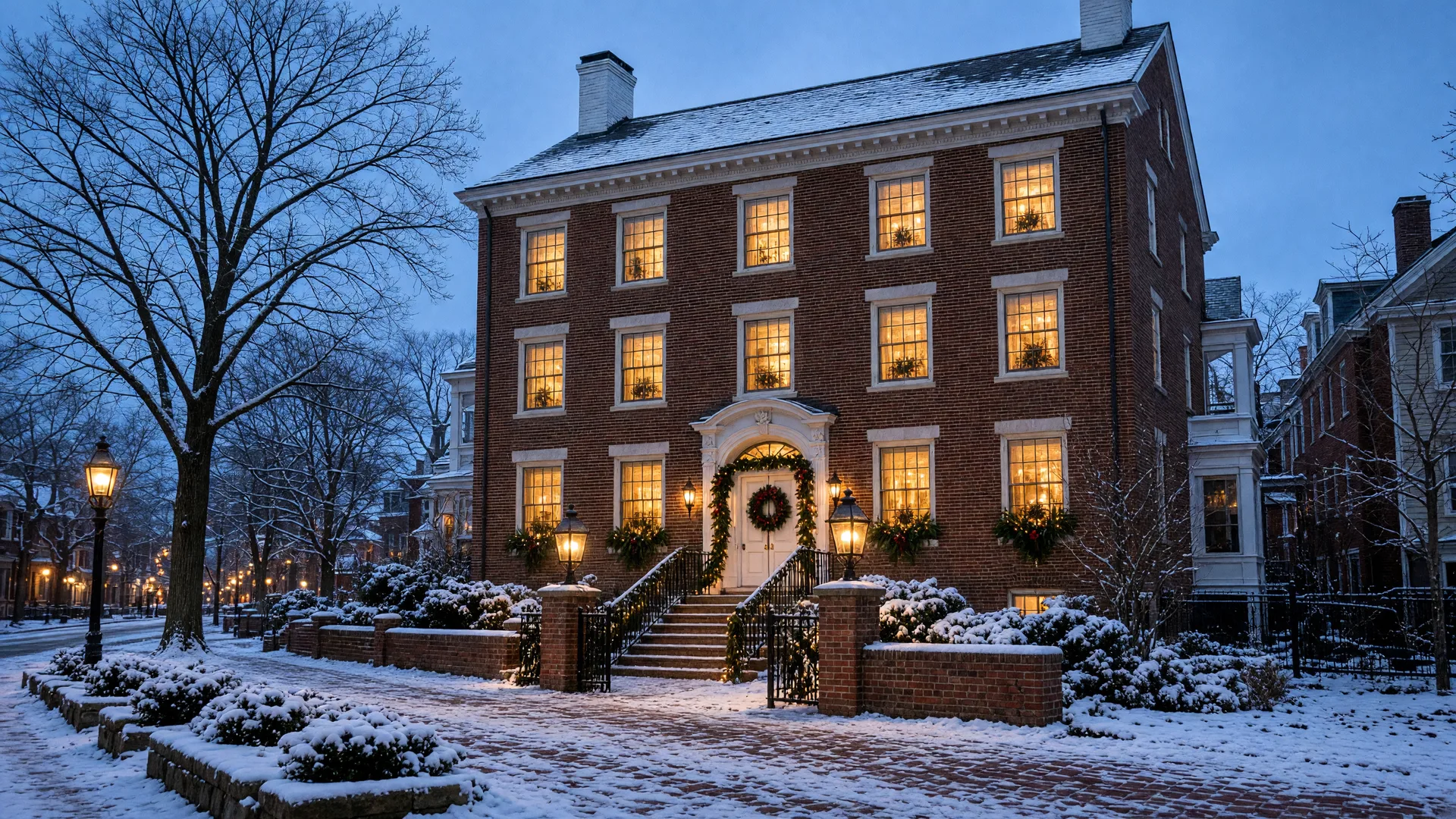
The best way to understand a historic North Shore home is to stand inside one, and the holidays are the one time of year when private doors open to the public. Decorated rooms, warm fireplaces and knowledgeable hosts make these tours the friendliest possible introduction to Federal townhouses, Colonial keeping rooms, Victorian parlors and shingled cottages by the sea. Here is what to expect, district by district, and what to look for if one of these homes wins you over.
Key Takeaways
Holiday house tours open private historic homes that are normally closed to the public, decorated and lit for the season.
Each style teaches something different: Federal symmetry in Salem and Newburyport, low-beamed Colonial rooms in Ipswich and Essex, and breezy seaside cottages on Cape Ann and the coast.
Tickets matter: Salem's Christmas in Salem and the Newburyport Holiday House Tour sell out, so plan ahead.
A tour is a chance to ask homeowners what it is really like to live in an older house, from heating to maintenance.
If you fall for a historic home, Kathleen can help you understand inspections, historic districts and budgets before you make an offer.
Historic house tours are the rare event where the owners open their doors and let strangers wander through the rooms they live in. That is exactly what makes them valuable: no staging, no agent walkthrough, just the house the way a real North Shore household uses it, decorated for the holidays.
The tours run through the historic districts where the architecture is densest, which means you can compare a half dozen homes from the same era in a single afternoon. And because the rooms are dressed for the season, you see the fireplaces lit, the windows glowing and the proportions at their most intimate.
Private homes, opened to the public for one weekend a year, usually to raise money for a local cause.
Docents and owners in each room, ready to answer questions about the house and its history.
A chance to compare Federal, Colonial, Victorian and cottage styles back to back, on foot, in the districts where they were built.
Brick, symmetry, and the merchant era
Salem's Chestnut Street is one of the finest collections of Federal architecture in New England. The street was laid out in 1796 and built out mostly between 1800 and 1840, when Salem's merchants and sea captains were at the height of their wealth. Hamilton Hall, the 1805 ballroom that anchors the street, shows the scale these houses were built to entertain at.
In Newburyport, the downtown historic district runs the same era: Federalist and Greek Revival houses line the brick streets near Market Square and the waterfront, built on the fortunes of shipping and the Merrimack River.
Inside a Federal home, expect symmetry: a central hall, balanced rooms, tall windows, and carved mantels and doorways with delicate fanlights and sidelights. The ornament is elegant but disciplined, and the proportions are what win people over.
Low ceilings, wide boards, and four centuries
Ipswich calls itself America's best-preserved Puritan town, and it earns the title with one of the largest concentrations of First Period houses, homes built before 1725, in the country. In Essex, the shipwrights who built the fishing schooners also built their own houses, so the same skills show up in the joinery.
Step inside a First Period house and the differences are immediate: doorways sized for people of the 1600s, ceilings you will want to duck under, floorboards a foot and a half wide cut from old-growth trees, and hand-planed beams overhead. Rooms were built around a central chimney, with a keeping room where the fire, the cooking and most of daily life happened.
These are the houses where character is literal: the walls are uneven, the floors slope a little, and the history is part of the structure. That is the charm, and it is also the thing to understand before you buy.
Most tour guides will happily point out the original beams, the wrought-iron nails and the sections added over the centuries, so ask.
Columns, hilltop lanes, and sea captains' houses
Marblehead's Old Town is a warren of narrow lanes and hilltop houses that predate the American Revolution, while the grander Greek Revival homes date to the town's cod-fishing and shoe-making heyday. The Christmas Walk weekend turns the whole district into one long open house, with shop windows lit and the lanes full of strollers.
In Beverly, the historic fabric ranges from the Federal houses of the downtown to the grand summer estates of Beverly Farms and Prides Crossing. Gloucester's villages each have their own character: Rocky Neck's artist studios, Eastern Point's shingled mansions, and the working waterfront that keeps the town honest.
Greek Revival houses wear their classical details proudly, columns, pilasters and heavy front doors, while the Victorians add porches, turrets and ornament. Expect more rooms, more light, and the first hints of modern plumbing and closets.
Shingles, salt air, and a room with a view
At the coast, the story changes scale. Rockport's Bearskin Neck and Pigeon Cove are full of small houses built for fishermen and granite workers, with the same sturdy bones you see in the village's studios and galleries. Manchester-by-the-Sea brings the resort-era cottage, larger and shingled, built for summer families who came by train.
The word cottage here does not mean simple by accident: these homes were built to be modest, breezy and close to the water. Inside you will find multipane windows that frame the harbor, low-maintenance shingle walls, and rooms that open to porches instead of formal gardens.
In December, a seaside cottage shows you the other side of coastal living: how the wind finds the cracks, where the wood stove works hardest, and how a small house holds heat. That is exactly the information you want before you buy one.
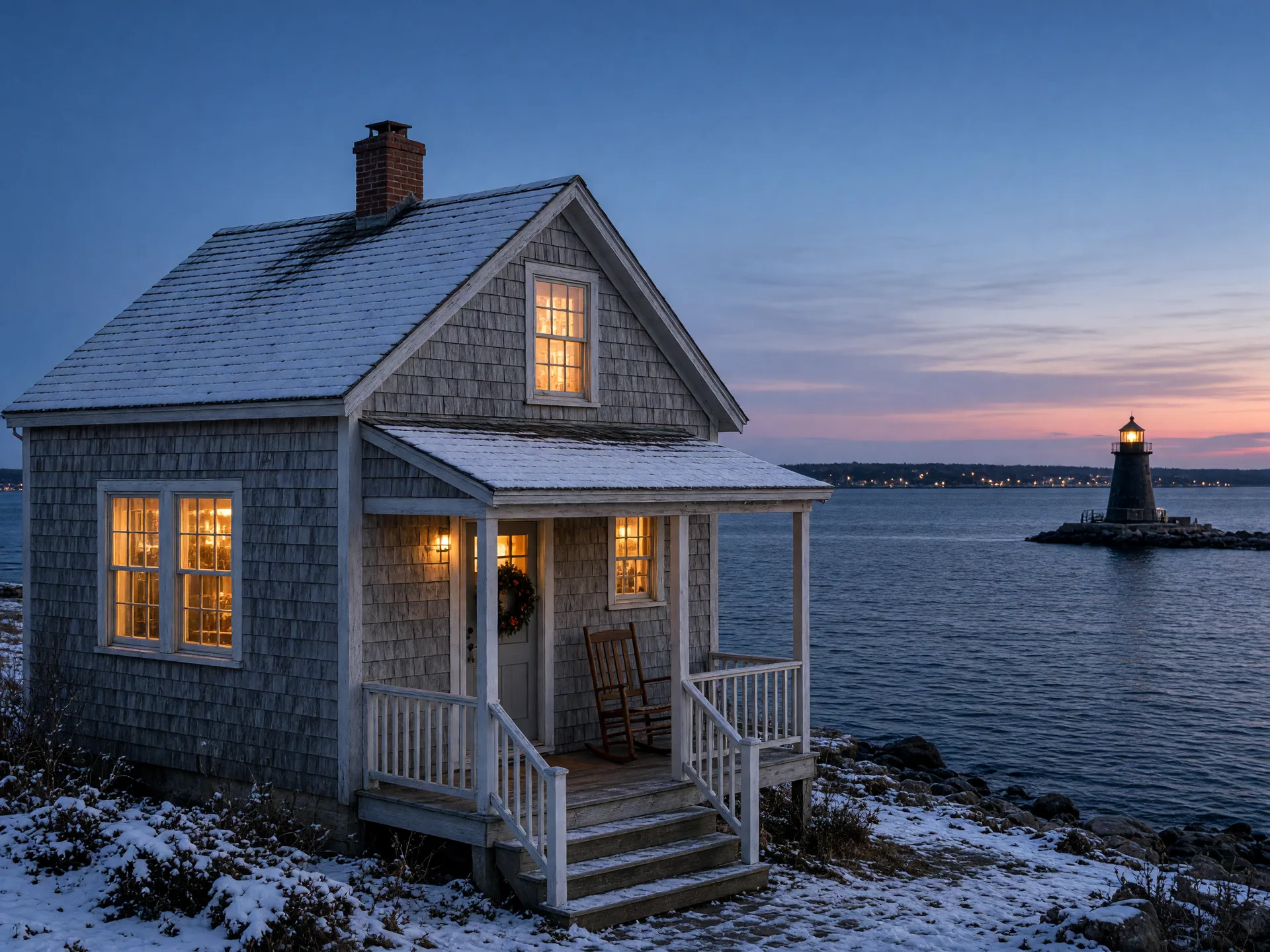
A twenty-minute walkthrough at Christmas can tell you more about an old house than a month of listing photos. You see the floor plan in person, feel the drafts, hear the creaks and notice the details no camera captures.
Staircases in older homes are often narrow and steep; check whether the layout would work for your daily life.
Low doorways and ceilings are the norm in First Period houses, and modern furniture has to fit the rooms, not the other way around.
Ask about the heating: many older homes run on radiators, wood stoves or updated forced air, and the bills are part of the decision.
Original windows, plaster walls and wide floors are beautiful and expensive to replace, so treat them as assets and understand their care.
Homes in historic districts may sit under local preservation rules, which protect the facades you love and limit the changes you can make.
Winter is the honest season for an old house: if it feels warm and dry in December, it will likely feel that way all year.
The owners and docents are the best source in the room, so bring a few questions. You do not need to be buying anything to ask them, but the answers will stay with you.
How old is the house, and what parts are original?
When was the last major renovation, and what did it add?
How do you heat it, and what does a winter bill actually run?
Are there preservation rules on the street, and what do they cover?
What would you change, and what would you never touch?
If this were for sale, what would you want buyers to understand first?
Three tours anchor the season on the Coastal North Shore, and each is worth planning around.
Christmas in Salem: produced by Historic Salem, Inc. on the first weekend of December, with a candlelight preview Friday evening and tours Saturday and Sunday. The 2026 event (December 4 preview, December 5-6) carries the theme Seas and Greetings and explores the waterfront Derby Street neighborhood, so expect maritime history along with the Federal architecture.
Newburyport Holiday House Tour: a daytime, self-guided tour on a December Saturday, roughly 10 a.m. to 4 p.m., of decorated Federalist, Greek Revival and contemporary homes. Tickets support the Anna Jaques Hospital Aid Association, check-in is at the Senior Center on High Street, and advance tickets are the safe move.
Marblehead Christmas Walk & Holiday Stroll: a free four-day weekend in early December (2026 runs December 3-6) built around the Historic District, with Santa arriving by lobster boat at State Street Landing, a town tree lighting, an artisan market and the Gingerbread Festival.
Wear comfortable shoes and dress in layers: you will be outdoors between houses, and old homes are not uniformly warm. Respect the houses, no flash photography unless the tour allows it, no touching the decorations, and follow each hostu0027s rules. And thank the people who open their doors: they are giving their holiday weekend to share these houses with you.
Holiday house tours are the warmest introduction to North Shore architecture you will find. In one weekend you can walk from a 1796 Federal brick mansion in Salem to a low-beamed First Period room in Ipswich to a shingled cottage on the water, each one dressed for the season and ready to tell its story.
And if a historic home starts to feel less like a tour stop and more like a possibility, that is the moment to get the real numbers. Understanding what you are really taking on, inspections, heating, preservation rules and budget, is exactly what experience is for. That is why Experience Matters.
If a tour house leaves you wondering what it would really be like to live in a historic North Shore home, reach out through my contact page or call (978) 500-1480. I will tell you what I really think. Warmly, Kathleen
Ask Kathleen
Straight answers to the questions this season keeps bringing up, from the article above.
Yes. Christmas in Salem, the Newburyport Holiday House Tour and Marblehead's Christmas Walk all open private homes and district streets to the public during the first weekends of December. Some tours sell tickets and some are free, but none require you to be a buyer or a member to attend.
For the paid tours, advance tickets are the smart move. Christmas in Salem sells out most years, and the Newburyport Holiday House Tour, which supports the Anna Jaques Hospital Aid Association, is easiest to plan with tickets bought ahead. Marblehead's Christmas Walk is free and open, so no ticket is needed.
Federal style is the architecture of the young American republic, roughly 1780 to 1840, and it dominates Salem's Chestnut Street and Newburyport's downtown. Look for symmetrical facades, brick or clapboard, delicate doorways with fanlights, tall windows, and elegantly carved mantels and staircases.
Comfortable shoes and layers. You will walk between houses outdoors in December weather, and the rooms themselves vary from wood-stove cozy to genuinely cool. Tours often run for hours, so dress for the walk, not just the interiors.
It depends on the tour. Some allow no photography at all, and others allow photos without flash. When in doubt, ask the docent at the door and follow the house rules; the tours open private homes, and the owners set the terms.
Rarely. The tours are fundraisers and community celebrations, not open houses, so most homes are not on the market. But that does not make the tour less useful: you learn the styles, the floor plans and the realities of old-house living, which is exactly the education you want before you search for a historic home of your own.

Written by
Kathleen Militello, Realtor®
The Militello Team · AI Certified Agent™ · Certified Negotiation Specialist™ · eXp Realty
I am Kathleen Militello, Realtor® with eXp Realty, and I have been helping people buy and sell on Boston's Coastal North Shore since 2003. I have spent more than twenty years inside these historic houses, and I love helping buyers understand what an older home really asks of them.
Keep your reading going
Kathleen Militello is a Realtor® with eXp Realty, MA Salesperson License 9053343, serving Boston's Coastal North Shore. House tour dates and themes change each year, so confirm schedules with each organization before you plan your weekend.
Related Posts
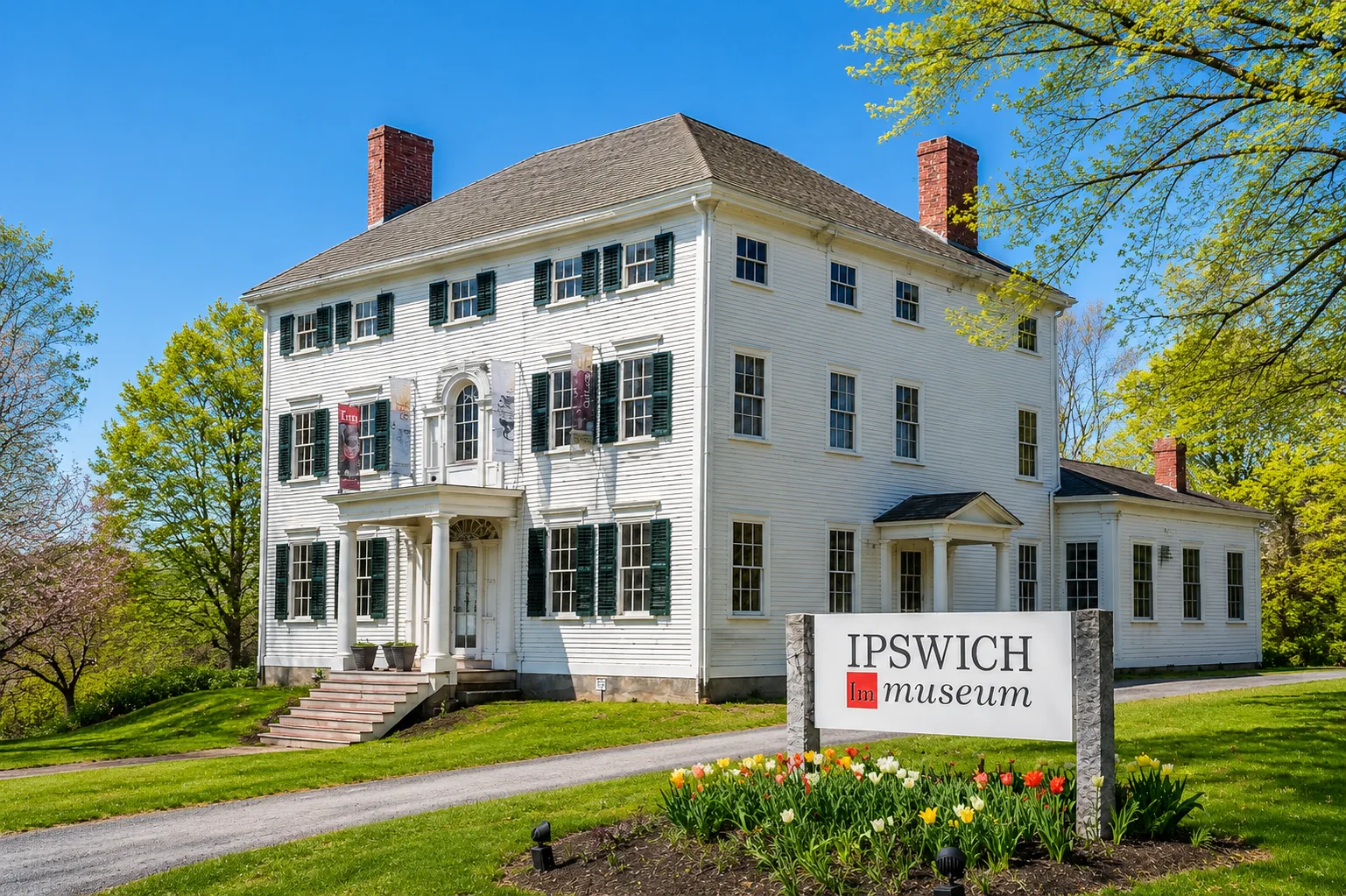 North Shore History The History of Ipswich: America's Best-Preserved Puritan Town
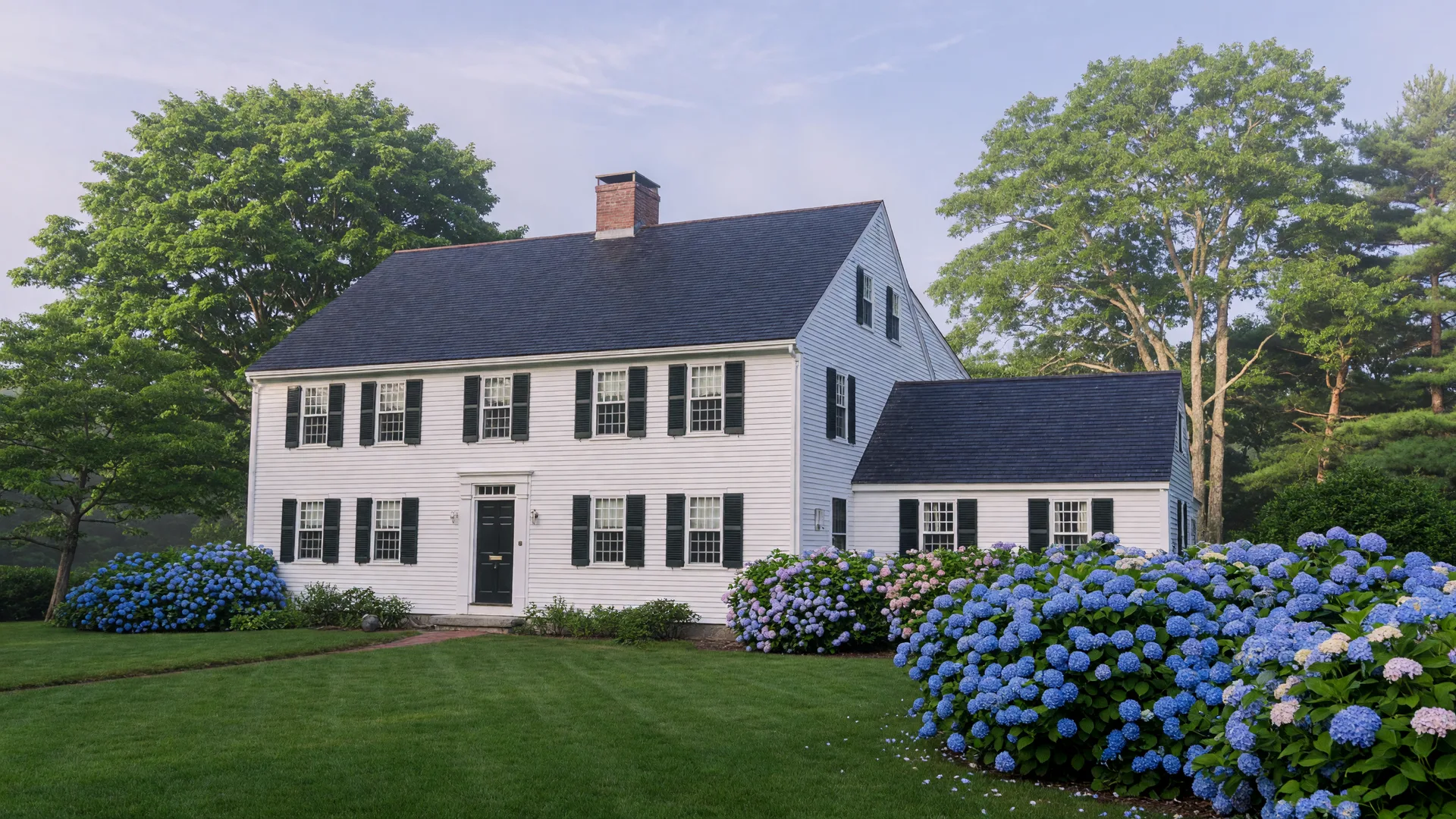 North Shore History From Saltbox to Shingle Style: A Quick Tour of North Shore Home Styles
 Buying / Open Houses How to Get the Most Out of an Open House
 Local Living Ipswich Illumination: How One Night of Fire on the River Became a North Shore Tradition
From the page to the porch
A note can only tell you so much. Let Kathleen take you through the towns, the streets, and the options that actually fit.