
First-Time Home Buyers
The First-Time Home Buyer's Guide to the North Shore
Kathleen Militello · Published October 6, 2026 · Updated October 6, 2026 · 12 min read
First-Time Home Buyers
Kathleen Militello · Published October 6, 2026 · Updated October 6, 2026 · 12 min read

Buying a first home on the North Shore can feel like a long list of steps, but every one of them is learnable. This guide walks through the whole process in order: what you can afford, getting pre-approved, the true cost of owning, which towns to consider, how offers and inspections work, and what happens at the closing table. It is written for Massachusetts buyers, with the coastal details that matter here, and it will stay useful no matter what season you start in.
Key Takeaways
Start with affordability and pre-approval before you look: a lender's pre-approval tells you what you can genuinely afford and makes your offer stronger.
Ownership costs more than the mortgage: property taxes, insurance (including flood insurance in coastal areas), utilities, and maintenance all belong in your monthly picture.
North Shore towns differ in character, commute, and schools, so the right community is the one that fits how you actually live, not just the prettiest listing.
Understand how offers work, including multiple offers, and lean on a Massachusetts buyer's agent for the purchase and sale agreement, attorney review, mortgage commitment, and closing.
A thorough home inspection matters everywhere, and on the coast it includes Title 5 septic status, flood zone, and the age of the heating system.
Pre-approval before postcards
The most useful thing you can do before you look at a single house is figure out what you can actually afford, and then get pre-approved by a lender. Pre-approval is more than a letter: a lender reviews your income, debts, credit, and down payment, then tells you the price range you can responsibly work in. That range becomes your search budget, and it keeps every showing realistic.
Be honest with yourself about what you want your life to feel like after the purchase, not just what the lender will approve. Lenders look at your whole debt load, and you should too. The top of your qualification is not automatically what you should spend, and a good lender will help you see the full picture.
Getting pre-approved before you look also strengthens everything that comes later. Sellers and their agents take a pre-approved buyer seriously, and in a competitive market it is often the difference between an offer that gets attention and one that does not. Massachusetts has programs designed to help first-time buyers, so ask a lender about what is available early. My roundup of first-time buyer programs in Massachusetts is a useful place to start.
More than the mortgage
Your mortgage payment is the headline, but it is not the whole story. Ownership brings a set of recurring costs that renters never see, and the North Shore has some coastal specifics worth planning for. The honest way to approach it is to build a monthly ownership budget that includes all of the following, not just the housing payment.
Property taxes: Massachusetts towns set their own rates, and they vary noticeably from town to town across the North Shore.
Homeowners insurance: your lender will require it, and coastal homes may also need separate flood insurance, which can be significant in flood zones.
Utilities: heating a New England home through winter is a real line item, especially in older houses.
Maintenance and repairs: plan for the unexpected, from a water heater one year to a roof another, because homes need care every year.
Condominium fees: if you buy a condo, the monthly association fee covers common areas, insurance, and often reserves for big future projects.
If you are shopping coastal towns, ask about flood zones early: the designation can meaningfully change both insurance costs and what you can finance. It is the kind of detail a local agent checks before you ever walk through the door.
Clarity beats compromise-by-accident
Before you tour homes, write down two lists. The must-haves are the things you genuinely will not compromise on: number of bedrooms, commute time, a yard or a garage, or proximity to a particular school district. The nice-to-haves are the things you would love but could live without: a second bath, a finished basement, or a short walk to the water.
Keep the must-have list short and honest. Every addition narrows the pool of homes and usually pushes the price up, so the discipline of writing the lists early pays off in every town you visit. You will refine both lists as you see real homes, but starting with them means every showing is a comparison against what you actually need, not a reaction to whatever is prettiest.
Remember that the North Shore is full of trade-offs: a bigger yard in one town may mean a longer train ride, and a shorter commute may mean a smaller home. The lists help you see those trade-offs clearly instead of feeling them for the first time after you have already moved in.
One coast, many towns
The North Shore is not one market; it is a collection of very different towns, and the differences shape daily life in ways a listing photo never shows. Commute times, schools, housing stock, walkability, and the feel of downtown all vary town by town. Beverly offers two train stations and a range of housing. Salem brings walkable city energy and history on the water. Ipswich offers beaches and deep history. And towns like Swampscott and Marblehead sit closer to Boston with their own strong coastal characters.
Spend time in the towns you are considering, not just the houses. Walk the downtown, ride the train at the hour you would actually ride it, and ask locals what they love and what they would change. My commuter rail guide and my school districts guide cover two of the biggest practical differences between towns.
And give each town a second look. Neighborhoods reveal themselves slowly, and the street that felt confusing on the first visit can feel like home by the third. My neighborhood evaluation checklist gives you a concrete way to compare the candidates fairly.
Calibrate before you commit
With your pre-approval and your lists in hand, the search starts in earnest. Your buyer's agent will set up a search that matches your criteria, and you will start seeing homes, in person and online, within your range. Look at more than one style of home and more than one town. The first few showings are about calibrating your expectations, and that is exactly what they should be used for.
During showings, look past the furniture and decor and focus on the bones: layout, natural light, the condition of systems, and how the house sits on its lot. Take notes and photos (with permission) so the homes do not blur together. And remember that a house is part of a neighborhood: the street, the neighbors, and the walk to daily life matter as much as the kitchen.
For more on sizing up homes and neighborhoods, my look at getting to know a neighborhood explains why the second visit is often the one that counts.
Multiple offers are common
When you find the right home, your agent will help you decide what to offer: the price, and the terms that matter to the seller, from timeline to contingencies. In a competitive market, multiple offers are common, and a seller may receive several at once. This is not legal advice, just how the process tends to work here; your agent and, in Massachusetts, your attorney will guide the details.
A competitive offer is usually about more than price. Sellers care whether the financing is solid, how flexible the timeline is, and how clean the offer is. This is where a pre-approval and a careful buyer's agent earn their keep. My guide to handling multiple-offer situations walks through what actually matters.
Keep your own guardrails: decide your maximum before you are in the room, and tell your agent. It is easy to get caught up in the moment of a bidding situation, and a good agent will keep you honest about what the home is really worth to you.
Know the house and the coast
Once your offer is accepted, the home inspection is one of the most valuable steps in the process. A licensed inspector goes through the home top to bottom, and the report becomes the basis for understanding exactly what you are buying. It also often leads to a conversation about repairs or price, so it matters for the numbers too.
On the coast, there are specific checks worth asking about:
Title 5 septic status, if the home is on a private septic system, since Massachusetts has specific requirements and these inspections can be significant.
Flood zone designation, which affects insurance requirements and what you can finance.
The age and condition of the heating system, a critical detail in older North Shore homes.
Roof, windows, and exterior condition, given the coastal exposure.
Water quality and well status, for homes on private water.
Your inspector will flag much of this, but knowing the right questions helps you read the report with context. For a deeper look at one of the coastal specifics, my guide to septic systems in Massachusetts is a good companion read.
The P&S, attorney review, and the final walkthrough
Massachusetts has its own rhythm after an offer is accepted, and it helps to know the sequence before you are in it. The purchase and sale agreement, known as the P&S, is the binding contract that follows the offer and one of the most important documents in the purchase. An attorney review period is standard, and your attorney will review the contract on your side.
Between the P&S and closing, you will secure your mortgage commitment, complete the inspection and any negotiations that come out of it, and do a final walkthrough of the home shortly before closing day. At closing, ownership transfers and the keys change hands. It sounds quick when written this way, but each step has timing and paperwork, and a patient agent keeps everything moving.
For a close look at the final stretch, my walkthrough of what happens on closing day explains the last step in detail.
You do not have to figure this out alone
Buying a first home is a process with many moving parts, and the value of an experienced buyer's agent is that you do not have to manage all of them by yourself. Your agent explains each step as it comes, keeps you honest about the numbers, negotiates on your behalf, and carries the institutional knowledge of how the North Shore market actually behaves, town by town.
I have been a licensed Realtor® on Boston's Coastal North Shore since 2003, and I have walked many first-time buyers through exactly this path: from the first conversation about what they can afford to the moment the keys are in their hands. I listen first, I ask questions, and I tell people what I really think. If you are starting your search, let's look at your options together. You do not have to figure this out alone, and experience matters.
The best time to start is when you feel ready, not when the market looks perfect, because there will never be a market that looks perfect. If you would like help figuring out what is realistic for you, call or text me at (978) 500-1480 or book a conversation. We will start with your numbers, talk through the towns, and build a plan that fits. Warmly, Kathleen Militello, Realtor®, eXp Realty.
Ask Kathleen
Straight answers to the questions first-time North Shore buyers ask most.
Down payment requirements vary by loan program, and Massachusetts has programs designed for first-time buyers. The best move is to talk with a lender early, get pre-approved, and ask which programs you qualify for, because the range is wider than most people expect.
Yes, and it is one of the most useful steps in the process. Pre-approval tells you what you can genuinely afford, keeps your search realistic, and makes your offer stronger in a competitive market.
Coastal homes can carry flood insurance requirements in flood zones, and they face natural wear from salt air. Homes on private systems may need Title 5 septic inspections, and older heating systems are common. All of it is manageable, but it belongs in your budget and your inspection checklist.
In a competitive market, a seller may receive several offers at once and choose among them. Price matters, but so do financing strength, terms, and timeline. Your agent will help you put together your strongest offer while keeping you within the limits you set beforehand.
The same questions and answers, un-styled and sequential, so they can be read and extracted easily.
Q: How much do I need for a down payment on the North Shore?
A: Down payment requirements vary by loan program, and Massachusetts has programs designed for first-time buyers. The best move is to talk with a lender early, get pre-approved, and ask which programs you qualify for, because the range is wider than most people expect.
Q: Should I get pre-approved before I start looking at homes?
A: Yes, and it is one of the most useful steps in the process. Pre-approval tells you what you can genuinely afford, keeps your search realistic, and makes your offer stronger in a competitive market.
Q: What makes buying on the coast different?
A: Coastal homes can carry flood insurance requirements in flood zones, and they face natural wear from salt air. Homes on private systems may need Title 5 septic inspections, and older heating systems are common. All of it is manageable, but it belongs in your budget and your inspection checklist.
Q: How does a multiple-offer situation work?
A: In a competitive market, a seller may receive several offers at once and choose among them. Price matters, but so do financing strength, terms, and timeline. Your agent will help you put together your strongest offer while keeping you within the limits you set beforehand.

Written by
Kathleen Militello, Realtor®
The Militello Team · AI Certified Agent™ · Certified Negotiation Specialist™ · eXp Realty
Keep your reading going
Kathleen has guided first-time buyers through the North Shore market for more than 20 years. Let's talk about what you can afford, which towns fit, and what the whole process will look like.
Related Posts
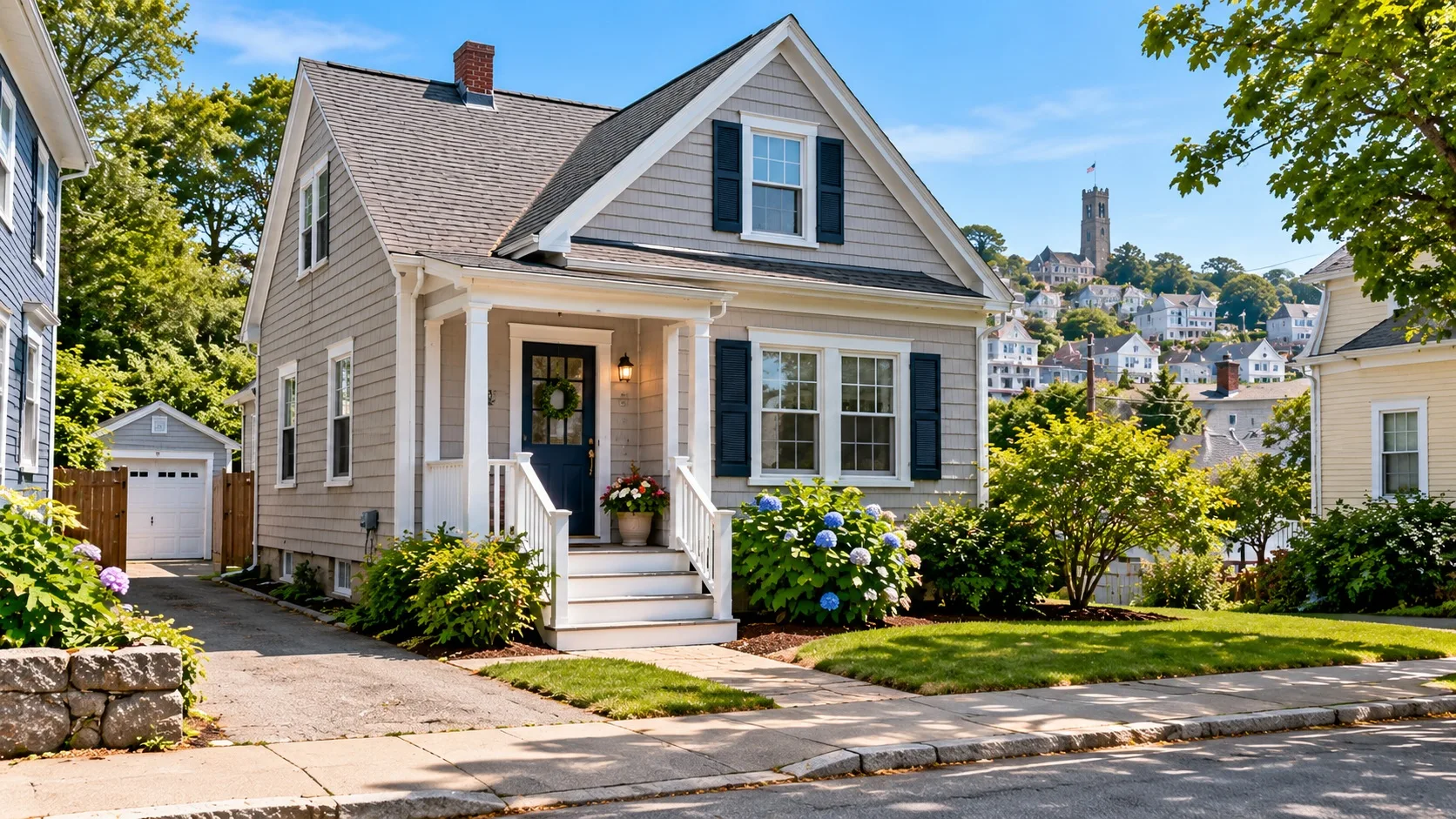 First-Time Home Buyers How Much Do You Need to Save to Buy a First Home on the North Shore?
  First-Time Home Buyers Massachusetts First-Time Home Buyer Programs in 2026: Where the Down Payment Help Really Is
  Buying Your Next Home How to Win a Bidding War on a North Shore Home Without Overpaying
  Buying Your Next Home North Shore School Districts: What Parents Need to Know Before Buying
  Downsizing on the North Shore Downsizing on the North Shore: A Step-by-Step Guide to Your Next Chapter
 From the page to the porch
A note can only tell you so much. Let Kathleen take you through the towns, the streets, and the options that actually fit.